
Imagine standing in front of a mirror and seeing someone you barely recognize. This was the reality for Chandni Singh, a 39-year-old mother who found herself at a crossroads after gaining significant weight during her pregnancy. She weighed 118 kilograms and faced several health complications that made daily life a struggle. Rather than chasing a miracle pill or an expensive gym membership, she turned back to her roots. She focused on her kitchen. By prioritizing home cooking and practicing mindful portion control, she lost 48 kilograms. She went from wearing XXXL sizes to a medium, eventually winning a beauty pageant. Her story is not an outlier. It is a powerful example of how to lose weight with home food by simply reclaiming control over what goes into your body.
Why Home Cooking is the Ultimate Weight Loss Tool
Table of Contents
- 1 Why Home Cooking is the Ultimate Weight Loss Tool
- 2 Decoding the NIH Statistics on Domestic Meal Preparation
- 3 The Biology of Satiety: How Homemade Fiber Keeps You Full
- 4 Indian Home Food for Weight Loss: A Cultural Superfood Guide
- 5 How to Reduce belly fat with home food and Spices
- 6 The Science of Homemade Fat Burning Drinks
- 7 Portion Control for Home Meals: Retraining the Brain
- 8 Meal Prep for Weight Loss: The Harvard Approach
- 9 A Comprehensive 7-Day Indian Diet Plan to Lose Weight at Home
- 10 The Role of Healthy Cooking Methods
- 11 Troubleshooting Common Weight Loss Plateaus at Home
- 12 Conclusion: Reclaiming Your Health, One Meal at a Time
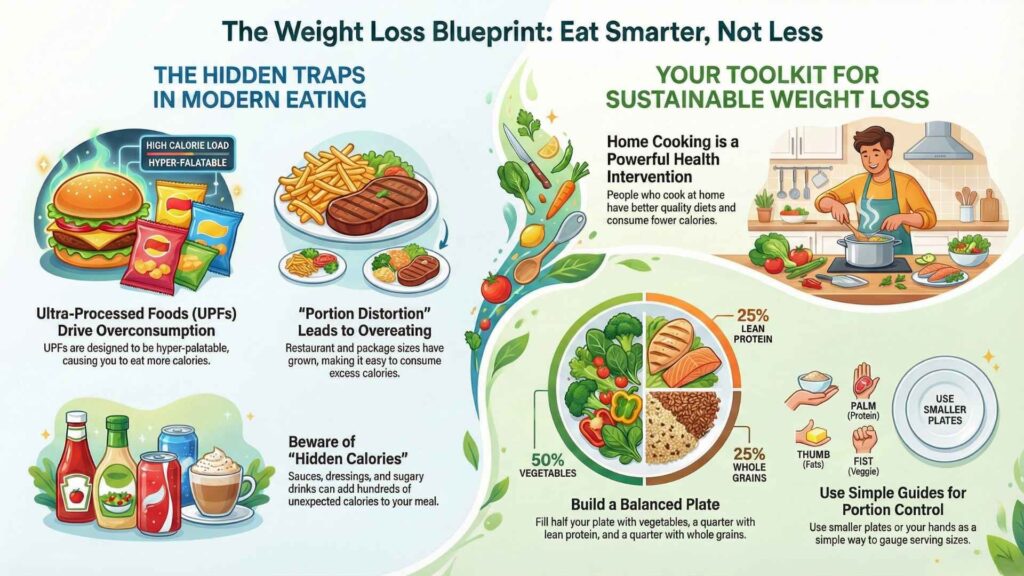
The struggle to manage weight often feels like an uphill battle against an environment designed to make us overeat. Restaurant portions have ballooned over the last twenty years. A standard bagel used to be three inches wide; now it is six. Burgers have nearly doubled in size. When you eat out, you consume what is put in front of you. Research from Cornell University shows that adults eat 92% of whatever is on their plate. This is why the home environment is your greatest asset. At home, you decide the portion. You choose the oil. You control the salt.
The Shift Toward Domestic Nutrition
When you cook at home, you naturally avoid the hidden calories found in processed items. Most restaurant food is designed for taste, not health. This often means excessive amounts of butter, cream, and sodium. By shifting to healthy home cooked meals for weight loss, you bypass these hidden metabolic traps. Data from the National Institutes of Health (NIH) indicates that frequent home cooking leads to a significantly higher quality diet. People who cook dinner six to seven times a week consume fewer calories daily than those who do not.
Breaking the Dependency on Prepared Foods
The decline in home cooking is directly linked to the rise in obesity. In the 1970s, only 18% of our calories came from food prepared away from home. By the late 1990s, that number hit 32%. This shift means we are eating more fast food and frozen meals. These items are often nutrient-poor but energy-dense. What this really means is that you feel full for a short time but lack the vitamins and minerals your body needs. This leads to a cycle of overeating. Reclaiming your kitchen breaks this cycle.
Decoding the NIH Statistics on Domestic Meal Preparation
Statistics tell a very clear story about the power of the domestic kitchen. According to the NIH, individuals who cook at home frequently have a lower intake of fat and sugar. This is true even if they are not actively trying to lose weight. High-frequency cookers consume roughly 81 grams of fat per day compared to 86 grams for low-frequency cookers. While five grams might seem small, it adds up to a significant caloric difference over a month.
Energy Consumption Differences
The caloric difference between eating at home and eating out is stark. High-frequency cooking is associated with a daily intake of 9,054 kJ. Compare this to 9,627 kJ for those who cook only once a week or less. This is a difference of over 500 kJ every single day. If you are looking for a diet plan to lose weight at home, simply increasing your cooking frequency is the most effective starting point.
| Cooking Frequency | Mean Daily Energy (kJ/d) | Daily Fat (g) | Daily Sugar (g) |
| Low (0-1 times/week) | 9,627 | 86 | 135 |
| Medium (2-5 times/week) | 9,222 | 83 | 121 |
| High (6-7 times/week) | 9,054 | 81 | 119 |
Impact on Obesity Risk
The physical results of these dietary habits are measurable. Frequent home cooking is associated with a 28% lower likelihood of having a higher-weight BMI. It also correlates with a 24% lower likelihood of having excess body fat. This data suggests that domestic meal preparation is not just about eating better. It is about fundamentally changing your body composition. These statistics provide a strong foundation for anyone starting their fitness journey.
The Biology of Satiety: How Homemade Fiber Keeps You Full
One of the biggest hurdles in weight loss is hunger. When you eat processed food, your blood sugar spikes and then crashes. This makes you feel hungry again very quickly. Home-cooked food allows you to prioritize fiber. Fiber is the part of plant food that your body cannot digest. It adds bulk to your meals without adding calories. This is a key part of how to reduce belly fat with home food.
The Role of Soluble and Insoluble Fiber
Leafy greens like spinach and fenugreek are fiber boosters. They slow down the movement of food through your digestive tract. This provides a steady release of energy. Legumes and lentils are also fiber “bombs”. They contain protein and fiber which work together to regulate blood sugar. This prevents the insulin spikes that lead to fat storage. When you cook these at home, you get the full benefit without the added preservatives.
Fiber and Gut Health
Fiber does more than just fill your stomach. It feeds the good bacteria in your gut. A healthy gut microbiome is essential for weight control. Whole grains like brown rice, quinoa, and millets are excellent sources. People who eat whole grains regularly have a lower risk of obesity. These grains help you feel full for longer periods. This makes it much easier to stick to your calorie goals.

Indian Home Food for Weight Loss: A Cultural Superfood Guide
Indian cuisine is often misunderstood as being greasy or heavy. In reality, traditional Indian home food for weight loss is incredibly nutrient-dense. The problem is not the food itself, but the modern preparation methods. Traditional cooking uses fresh produce and wholesome grains. It avoids the concept of frozen and processed items. This makes the Indian diet one of the best for sustainable health.
The Power of the Traditional Thali
A traditional Indian meal is a masterclass in balance. A typical thali includes protein from dal or dahi. It includes complex carbs from roti or rice. It adds fiber from a vegetable sabzi. Finally, it includes healthy fats from a small amount of ghee or oil. This combination ensures that you get all the necessary macronutrients in one sitting. This variety prevents the feeling of deprivation that often kills diets.
Low-Calorie Indian Staples
Many common Indian dishes are naturally low in calories. Lauki (bottle gourd) soup is a classic example. It is hydrating and very light. Moong dal soup is another staple that is protein-packed and easy to digest. These dishes provide nourishment without the caloric heavy lifting. By using minimal oil and fresh spices, you can enjoy these meals daily.
| Popular Indian Dish | Approximate Calories | Key Benefit |
| Cucumber Raita | 80-90 kcal | Probiotic-rich, cooling |
| Sprout Salad | 120-140 kcal | High protein, high fiber |
| Moong Dal Soup | 140-160 kcal | Easy to digest, filling |
| Aloo Gobi (Low Oil) | 150-170 kcal | Nutrient-dense, satisfying |
How to Reduce belly fat with home food and Spices
Belly fat is often the most stubborn part of weight loss. It is not just about appearance; it is about health. Visceral fat surrounds your organs and increases the risk of metabolic disease. The good news is that your kitchen is full of natural fat burners. Spices like turmeric, cumin, and ginger are not just for flavor. They have specific biological effects on fat cells.
Curcumin and Inflammation
Turmeric contains curcumin, a compound with powerful anti-inflammatory properties. Chronic inflammation is a major driver of fat accumulation around the midsection. Curcumin helps regulate fat metabolism and improves liver function. To get the most benefit, always pair turmeric with a pinch of black pepper. Black pepper contains piperine, which helps your body absorb the curcumin effectively.
The Metabolism-Boosting Trio: Jeera, Saunf, and Ajwain
Three specific seeds are legendary for their ability to flatten the stomach.
- Cumin (Jeera): It stimulates digestive enzymes and boosts metabolism.
- Fennel (Saunf): It acts as a mild diuretic and helps flush out excess water weight.
- Carom Seeds (Ajwain): It contains thymol, which aids digestion and helps melt stubborn fat.Combining these into a homemade powder can be a game-changer for your digestive health.

The Science of Homemade Fat Burning Drinks
What you drink is just as important as what you eat. Liquid calories are “sneaky” because they don’t trigger the same fullness signals as solid food. Switching from sodas and juices to homemade fat burning drinks is a major win. These drinks are not magic potions, but they support the biological processes of weight loss. They improve hydration, digestion, and metabolic rate.
Morning Detox Infusions
Starting your day with a warm drink can set a healthy tone. Lemon and honey water is a popular choice. Lemon helps flush out toxins, while honey provides a steady source of energy. Another powerful option is ginger water. Ginger increases body heat, which accelerates calorie burning. These drinks should be consumed on an empty stomach for maximum impact.
Traditional Ayurvedic Tonics
Ayurveda offers time-tested remedies for weight management. Triphala water is one such tonic. It is a combination of three fruits that acts as a gentle colon cleanser. It flushes toxins and regulates digestion. Methi (fenugreek) water is also excellent. The soluble fiber in fenugreek seeds slows down digestion and reduces hunger cravings.
| Drink Name | Primary Ingredient | Best Time to Drink |
| Jeera Water | Cumin seeds | Early morning |
| Methi Water | Fenugreek seeds | Empty stomach |
| Ajwain Water | Carom seeds | 30 mins before breakfast |
| Triphala Water | Triphala powder | Before bed |

Portion Control for Home Meals: Retraining the Brain
Even the healthiest home food can cause weight gain if you eat too much of it. Portion control is often the most challenging part of a fitness journey. Our eyes are often bigger than our stomachs. We have been trained to “finish the plate,” regardless of how full we actually are.2 Retraining your brain to recognize satiety is essential.
Visual Cues and the Hand Method
You don’t always need a scale to measure your food. Your hand is a built-in guide. A portion of protein should be the size of your palm. A portion of carbohydrates should fit in your closed fist. For fats like butter or oil, use the size of your thumb tip. These visual cues make it easy to manage your plate without counting every calorie.
The Psychology of Smaller Plates
The size of your plate affects how much you eat. When you use a giant dinner plate, a normal portion looks small. This tricks your brain into thinking you are being deprived. Using a smaller salad plate creates a different visual effect. The same amount of food looks like a feast. This simple hack can reduce your intake by hundreds of calories over a week. It is one of the most effective natural weight loss tips you can implement at home.
Meal Prep for Weight Loss: The Harvard Approach
Hectic schedules are the enemy of healthy eating. When you are tired after work, you are more likely to order takeout. Meal prep for weight loss is the solution to this problem. It allows you to make healthy choices when you have the energy, so you can eat well when you don’t. The Harvard T.H. Chan School of Public Health emphasizes that meal planning is vital for maintaining a healthy track.
Strategic Planning and Batch Cooking
Start by focusing on long-cook items. Proteins like chicken, fish, or lentils can be cooked in large batches. Grains like brown rice or quinoa also store well. While these are on the stove, you can chop fresh vegetables or wash salad greens. Preparing these components in advance makes assembling a meal quick and easy. This reduces the stress of last-minute decisions.
Storage Safety and Efficiency
Proper storage is key to making meal prep work. Use airtight containers to keep food fresh. Label and date everything so you know what needs to be eaten first. Most cooked meats and soups will last three to four days in the fridge. If you want to store food for longer, utilize your freezer. Blanching vegetables before freezing helps them maintain their texture and nutrients.

A Comprehensive 7-Day Indian Diet Plan to Lose Weight at Home
Creating a structured plan helps remove the guesswork. This 7-day plan is designed for beginners. It focuses on nutrient density and variety. It includes a mix of traditional favorites and lighter modern options. The goal is to keep you satisfied while maintaining a calorie deficit.
Days 1 to 3: The Foundations
- Day 1: Start with warm lemon water. Breakfast is moong dal chilla with mint chutney. For lunch, have one roti with lauki sabzi and a bowl of dal. Snack on an orange or guava. Dinner is a clear vegetable soup with grilled paneer.
- Day 2: Breakfast is vegetable oats upma. Lunch consists of brown rice with mixed sprouts curry and cucumber raita. For a snack, have an apple and two walnuts. Dinner is one bajra roti with stir-fried spinach and dal.
- Day 3: Enjoy two idlis with sambhar for breakfast. Lunch is one roti with bhindi sabzi and masoor dal. Snack on roasted chana. Dinner is tomato rasam with sautéed beans and a small bowl of quinoa.
Days 4 to 7: Building Momentum
- Day 4: Breakfast is three boiled egg whites with toast. Lunch is grilled chicken breast with a large salad and curd. Snack on a handful of peanuts and buttermilk. Dinner is a light chicken stew with broccoli.
- Day 5: Have a bowl of vegetable poha for breakfast. Lunch is tofu bhurji with one roti and salad. Snack on coconut water and fox nuts (makhana). Dinner is a zucchini and bell pepper stir-fry with a bowl of soup.
- Day 6: Breakfast is one small paratha without butter, served with curd. Lunch is vegetable pulao with cucumber raita. Snack on a fresh fruit bowl. Dinner is tandoori paneer or grilled fish with boiled veggies.
- Day 7: Start the final day with an oats and banana smoothie. Lunch is millet khichdi with kadhi. Snack on herbal tea and sunflower seeds. Dinner is a clear moong soup with sautéed spinach and one roti.
The Role of Healthy Cooking Methods
The way you cook your food is just as important as the ingredients. You can turn a healthy vegetable into a calorie bomb by deep-frying it. Adopting healthy cooking methods ensures that you preserve nutrients without adding unnecessary fats. This is a critical part of clean eating at home.
Steaming, Grilling, and Sautéing
Steaming is one of the best ways to cook vegetables. It keeps the colors vibrant and the vitamins intact. Grilling or baking proteins like chicken and fish allows the fat to drip away. For traditional Indian curries, focus on sautéing. Use a non-stick pan and a single teaspoon of oil. You will find that the spices provide plenty of flavor without needing excessive fat.
Swapping Ingredients for Better Health
Making simple swaps can significantly lower the calorie count of your meals. Instead of using heavy cream in your curries, try using non-fat yogurt. Replace white flour (maida) with whole wheat flour or millet flour. If you enjoy sweet flavors, use whole fruits instead of refined sugar. These small changes make your diet sustainable for the long term.

Troubleshooting Common Weight Loss Plateaus at Home
Even with the best intentions, weight loss often stalls. This is called a plateau. It happens because your body adapts to your new habits. When this occurs, it is time to look closer at the details. Sometimes, small habits are quietly sabotaging your progress.
The Problem of “Healthy” Overeating
Just because a food is healthy doesn’t mean it is calorie-free. Nuts, avocados, and olive oil are great, but they are very energy-dense. If you are snacking on handfuls of nuts all day, you might be overshooting your calorie goals. Be mindful of these portions. Another common issue is liquid calories from “healthy” smoothies or juices. Whole fruits are always better than juice because they contain fiber.
The Importance of Sleep and Stress Management
Weight loss is not just about food. Your hormones play a massive role. Lack of sleep increases ghrelin, the hunger hormone. It also decreases leptin, the hormone that tells you you’re full. Stress leads to high cortisol levels, which is directly linked to increased belly fat. Prioritizing rest and relaxation is just as important as your meal plan. As expert Rujuta Diwekar notes, health improves first, then size changes, and weight follows.
Conclusion: Reclaiming Your Health, One Meal at a Time
Weight loss is often portrayed as a complicated science, but the most effective strategy is found in your kitchen. By learning how to lose weight with home food, you are choosing a path that is sustainable, affordable, and culturally fulfilling. The journey of Chandni Singh shows us that transformation is possible without extreme measures. The shift often begins with choosing to cook one extra meal at home this week. Momentum builds when you experiment with more spices and dial back the oil just slightly. Over time, it becomes a habit as you reach for water instead of soda, and let a smaller plate guide portions without second-guessing every bite.
You don’t need expensive supplements or fad diets. You need the tools you already own. Start small. Focus on the process, not just the number on the scale. Every home-cooked meal is a vote for the person you want to become.
If you are ready to take the next step and want a personalized roadmap to success, we are here to help. Our experts can design a plan that fits your lifestyle and your kitchen.
Start your transformation today:(https://dietdekho.com/form/)

Frequently Asked Questions (FAQs)
Q1: Can I really lose weight just by eating home food?
Yes. Home food allows you to control ingredients and portions. Research from the NIH confirms that people who cook at home frequently consume fewer calories and have a lower likelihood of having a higher-weight BMI than those who eat out. By focusing on healthy home cooked meals for weight loss, you naturally reduce your intake of sugar and unhealthy fats.
Q2: What is the best home food for a flat stomach?
The best home food for a flat stomach includes high-fiber vegetables like bottle gourd (lauki), lean proteins like lentils and eggs, and digestive spices. Spices like cumin (jeera) and carom seeds (ajwain) are particularly effective at reducing bloating and boosting metabolism.
Q3: How do homemade fat burning drinks help in weight loss?
Homemade fat burning drinks like lemon-ginger water or jeera water help by boosting metabolism, improving digestion, and increasing satiety. They are excellent replacements for sugary beverages, which are a major cause of weight gain.
Q4: How do I manage portion control when eating at home?
Managing portion control is easier when you use visual cues. Aim for a palm-sized portion of protein and a fist-sized portion of grains. Using smaller plates and serving food in the kitchen instead of at the table can also help you avoid overeating.
Q5: Is an Indian diet plan to lose weight at home effective for beginners?
Absolutely. An Indian diet is naturally rich in legumes, whole grains, and vegetables. By making small tweaks like using less oil and including more protein, beginners can see significant results while enjoying familiar, delicious meals.
BOOK YOUR APPOINTMENT
Abhinav is the Founder of Diet Dekho, helping people manage weight and lifestyle health through simple, practical nutrition and personalized diet plans.