
Struggling to build muscle because protein supplements feel too expensive? I know it is hard to find time and money, but a Low Budget Diet for Muscle Gain can transform your physique using simple, local staples. You do not need to empty your wallet to see real results in your fitness journey.
Start Your Free Diet AssessmentWhat is a low budget gain diet?
A Low Budget Diet for Muscle Gain is a strategic nutritional plan using affordable Indian proteins like soya chunks, eggs, sattu, and legumes to meet the 1.2–1.7g / kg protein requirement for growth. By following the National Institute of Nutrition recommended 3:1:2.5 cereal-pulse-milk ratio, you can achieve consistent hypertrophy for approximately ₹150–₹165 per day.
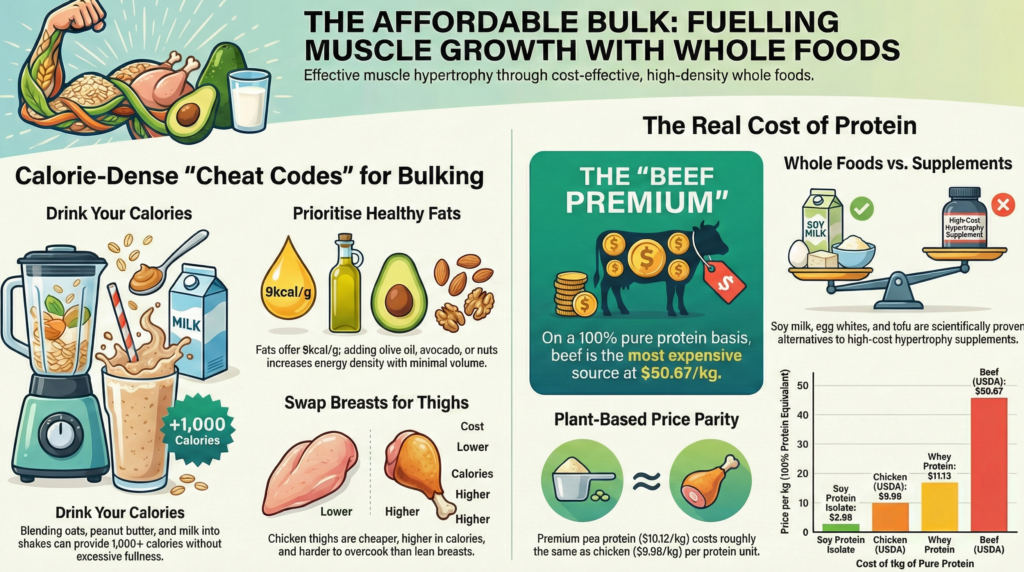
The Frustration of Heavy Training and Empty Pockets
Table of Contents
- 1 The Frustration of Heavy Training and Empty Pockets
- 2 Breaking Myths: Why a Low Budget Diet for Muscle Gain Works
- 3 Planning Your Inexpensive Mass Gainer Meal Plan
- 4 Top 5 Cheap Muscle Building Foods for Hypertrophy
- 5 Safety Considerations for Clinical Conditions
- 6 Sample ₹150/Day Inexpensive Mass Gainer Meal Plan
- 7 Common Mistakes: Why Your Gains Might Stall
- 8 Consistency Beats Expensive Supplements Every Time
- 9 Ready to Transform? Book a Consultation Today
- 10 Frequently Asked Questions (FAQs)
I know it is hard to stay motivated when you hit the gym daily but cannot afford the “required” supplements. You might feel that your progress has stalled because you lack fancy whey isolates. However, the biological reality of muscle growth is indifferent to the brand name on your kitchen shelf.
Your body simply requires a consistent caloric surplus and enough essential amino acids to stay in a positive nitrogen balance. Specifically, a Low Budget Diet for Muscle Gain ensures that your muscles receive the building blocks they need without relying on high-cost marketing gimmicks. Consequently, you can focus on lifting heavy while your local nutrition handles the tissue repair.
Breaking Myths: Why a Low Budget Diet for Muscle Gain Works
Many influencers suggest that you need expensive avocados or imported berries to see results. This is a common myth that stops many busy professionals and homemakers from starting. In simple terms, your local market holds better secrets for an affordable bodybuilding diet India.
For instance, Indian “superfoods” like amaranth (rajgira) and millets provide exceptional micronutrients for a fraction of the cost. Furthermore, research from the National Institutes of Health (NIH) indicates that whole foods often stimulate muscle protein synthesis more effectively than isolated supplements. Therefore, choosing a Low Budget Diet for Muscle Gain is actually a scientifically superior choice for your long-term health.
Planning Your Inexpensive Mass Gainer Meal Plan
Let’s simplify the biology of getting bigger. To gain weight, you must consume more energy than you burn. A Low Budget Diet for Muscle Gain prioritizes calorie-dense whole grains like brown rice and whole wheat, which fuel intense workouts.
What this means for your daily routine is that protein timing matters as much as the amount. You should distribute your protein intake across 4–5 meals rather than loading it all in one sitting. Notably, the ICMR suggests that combining cereals and pulses in a 3:1 ratio creates a complete amino acid profile. This strategy makes a budget protein diet highly effective for vegetarians.
Start Your Free Diet AssessmentTop 5 Cheap Muscle Building Foods for Hypertrophy
1. Soya Chunks: The Vegetarian Meat
Soya chunks are the undisputed champions of a Low Budget Diet for Muscle Gain. They contain a massive 52g of protein per 100g (dry weight). Moreover, they provide all essential amino acids for under ₹10 per serving.
2. Whole Eggs: A Budget Protein Diet Essential
Eggs offer the highest biological value of any whole food. While prices sometimes surge in winter, they remain an inexpensive mass gainer meal plan staple. Specifically, the yolk contains Vitamin D and healthy fats that support natural testosterone production.
3. Sattu: The Indigenous Mass Gainer
Traditional roasted gram flour (sattu) acts as a powerful, natural protein shake. It provides roughly 20g of protein per 100g and keeps you full for longer. Consequently, it is a core part of an affordable bodybuilding diet India.
4. Paneer: The Slow-Digesting Powerhouse
Paneer is rich in casein protein, which your body digests slowly. This makes it the perfect pre-bedtime snack to prevent muscle breakdown while you sleep. Always choose low-fat paneer to keep your calories focused on growth rather than unwanted fat gain.
5. Peanuts: The Calorie-Dense Fuel
Peanuts provide a cheap source of healthy fats and protein. They add necessary calories to a Low Budget Diet for Muscle Gain without requiring large food volumes. For instance, a handful of peanuts provides roughly 7-8g of protein.
Start Your Free Diet AssessmentSafety Considerations for Clinical Conditions
If you manage conditions like PCOD, Diabetes, or Hypertension, your Low Budget Diet for Muscle Gain needs careful adjustment. Building muscle is actually beneficial for these conditions because muscle tissue acts as a “glucose sink.”
- PCOD/PCOS: Focus on low-glycemic index (GI) foods like ragi, bajra, and moong dal to prevent insulin spikes. Furthermore, anti-inflammatory spices like turmeric can help balance hormones.
- Diabetes: Prioritize high-fiber legumes and complex carbohydrates to maintain stable energy levels. Always pair your carbs with protein to blunt the sugar response.
- Thyroid: Contrary to older myths, soy is generally safe for thyroid patients if your iodine intake is adequate. However, you should consult your doctor about the timing of soy intake relative to your medication.
- Hypertension (BP): Limit salt intake to under 5g daily and focus on potassium-rich foods like bananas and potatoes to manage blood pressure.
Sample ₹150/Day Inexpensive Mass Gainer Meal Plan
This inexpensive mass gainer meal plan provides roughly 2800 calories and 120g of protein using current market rates.
| Meal Time | Food Selection | Protein (g) | Cost (Approx.) |
| Breakfast | 3 Boiled Eggs (1 whole) + 2 Whole Wheat Rotis | 16g | ₹30 |
| Mid-Morning | 50g Roasted Peanuts + 1 Banana | 14g | ₹15 |
| Lunch | 1.5 cups Rice + 1 bowl Dal + 50g Soya Curry | 35g | ₹35 |
| Evening Snack | 1 Glass Sattu Drink (30g Sattu + Jaggery) | 6g | ₹10 |
| Dinner | 100g Paneer + 2 Rotis + Seasonal Veggie Sabzi | 25g | ₹55 |
| Before Bed | 1 Glass Low-fat Milk + Pinch of Turmeric | 8g | ₹5 |
Common Mistakes: Why Your Gains Might Stall
The biggest mistake people make on a Low Budget Diet for Muscle Gain is skipping meals to save money. If you do not meet your total calorie needs, your body will burn protein for energy instead of using it to build muscle. Therefore, you must eat consistently throughout the day.
Another error is ignoring seasonal local produce. Imported broccoli is not better than local spinach or drumstick leaves (moringa). Specifically, local greens provide the vitamins needed for muscle recovery at a lower cost. Moreover, many people over-rely on “clean” eating and avoid healthy fats like ghee, which are crucial for hormone health.
Start Your Free Diet AssessmentConsistency Beats Expensive Supplements Every Time
I have seen many clients transform their bodies using only home-cooked meals. The short answer is that your effort in the gym and your consistency in the kitchen matter more than any expensive tub of powder. Start with what you have today; buy your dals in bulk and prioritize eggs and soya.
What this means for your daily routine is that you should stop waiting for a “better time” to start. A Low Budget Diet for Muscle Gain is sustainable, healthy, and perfectly tailored for the Indian lifestyle. Whether you are an NRI looking for home-based solutions or a busy professional, these principles remain the same.
Ready to Transform? Book a Consultation Today
Ready to transform? Book a consultation with Diet Dekho for a personalized, pocket-friendly nutrition plan. We specialize in creating high-protein strategies for real Indian kitchens.
Start Your Free Diet AssessmentFrequently Asked Questions (FAQs)
1. Can I really build muscle on a Low Budget Diet for Muscle Gain without whey?
Yes. Whole foods like soya chunks, paneer, and eggs provide the same essential amino acids found in whey. In fact, whole foods offer a “food matrix” of nutrients that can enhance absorption and long-term health.
2. Is soya safe for men to eat every day?
Recent research confirms that moderate soya intake (1–2 servings daily) does not affect testosterone levels or thyroid function in healthy men. It remains the most cost-effective “complete” plant protein available for a budget protein diet.
3. How much protein do I need daily for muscle growth?
The ICMR and global sports nutrition standards suggest 1.2 to 1.7 grams of protein per kilogram of body weight for active individuals. A Low Budget Diet for Muscle Gain easily meets this through the clever combination of dairy, legumes, and grains.
4. Which is the cheapest protein source in India?
Soya chunks and roasted black chana (sattu) are the most affordable options, providing high protein density for under ₹10-₹15 per serving. These are staples of an affordable bodybuilding diet India.
5. Can busy professionals follow this plan?
Absolutely. Most of these foods, like boiled eggs and sattu shakes, require minimal preparation time. Preparation is key; boiling your soya chunks or eggs in advance can save you time during a busy work week.
Start Your Free Diet AssessmentDisclaimer: This blog post was written to help you make healthier food choices altogether. So, be aware and take care. The important thing to consider is your health before starting a restrictive diet. Always seek advice from a doctor or dietitian before starting if you have any concerns.

Abhinav is the Founder of Diet Dekho, helping people manage weight and lifestyle health through simple, practical nutrition and personalized diet plans.