
Imagine a typical Tuesday morning in a busy household in Delhi or Mumbai. The kitchen is alive with the scent of tempering mustard seeds and fresh curry leaves. A fitness beginner, perhaps inspired by a recent health check-up, stands at the counter questioning the very foundations of their childhood diet. Is the paratha too heavy? Will the white rice at lunch derail a week of gym efforts? This internal conflict is a common entry point for health-conscious individuals seeking low calorie indian foods for weight loss as a manageable path to wellness. The transition to a healthier lifestyle often feels like a cultural loss, but here is the reality: traditional Indian cuisine is a treasure trove of fat-burning superfoods and high-protein ingredients that, when prepared with precision, align perfectly with the world’s most advanced nutritional standards.
The challenge of weight management in the South Asian population is often exacerbated by a high-carbohydrate intake and a genetic predisposition toward visceral adiposity. However, by strategically integrating low calorie indian foods for weight loss, individuals can leverage the thermic effect of food to boost metabolism naturally. This report provides an exhaustive, evidence-based exploration of how to re-engineer the Indian plate. By shifting the focus from simple starches to complex legumes and high-fiber vegetables, we can move beyond the “starvation” model of dieting toward a sustainable biological reset.
Bioenergetic Principles: Why Protein and Fiber Define Success
Table of Contents
- 1 Bioenergetic Principles: Why Protein and Fiber Define Success
- 2 The Breakfast Revolution: High-Protein and Steamed Options
- 3 Lunch and Dinner Architecture: The Low-Calorie Thali
- 4 Low Carb Indian Food Substitutes: Breaking the Grain Cycle
- 5 Indian Superfoods for Weight Loss: The Clinical Evidence
- 6 Spices as Metabolic Catalysts: Beyond Flavor
- 7 Healthy Indian Snacks for Weight Loss: Avoiding the “Namkeen” Trap
- 8 The 1200-Calorie Indian Diet Plan: A Practical Framework
- 9 Cooking Techniques: How to Shave Off “Hidden” Calories
- 10 Psychological Integration: Mindful Eating in the Indian Home
- 11 Future Outlook: Personalization and Metabolic Flexibility
- 12 Conclusion: Reclaiming the Desi Plate
- 13 FAQs optimized for Google Snippets
To understand why a high protein Indian breakfast for weight loss is so effective, we have to look at the endocrine response to different macronutrients. When we consume refined carbohydrates, our insulin levels spike, signaling the body to store fat rather than burn it. Conversely, dietary protein has a significantly higher thermic effect. While carbohydrates require approximately 5% to 10% of their energy to be processed, protein demands between 20% and 30%. This metabolic “tax” means that for every 100 calories of protein you consume, your body only nets about 70 to 80 calories.
Research supported by the National Institutes of Health (NIH) indicates that high-protein, energy-restricted diets lead to greater weight loss and better preservation of lean muscle mass compared to lower-protein alternatives. In a 12-week clinical trial, individuals who have a higher weight and consumed a high-protein and fiber-based nutritional preload 30 minutes before breakfast and lunch lost 3.3 kg, compared to only 1.8 kg in the placebo group. The mechanism here is twofold: increased satiety via the suppression of ghrelin (the hunger hormone) and the elevation of peptide YY (PYY), which signals fullness to the brain.
| Metabolic Indicator | High-Protein Impact | Mechanism of Action |
| Thermic Effect of Food (TEF) | Increases by 20-30% | Higher energy cost for amino acid processing |
| Ghrelin Levels | Significant Decrease | Reduction in hunger signals post-consumption |
| Peptide YY (PYY) | Significant Increase | Enhanced signaling of satiety to the hypothalamus |
| Muscle Retention | Higher Preservation | Provides nitrogen balance during caloric deficit |
The Role of Dietary Fiber as a Mechanical Satiety Tool
Fiber acts as the primary regulator of the digestive speed in the Indian diet. Soluble fiber, found in abundance in oats, barley, and the pectin of citrus fruits, forms a viscous gel in the intestine. This gel traps cholesterol and slows glucose absorption, preventing the insulin spikes that drive fat storage. Insoluble fiber, found in whole wheat, bran, and the skin of vegetables, adds bulk to the stool and accelerates the removal of toxins from the gut.
A landmark study known as the POUNDS Lost trial demonstrated that fiber intake, independent of macronutrient and caloric intake, is a powerful predictor of weight loss and dietary adherence. For the Indian dieter, this means that fiber-rich Indian foods like pulses, leafy greens, and millets are not just side dishes; they are the functional core of a weight-loss strategy. By prioritizing these items, you are essentially creating a biological “buffer” that makes a calorie-restricted diet feel manageable rather than punitive.
The Breakfast Revolution: High-Protein and Steamed Options
Breakfast is often the most calorie-dense and carb-heavy meal in the Indian context, frequently consisting of deep-fried parathas or white rice-based idlis. To transform this into a fat-burning opportunity, we must look toward low calorie indian foods for weight loss like legume-based pancakes and steamed delicacies. The goal is to reach a target of 20 to 30 grams of protein in the morning.
Moong Dal Chilla: The Desi Protein Pancake
Moong dal chilla is perhaps the most versatile tool in the weight-loss arsenal. Made from ground split green or yellow gram, it is naturally rich in protein and fiber. A 100g serving of moong dal provides approximately 23g of protein. When we stuff this savory pancake with 50g of low-fat paneer, the protein content surges to 25g, meeting the clinical threshold for sustained morning energy.
Let’s break down the preparation for maximum efficiency. Soaking the dal for 2 to 3 hours and blending it with ginger, green chilies, and cumin seeds not only enhances flavor but also aids digestion. By using a non-stick tawa and a cooking spray rather than pouring oil, you can reduce the fat content by nearly 80%.
Besan Chilla and Its Metabolic Benefits
Besan, or gram flour, is derived from ground chickpeas and offers a protein profile of 22g per 100g. It is significantly more nutrient-dense than refined wheat flour. A besan chilla loaded with finely chopped spinach, onions, and tomatoes provides a high-volume, low-calorie meal that supports muscle repair. Integrating besan into your routine is a simple strategy for those who find the preparation of whole lentils time-consuming.
Steamed Breakfasts: Idli and Dhokla Science
Steaming is a superior cooking method for weight loss because it requires virtually no added fats. However, the traditional rice-based idli can be high in carbohydrates. To optimize this, the use of alternative flours is recommended. Ragi (finger millet) idli or oats idli increases the fiber and mineral content while lowering the glycemic index. Ragi is particularly rich in calcium and iron, making it a “super-grain” for bone health and energy maintenance during a caloric deficit.
Dhokla, a fermented steamed cake made from chickpea flour, is another excellent option. The fermentation process introduces probiotics that support gut health, which is increasingly recognized as a critical factor in weight management. A single piece of dhokla contains roughly 75 calories, compared to a samosa which can exceed 200 calories.
| Breakfast Option | Primary Ingredient | Protein Content | Calorie Count |
| Moong Dal Chilla | Split Mung Bean | 10-12g | 150 kcal |
| Besan Chilla | Gram Flour | 12-14g | 180 kcal |
| Ragi Dosa | Finger Millet | 6-8g | 120 kcal |
| Paneer Bhurji Toast | Low-fat Paneer | 15-18g | 250 kcal |
| Steamed Idli (2) | Rice & Urad Dal | 4-6g | 155 kcal |
Lunch and Dinner Architecture: The Low-Calorie Thali
The structure of an Indian lunch often revolves around the combination of cereals (roti/rice), pulses (dal), and vegetables (sabzi). To make this weight-loss friendly, we must adjust the ratios. According to the Harvard Healthy Eating Plate guidelines, half of your plate should be filled with vegetables, one-quarter with whole grains, and one-quarter with healthy proteins.
The Science of Low Calorie Dal Recipes
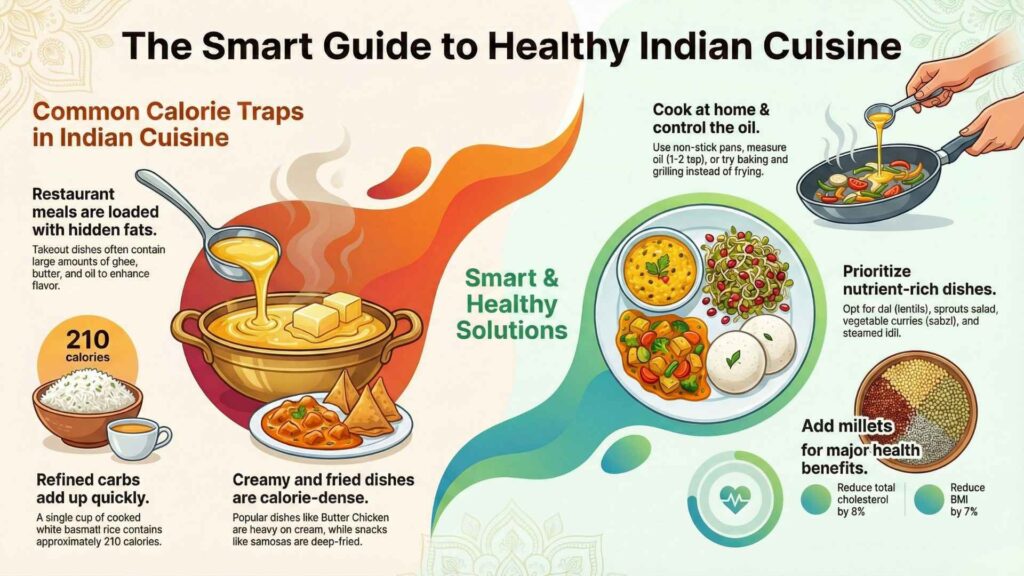
Dals are the primary source of plant-based protein in India, but their caloric value can be doubled by a heavy “tarka” or tempering of ghee and oil. Research shows that traditional dal tempered with ghee contains about 254 calories per cup, while a dal made with dry-roasted cumin seeds contains only 213 calories. What this really means is that by simply changing your tempering technique, you can save 40 calories per meal without sacrificing the nutritional core of the dish.
Red lentils (masoor dal) and yellow lentils (moong dal) are particularly effective for weight loss because they are easy to digest and cook quickly. They are also high in resistant starch, which helps control appetite and curbs late-night food cravings.

Optimized Lentil Recipes for Weight Loss
- Red Lentil Dahl (Oil-Free): Sauté onions and garlic using a splash of vegetable stock instead of oil. Add 1 cup of dried red lentils and 2 cups of water. Simmer with turmeric and cumin for 15 minutes. Finish with lemon juice and fresh coriander.
- Lauki Chana Dal: Combine 100g of bottle gourd (lauki) with half a cup of soaked Bengal gram. Pressure cook with turmeric and salt. Lauki is 96% water and adds massive volume with only 20 calories per 100g, making the meal highly satiating.
- Moong Dal Soup with Zucchini: Boil yellow moong dal with finely chopped zucchini. The zucchini melts into the dal, increasing the fiber content and providing a creamy texture without the need for cream or coconut milk.
The Best Indian Vegetables for Weight Loss
Vegetables are the high-volume heroes of any weight-loss plan. Leafy greens like spinach (palak), fenugreek (methi), and mustard greens (sarson) are packed with vitamins and minerals while being extremely low in calories.
- Lauki (Bottle Gourd): A staple in weight-loss diets, it is incredibly hydrating and rich in fiber.
- Bhindi (Okra): High in fiber and low in fat, bhindi supports digestion. For a low-calorie version, avoid deep-frying and instead use a non-stick pan with a quick stir-fry technique.
- Karela (Bitter Gourd): Contains bioactive compounds that mimic insulin and help regulate blood sugar levels, preventing the fat-storage response.
- Cruciferous Vegetables: Cauliflower (gobi) and cabbage (patta gobhi) are high in fiber and antioxidants. Cauliflower is also a primary low-carb substitute for rice.
| Vegetable | Calories (per 100g) | Primary Benefit |
| Bottle Gourd | 12-20 kcal | Hydration & Fiber |
| Spinach | 23 kcal | Iron & Vitamin K |
| Cauliflower | 25 kcal | Low Carb & Antioxidants |
| Bitter Gourd | 17 kcal | Blood Sugar Regulation |
| Cabbage | 25 kcal | High Fiber |
Low Carb Indian Food Substitutes: Breaking the Grain Cycle
The primary hurdle for many Indian dieters is the reliance on wheat and rice. These staples provide a high glycemic load that can stall weight loss. However, here’s the thing: you don’t have to give up the “feel” of these foods to get the results.
Cauliflower Rice and Its Versatility
Cauliflower rice is the gold standard for low-carb substitutions. By pulsing cauliflower florets in a food processor and lightly sautéing them with cumin, mustard seeds, and curry leaves, you create a base for biryanis and pulaos that contains 80% fewer calories than white rice.
Low-Carb Flour Alternatives
For those who cannot imagine a meal without roti, swapping regular wheat flour for almond flour, coconut flour, or a specialized low-carb blend can significantly reduce the insulin response. Almond flour provides healthy fats and protein, which slow down the digestion of the meal. Another option is the use of ragi or jowar (sorghum) flours, which are higher in fiber and offer a more gradual energy release than refined wheat.

High-Protein Vegetarian Mains
Paneer is the “king of protein” in the Indian vegetarian diet. For weight loss, opting for low-fat paneer is essential. A serving of paneer tikka, marinated in Greek yogurt and grilled in an air-fryer, provides high-quality protein without the excess calories of traditional cream-based curries.
Indian Superfoods for Weight Loss: The Clinical Evidence
While the term “superfood” is often dismissed as marketing fluff, several Indian ingredients have been validated by clinical research at institutions like Harvard Medical School and the NIH.
Turmeric and the Power of Curcumin
Turmeric is ubiquitous in Indian cooking, but its active compound, curcumin, is a potent metabolic regulator. A meta-analysis published in Nutrition & Diabetes reviewed 20 clinical trials and found that turmeric supplementation led to an average weight loss of 1.9 kg and a 2.5 kg loss in individuals with prediabetes. Curcumin works by reducing systemic inflammation and improving insulin sensitivity. To maximize absorption, turmeric should always be consumed with a pinch of black pepper, which contains piperine.
Amla (Indian Gooseberry) and Visceral Fat
Dr. Saurabh Sethi, a gastroenterologist trained at Harvard, highlights amla as a powerhouse of antioxidants called anthocyanins. These compounds support gut and metabolic health, specifically targeting visceral fat—the dangerous fat stored around the internal organs. Amla is also incredibly high in Vitamin C, which is essential for fat oxidation.
Moringa (Drumstick Tree): The Nutrient-Dense Ally
Moringa leaves are a concentrated source of protein, vitamin A, and iron. Research indicates that moringa extracts can inhibit adipogenesis—the formation of new fat cells—and enhance the breakdown of existing fat. In a study involving heavier human subjects, those taking 1g of moringa daily for 12 weeks saw significant reductions in BMI and waist circumference.
| Superfood | Active Compound | Primary Weight Loss Benefit |
| Turmeric | Curcumin | Reduces Inflammation & Improves Insulin Sensitivity |
| Amla | Anthocyanins | Targeted Visceral Fat Reduction |
| Moringa | Polyphenols | Inhibits Fat Cell Formation |
| Ginger | Gingerol | Increases Thermogenesis (Fat Burning) |
| Fenugreek | Galactomannan | Suppresses Appetite & Increases Satiety |
Spices as Metabolic Catalysts: Beyond Flavor
Indian spices are not merely for aroma; they are functional ingredients that influence energy expenditure.
- Chilli Peppers: Capsaicin, found in green and red chilies, boosts metabolism and promotes thermogenesis—the process by which the body generates heat by burning calories.
- Ginger: Known as a “thermogenic” ingredient, fresh ginger mimics the effects of exercise on the metabolism and helps reduce gas and bloating, making your stomach look flatter.
- Fenugreek (Methi): The high fiber content of fenugreek seeds forms a gel in the stomach that increases feelings of fullness and reduces the desire to snack between meals.
- Cinnamon (Dalchini): Helps stabilize blood sugar levels by mimicking the action of insulin, which is particularly beneficial after a carbohydrate-heavy meal.

Healthy Indian Snacks for Weight Loss: Avoiding the “Namkeen” Trap
The 4 PM hunger pang is the point of failure for many. The typical reach for deep-fried samosas or sugar-laden biscuits can negate an entire day of healthy eating. Instead, we must turn to low calorie indian foods for weight loss that provide “crunch” and “protein.”
Roasted Makhana: The Mineral-Rich Crunch
Makhana, or fox nuts, are an exceptional snack for those monitoring their calorie intake. They are low in sodium and high in potassium and magnesium. When dry-roasted with a drop of ghee and a sprinkle of black salt, they provide a satisfying alternative to popcorn or potato chips.
Roasted Chana (Bhuna Chana)
Bhuna chana is one of the most cost-effective and nutritious snacks available. One hundred grams of roasted chana provides 19g of protein and 11g of fiber. It has a very low glycemic index, meaning it provides a steady release of energy without spiking your blood sugar.
Sprout Chaat: The Metabolic Booster
Mixing steamed moong or chana sprouts with chopped onions, tomatoes, green chilies, and lemon juice creates a “sprout chaat” that is rich in enzymes and protein. Sprouting the grains increases the bioavailability of nutrients and makes the protein easier for the body to absorb.
| Snack | Portion | Calories | Protein |
| Roasted Makhana | 1 Bowl (30g) | 100 kcal | 3g |
| Roasted Chana | 1/2 Bowl (50g) | 180 kcal | 9g |
| Sprout Chaat | 1 Bowl (150g) | 130 kcal | 8g |
| Cucumber Raita | 1 Bowl (200g) | 90 kcal | 4g |
| Buttermilk (Chaas) | 1 Glass (250ml) | 45 kcal | 3g |
The 1200-Calorie Indian Diet Plan: A Practical Framework
For beginners, following a structured plan takes the guesswork out of weight loss. This 1200-calorie menu is designed to keep protein high and calories low while ensuring regional variety. To get a plan tailored specifically to your body type and preferences, you can connect with our specialists at(https://dietdekho.com/form/).
The Detox Start Day
- Early Morning: Warm lemon water with 5 soaked almonds.
- Breakfast: Moong dal chilla (2) with mint chutney.
- Mid-Morning: 1 medium apple.
- Lunch: 1 whole wheat roti + 1 bowl of Lauki Sabzi + 1 bowl of Dal + Fresh Salad.
- Evening Snack: 1 cup Green Tea + 1 bowl of roasted makhana.
- Dinner: Clear vegetable soup + 100g grilled paneer with sautéed spinach.
Fiber-Rich Focus Day
- Early Morning: Jeera (cumin) water.
- Breakfast: Oats upma with plenty of carrots and peas.
- Mid-Morning: 1 guava or orange.
- Lunch: 1 bowl of brown rice + 1 bowl of Rajma + Cucumber Raita.
- Evening Snack: 1 glass of Masala Buttermilk.
- Dinner: Lauki Chana Dal + 1 Bajra Roti + Mixed Salad.
High-Protein Wednesday
- Early Morning: Ginger-lemon tea (no sugar).
- Breakfast: 2 Egg whites + 1 slice of whole-grain toast or Besan Chilla.
- Mid-Morning: 1 bowl of papaya.
- Lunch: 1 bowl of Quinoa Mushroom Pulao + 1 bowl of Curd.
- Evening Snack: A handful of roasted peanuts (30g).
- Dinner: 2 Wheat rotis + Palak Paneer (low oil) + Salad.

Cooking Techniques: How to Shave Off “Hidden” Calories
One of the biggest mistakes fitness beginners make is ignoring the calories in their cooking fat. Let’s break it down: one tablespoon of oil or ghee contains roughly 120 calories. If you use three tablespoons a day, that’s 360 calories—nearly 30% of a 1200-calorie diet!
Transitioning to Cooking Sprays
Using a cooking oil spray allows you to coat the pan with less than 1/10th of the oil used in traditional pouring. For rotis, spraying them once after they are cooked provides the same aroma and texture for only 2-4 calories, compared to 20-30 calories for a teaspoon of ghee.
The Water-Sauté Method
For vegetable curries, you can sauté your onions, ginger, and garlic using small splashes of water or vegetable broth. Once the onions are translucent and the raw smell of garlic is gone, add your dry spices and then the vegetables. This method, combined with a lid to trap steam, allows the vegetables to cook in their own juices, preserving nutrients and keeping the calorie count remarkably low.
Air-Frying: The Modern Tandoor
If you love tandoori chicken or paneer tikka, the air-fryer is your best friend. It provides the high-heat circulation of a traditional clay oven without the need for the excessive basting of butter. Grilling at 200°C for 20-25 minutes yields a protein-rich meal with minimal fat.
Psychological Integration: Mindful Eating in the Indian Home
Weight loss is as much a mental game as a physical one. In the Indian context, social pressure and family gatherings often present obstacles.
- The “Hara Hachi Bu” Principle: An ancient Japanese concept that aligns with Ayurvedic teachings—eat until you are 80% full. This prevents the sluggishness associated with overeating and allows your body to digest the meal efficiently.
- Sequence Your Eating: Start every meal with a bowl of salad or a cup of clear soup. The fiber and volume will fill your stomach, signaling to your brain that you are satiated before you reach for the higher-calorie roti or rice.
- The DASH Influence: For those managing hypertension alongside weight, the DASH (Dietary Approaches to Stop Hypertension) plan suggests limiting sodium and focusing on mineral-rich whole foods like nuts, seeds, and beans.
Future Outlook: Personalization and Metabolic Flexibility
As we move forward, the understanding of nutrition is becoming increasingly personalized. What works for a person in Kerala might differ for someone in Punjab due to regional gut microbiomes and genetic variations. However, the core truth remains: a diet based on whole, unprocessed Indian ingredients is globally competitive for weight management.
The future of Indian weight loss lies in “Metabolic Flexibility”—the body’s ability to switch between burning carbohydrates and burning fat. By utilizing the low calorie indian foods for weight loss and high-protein strategies outlined in this report, you are training your body to be a more efficient furnace. To navigate this journey with expert guidance tailored to your specific goals, we encourage you to fill out the assessment form at(https://dietdekho.com/form/).
Conclusion: Reclaiming the Desi Plate
Revisiting our urban professional from the introduction, the path forward is no longer a mystery. That Tuesday morning kitchen doesn’t need to be a place of deprivation. By choosing a moong dal chilla over a paratha, opting for lauki over starch-heavy vegetables, and using turmeric and moringa as biological boosters, weight loss becomes a natural byproduct of good nutrition. Traditional Indian food is not an enemy of fitness; it is its greatest ally. The key is in the preparation—choosing steaming over frying, protein over refined carbs, and mindfulness over mindless munching.
Sustainable health is a marathon, not a sprint. Start with small, manageable swaps today. Your body will thank you with higher energy, a clearer mind, and a more resilient metabolic profile. Using low calorie indian foods for weight loss consistently is the most reliable way to achieve your health goals. For a personalized strategy that fits your unique lifestyle, please reach out to us at(https://dietdekho.com/form/).

FAQs optimized for Google Snippets
What are the best low calorie indian foods for weight loss?
The best low calorie indian foods for weight loss include water-based vegetables like bottle gourd (lauki) and ridge gourd (tori), as well as protein-rich pulses like moong dal and masoor dal. Steamed items like dhokla and idli, when made with millets or oats, also provide high satiety with fewer calories. Spices like turmeric and ginger further support weight loss by boosting metabolism.
How can I make a high protein Indian breakfast for weight loss?
To create a high-protein Indian breakfast, focus on legume-based dishes like moong dal chilla, besan chilla with paneer stuffing, or sprouted moong salad. These dishes provide 20-25g of protein, which is essential for increasing metabolic rate and reducing hunger throughout the day. Replacing rice with ragi or oats in traditional recipes also boosts the nutritional profile.
Which Indian superfoods for weight loss are backed by science?
Indian superfoods backed by research from institutions like Harvard and NIH include turmeric (curcumin), amla (Indian gooseberry), and moringa (drumstick tree). Turmeric improves insulin sensitivity, amla targets visceral fat with potent antioxidants, and moringa helps prevent the formation of new fat cells. Ginger and fenugreek are also recognized for their thermogenic and appetite-suppressing properties.
What are some healthy Indian snacks for weight loss to avoid junk?
Healthy Indian snacks that support weight loss include roasted makhana (fox nuts), roasted chana (chickpeas), and sprout chaat. These options provide a combination of crunch, protein, and fiber, making them highly satiating. They are superior to deep-fried snacks as they prevent blood sugar spikes and keep energy levels stable between meals.
Is there a simple 7 day Indian diet plan for weight loss?
A simple 7-day Indian diet plan involves a 1200-1500 calorie structure focusing on high-protein breakfasts like chilla or eggs, lunches consisting of one whole wheat roti with dal and a water-based vegetable, and light dinners like soups or grilled paneer. Hydration with buttermilk and snacking on roasted makhana are key components of this plan for sustained fat loss.
BOOK YOUR APPOINTMENT
Abhinav is the Founder of Diet Dekho, helping people manage weight and lifestyle health through simple, practical nutrition and personalized diet plans.