Do you ever feel like your energy is on a permanent rollercoaster, or find yourself staring at a high blood pressure reading after a long week of work? Meet Arjun, a 42-year-old manager who lived on chai and packaged snacks until his doctor gave him a wake-up call about his heart. Starting a low sodium low sugar diet felt like a mountain to climb, but once we simplified his plate, his energy stabilized and his BP dropped. I know it’s hard to find time for healthy eating,but let’s simplify this journey together.
A low sodium low sugar diet focuses on restricting salt to under 5 grams (2,000mg sodium) and added sugars to less than 5% of total daily calories. Specifically, this protocol prioritizes whole grains, fresh vegetables, and lean proteins while eliminating processed snacks, pickles, and sugary beverages to manage hypertension and metabolic health effectively.
Why Your Body Craves a Low Sodium Low Sugar Diet
Table of Contents
- 1 Why Your Body Craves a Low Sodium Low Sugar Diet
- 2 Scientific Proof: The DASH Diet Connection
- 3 Identifying Hidden Sodium in the Indian Kitchen
- 4 Spotting Hidden Sugars in HealthyStaples
- 5 Meal Prep Strategies for the Busy Professional
- 6 The 2024 ICMR-NIN Guidelines: A New Standard
- 7 Practical Swaps for Your Weekly Routine
- 8 Success Stories: It’s Never Too Late
- 9 FAQs
- 10 Conclusion: Your Path to Vitality
- 11 Contact Us
- 12 Disclaimer
I often tell my clients at DietDekho that our modern Indian plates have become a silent saboteur of our health. In fact, research shows that unhealthy diets contribute to a staggering 56.4% of the total disease burden in India. When you consume too much salt, your body holds onto extra water, which forces your heart to work much harder and increases the pressure against your artery walls.

Similarly, those frequent sugar spikes from sweet chai and biscuits trigger a massive insulin response. Consequently, your body begins to store more fat and loses its ability to regulate energy, leading to that heavy brain fog many professionals feel by 4 PM. By choosing a low sodium low sugar diet, you aren’t just losing weight; you are essentially giving your vascular system a much-needed internal reset.
Scientific Proof: The DASH Diet Connection
We don’t just recommend these changes because they sound good; we base them on decades of clinical evidence. Harvard Health and the NIH heavily advocate for the DASH (Dietary Approaches to Stop Hypertension) protocol. Clinical trials demonstrate that limiting sodium to 1,500mg daily can reduce blood pressure as effectively as some first-line medications.

Specifically, the OmniHeart study found that replacing a portion of refined carbohydrates with plant-based proteins-like our traditional lentils and beansfurther improves heart health. I know it sounds technical, but what this means for your daily routine is that your favorite bowl of thick dal is actually a powerful medical tool for your heart.
Identifying Hidden Sodium in the Indian Kitchen
One of the biggest mistakes I see is focusing only on the salt shaker. Unfortunately, the real salt bombsare often hidden in items we consider staples. For example, a single tablespoon of commercial mango pickle (achar) can contain over 20% of your entire daily sodium limit. Similarly, those crispy papads we love are loaded with sodium bicarbonate.

Let’s simplify your pantry audit. If you want to succeed on a low sodium low sugar diet, you must be wary of these common items:
- Instant Noodles: The tastemaker alone often exceeds 1,000mg of sodium.
- Bakery Items: Surprisingly, white bread and digestive biscuits contain high levels of hidden salt used as a preservative.
- Condiments: Tomato ketchup and sweet chutneys are dual threats-they are packed with both salt and sugar.

Spotting Hidden Sugars in HealthyStaples
Many of my friends tell me, But I don’t eat sweets!However, they are often surprised to learn that sugar hides in their healthy breakfast cereals and packaged oats. In the Indian diet, white rice acts almost exactly like sugar in your body because it lacks fiber and causes immediate glucose spikes.
Moreover, popular health drinks often marketed for energy are actually high-sugar traps. To maintain a successful low sodium low sugar diet, I recommend swapping that afternoon biscuit for a handful of unsalted roasted chana or walnuts. These small swaps prevent the sugar crash that makes your workday feel twice as long.
Meal Prep Strategies for the Busy Professional
I know you’re juggling meetings and family, so let’s make your kitchen work for you, not against you. The secret to a consistent low sodium low sugar diet is batch-cooking your foundations. On Sundays, I suggest preparing a large batch of Bhuna Masala-a concentrated base of onions, tomatoes, ginger, and garlic sautéed in minimal oil.
By freezing this base in small portions, you can cook a fresh, heart-healthy sabzi in under 10 minutes on a Tuesday night. Additionally, you should batch-boil legumes like Rajma or Chole. When you have pre-boiled protein ready, you are far less likely to order high-sodium restaurant food when you’re tired.

The 2024 ICMR-NIN Guidelines: A New Standard
The latest dietary guidelines for Indians (2024) have raised the bar for our health. Experts now recommend a 33% increase in daily vegetable intake-specifically targeting 400g of vegetables and 100g of green leafy greens. This is vital because the potassium found in spinach and gourds actually helps your kidneys flush out excess sodium.
Unhealthy diets are contributing substantially to the NCD burden in India,notes Dr. Prabha, emphasizing that replacing refined carbs with protein can reduce the diabetes burden by 50%. Therefore, your low sodium low sugar diet should focus on making protein the hero of your plate rather than just a side dish.

Practical Swaps for Your Weekly Routine
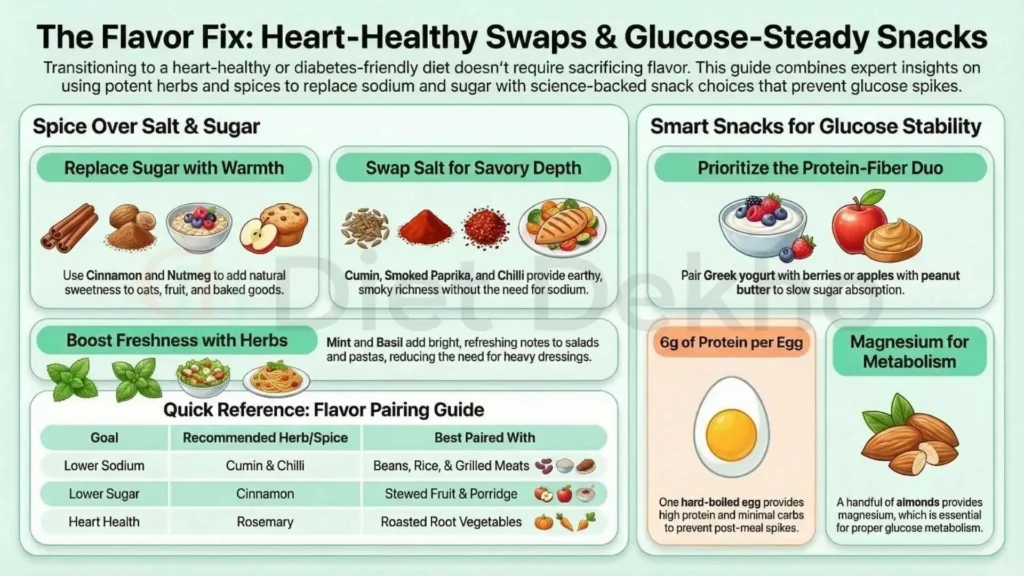
Transitioning doesn’t mean eating bland food. In fact, you can use lemon juice, tamarind, or amchur (dried mango powder) to provide that tangy flavor without the blood-pressure-raising salt.
| Instead of This… | Try This Low Sodium Low Sugar Diet Option |
| Commercial Pickle | Fresh Mint & Lemon Chutney |
| White Rice Poha | Moong Dal Cheela with Veggies |
| Digestive Biscuits | Roasted Makhana (Foxnuts) |
| Packaged Fruit Juice | Whole Fruit (Apple or Guava) |
| Salty Namkeen | Unsalted Roasted Chana |
Success Stories: It’s Never Too Late
Take the case of Ramesh, a 67-year-old professional who struggled with hypertension for years. By shifting to a light, wholesome diet and eliminating processed snacks, his blood pressure stabilized significantly within weeks. Similarly, 78-year-old engineer Ramachandra Bhat managed to discontinue his BP medication in just 45 days after adopting a structured, high-fiber Indian diet plan. These results show that the body is remarkably resilient when we provide the right fuel.
FAQs
Q1: Is jaggery a safe substitute for sugar if I have diabetes?
While jaggery contains some minerals, it still causes significant blood sugar spikes. For a low sodium low sugar diet, it is better to use spices like cinnamon for perceived sweetness or very small amounts of whole dates.
Q2: How much salt is actually safe for hypertension?
The ICMR and WHO recommend less than 5 grams of salt per day (about one teaspoon). If you are managing stage 1 hypertension, reducing this further to 1,500mg of sodium (3.8g salt) provides the best results.
Q3: Can I eat out while on this diet?
Yes, but you must be strategic! Always ask for less salt and no extra butter/ghee.Choose grilled or tandoori items over deep-fried snacks, and opt for plain rotis instead of buttery naans.
Q4: Will a low sodium low sugar diet help with weight loss?
Absolutely. By removing hidden sugars and reducing water retention from excess salt, most people see a significant improvement in bloating and weight management within the first 14 days.
Conclusion: Your Path to Vitality
Starting a low sodium low sugar diet is the single most effective gift you can give your future self. By following the 2024 ICMR-NIN guidelines and embracing regional, whole-food staples, you can protect your heart and stabilize your energy for years to come. Remember, you don’t have to be perfect; you just have to be consistent.
Ready to personalize your journey?
Contact Us
We understand how overwhelming nutrition and weight loss information can feel. With so many opinions and confusing advice online, it’s easy to feel stuck or unsure about what to do next.
At Diet Dekho, you never have to figure it out alone. You can contact us anytime with any questions or concerns. Our expert dietitians are available 24/7 to guide, support, and help you stay on track. Whether your goal is weight loss or building healthier habits, we’re here to make the journey simpler and more sustainable for you.
Disclaimer
This blog is intended to help readers make healthier food choices. Your health should always be the top priority. Before starting any restrictive or special diet, especially if you have a medical condition or health concern, please consult a doctor or a qualified dietitian. Each body responds differently to food and lifestyle changes. Always choose what is safe and suitable for you.

Abhinav is the Founder of Diet Dekho, helping people manage weight and lifestyle health through simple, practical nutrition and personalized diet plans.