
We understand that while the world seems obsessed with losing weight, there is a silent community struggling with the exact opposite. Have you ever looked in the mirror and wished for a more filled-out, healthy physique? Finding a sustainable weight gain diet plan can be surprisingly difficult in a culture that often ignores the hardgainers.
A weight gain diet plan is a structured nutrition strategy focusing on a healthy caloric surplus—consuming 300–500 extra calories daily. For Indians, this involves nutrient-dense staples like ghee, paneer, and millets, combined with high-quality protein and strength training to ensure you gain lean muscle mass instead of just unhealthy body fat.
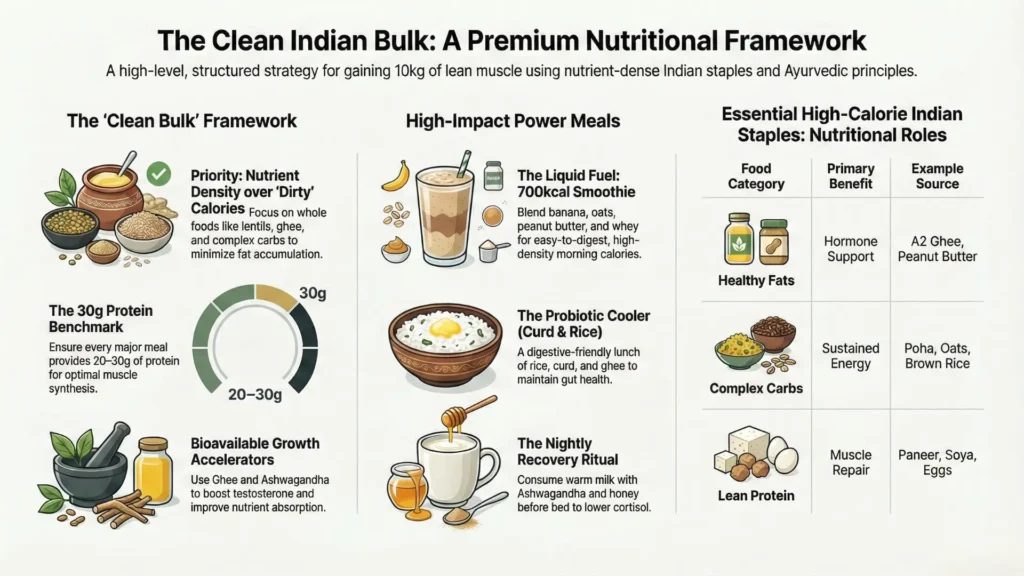
Struggle to Put on Weight? Why Your Metabolism Might Be Too Fast
Table of Contents
- 1 Struggle to Put on Weight? Why Your Metabolism Might Be Too Fast
- 2 The Frustration of Being Underweight in a Weight-Loss Obsessed World
- 3 Myth: Eating Junk Food is the Best Way to Gain Weight Quickly
- 4 The Science of Healthy Caloric Surplus: Muscle vs. Fat Gain
- 5 Essential Indian Superfoods for Natural and Healthy Weight Gain
- 6 Your 30-Day Monthly Weight Gain Diet Plan: A Sample Daily Routine
- 7 Why Consistency Trumps Intensity: Common Mistakes in Weight Gain Journeys
- 8 Progress Takes Time: Staying Motivated on Your Transformation Journey
- 9 FAQ’s
- 10 Contact Us
- 11 Disclaimer
I know it’s hard to understand why some people can eat anything and stay thin, but the answer often lies in your biology. If you find yourself unable to bulk up, you might have a naturally high Basal Metabolic Rate (BMR). In simple terms, your body is like a high-performance engine that burns fuel (calories) much faster than average.
Genetics play a major role here. Some individuals are born with a fast metabolism, meaning their cells process energy quickly even at rest. Research from Harvard indicates that leptin resistance or sensitivity also dictates how your body stores fat and signals hunger. If your body is highly sensitive to leptin, it may constantly signal that you are full, making it a chore to eat the calories required for a weight gain diet plan.
The Frustration of Being Underweight in a Weight-Loss Obsessed World
It can be incredibly isolating to feel like you’re disappearing when every advertisement is about shedding kilos. For busy professionals or homemakers in India, being underweight isn’t just about aesthetics; it often leads to low energy, a weak immune system, and constant fatigue.
In our experience at DietDekho, we see many clients who feel thin-fat—they have a low body weight but carry most of it as unhealthy visceral fat because of poor nutrition. According to the National Family Health Survey-5 (NFHS-5), approximately 20.1% of Indian women aged 18–49 are still classified as underweight. This is a serious public health issue that impacts hormonal health, especially for those managing PCOD or thyroid imbalances.
Myth: Eating Junk Food is the Best Way to Gain Weight Quickly
Let’s simplify this: Dirty bulking is a trap. You might think that eating samosas, pizzas, and sugary sweets is the fastest way to see the scale move. While you will gain weight, it will likely be in the form of unhealthy fat around your midsection, increasing your risk for Type 2 diabetes and hypertension.
The goal of a healthy weight gain diet plan is to nourish your cells, not just fill your stomach. Empty calories from ultra-processed foods (UPFs) cause insulin spikes and inflammation. Instead, we focus on nutrient density. This means choosing foods that offer a high amount of vitamins, minerals, and healthy fats alongside their calorie content. Think of it as building a house with solid bricks (nutrients) rather than cardboard (junk food).

The Science of Healthy Caloric Surplus: Muscle vs. Fat Gain
To gain weight, you must be in an anabolic state—a condition where your body is building tissue rather than breaking it down. This requires a caloric surplus. What this means for your daily routine is eating roughly 300 to 500 calories more than your body burns each day.
However, calories alone aren’t enough. You need the right macros:
- Proteins: The building blocks. For healthy mass, aim for 1.6 to 2.2 grams of protein per kilo of body weight.
- Carbohydrates: Your primary energy source. Focus on complex carbs like brown rice and millets to fuel your workouts.
- Healthy Fats: These are calorie-dense. Just one tablespoon of ghee adds nearly 120 calories to your meal without making it feel heavy.
Essential Indian Superfoods for Natural and Healthy Weight Gain
The beauty of an Indian weight gain diet plan is our traditional pantry. We don’t need expensive supplements when we have these superfoods:
1. Ghee (Clarified Butter)
Ghee is a powerhouse of healthy fats and butyrate, which aids gut health. Drizzling ghee on your rotis or dals is the easiest way to sneak in extra calories.
2. Sattu (Roasted Gram Flour)
Common in Bihar and UP, Sattu is often called the poor man’s protein. It provides up to 20g of protein per 100g and is excellent for building muscle.
3. Millets (Ragi and Bajra)
Ragi is rich in calcium, while Bajra provides high protein. These nutri-cereals are perfect for those with PCOD as they have a low Glycemic Index (GI), preventing insulin spikes.
4. Paneer and Full-Fat Dairy
For vegetarians, paneer is indispensable. It’s rich in casein protein, which is slow-digesting and keeps your body in a muscle-building state for longer.

Your 30-Day Monthly Weight Gain Diet Plan: A Sample Daily Routine
Consistency is key. Here is a sample routine that balances traditional Indian flavors with scientific loading.
| Time | Meal Type | Menu Options |
| 7:00 AM | Early Morning | 1 glass full-fat milk + 5-6 soaked almonds + 2 walnuts |
| 8:30 AM | Breakfast | 2 Paneer stuffed parathas with ghee + 1 cup full-fat curd |
| 11:00 AM | Mid-Morning | 1 Banana smoothie with peanut butter or 1 bowl of fruit salad with seeds |
| 1:30 PM | Lunch | 1 cup Dal + 1 cup Sabzi + 2 Ghee-laden Rotis + 1/2 cup Rice + Salad |
| 4:30 PM | Evening Snack | 1 glass Lassi or Sattu drink + a handful of roasted peanuts |
| 8:30 PM | Dinner | Grilled Chicken/Fish or Paneer Curry + 2 Rotis + 1 cup Dal + 1 cup Salad |
| 10:00 PM | Bedtime | 1 glass warm turmeric milk with 1 tsp honey + 1 banana |
Note for Medical Conditions:
- PCOS/Diabetes: Replace white rice with brown rice or quinoa. Limit sugar and use low-GI fruits like guava or apple.
- Hypertension (BP): Use no-salt flavorings like lemon and roasted cumin. Avoid pickles, papads, and processed snacks.
- Thyroid: Ensure adequate iodine intake and focus on selenium-rich nuts like walnuts.

Why Consistency Trumps Intensity: Common Mistakes in Weight Gain Journeys
I’ve seen many people start a weight gain diet plan with high energy, only to quit after two weeks when the scale doesn’t budge. The most common mistake is skipping meals. Missing just one meal can put you back into a caloric deficit, undoing a whole day’s work.
Another mistake is neglecting sleep. Your muscles don’t grow in the gym or at the dining table; they grow while you sleep. Aim for 7–9 hours of quality rest. Lastly, don’t drink water right before your meals. It fills up your stomach, making you feel full before you’ve had a chance to eat your calorie-dense food.
Progress Takes Time: Staying Motivated on Your Transformation Journey
Gaining 2–4 kilos a month is a realistic and healthy goal. Rapid weight gain often means you’re just gaining water or fat. At DietDekho, we recommend tracking your progress every two weeks rather than every day.
Take before and after photos. Sometimes the scale doesn’t move, but your clothes start fitting better because you’re gaining muscle and losing inches in the right places. Remember, this is a marathon, not a sprint.
Get a Personalized Nutrition Assessment: Consult a Diet Dekho Expert Today
Every body is different. What works for a 25-year-old athlete won’t work for a 45-year-old professional managing thyroid issues. Our experts at DietDekho specialize in crafting plans that fit your specific lifestyle, whether you’re an NRI craving home flavors or a busy homemaker with no time for the gym.

FAQ’s
Q1. Which Indian food is best for fast weight gain?
Lentils (dals), paneer, ghee, and bananas are excellent. For a protein boost, Sattu and eggs are highly recommended. Combining cereals with pulses in a 3:1 ratio (like Khichdi) provides a complete amino acid profile for muscle growth.
Q2. How can I gain weight if I have a very small appetite?
In simple terms, eat smaller, more frequent meals. Instead of three large meals, aim for 5–6 mini-meals. Use liquid calories like milkshakes or smoothies, which are easier to consume than solid food when you aren’t feeling hungry.
Q3. Is it possible to gain weight without going to the gym?
Yes, but you should still engage in light strength training at home, such as yoga or bodyweight squats. This ensures the extra calories are used to build muscle rather than just being stored as fat.
Q4. Can women with PCOS safely follow a weight gain diet?
Absolutely. The focus should be on Lean PCOS management—using low-GI complex carbohydrates and anti-inflammatory spices like turmeric to gain weight while keeping hormones balanced.
Contact Us
We understand how overwhelming nutrition and weight loss information can feel. With so many opinions and confusing advice online, it’s easy to feel stuck or unsure about what to do next.
At Diet Dekho, you never have to figure it out alone. You can contact us anytime with any questions or concerns. Our expert dietitians are available 24/7 to guide, support, and help you stay on track. Whether your goal is weight loss or building healthier habits, we’re here to make the journey simpler and more sustainable for you.
Disclaimer
This blog is intended to help readers make healthier food choices. Your health should always be the top priority. Before starting any restrictive or special diet, especially if you have a medical condition or health concern, please consult a doctor or a qualified dietitian. Each body responds differently to food and lifestyle changes. Always choose what is safe and suitable for you.

Dr. Ritika is a nutrition and lifestyle expert with 2+ years of experience, helping clients manage weight and health through practical, personalized diet plans.