
Have you ever felt like your body is working against you, especially when you notice weight gathering only around your midsection? If you are struggling with a stubborn “pooch” despite eating less, you are likely looking for a practical PCOS belly fat diet that fits your Indian lifestyle and addresses the root hormonal cause.
The short answer is that a successful PCOS belly fat diet focuses on stabilizing insulin levels through low-glycemic index (GI) Indian whole grains, high-fiber vegetables, and lean proteins. Consequently, by reducing systemic inflammation and managing cortisol with traditional herbs like cinnamon and spearmint, you can effectively target visceral fat and restore hormonal balance within 12 to 24 weeks.
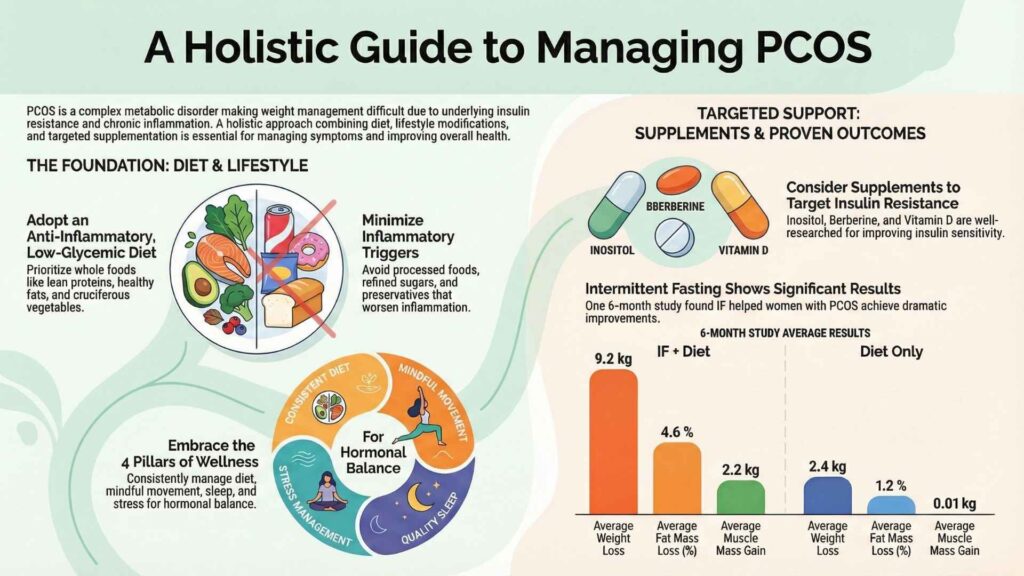
Why does fat specifically gather around the stomach in PCOS?
Table of Contents
- 1 Why does fat specifically gather around the stomach in PCOS?
- 2 Is the prevalence of PCOS rising in India?
- 3 How can the 2024 ICMR-NIN guidelines help?
- 4 What are the core pillars of the PCOS diet?
- 5 Can Indian spices and herbs really reduce belly fat?
- 6 What about beverages and evening snacks?
- 7 How to manage PCOS with Thyroid or Hypertension?
- 8 What is the best 7-day Indian meal plan for PCOS?
- 9 What exercises work best for a busy professional?
- 10 Frequently Asked Questions (FAQs)
- 11 Conclusion: You are more than your diagnosis
The “PCOS belly” is not just a cosmetic concern; rather, it is a visible sign of metabolic distress. In simple terms, when you have Polycystic Ovary Syndrome, your body often produces too much insulin. This extra insulin acts like a master storage key, telling your body to store energy as fat, specifically in the abdominal area.
What this means for your daily routine is that even if you eat the same amount as someone else, your body may be “programmed” to store it differently. This is driven by high levels of male hormones, known as androgens, which encourage a “masculinized” or “apple-shaped” fat distribution.
Instead of fat settling on the hips or thighs, it gathers deep inside the abdomen. This is known as visceral adipose tissue (VAT), which surrounds your internal organs. Unlike the “pinchable” fat under your skin, this deeper fat is firm and metabolically active. Furthermore, it releases inflammatory chemicals that make insulin resistance even worse.
| Fat Type | Location | Texture | Metabolic Impact |
| Visceral Fat (VAT) | Deep around organs | Firm/Hard | High; causes inflammation |
| Subcutaneous Fat (SAT) | Just under the skin | Soft/Pinchable | Lower; energy storage |
How does insulin resistance drive abdominal fat?
I know it’s hard to understand why the scale doesn’t move, but the primary culprit is insulin resistance. Specifically, roughly 70% of women with PCOS have cells that don’t respond properly to insulin. To compensate, your pancreas pumps out more of this hormone to keep your blood sugar stable.
High insulin levels tell the body to stop burning fat and start storing it. Consequently, this creates a vicious cycle: the more insulin you have, the more abdominal fat you gain. Moreover, as you gain weight, your cells become even more resistant to insulin. This is why a PCOS belly fat diet must prioritize “insulin sensitizing” foods over mere calorie restriction.
The role of androgens and “masculinized” fat distribution
In the female body, estrogen typically encourages fat storage in the lower body, such as the hips and thighs. However, PCOS is characterized by a mismatch in the ratio of male to female hormones. Because of this, elevated testosterone levels shift the fat storage command to the midsection, much like how men typically carry weight.
Research on Asian Indian women specifically shows that they carry a disproportionately higher amount of visceral fat compared to other ethnicities, even at a lower Body Mass Index (BMI). This “Asian Indian Phenotype” makes the abdominal area a primary site for metabolic complications like fatty liver and high blood pressure.
Is the prevalence of PCOS rising in India?
We are currently seeing a significant shift in the health landscape for Indian women. Recent data from 2024 and 2025 indicates that PCOS prevalence in India now ranges from 7.2% to nearly 20%, depending on the city.
In urban centers like Delhi NCR, for instance, studies found that 17.4% of college-going women are affected. This rise is often linked to the “modernization” of our diets, where traditional, fiber-rich meals are being replaced by processed, high-sugar convenience foods.
| Study Year | Region | Prevalence Rate | Primary Observation |
| 2014 | Mumbai | 22.5% | High among adolescents |
| 2024 | Delhi NCR | 17.4% | Linked to urban habits |
| 2025 | National | ~19.6% | Phenotype C is most common |
Why are urban professionals more at risk?
If you are a busy professional, you might find yourself sitting for long hours and relying on quick, refined-carb meals. This lack of movement, combined with high stress levels, leads to elevated cortisol. Cortisol is the body’s stress hormone, and abdominal fat cells have four times more receptors for cortisol than fat cells elsewhere.
What this means for you is that stress literally “feeds” your belly fat. When you are stressed, your body releases glucose for energy. If you don’t use that energy physically, insulin steps in and stores it right in your midsection. Therefore, managing stress is as vital as your PCOS belly fat diet.
How can the 2024 ICMR-NIN guidelines help?
The Indian Council of Medical Research (ICMR) and the National Institute of Nutrition (NIN) released updated dietary guidelines in 2024 to address rising obesity. These guidelines provide a scientific blueprint for a PCOS belly fat diet that is culturally relevant.
The 2024 guidelines emphasize a 33% increase in vegetable intake. For someone with PCOS, this shift is revolutionary. Specifically, more vegetables mean more fiber, which acts like a “brake” on your blood sugar, preventing the insulin spikes that grow your waistline.
| Nutritional Aspect | 2011 Recommendation | 2024 Recommendation | Significance |
| Total Vegetables | 300g / day | 400g / day | Satiety & sugar control |
| Green Leafy Veg | 50g / day | 100g / day | Enhanced iron and folate |
| Whole Grains | Preference only | At least 50% of cereals | Reduces insulin resistance |
Focusing on quality over quantity
The ICMR now explicitly recommends that 50% of your daily cereal intake should come from whole grains rather than refined white rice or maida. In simple terms, this means swapping half your white rice for brown rice, millets, or oats. Consequently, this small change can reduce the “glycemic load” of your meal, helping your body burn fat instead of storing it.
Furthermore, the guidelines suggest obtaining protein from diverse plant-based sources like legumes and nuts.14 For an Indian woman managing PCOS, this supports a sustainable, anti-inflammatory way of eating that reduces the overall metabolic burden on the liver.

What are the core pillars of the PCOS diet?
When building a PCOS belly fat diet, we focus on four key areas: low glycemic index (GI) foods, high fiber, lean protein, and healthy fats. This combination ensures that you stay full for longer while keeping your hormones in a state of balance.
I know it’s hard to change everything at once, so let’s break these down into manageable steps.
Choosing low-glycemic index (GI) Indian foods
The Glycemic Index is a ranking of how quickly foods raise your blood sugar. High-GI foods like white bread and sugary snacks cause a rapid spike in glucose. In a PCOS-prone body, this is the fastest way to gain abdominal weight.
Low-GI foods, on the other hand, release energy slowly. This provides a steady supply of fuel to your brain and muscles without overwhelming your system. Specifically, a study showed that women with PCOS who followed a low-GI diet improved their insulin sensitivity by 31%.
| High GI (Limit) | Low GI (Focus On) |
| White Rice, Maida | Brown Rice, Quinoa, Ragi |
| Potatoes, Corn | Sweet Potatoes, Yam, Green Beans |
| White Bread, Naan | Multigrain Roti, Jowar Bhakri |
The secret power of Indian millets
Millets like Ragi (Finger Millet), Jowar (Sorghum), and Bajra (Pearl Millet) are traditional Indian superfoods. They are naturally gluten-free and have a much lower GI than modern wheat or rice.
What this means for your daily routine is that swapping your morning toast for a ragi dosa can directly help reduce your waistline. Because these grains take longer to digest, you won’t feel hungry or “hangry” just two hours after eating.
Why fiber is your best friend for weight loss
Fiber is the non-digestible part of plant foods that adds bulk to your diet. It slows down the speed at which sugar enters your bloodstream and helps you feel full. For women with PCOS, a high-fiber diet is one of the most effective ways to lower insulin resistance.
The ICMR-NIN 2024 guidelines recommend 25–30 grams of fiber daily. In the Indian context, you can easily reach this by including “sabzi” (vegetables) in every meal. For instance, for every 1,000 calories you eat, aiming for 14 grams of fiber can reduce your risk of weight gain by 7%.
Can Indian spices and herbs really reduce belly fat?
The short answer is yes. Your kitchen spice box is a treasure trove of anti-inflammatory and insulin-sensitizing agents. For centuries, traditional Indian medicine has used these ingredients to balance the body, and modern science is finally catching up.
In simple terms, these spices act as “natural metformin,” helping your cells use glucose more efficiently.
Cinnamon (Dalchini): Nature’s insulin sensitizer
Cinnamon is perhaps the most researched spice for PCOS. It has been shown to reduce fasting blood glucose by 18-29% and improve insulin sensitivity by 20%. It works by increasing the activity of specific pathways in your cells that handle sugar.
How to use: Start your day with cinnamon-infused warm water. Simply boil a small stick of cinnamon in water or add half a teaspoon of Ceylon cinnamon powder to your morning tea or smoothie.
Fenugreek (Methi): The glucose regulator
Both methi seeds and leaves are incredible for a PCOS belly fat diet. The seeds contain a type of fiber called galactomannan, which slows down sugar absorption. Research shows that methi seeds can reduce fasting glucose by over 13%.
How to use: Soak one teaspoon of methi seeds in a glass of water overnight. In the morning, drink the water and chew the softened seeds. You can also add fresh methi leaves to your parathas for an extra fiber boost.
Spearmint Tea: The anti-androgen herb
If you struggle with facial hair alongside your belly fat, spearmint tea is a must-have. Two cups of spearmint tea daily have been shown to reduce free testosterone levels by 30%. Since high androgens are what cause fat to gather in the belly, lowering them is a key step in changing your body shape.
| Herb / Spice | Key Benefit | Scientific Insight |
| Cinnamon | Improves insulin sensitivity | 18-29% glucose reduction |
| Fenugreek | Lowers blood sugar | Slows carb absorption |
| Spearmint | Lowers male hormones | 30% testosterone reduction |
| Turmeric | Reduces inflammation | Blocks inflammatory pathways |

What about beverages and evening snacks?
One of the biggest hurdles for busy professionals is the “evening hunger.” Around 5 PM, many people reach for tea with biscuits or fried samosas. These are “insulin bombs” that can undo a whole day of healthy eating.
A smart PCOS belly fat diet replaces these with high-fiber snacks that keep you satisfied until dinner.
Smart evening snacks for PCOS weight loss
The goal for an evening snack is to provide a “bridge” to dinner without spiking your sugar. Roasted Chana (chickpeas) and Makhana (fox nuts) are perfect Indian snacks because they are crunchy and have a low GI.
- Roasted Chana: High in protein and fiber. One ounce provides about 6 grams of protein.
- Makhana: Low in calories and high in antioxidants. Roast them with a little ghee and turmeric.
- Sprouts Chaat: A mix of steamed moong sprouts with onions and lemon juice is a nutritional powerhouse.
- Nuts: A handful of walnuts or almonds provides healthy fats that support hormone production.
How to manage PCOS with Thyroid or Hypertension?
Many women I work with are not just managing PCOS; they often have a second condition like hypothyroidism. In simple terms, your body is like an interconnected web; therefore, when one hormone is off, others often follow.
PCOS and Hypothyroidism
If you have both, your metabolism is likely slower. The dietary approach for both is very similar: focus on whole, anti-inflammatory foods.
A common concern is “goitrogenic” vegetables like cauliflower. However, the short answer is that you can still eat them! Specifically, cooking these vegetables inactivates the goitrogenic compounds, making them safe for you to enjoy in moderation.
PCOS and Hypertension (High BP)
PCOS increases the risk of high blood pressure because of insulin’s effect on blood vessels. To manage this, the ICMR 2024 guidelines emphasize restricting salt intake to less than 5 grams per day.
What this means for your daily routine is avoiding processed foods and pickles. Instead, use herbs like lemon or tamarind to add flavor to your food without the extra salt.

What is the best 7-day Indian meal plan for PCOS?
Let’s simplify this with a practical 7-day structure. This plan focuses on high-protein breakfasts and light, early dinners. Remember, the goal of a PCOS belly fat diet is consistency, not perfection.
Day 1 to Day 3: Building Momentum
- Morning Detox: Warm water with lemon and 5 soaked almonds.
- Breakfast: Vegetable Moong Dal Chilla with mint chutney. This is high in protein and keeps you full.
- Lunch: 1 small bowl of brown rice + 1 cup Palak Dal + a large salad.
- Evening Snack: A cup of green tea with roasted makhana.
- Dinner: Grilled Paneer or Tofu with sautéed broccoli and carrots.
Day 4 to Day 7: Diversifying Grains
- Breakfast: Oats Upma with peas and carrots. Oats contain beta-glucan, which improves insulin response.
- Lunch: 2 Bajra or Jowar rotis + Lauki sabzi + a bowl of curd.
- Evening Snack: 1 small apple or guava with walnuts.
- Dinner: Moong Dal Khichdi (made with brown rice) or a bowl of vegetable soup with a boiled egg.
What exercises work best for a busy professional?
I know it’s hard to find time for the gym, but you don’t need one to lose fat. For women with PCOS, the goal of exercise is to lower cortisol and improve how your muscles use insulin.
Walking: The most underrated PCOS workout
Walking is a powerful tool. It is low-impact, meaning it doesn’t spike your stress hormones. Brisk walking for 30 to 45 minutes daily can significantly improve insulin sensitivity.
What this means for your routine: try three 15-minute walks after your major meals. This “post-meal stroll” helps your muscles soak up glucose, preventing it from being stored as belly fat.
Strength Training at home
Building muscle is the secret to a faster metabolism. You can do simple exercises like squats and push-ups using just your body weight. Aim for 3 sets of 12 repetitions for each exercise, twice a week.
Strength training improves the “density” of insulin receptors on your muscles, making your whole body more efficient at handling carbohydrates.
| Exercise Type | Best For | Frequency |
| Walking | Insulin sensitivity | Daily (30-45 min) |
| Strength Training | Metabolism boost | 2-3 times per week |
| Yoga (Cobra Pose) | Hormonal balance | 3-4 times per week |

Frequently Asked Questions (FAQs)
1. How long does it take to see results with a PCOS belly fat diet?
While every body is different, most women begin to notice reduced bloating within 2-4 weeks. Specifically, significant changes in abdominal fat and improved menstrual regularity typically occur within 12 to 24 weeks of consistent dietary changes.
2. Can I eat rice on a PCOS belly fat diet?
Yes, but the short answer is to choose the right kind. Swap white rice for brown rice or red rice, as these have more fiber. Moreover, practice portion control—keep rice to one-third of your plate and fill the rest with dal and vegetables.
3. Why is my stomach firm instead of soft?
A firm “PCOS belly” is often due to visceral fat deeper in the abdomen, which pushes the abdominal wall outward. It can also be caused by chronic bloating. Following an anti-inflammatory PCOS belly fat diet helps soften and eventually reduce this fat.
4. Is jaggery better than sugar for PCOS weight loss?
In simple terms, no. While jaggery (gud) contains some minerals, it still spikes your insulin levels almost as much as white sugar. Therefore, it is best to limit all forms of added sugar and rely on the natural sweetness of whole fruits.
Conclusion: You are more than your diagnosis
I know it’s hard to stay motivated when progress feels slow, but remember that every healthy meal is a win for your hormones. Managing PCOS is about a “nourishing lifestyle” that honors your body’s unique needs. By embracing our traditional Indian grains and moving our bodies with joy, we can reclaim our health and confidence.
You don’t have to do this alone. Small, steady changes lead to the most lasting transformations. Be patient with yourself, stay consistent, and celebrate every small victory.
Ready to take the next step towards a healthier you? Our experts at DietDekho are here to create a personalized plan just for you.
Disclaimer: This blog post was written to help you make healthier food choices altogether. So, be aware and take care. The important thing to consider is your health before starting a restrictive diet. Always seek advice from a doctor or dietitian before starting if you have any concerns.
BOOK YOUR APPOINTMENT
Dr. Ritika is a nutrition and lifestyle expert with 2+ years of experience, helping clients manage weight and health through practical, personalized diet plans.