
Maya stood in front of her bathroom mirror, tugging at the waistband of her favorite jeans. They no longer fit. For months, she did everything by the book. She cut calories, skipped desserts, and spent hours on the treadmill. Yet, the scale refused to budge. The stubborn weight around her midsection seemed to only increase. Along with the weight gain came a profound, bone-deep exhaustion. She had irregular cycles and frustrating coarse hairs on her chin. Maya felt like her own body was working against her. It wasn’t until her diagnosis of Polycystic Ovary Syndrome (PCOS) that she realized her struggle wasn’t a failure of willpower. It was a complex biological puzzle involving hormones, insulin, and metabolism.
Many women share Maya’s story. They navigate a condition that affects up to 13% of reproductive-aged women globally. PCOS is not just a reproductive issue. It is a multifaceted endocrine and metabolic disorder. It fundamentally alters how the body processes energy. This guide serves as an expert roadmap for beginners. If you want a science-backed pcos weight loss diet, you are in the right place. By understanding the underlying mechanisms, you can move beyond restrictive diets. You can embrace a lifestyle that fosters hormonal balance diet habits for long-term health.
Understanding the Global Landscape of PCOS
Table of Contents
- 1 Understanding the Global Landscape of PCOS
- 2 The Physiology of Weight Gain and the PCOS Belly
- 3 Barriers to Weight Loss: Energy and Metabolism
- 4 The Best PCOS Diet Plan: Embracing the Mediterranean Way
- 5 Strategies for an Insulin Resistance Diet
- 6 High Protein PCOS Diet: The Foundation of Satiety
- 7 Navigating the Vegetarian PCOS Diet Plan
- 8 Essential PCOS Friendly Snacks for Weight Loss
- 9 The Science of PCOS Weight Loss Supplements
- 10 Exercise and Lifestyle: Moving for Hormonal Health
- 11 Lean PCOS Weight Loss: A Different Approach
- 12 Frequently Asked Questions
- 13 Conclusion
- 14
The prevalence of PCOS is a growing public health concern. Incident cases have risen significantly over the last three decades. Global incidence increased by over 54% between 1990 and 2019. Researchers documented approximately 65.8 million cases worldwide in 2021. Despite these numbers, a critical gap remains in diagnosis. Experts estimate that up to 70% of women living with PCOS remain undiagnosed. They often attribute symptoms to general health issues or stress.
The burden is particularly high in regions with rapid urbanization. In parts of the Middle East and North Africa, prevalence rates surged by nearly 38% since the 1990s. This trend highlights the influence of modifiable risk factors. These include sedentary lifestyles and ultra-processed foods. For many women, genetic predisposition is like a loaded spring. Environmental factors like diet and weight gain act as the trigger.
| Geographic Region / Metric | Statistical Data & Trends |
| Global Prevalence Rate | 6% to 13% of reproductive-aged women |
| Undiagnosed Cases | Approximately 70% worldwide |
| Increase in Incidence | 54.3% increase since 1990 |
| UAE Prevalence | 27.6% (using NIH criteria) |
| Middle East Trend | 37.9% increase in prevalence |
The Physiology of Weight Gain and the PCOS Belly
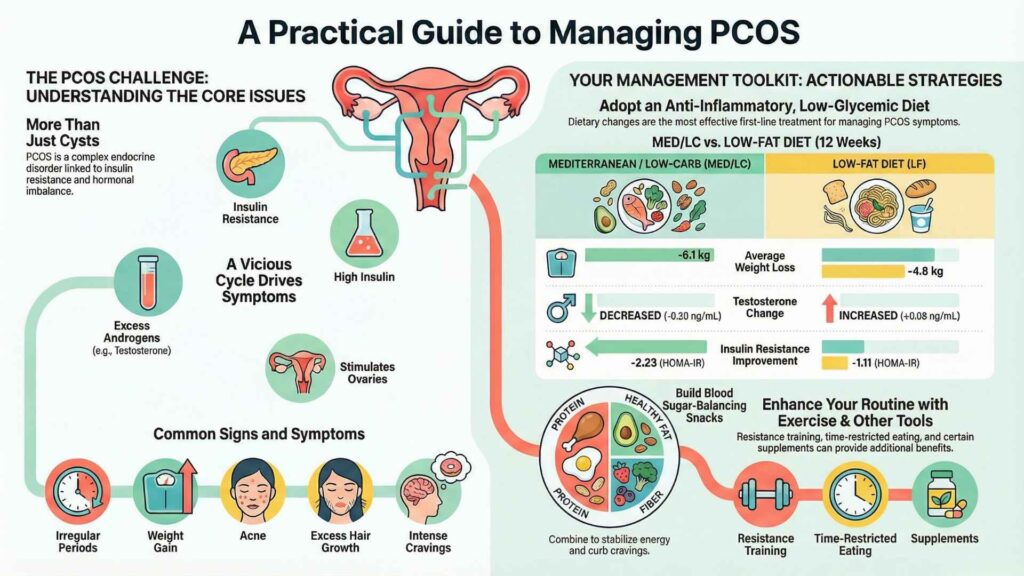
To target weight loss, you must understand why PCOS makes it difficult. The primary driver for most women is insulin resistance This condition affects an estimated 65% to 70% of women with the syndrome. When cells resist insulin, the pancreas produces more of the hormone to compensate. This leads to chronic hyperinsulinemia.
Hyperinsulinemia creates a vicious cycle. Excess insulin stimulates the ovaries to produce high levels of androgens. These male hormones influence where the body stores fat. Most women naturally carry weight in their hips and thighs. High androgen levels cause fat to accumulate in the abdomen instead. This is often called the pcos belly fat diet challenge. This abdominal fat is predominantly visceral fat. It lives deep beneath the skin and surrounds internal organs.
The Dangers of Visceral Adiposity
Visceral fat is not just an aesthetic concern. It is a metabolically active organ that secretes inflammatory molecules. This inflammation further worsens insulin resistance. This leads to even higher insulin levels and more fat storage. This feedback loop makes the midsection a stubborn area for weight loss. It also increases long-term risks for heart disease and type 2 diabetes.
| Weight Distribution | PCOS Android Pattern | Standard Gynoid Pattern |
| Primary Storage Area | Abdomen and midsection | Hips and thighs |
| Type of Fat | Visceral (internal) | Subcutaneous (under skin) |
| Metabolic Activity | High (pro-inflammatory) | Low |
| Hormonal Driver | Excess Androgens / Insulin | Estrogen / Progesterone |
Barriers to Weight Loss: Energy and Metabolism
Many beginners feel frustrated when standard caloric deficits fail. Research suggests women with PCOS face unique physiological hurdles. Studies report altered physiological factors in PCOS compared to healthy controls. These include blunted appetite hormone responses and metabolic inflexibility.
Women with PCOS often have impaired responses of hormones like ghrelin and cholecystokinin (CCK). These hormones signal the brain when the body is full. When these are blunted, you may feel persistent hunger after eating. Furthermore, some evidence points to reduced meal-induced thermogenesis (MIT). This means the body burns fewer calories during digestion.
Metabolic Inflexibility and Fat Oxidation
Another hurdle is metabolic inflexibility. This is the body’s impaired ability to switch between burning carbs and fat. A metabolically inflexible body remains reliant on glucose even when fat stores are available. This makes it difficult to tap into body fat during exercise. It explains why many women experience intense sugar cravings and energy crashes.
| Energy Parameter | Observed Change in PCOS | Clinical Implication |
| Ghrelin (Hunger) | Blunted postprandial drop | Increased persistent hunger |
| CCK (Satiety) | Reduced response | Difficulty feeling full |
| Thermogenesis (MIT) | Potential reduction | Fewer calories burned eating |
| Metabolic Flexibility | Significantly impaired | Difficulty burning stored fat |

The Best PCOS Diet Plan: Embracing the Mediterranean Way
If you want a sustainable best pcos diet plan, look to the Mediterranean diet. Clinical experts consistently recommend this approach. Unlike fad diets, the Mediterranean style emphasizes whole foods. These foods naturally combat inflammation and insulin resistance.
This dietary pattern eliminates saturated fats and refined sugars. It avoids processed meats that ramp up systemic inflammation. Instead, it focuses on high-fiber vegetables and lean proteins. Research shows this anti inflammatory pcos foods approach improves metabolic health.
Key Components of a Mediterranean Strategy
The foundation includes omega-3 rich fish like salmon or mackerel. These help reduce oxidative stress and improve lipid profiles. Use olive oil instead of butter. It contains oleocanthal, which has potent anti-inflammatory properties. The diet also prioritizes beans and non-starchy vegetables. These provide the fiber needed to slow glucose absorption.
| Recommended Food | Benefit for PCOS | Nutrient Profile |
| Fatty Fish (Salmon) | Reduces inflammation | Omega-3 Fatty Acids |
| Extra Virgin Olive Oil | Anti-inflammatory | Monounsaturated Fats |
| Leafy Greens | Lowers insulin response | Fiber and Folate |
| Berries | Antioxidant support | Polyphenols, Low GI |
| Legumes | Stable blood sugar | Protein and Fiber |
Strategies for an Insulin Resistance Diet
Managing an insulin resistance diet is about eating smarter. The goal is to minimize insulin spikes by choosing low glycemic index (GI) foods. High-GI foods like white bread cause blood sugar to surge. This forces the body to release large amounts of insulin.
By contrast, low glycemic index foods for pcos are digested slowly. Options include oats, quinoa, and sweet potatoes. This slow digestion prevents big dips and spikes in blood sugar. One study found a low-GI diet led to significant weight loss even with the same calories.
Pairing Carbs for Hormonal Balance
Here is a tip for beginners: never eat carbs naked. Always pair a carb with protein or healthy fat. If you eat an apple, add a tablespoon of almond butter. This combination slows the release of glucose. It makes the meal more satisfying and reduces the insulin needed.
| Carb Source | High GI (Limit) | Low GI (PCOS Friendly) |
| Grains | White bread, White rice | Quinoa, Brown rice |
| Breakfast | Sugary granola | Rolled oats |
| Vegetables | Mashed potatoes | Broccoli, Spinach |
| Pasta | Refined flour pasta | Chickpea pasta |

High Protein PCOS Diet: The Foundation of Satiety
A high protein pcos diet is one of the most effective tools for weight loss. Protein is essential for hormone synthesis and muscle repair. It also increases satiety and thermogenesis. Research shows high-protein diets lead to greater weight loss in women with PCOS.
Aim for 1.0 to 1.5 grams of protein per kilogram of body weight. This means about 20 to 30 grams of protein per meal. Lean sources include poultry, fish, eggs, and tofu. You can also use high-quality protein powders if you struggle to meet targets.
The Role of Protein in Reducing Androgens
High protein intake reduces the demand for insulin. Insulin is the primary stimulus for excess testosterone production. Keeping insulin low can reduce symptoms like acne and hirsutism. Reaching protein targets also helps preserve muscle mass. This is vital for maintaining a healthy metabolic rate.
| Protein Source | Portion Size | Protein Content |
| Chicken Breast | 3 oz | 25-27 grams |
| Salmon Fillet | 3.5 oz | 22-25 grams |
| Greek Yogurt | 1 cup | 15-20 grams |
| Tofu (Firm) | 5 oz | 15-20 grams |
| Large Eggs | 2 units | 12-14 grams |
A vegetarian pcos diet plan is effective but requires planning. Many vegetarian proteins like beans are also high in carbs. For someone with insulin resistance, too many beans can still trigger an insulin response.
The secret is prioritizing primary proteins lower in carbs. Use eggs, Greek yogurt, tofu, and tempeh. When using beans, treat them as a protein-rich carb. Balance them with extra vegetables and healthy fats. Research shows soy is particularly beneficial for reducing metabolic markers.
Plant-Based Anti-Inflammatory Benefits
A plant-forward diet is high in fiber and antioxidants. These are crucial for combating low-grade chronic inflammation. Use cooking methods like steaming or baking instead of frying. This reduces inflammatory compounds that can worsen hormonal imbalances.
| Meal Component | Vegetarian Strategy | Why It Works |
| Primary Protein | Tofu, Tempeh, Eggs | High protein, Low carb |
| Secondary Protein | Chickpeas, Lentils | High fiber |
| Healthy Fat | Avocado, Walnuts | Slows sugar absorption |
| Cooking Method | Steaming / Sautéing | Reduces inflammation |

Essential PCOS Friendly Snacks for Weight Loss
Snacking can be a powerful tool if done right. For women with PCOS, snacks should be bridge meals that keep blood sugar stable. A useful guideline for pcos friendly snacks is the 3-2-1 formula :
- 3 grams of fiber (like an apple or berries).
- 2 grams of protein (like a hard-boiled egg or hummus).
- 1 portion of healthy fat (like nuts or seeds).
Satisfying Cravings with Smart Swaps
Avoid crackers or chips which are high-GI and low-nutrient. Opt for fiber-rich combinations. Celery with almond butter or Greek yogurt with chia seeds are excellent. These snacks provide the nutrients to prevent afternoon slumps. They help you avoid the sugar cravings that derail weight loss efforts.
| Snack Idea | Primary Nutrients | PCOS Benefit |
| Egg + avocado | Protein + Fat | No insulin spike |
| Apple + nut butter | Fiber + Protein | Balances sugars |
| Edamame pods | Protein + Fiber | High satiety |
| Cottage cheese + flax | Protein + Omega-3 | Anti-inflammatory |
The Science of PCOS Weight Loss Supplements
Diet and exercise are first-line treatments. However, certain pcos weight loss supplements can provide a metabolic edge. The most evidence-based supplement is inositol. Specifically, a 40:1 combination of Myo-inositol (MI) and D-chiro-inositol (DCI) is best.
In a healthy body, the ovaries maintain a specific ratio of these two. In PCOS, insulin resistance causes an imbalance. This deficiency impairs hormone signaling and egg quality. Restoration of this ratio helps improve metabolic parameters and ovulation.
The 40:1 Ratio: A Clinical Breakthrough
Clinical trials show that supplementing with MI and DCI in the 40:1 ratio is effective. It helps restore ovulation and normalize insulin levels. Other helpful supplements include Vitamin D and Omega-3 fatty acids. Vitamin D is often deficient in women with PCOS and helps with insulin sensitivity.
A randomized trial of fifty women in higher-weight bodies with PCOS found that a combination of 550 mg MI and 13.6 mg DCI was better at improving metabolic parameters than Myo-inositol alone.
| Supplement | Evidence | Primary Benefit |
| Inositol (40:1) | High | Restores ovulation |
| Vitamin D | Moderate | Insulin sensitivity |
| Omega-3 | Moderate | Reduces inflammation |
| Berberine | Moderate | Blood sugar control |
| Magnesium | Moderate | Mood and glucose |

Exercise and Lifestyle: Moving for Hormonal Health
Exercise does more than burn calories. It increases insulin receptors on muscle cells. This allows your body to process sugar more efficiently even at rest. A combination of HIIT and resistance training often yields the best results.
HIIT combines short intervals of vigorous exercise with recovery periods. Research suggests HIIT improves insulin resistance more than moderate walking alone. The best exercise is the one you will actually do. Aim for 150 minutes of moderate activity or 75 minutes of vigorous activity per week.
The Importance of Sleep and Stress Management
Weight loss is nearly impossible if you are chronically stressed. Stress triggers cortisol, which promotes fat storage in the abdomen. Lack of sleep also disrupts hunger hormones. Prioritize 7 to 9 hours of quality sleep. Practice stress-reduction techniques like deep breathing or spending time in nature.
| Exercise Type | Frequency | Key PCOS Benefit |
| HIIT | 2 times / week | Improves insulin sensitivity |
| Strength Training | 2-3 times / week | Boosts metabolism |
| Low-Impact Walking | Daily | Lowers cortisol |
| Yoga / Pilates | 1-2 times / week | Stress management |
Lean PCOS Weight Loss: A Different Approach
It is a misconception that only higher-weight women have PCOS. About 20% to 25% of women with the condition have lean pcos weight loss needs. They have a normal BMI but still suffer from insulin resistance and high androgens. The goal for these women is improving body composition rather than losing pounds.
Lean women often have higher levels of visceral fat relative to their weight. The dietary approach remains similar. Focus on low-GI carbs and high protein for weight maintenance. Regular strength training is crucial to support long-term hormonal stability.
| Metric | Higher-weight PCOS Profile | Lean PCOS Profile |
| BMI | > 30 kg/m2 | < 25 kg/m2 |
| Insulin Resistance | Present in ~80% | Present in ~20% |
| Primary Goal | Modest weight loss | Metabolic health |
| Visceral Fat | High | Often high for BMI |

Frequently Asked Questions
1. Can I lose weight with PCOS without a restrictive diet?
Yes. Extreme restriction can increase stress and trigger excessive eating. Focus on adding healthy foods like fiber and protein. Losing just 5% to 10% of your body weight can restore ovulation and improve symptoms.
2. Why do I have a PCOS belly even though I am not at a higher weight?
The PCOS belly is driven by androgens and insulin. These hormones signal the body to store fat in the abdomen. Even lean women can have visceral fat around their organs.
3. Is the ketogenic diet good for PCOS?
Keto can lower weight and improve hormone levels by reducing insulin. However, it may not be sustainable long-term. A Mediterranean approach provides the fiber necessary for gut health and hormone excretion.
4. Does coffee affect PCOS weight loss?
Moderate coffee is generally fine and part of anti-inflammatory diets. However, if it increases anxiety or disrupts sleep, it can lead to higher cortisol. This might hinder weight loss.
5. How long does it take to see results on a PCOS diet?
Consistency is key. You may notice energy improvements in a few weeks. Significant hormonal changes and weight loss typically take three to six months.
Conclusion
Losing weight with PCOS requires patience and science. Stop chasing quick fixes. Focus on the underlying physiology of insulin and androgens. Every small choice is a vote for your hormonal balance. Whether it is a low-GI snack or a 15-minute walk, it matters.
If you are ready to take the next step, let the experts help. Visit (https://dietdekho.com/form/) for a personalized assessment. For more clinical insights, explore resources at Harvard Health and the National Institutes of Health (NIH). You have the power to master your metabolism.
BOOK YOUR APPOINTMENT
Abhinav is the Founder of Diet Dekho, helping people manage weight and lifestyle health through simple, practical nutrition and personalized diet plans.