Imagine someone like Ramesh, a forty-two-year-old professional in Bengaluru, who just discovered his blood sugar is in the borderline range during a routine health check. Ramesh feels perfectly fine, yet that lab report feels like a silent siren. He represents millions of Indians standing at a crossroads. Fortunately, he can take control right now because a properly structured pre diabetic diet chart is the most powerful tool available to reclaim metabolic health and stop type 2 diabetes in its tracks.
To reverse prediabetes, you must follow a pre diabetic diet chart that prioritizes low-glycemic index (GI) foods, high fiber (25–40g daily), and lean protein. Focus on replacing white rice with millets, finishing dinner three hours before sleep, and completing 150 minutes of weekly activity. These steps improve insulin sensitivity and help normalize blood sugar naturally.
Why Your Borderline Result is Actually an Opportunity
Table of Contents
- 1 Why Your Borderline Result is Actually an Opportunity
- 2 Understanding the Thin-Fat Indian Phenotype
- 3 The Heart of the Pre-Diabetic Diet Chart: Smart Swaps
- 4 Why Millets are Your New Best Friend
- 5 Why You Need More Protein (Even as a Vegetarian)
- 6 Food Sequencing: The Fiber-First Rule
- 7 Beware of Hidden Sugars in Your Kitchen
- 8 Moving More for the Non-Gym Audience
- 9 The 7-Day Indian Pre-Diabetic Diet Chart
- 10 Frequently Asked Questions
- 11 Conclusion: You’ve Got This!
- 12 Contact Us
- 13 Disclaimer
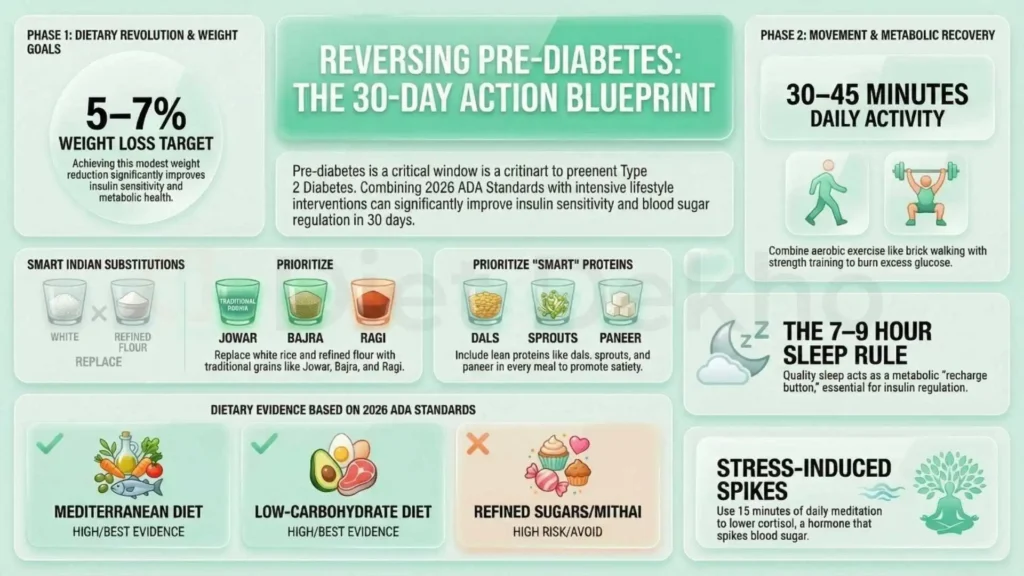
I know hearing the word prediabetes is scary, but I want you to look at it as a gift of time. Prediabetes means your blood sugar levels are higher than normal but haven’t reached the diabetes threshold yet. Consequently, this is your window of opportunity. In fact, lifestyle changes can slash your risk of progressing to full-blown diabetes by a massive 58%.
In India, we are facing a unique metabolic crisis. Most of us eat a diet where refined carbohydrates account for over 62% of our energy. Because of this, our bodies struggle to process the constant sugar load. However, the good news is that your pancreas and liver can heal if you give them the right cues through a consistent pre diabetic diet chart.
| Clinical Indicator | Healthy Range | Prediabetic Warning |
| HbA1c | < 5.7% | 5.7% – 6.4% |
| Fasting Glucose | < 100 mg/dL | 100 – 125 mg/dL |
| 2-Hour Post-Meal | < 140 mg/dL | 140 – 199 mg/dL |

Understanding the Thin-Fat Indian Phenotype
I often hear clients say, But I don’t look like a person of higher weight! This is a common struggle for many Indians. We often have a Thin-Fat profile, meaning we carry visceral fat around our internal organs even if our BMI seems normal. This hidden fat triggers insulin resistance, where your cells stop responding to the hormone that regulates sugar.
When your cells resist insulin, your pancreas works overtime to pump out more. Eventually, the pancreas gets exhausted. To fix this, we need to lower the glycemic load on your system. What this means for your daily routine is that we aren’t just cutting calories; we are changing how your body handles energy.
The Heart of the Pre-Diabetic Diet Chart: Smart Swaps
Let’s simplify your kitchen. The most important change you can make is swapping refined white carbs for complex ones. For example, white rice and maida cause your sugar to spike almost instantly. Instead, we want to choose foods that release energy slowly. This is where the Glycemic Index (GI) becomes your best friend.
Fiber is the secret sauce here. It acts like a physical barrier in your gut, which slows down sugar absorption. I know it’s hard to find time for complicated recipes, so let’s focus on native staples that are naturally high in fiber.
| Traditional Staple | Glycemic Index (GI) | Metabolic Impact |
| White Rice | High (73) | Rapid spikes; high insulin stress |
| Maida (Refined Flour) | High | Zero fiber; stresses the pancreas |
| Brown Rice | Medium (60) | Moderate fiber; better than white |
| Millets (Siridhanya) | Low (<55) | Slow sugar release; high satiety |

Why Millets are Your New Best Friend
If you are looking for a superfood for your pre diabetic diet chart, look no further than millets. These ancient grains are nutritional powerhouses. Specifically, Barnyard and Browntop millets act as a metabolic brake because of their incredible fiber content.
For instance, Barnyard millet has the lowest GI of all common grains, making it the gold standard for sugar control. If you are new to this, start with Foxtail millet. It tastes very similar to white rice, which makes the transition much easier for your family.
- Barnyard (Oodalu): Lowest GI (41); best for immediate sugar control.
- Browntop (Korle): Highest fiber (12.5g); creates the strongest brake effect.
- Little (Saame): High in iron; perfect for busy women facing fatigue.

Why You Need More Protein (Even as a Vegetarian)
One of the most striking findings from the ICMR-INDIAB study is that replacing just 5% of your carbs with protein can significantly lower your diabetes risk. Protein doesn’t just keep you full; it also prevents the sugar from your meal from entering your blood too quickly.
As a vegetarian, you can easily boost protein by adding dal, paneer, or curd to every meal. If you eat non-veg, focus on grilled chicken or fish rather than fried options. Dr. Parashar, a leading expert, notes: Many traditional Indian sweets are sugar bombs. Look for healthier alternatives like nuts or sprouts during your reversal phase .

Food Sequencing: The Fiber-First Rule
Believe it or not, the order in which you eat your food matters as much as the food itself. A recent 2024 study showed that eating your veggies first, then your protein, and saving your carbs for last can improve sugar control by 37%.
Moreover, timing is everything. I always tell my friends to finish dinner at least three hours before bed. This gap allows your insulin levels to stabilize overnight, which prevents high fasting sugar levels the next morning.
Beware of Hidden Sugars in Your Kitchen
You might be avoiding mithai, but sugar hides in the most unexpected places. For example, savory snacks like namkeens, digestive biscuits, and even ready-made upma mixes often contain maltodextrin or liquid glucose.
Always read your labels. If sugar (or its aliases like dextrose or syrup) is in the first three ingredients, put it back on the shelf. Instead, reach for roasted chana or makhana. These are crunchy, satisfying, and won’t sabotage your pre diabetic diet chart.

Moving More for the Non-Gym Audience
I know you’re busy and the gym feels like a chore. However, you don’t need a heavy workout to see results. Simple movement is medicine for your cells. For example, a 10-minute walk after every meal burns off glucose before it can even spike in your blood.
You can also try movement snacks at your desk. Simple leg lifts or chair squats while on a call can improve how your muscles use insulin. Consistency is much more important than intensity.
| Quick Movement | Duration | The Friend Hack |
| Post-Meal Stroll | 10 Mins | Walk while you call a friend |
| Desk Leg Lifts | 10 Reps | Do them during a Zoom meeting |
| Wall Push-ups | 12 Reps | Do a set while your tea is brewing |
| Vajrasana Pose | 5 Mins | Sit in this pose after dinner |

The 7-Day Indian Pre-Diabetic Diet Chart
This plan is designed for the Indian palate. It combines low GI grains with high protein to keep your energy steady throughout the day.
| Day | Breakfast | Lunch | Afternoon Snack | Dinner |
| Mon | Moong Dal Chilla | Brown Rice + Dal + Salad | Roasted Chana | 2 Multigrain Rotis + Bhindi |
| Tue | Vegetable Oats Upma | 2 Jowar Rotis + Palak Paneer | 1 Apple + 5 Almonds | 1 cup Brown Rice + Dal |
| Wed | 2 Boiled Eggs + Toast | Quinoa Khichdi + Curd | Sprouts Chaat | Egg Curry + 1 Bajra Roti |
| Thu | Veg Poha + Sprouts | 1 cup Brown Rice + Rajma | Buttermilk + Cumin | 2 Bajra Rotis + Baingan Bharta |
| Fri | Paneer Bhurji + Toast | 2 Multigrain Rotis + Tofu | Roasted Makhana | 1 cup Brown Rice + Mixed Dal |
| Sat | Ragi Porridge (No Sugar) | 2 Jowar Rotis + Chole | Handful of Walnuts | Tandoori Chicken + Salad |
| Sun | Besan Chilla + Chutney | Grilled Fish + Red Rice | 1 Guava or Pear | 2 Ragi Rotis + Veg Curry |
Frequently Asked Questions
Can I really reverse prediabetes with just a diet chart?
Yes, you absolutely can. Research from the National Institutes of Health (NIH) confirms that lifestyle changes are the first-line treatment for reversing prediabetes. By being consistent with your pre diabetic diet chart, you allow your body to heal its insulin response naturally.
Is white rice completely banned?
White rice has a very high GI (73), which causes sharp sugar spikes. While you don’t have to ban it forever, I strongly recommend replacing it with millets or brown rice during your reversal phase. If you must eat it, keep the portion very small and always pair it with double the amount of vegetables and dal.
What is the best snack for borderline sugar?
The best snacks are high in protein and fiber. For instance, roasted makhana, boiled sprouts, or a handful of almonds are perfect because they keep you full without causing a sugar crash later.
How long does it take to see results?
Most people see improvements in their energy levels within a week. However, it typically takes 3 to 6 months of consistency for your HbA1c levels to show a significant drop. Remember, this is a marathon, not a sprint!
Conclusion: You’ve Got This!
Reversing prediabetes is not about perfection; it’s about making better choices most of the time. By following a pre diabetic diet chart that leans on millets, leans into protein, and prioritizes movement, you are taking a stand for your future health.
I know it feels like a lot to change at once, but start with one swap today. Maybe replace your afternoon biscuit with roasted chana, or take a short walk after dinner. Every small step counts toward metabolic healing.
Ready to personalize your plan? Let’s work together to build a routine that fits your busy life. Fill out our assessment form here and let’s get started
Contact Us
We understand how overwhelming nutrition and weight loss information can feel. With so many opinions and confusing advice online, it’s easy to feel stuck or unsure about what to do next.
At Diet Dekho, you never have to figure it out alone. You can contact us anytime with any questions or concerns. Our expert dietitians are available 24/7 to guide, support, and help you stay on track. Whether your goal is weight loss or building healthier habits, we’re here to make the journey simpler and more sustainable for you.
Disclaimer
This blog is intended to help readers make healthier food choices. Your health should always be the top priority. Before starting any restrictive or special diet, especially if you have a medical condition or health concern, please consult a doctor or a qualified dietitian. Each body responds differently to food and lifestyle changes. Always choose what is safe and suitable for you.

Abhinav is the Founder of Diet Dekho, helping people manage weight and lifestyle health through simple, practical nutrition and personalized diet plans.