Imagine you are standing in your kitchen at 7:00 AM. Your back aches a little. You feel that familiar morning hunger. But instead of reaching for a warm paratha, you reach for your glucometer. That tiny prick of the finger defines your morning. If you feel overwhelmed by your diagnosis, a simple pregnancy diabetes diet menu can help you regain control without losing the joy of your meals.
A pregnancy diabetes diet menu focuses on balancing complex carbohydrates, lean proteins, and healthy fats to maintain stable blood sugar levels throughout the day. It prioritizes low-glycemic index (GI) foods like whole grains, legumes, and non-starchy vegetables to prevent glucose spikes. By eating smaller, frequent meals and pairing every carbohydrate with a protein, you can manage gestational diabetes effectively while supporting your baby’s growth.
Understanding Your Diagnosis with Compassion
Table of Contents
- 1 Understanding Your Diagnosis with Compassion
- 2 The Reality of GDM in India Today
- 3 Why Early Screening Matters for Your Baby
- 4 The Role of Hormones and Insulin Resistance
- 5 The New ICMR-NIN 2024 Dietary Guidelines
- 6 Balancing Your Macronutrients
- 7 The Power of the Glycemic Index (GI)
- 8 Traditional Indian Food Swaps
- 9 Managing the Morning Spike
- 10 Designing Your Weekly Menu Strategy
- 11 Day 1: Starting with Simple Staples
- 12 Day 2: Embracing Ancient Grains
- 13 Day 3: Protein-Powered Wednesday
- 14 Day 4: Vegetarian Variety
- 15 Day 5: Traditional Flavors with a Twist
- 16 Day 6: The Weekend Refresh
- 17 Day 7: Relaxed Sunday Planning
- 18 The Secret of Movement Snacks
- 19 Low-Impact Exercises for Home
- 20 Snacking Without the Guilt
- 21 Navigating Social Situations
- 22 Practical Hacks for Busy Professionals
- 23 The Importance of Sleep and Stress Management
- 24 Monitoring and Adjusting Your Plan
- 25 Frequently Asked Questions
- 26 Conclusion: You’ve Got This
- 27 Contact Us
- 28 Disclaimer
I know how scary it feels when the doctor mentions gestational diabetes. It sounds like a heavy burden. You might worry about every bite of food. You might feel like your body is failing you. But I want to tell you something important. This is not your fault. Your hormones are simply changing the way your body processes sugar.
In India, this is becoming very common. Recent studies show that nearly one in four pregnant people now faces GDM. The national prevalence has reached a weighted average of 22.4%. This means millions of women are on this same journey with you. You are not alone in this kitchen. We can navigate this together.

What this means for your daily routine is a shift in focus. We are not going to starve you. We are not going to take away all your favorite flavors. Instead, we are going to learn how to plate your food differently. We will use the latest science to make your meals work for you. Let’s look at why this happens and how we can fix it.
The Reality of GDM in India Today
India is currently the world’s largest diabetes population. We have over 101 million adults living with the condition. This environment makes pregnancy a bit more challenging for our metabolism. About 4 million women in India develop GDM every single year. These numbers show why we need a specialized pregnancy diabetes diet menu tailored for our local palates.
Different parts of India see different rates of this condition. Southern states often report higher numbers. This might be due to a traditional diet heavy in white rice. In places like Tamil Nadu, prevalence is around 18.7%. Central India has seen even higher rates, reaching up to 32.9% in some recent reports.
Table 1: Regional Prevalence of GDM in India
| Region of India | Prevalence Percentage (%) | Study Source |
| Central India | 32.9% | ICMR-INDIAB |
| South India (Tamil Nadu) | 18.7% | Bhavdharini et al. |
| North India (New Delhi) | 27.3% | Balagopalan et al. |
| West India (Maharashtra) | 10.7% | Jain P et al. |
| East India (West Bengal) | 11.0% | Sharma et al. |
| National Average | 22.4% | Weighted National Study |
I know these numbers look intimidating. But knowledge is your best tool. Knowing that this is a national trend helps take the stigma away. It allows us to focus on the solution. We can use these statistics to understand that our healthcare system is getting better at testing. More women are being caught early, which is a good thing for the baby.

Why Early Screening Matters for Your Baby
In the past, doctors usually tested for GDM between 24 and 28 weeks. New research from the ICMR-INDIAB study changes this. It shows that many women develop diabetes in the first trimester. About 19.2% of women have what we call Early GDM. This is why testing early is so vital.
If you catch it early, you can start your pregnancy diabetes diet menu sooner. This protects the baby from high sugar levels during the most critical growth phases. It also lowers the risk of preeclampsia and macrosomia. Macrosomia is just a fancy word for the baby growing too large. A larger baby can make delivery more difficult for both of you.
What this means for your daily routine is simple. If you have a family history of diabetes, don’t wait. Talk to your doctor about testing in your first trimester. Dr. V. Mohan, a leading expert, notes that early testing protects both mother and child. It gives you a head start on managing your health.

The Role of Hormones and Insulin Resistance
During pregnancy, your placenta produces hormones to help the baby grow. These hormones naturally cause some insulin resistance. This is normal. It ensures the baby gets enough glucose. However, sometimes the mother’s pancreas cannot keep up. When this happens, blood sugar levels stay too high.
This is where your diet becomes your primary medicine. We call this Medical Nutrition Therapy (MNT). It is the cornerstone of GDM management. About 67% of women can achieve their sugar targets with diet alone. This is very encouraging news. It means your choices in the kitchen have immense power.
I know it’s hard to find time to cook perfectly every day. But even small changes make a big difference. You don’t need to be a chef. You just need to understand how carbohydrates work. Let’s simplify the science of your plate. We will look at the 2024 guidelines from the National Institute of Nutrition.

The New ICMR-NIN 2024 Dietary Guidelines
In May 2024, the Indian Council of Medical Research (ICMR) updated its guidelines. These new rules help us build a better pregnancy diabetes diet menu. They focus on nutrient density. This means getting the most vitamins out of every calorie you eat. For a pregnant woman, this is more important than ever.
The guidelines suggest a plate that is half full of vegetables and fruits. One-quarter should be cereals and millets. The final quarter must be protein-rich foods. This balance ensures you get enough fiber. Fiber is your best friend right now. It slows down how fast sugar enters your blood.
These guidelines also emphasize avoiding refined flours and sugars. They suggest limiting salt to less than 5 grams per day. This helps manage blood pressure, which often rises with GDM. Let’s break down the specific nutrients you need for you and your little one.

Balancing Your Macronutrients
Your body needs three main things: carbohydrates, proteins, and fats. The trick with a pregnancy diabetes diet menu is the ratio. You need enough carbs for energy but not so many that your sugar spikes. You also need extra protein to build the baby’s tissues.
Most experts recommend that 35% to 45% of your calories come from carbohydrates. You should aim for about 175 grams of carbs per day. This amount prevents your body from producing ketones. Ketones can be harmful to the baby’s brain development. So, skipping carbs entirely is not the answer.
Protein is equally vital. You need an additional 8 to 18 grams of protein per day during the second and third trimesters. This helps maintain your muscle mass and supports the placenta. Healthy fats from nuts and seeds should round out your diet. They help your body absorb vitamins and provide long-lasting energy.
Table 2: Daily Nutrient Targets for GDM
| Nutrient Type | Recommended Daily Intake | Why It Matters |
| Carbohydrates | 135g – 175g | Prevents ketosis; provides energy |
| Protein | 1.1g per kg + 18g (3rd trimester) | Builds baby’s muscles and organs |
| Fiber | 28g – 40g | Slows sugar absorption; prevents constipation |
| Total Fat | 20% – 35% of total calories | Supports brain growth; vitamin absorption |
| Saturated Fat | Less than 10% of calories | Reduces insulin resistance |
The Power of the Glycemic Index (GI)
Have you ever wondered why a bowl of white rice makes you sleepy, but a bowl of dal keeps you going? That is the Glycemic Index at work. The GI measures how fast a food raises your blood sugar. High-GI foods cause a sharp spike. Low-GI foods cause a slow, steady rise.
For your pregnancy diabetes diet menu, we want low-GI foods. These include whole grains, legumes, and most vegetables. In India, our staples are often high in GI. White rice and maida are the main culprits. We can easily swap these for better options without losing our traditional tastes.
For example, swap white rice for brown rice or parboiled (ukada) rice. Instead of a white flour roti, use multigrain atta or jowar flour. These small swaps are the secret to keeping your glucometer numbers in the green zone. Let’s look at some common Indian food swaps that work beautifully.

Traditional Indian Food Swaps
I know it’s hard to give up your favorite foods. But what if I told you that you could still have them? You just need a healthier twin for them. Take Poha, for example. Regular white poha can spike sugar. But red rice poha or daliya (broken wheat) upma are much better. They have more fiber and more nutrients.
Instead of regular wheat rotis, try adding chickpea flour (besan) to your dough. This increases the protein and lowers the GI. If you love South Indian food, idli made from oats or ragi is a fantastic alternative. You get the same comforting texture with a much better metabolic response.
What this means for your daily routine is checking your pantry. Look at your staples. Can you replace your white sugar with a small amount of stevia or just skip it? Can you switch your refined oil to cold-pressed mustard or coconut oil? These choices accumulate over the week to protect your health.

Table 3: Smart Swaps for the Indian Kitchen
| Traditional High-GI Choice | Better Low-GI Alternative | Metabolic Benefit |
| White Basmati Rice | Brown Rice or Quinoa | Slower glucose release |
| Maida (Refined Flour) | Jowar, Bajra, or Ragi Flour | High fiber and minerals |
| White Bread | Multigrain or Sourdough | Complex carb structure |
| Fried Samosa | Roasted Chana or Makhana | High protein; low fat |
| Sugary Tea/Coffee | Spiced Buttermilk or Green Tea | No sugar spikes; hydrating |
Managing the Morning Spike
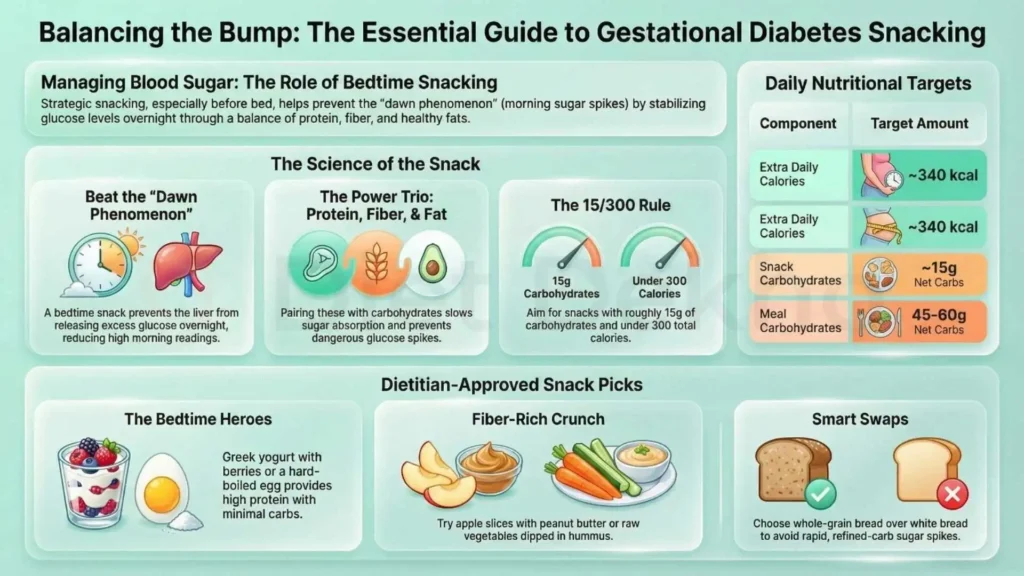
Many women find that their fasting sugar is the hardest to control. This is often due to the dawn phenomenon. Your liver releases extra glucose early in the morning to wake you up. If your insulin is struggling, your numbers will look high before you’ve even eaten.
A great trick for your pregnancy diabetes diet menu is the bedtime snack. Eating a small snack with protein and complex carbs right before sleep can help. It prevents your blood sugar from dropping too low at night. This, in turn, stops your liver from overcompensating in the morning.
Think about having a few soaked almonds and a half-cup of milk before bed. Or perhaps a small piece of paneer. These protein-heavy snacks act like a slow-release fuel. They keep your levels steady while you dream. Let’s move on to the actual weekly menu ideas you can start using today.

Designing Your Weekly Menu Strategy
A structured plan is your best defense against cravings. When you are tired and hungry, you will reach for whatever is closest. If you have a plan, that whatever will be a healthy choice. I recommend planning your pregnancy diabetes diet menu on Sunday. Prep your vegetables and soak your lentils in advance.
The Plate Method is your guiding star. Fill half your plate with green things like spinach, beans, or gourd. One-quarter should be your grain, like a small roti. The last quarter must be your dal, egg, or chicken. This ensures you never eat carbohydrates in isolation.
Eating every 2 to 3 hours is also crucial. This prevents the hunger monster from taking over. It keeps your insulin working at a steady pace rather than in panicked bursts. We will break this down into a 7-day example to give you a clear roadmap.
Day 1: Starting with Simple Staples
Let’s begin the week with familiar flavors. For breakfast, try two moong dal chillas. Moong dal is high in protein and fiber, which slows down sugar absorption. Pair it with a mint chutney for that fresh zing. If you are a busy professional, you can even make the batter the night before.
For lunch, have one whole wheat roti with a large bowl of mixed vegetable sabzi. Use local vegetables like lauki or tinda. These are low in calories but high in water and fiber. Include a small bowl of dal and a cup of curd. Curd is a great probiotic that helps with digestion.
For dinner, keep it light. A bowl of vegetable soup followed by paneer bhurji and a small salad. This ensures you get enough protein before bed without a heavy carb load. Remember to walk for 15 minutes after your meals. This simple act can lower your sugar levels significantly.
Day 2: Embracing Ancient Grains
On Tuesday, let’s switch to millets. For breakfast, try vegetable oats upma. Oats contain beta-glucan, a type of fiber that specifically helps with blood sugar control. Add lots of carrots and peas to increase the volume without adding many carbs.
For lunch, try a Jowar roti. Jowar is a gluten-free grain that has a much lower GI than wheat. Pair it with rajma (kidney beans). Legumes like rajma are excellent because they provide both protein and complex carbohydrates. Don’t forget a side of kachumber salad (onion, tomato, and cucumber).
Dinner can be moong dal khichdi, but make it vegetable-heavy. Use more vegetables than rice. This creates a comforting, easy-to-digest meal. According to Ms. Smita Jaiswal, a consultant dietitian, balancing rice with extra fiber is key for Indian patients.
Day 3: Protein-Powered Wednesday
By mid-week, you might feel a bit tired. Focus on protein to keep your energy up. For breakfast, have two boiled eggs with a slice of multigrain toast. Eggs are a nearly perfect protein and have zero carbohydrates, making them ideal for your pregnancy diabetes diet menu.
For lunch, try a quinoa khichdi. Quinoa has more protein and fiber than white rice. It is a modern addition to our kitchens that works very well for GDM. Serve it with a bowl of cooling cucumber raita. The probiotics in the curd are great for your gut health during pregnancy.
Dinner can be an egg curry or a light chicken curry if you eat meat. Pair it with one small bajra roti and a large portion of sautéed beans. The protein in the meat or eggs will help keep you full throughout the night. This prevents that midnight hunger that often leads to unhealthy snacking.
Day 4: Vegetarian Variety
On Thursday, let’s explore more vegetarian protein. For breakfast, a besan chilla with grated paneer is a delicious option. Besan (gram flour) is a staple in Indian kitchens and is much better for sugar levels than wheat or rice flour.
For lunch, have a bowl of palak paneer with one multigrain roti. Spinach is a powerhouse of iron and folate, which are essential for your baby’s development. The paneer provides the protein you need to stay satiated. A small bowl of masoor dal on the side adds extra fiber.
For dinner, try a tofu stir-fry with colorful bell peppers. Tofu is a great plant-based protein. Serve it with a very small portion of brown rice. By keeping the carb portion small at night, you help your body manage its fasting sugar levels more effectively.
Day 5: Traditional Flavors with a Twist
Let’s head into the weekend with some classic tastes. For breakfast, try a ragi porridge made with milk but no sugar. You can add a few chopped walnuts or seeds for crunch and healthy fats. Ragi is rich in calcium, which is vital for your baby’s bones.
For lunch, have a bowl of chole (chickpeas) with a side of mixed salad. Instead of bhatura or heavy puri, have one small whole wheat roti. Chickpeas are excellent for GDM because they have a very low GI and keep you full for hours.
For dinner, a light fish curry (if you eat fish) or a soya chunk curry works well. Fish is rich in omega-3 fatty acids, which support the baby’s brain growth. Pair it with a large serving of steamed broccoli or cauliflower. This provides volume and nutrients without the sugar spike.
Day 6: The Weekend Refresh
Saturdays are often busy. For breakfast, a quick paneer bhurji with a slice of whole wheat toast is a great start. It is fast to cook and very filling. You can add plenty of onions and tomatoes to the bhurji to increase your vegetable intake.
For lunch, try a millet-based pulao. Use foxtail millet or barnyard millet. These grains are traditional to India and are much more sugar-friendly than modern rice. Load the pulao with beans, carrots, and peas. Serve it with a large bowl of plain curd.
For dinner, go for a simple dal and sabzi. A bowl of yellow moong dal and a side of baingan bharta (roasted eggplant) is light on the stomach. Eggplant is low in carbohydrates and high in fiber. This helps ensure a better fasting sugar reading on Sunday morning.
Day 7: Relaxed Sunday Planning
Sundays are for resting and prepping for the next week. For breakfast, try a whole wheat dosa with a vegetable-heavy sambar. Limit the number of dosas to one or two and focus more on the sambar and coconut chutney. Coconut is a source of healthy fats that can slow down the absorption of the rice in the dosa.
For lunch, have a special meal of chicken or paneer tikka with a huge salad. Tandoori-style cooking is great because it uses less oil and focuses on protein. You can have a small portion of brown rice or one small roti with it.
For dinner, keep it very simple. A bowl of sprout salad with chopped onions, tomatoes, and a squeeze of lemon. Sprouts are living food packed with enzymes and fiber. They are the perfect end to your week of healthy eating. Use this time to plan your next pregnancy diabetes diet menu for the coming week.

The Secret of Movement Snacks
I know it’s hard to find time for the gym, especially when you are pregnant and tired. But what if I told you that you don’t need a gym? For a GDM patient, timing is more important than intensity. Walking for just 10 to 15 minutes after each meal is a metabolic miracle.
When you walk after eating, your muscles use the glucose that just entered your blood. This prevents it from sitting in your bloodstream and causing a spike. This is sometimes called a movement snack. It’s a simple, free way to manage your sugar levels without any fancy equipment.
What this means for your daily routine is simple. Don’t sit on the couch after lunch. Instead, walk around your house. Do the dishes. Pace while you are on a phone call. These small movements add up to big changes in your glucometer readings. Dr. V. Mohan emphasizes that staying active protects both the mother and baby from complications.
Low-Impact Exercises for Home
Beyond post-meal walks, there are other safe things you can do at home. Prenatal yoga is fantastic for both your body and mind. Poses like the Cat-Cow or the Butterfly help with flexibility and stress. Stress produces cortisol, which can raise your blood sugar, so staying calm is part of your treatment.
If you have a stationary bike, 20 minutes of gentle cycling is another great option. It’s low impact and safe from falls. You can even do chair squats simply sitting down and standing up from a chair repeatedly. This builds leg muscle, and muscle is the best tissue for burning glucose.
Always listen to your body. If you feel dizzy or breathless, stop and rest. Drink plenty of water before and after you move. For a non-gym audience, the goal is consistency, not sweat. Aim for 150 minutes of moderate activity per week, which is just 30 minutes a day, five days a week.
Table 4: At-Home Movement Ideas
| Exercise Type | Duration | Best Time to Do It |
| Brisk Walking | 10–15 minutes | Immediately after meals |
| Chair Squats | 2 sets of 10 | During commercial breaks |
| Prenatal Yoga | 20–30 minutes | Morning or evening for stress relief |
| Arm Raises | 5 minutes | While waiting for the kettle to boil |
| Marching in Place | 5 minutes | Whenever you’ve been sitting too long |
Snacking Without the Guilt
Let’s talk about the 4 PM hunger. This is when most people reach for biscuits or tea with sugar. In a pregnancy diabetes diet menu, we need to reinvent tea time. Your snacks should be mini-meals that include protein and fiber. This keeps your energy levels stable until dinner.
Roasted chana (Bengal gram) is a lifesaver. It is crunchy, satisfying, and packed with protein. You can mix it with chopped onions and tomatoes for a healthy bhel. Another great option is makhana (fox nuts). Roast them in a little ghee with black pepper. They are low in GI and very light.
If you want something cold, a small bowl of hung curd with cucumber is refreshing. Curd provides protein and probiotics, while cucumber adds volume without the calories. These snacks ensure you never reach that starving point where you make poor food choices.

I know it’s hard to follow a diet when you go to a wedding or a family dinner. Indian culture is built around food and celebration. But you can still enjoy these events. The trick is to eat before you eat. Have a small protein snack like a handful of nuts before you leave the house.
At the event, look for the protein and vegetable options first. Fill your plate with salad, tandoori paneer, or dal. Take a very small portion of the rice or sweets. Most importantly, don’t feel pressured to eat everything. Your family wants you and the baby to be healthy. Most people will understand if you explain your situation.
If you do end up eating more than planned, don’t beat yourself up. Stressing about it only raises your sugar more. Just get back on track with your next meal and take an extra-long walk. This is a journey, and there will be bumps in the road. It’s your overall patterns that matter most.
Practical Hacks for Busy Professionals
I know it’s hard to find time to cook when you are balancing a career and a pregnancy. But you don’t have to be perfect. Use shortcut healthy foods. Buy pre-cut vegetables. Use a pressure cooker to cook beans and lentils in large batches and freeze them.
Keep a GDM survival kit in your office drawer. This should have roasted chana, walnuts, and some sugar-free crackers. If a meeting runs late, you won’t be tempted by the office samosas. Having your own snacks is the best way to stay in control of your pregnancy diabetes diet menu.
Hydration is also a secret weapon. Sometimes we think we are hungry when we are actually thirsty. Aim for 2 to 3 liters of water per day. Carry a beautiful water bottle with you. It’s a simple reminder to take care of yourself throughout the workday.
The Importance of Sleep and Stress Management
Did you know that poor sleep can raise your blood sugar? When you don’t sleep well, your body produces more stress hormones. These hormones make it harder for insulin to do its job. For a GDM patient, sleep is just as important as diet.
Try to create a sleep sanctuary. Keep your room cool and dark. Turn off your phone an hour before bed. High-intensity light from screens can disrupt your sleep cycle. Instead, read a book or listen to calming music. This helps lower your cortisol levels.
If you feel stressed, try deep breathing exercises for 5 to 10 minutes a day. Studies show that even simple breathing can lower fasting blood sugar by reducing stress hormones. You are doing a great job, and taking time for yourself is not selfish it’s necessary for the baby.
Monitoring and Adjusting Your Plan
Your pregnancy diabetes diet menu is a living document. It might need to change as your pregnancy progresses. Your insulin resistance often increases in the third trimester. This is normal. It simply means you might need to be even more careful with your portions.
Keep a food and sugar log. Write down what you ate and what your sugar reading was two hours later. This helps you identify your trigger foods. For some women, even a small piece of fruit in the morning causes a spike. For others, it’s fine. Everyone is different.
Share this log with your doctor or dietitian. It gives them the data they need to help you. If your numbers stay high despite your best efforts, don’t feel like you failed. Some women need medication or insulin because of how their placenta works. The goal is a healthy baby, and whatever tool gets us there is the right tool.
Frequently Asked Questions
Can I eat fruit on a pregnancy diabetes diet menu?
Yes, you can, but choice and timing are key. Stick to low-GI fruits like apples, pears, guavas, and berries. Avoid high-sugar fruits like mangoes, grapes, and chikus. It’s best to eat fruit as a snack between meals rather than with a large meal to avoid a cumulative sugar spike.
Is it okay to skip breakfast if my fasting sugar is high?
No, you should never skip meals. Skipping breakfast can actually cause your liver to release more glucose, making your sugar levels worse. Instead, try a high-protein, low-carb breakfast like eggs or paneer. This helps break the fast without causing a spike.
How much walking is needed to lower sugar levels?
Even a little bit helps! Aim for 10 to 15 minutes of brisk walking after every major meal. This is often more effective for GDM than one long 45-minute walk. The timing right after eating helps your body process the glucose immediately.
Can I use honey or jaggery instead of sugar?
Unfortunately, no. While honey and jaggery have some minerals, they still cause a sharp rise in blood sugar levels just like white sugar. It is best to avoid all sweeteners or use a doctor-approved natural sweetener like Stevia in very small amounts.
What is the best bedtime snack for gestational diabetes?
The best bedtime snack combines a bit of protein with a complex carbohydrate. Good examples include a small cup of milk with three walnuts, a small piece of cheese with a whole-grain cracker, or a half-cup of Greek yogurt. This prevents the dawn phenomenon.

Conclusion: You’ve Got This
Managing your health through a pregnancy diabetes diet menu is one of the most loving things you can do for your baby. I know it feels like a lot of work right now. I know there are days when you just want a slice of cake. But remember, this is temporary. Most GDM cases go away right after delivery.
Every healthy choice you make today is building a stronger future for your little one. You are teaching your baby’s metabolism how to be healthy before they are even born. That is an incredible gift. Take it one meal at a time. Celebrate the small wins, like a good sugar reading or a 15-minute walk.
If you need more personalized help, don’t hesitate to reach out. We can build a plan that fits your specific life, your favorite foods, and your busy schedule. You are not alone, and you are doing an amazing job. Let’s keep moving forward together.
Take the first step toward a healthier pregnancy today!
Consult with our expert dietitians here
Contact Us
We understand how overwhelming nutrition and weight loss information can feel. With so many opinions and confusing advice online, it’s easy to feel stuck or unsure about what to do next.
At Diet Dekho, you never have to figure it out alone. You can contact us anytime with any questions or concerns. Our expert dietitians are available 24/7 to guide, support, and help you stay on track. Whether your goal is weight loss or building healthier habits, we’re here to make the journey simpler and more sustainable for you.
Disclaimer
This blog is intended to help readers make healthier food choices. Your health should always be the top priority. Before starting any restrictive or special diet, especially if you have a medical condition or health concern, please consult a doctor or a qualified dietitian. Each body responds differently to food and lifestyle changes. Always choose what is safe and suitable for you.

Abhinav is the Founder of Diet Dekho, helping people manage weight and lifestyle health through simple, practical nutrition and personalized diet plans.