
Are you finding it difficult to choose a cooking oil that doesn’t just sit in your pantry but actually works for your heart? With so many conflicting “health” labels on supermarket shelves, it is easy to feel overwhelmed while trying to protect your family’s health. The good news is that understanding rapeseed oil benefits can simplify this decision, offering a heart-healthy, versatile, and affordable solution for your daily Indian cooking needs.
The short answer is that rapeseed oil is a nutritional powerhouse. It contains the lowest saturated fat of any common cooking oil, roughly 7%, and is rich in heart-healthy Omega-3 and monounsaturated fats. These rapeseed oil benefits help lower “bad” LDL cholesterol, improve insulin sensitivity for those with PCOS or diabetes, and provide a high smoke point perfect for Indian tadkas and frying.
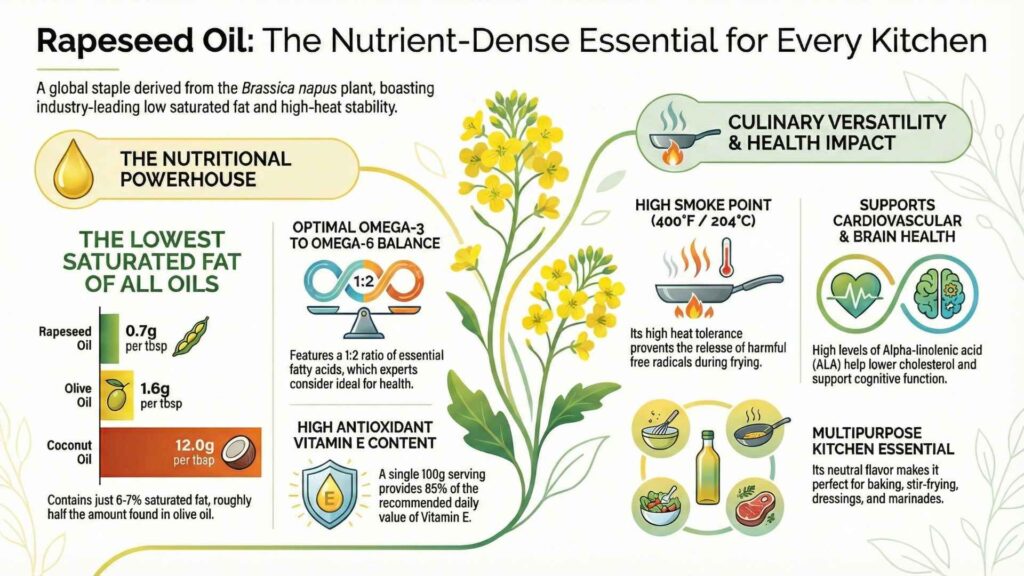
Confused About Which Cooking Oil is Best for Your Heart?
Table of Contents
- 1 Confused About Which Cooking Oil is Best for Your Heart?
- 2 The Daily Struggle of Balancing Taste and Health in Indian Kitchens
- 3 Common Myths: Is Rapeseed Oil Just Another Processed Fat?
- 4 10 Science-Backed Rapeseed Oil Benefits for Your Overall Well-being
- 5 Why Nutritionists Recommend Rapeseed Oil for High-Heat Indian Cooking
- 6 How to Use Rapeseed Oil: From Tadkas to Healthy Salad Dressings
- 7 A Simple Daily Routine: Incorporating Healthy Fats for Better Energy
- 8 Mistakes to Avoid: Why Reusing Cooking Oil Harms Your Health
- 9 Small Dietary Changes Lead to Big Heart-Health Wins
- 10 Get a Personalized Nutrition Plan: Book Your Consultation with Diet Dekho Today
Choosing the right cooking medium is perhaps the most important dietary decision you make every day. In many Indian households, the transition from traditional fats like ghee or unrefined mustard oil to modern refined oils has left a gap in nutritional understanding. I know it’s hard to find time to research every label, but focusing on the fatty acid profile of your oil is a great place to start. The primary reason doctors emphasize rapeseed oil benefits for cardiovascular health is its unique ability to balance different types of fats.
When we talk about heart health, we are often looking at the ratio of “good” to “bad” cholesterol. Research consistently shows that replacing saturated fats—the kind found in butter, lard, and palm oil—with unsaturated fats can significantly reduce the risk of heart disease. Rapeseed oil is particularly effective here because it is composed of nearly 63% monounsaturated fatty acids (MUFAs), primarily oleic acid.
The Power of Monounsaturated Fats (MUFAs)
These healthy fats are famous for helping to lower low-density lipoprotein (LDL) cholesterol without reducing the high-density lipoprotein (HDL) cholesterol that your body needs to clear out arterial plaque.3 What this means for your daily routine is that a simple switch in your primary cooking oil can act as a long-term insurance policy for your arteries.
For the Indian population, which has a higher genetic predisposition to metabolic syndrome and coronary artery disease, managing the quality of fat is non-negotiable. Most of our traditional snacks are deep-fried, and our curries rely on an oil-based base. By using an oil that is low in saturated fat, you are directly reducing the inflammatory burden on your heart with every meal.
| Oil Type | Saturated Fat (g/100g) | Monounsaturated Fat (g/100g) | Polyunsaturated Fat (g/100g) |
| Rapeseed (Canola) | 7 | 63 | 28 |
| Olive Oil | 14 | 73 | 11 |
| Mustard Oil | 12 | 60 | 21 |
| Sunflower Oil | 10 | 20 | 66 |
| Coconut Oil | 87 | 6 | 2 |
As shown in the data above, rapeseed oil consistently offers the lowest saturated fat profile among all major plant-based oils. This makes it a superior “mustard oil alternative” for those who want the health benefits of Brassica seeds without the high erucic acid or heavy saturated fat content.
The Daily Struggle of Balancing Taste and Health in Indian Kitchens
In an Indian kitchen, the oil is not just a cooking medium; it is a flavor carrier. Whether it is the tempering for a yellow dal or the base for a rich mutton curry, the oil must be able to handle high heat while remaining neutral enough to let the spices shine. Many health-conscious professionals and homemakers struggle with “healthy” oils like extra virgin olive oil because they often have a strong flavor that clashes with traditional Indian masalas or a smoke point too low for deep frying.
Let’s simplify this: you don’t have to choose between your health and the taste of your mother’s recipes. Refined rapeseed oil is virtually flavorless and odorless, making it a “hidden gem” for Indian cooking. It allows the natural aroma of cumin, mustard seeds, and curry leaves to take center stage. For those managing hypertension or blood pressure (BP), using a light oil that doesn’t feel “heavy” on the palate can also encourage a higher intake of sautéed vegetables and lentils.

Versatility for the Modern NRI and Professional
What this means for your daily routine is that you can prepare a traditional Moong Dal Tadka or a bhindi sabzi without worrying about the oil breaking down and smelling acrid. Because rapeseed oil is so versatile, it also works beautifully in Western-style baking or as a light dressing for salads. This versatility is a lifesaver for busy professionals who need one oil that can do everything—from frying morning parathas to whisking together a quick vinaigrette for an evening salad.
For NRIs living in the UK, USA, or Canada, rapeseed oil is often the most accessible heart-healthy oil. It is grown locally in many of these regions and is a sustainable, cost-effective choice compared to imported specialty oils. In simple terms, it provides premium nutrition at a price point that fits the monthly grocery budget of a growing family.
Common Myths: Is Rapeseed Oil Just Another Processed Fat?
You might have seen videos or posts claiming that seed oils like rapeseed are “toxic” or “inflammatory.” Let’s clear the air. Most of these myths stem from a misunderstanding of how modern oil is produced. Historically, rapeseed oil contained high levels of erucic acid, a compound that animal studies suggested could be harmful to the heart in massive doses. However, Canadian scientists used natural cross-breeding in the 1970s to create “Canola,” a variety of rapeseed with less than 2% erucic acid.
Today, all food-grade rapeseed oil sold in reputable stores must meet strict safety standards. In fact, most commercial oils contain nearly zero erucic acid. Another myth is that the “hexane” used in extraction makes the oil toxic. While hexane is a solvent used to get the most oil out of the seed, it is completely removed during the refining process, leaving no residue that could impact human health.
Understanding the Omega Balance and Inflammation
The idea that rapeseed oil benefits are negated by “inflammation” caused by Omega-6 is also scientifically inaccurate. While some seed oils are very high in Omega-6, rapeseed oil has a nearly perfect 2:1 ratio of Omega-6 to Omega-3. This is far better than the 15:1 ratio found in the typical modern diet.
In reality, the Omega-3 (Alpha-Linolenic Acid) in rapeseed oil helps reduce systemic inflammation, which is vital for people with autoimmune conditions like thyroid disorders or inflammatory markers in PCOS. If you still prefer a less processed option, cold-pressed rapeseed oil is an excellent choice. It is mechanically pressed at low temperatures, retaining its natural golden color and a light nutty flavor.
| Feature | Regular (Refined) Rapeseed Oil | Cold-Pressed Rapeseed Oil |
| Extraction | Heat and/or solvent | Mechanical (No heat) |
| Flavor | Neutral / Bland | Nutty / Buttery |
| Smoke Point | Very High (230°C) | Moderate (190°C-200°C) |
| Best Use | Deep frying, Tadka, Baking | Salad dressings, Drizzling |
| Nutrient Retention | High | Very High (Antioxidants) |

10 Science-Backed Rapeseed Oil Benefits for Your Overall Well-being
When we look at the clinical data, the reasons to include this oil in your diet go far beyond just “low fat.” Let’s break down the ten most impressive ways rapeseed oil benefits your body.
1. Superior Heart Protection
The high MUFA content helps clear out the LDL (bad cholesterol) from your bloodstream, reducing the risk of plaque buildup in your arteries.
2. Management of Diabetes and Blood Sugar
Replacing carbohydrates or saturated fats with the monounsaturated fats found in rapeseed oil can improve insulin sensitivity and lower HbA1c levels over time.
3. Hormonal Balance in PCOS/PCOD
Clinical trials specifically on women with PCOS found that daily rapeseed oil intake significantly reduced triglycerides and the LDL/HDL ratio while improving liver function.
4. High Plant-Based Omega-3 (ALA)
Rapeseed oil is one of the best sources of Alpha-Linolenic Acid (ALA), containing roughly 10% ALA, which is crucial for brain and heart health.
5. Skin and Eye Health via Vitamin E
One tablespoon provides about 16% of your daily Vitamin E requirement, a powerful antioxidant that protects cells from oxidative damage.
6. Bone Strength through Vitamin K
Vitamin K is essential for bone mineralization. Rapeseed oil contains approximately 71µg of Vitamin K per 100g, supporting bone density.
7. Weight Loss and Metabolic Support
Research into rapeseed diacylglycerol oil suggests it may help reduce visceral (belly) fat by altering how the body stores fat in the liver.
8. Powerful Anti-Inflammatory Effects
By balancing Omega-6 and Omega-3, it helps lower the production of pro-inflammatory cytokines, benefiting those with chronic joint pain.
9. Gut Health and Microbiome Diversity
Studies indicate that rapeseed oil may increase the diversity of beneficial gut flora, which is linked to better digestion and immunity.
10. Thermal Stability for Safe Cooking
The stability of rapeseed oil at high temperatures prevents the formation of carcinogenic compounds, making it a safe choice for traditional kitchens.

Why Nutritionists Recommend Rapeseed Oil for High-Heat Indian Cooking
The “smoke point” of an oil is the temperature at which it stops shimmering and starts to smoke. When an oil reaches its smoke point, it breaks down and releases a chemical called acrolein. Nutritionists recommend rapeseed oil because its smoke point is between 204°C and 230°C (400°F to 450°F).
For context, a typical Indian “Tadka” involves heating oil to about 180°C to 200°C. Most unrefined oils have smoke points as low as 160°C (325°F), meaning they begin to degrade before your mustard seeds even pop.
Oxidative Stability: A Shield Against Free Radicals
Beyond the smoke point, the oxidative stability is what really matters. Rapeseed oil is rich in antioxidants like Vitamin E and phytosterols that act as heat shields, protecting the oil molecules from “rusting” (oxidizing) when exposed to air and heat. This means that even after frying, the rapeseed oil benefits remain more intact than those of less stable oils like soybean or corn oil.
| Cooking Method | Typical Temp Range | Is Rapeseed Oil Suitable? |
| Deep Frying (Samosas, Pakoras) | 180°C – 190°C | Yes (Refined) |
| Tadka (Tempering) | 190°C – 220°C | Yes (Refined) |
| Pan-Sautéing (Sabzi) | 160°C – 180°C | Yes (Cold-pressed or Refined) |
| Salad Drizzle | Room Temp | Yes (Cold-pressed preferred) |
How to Use Rapeseed Oil: From Tadkas to Healthy Salad Dressings
I know it’s hard to change your cooking style, but the beauty of rapeseed oil is that you don’t have to. It behaves just like the oils you are used to. If you are a fan of North Indian cooking, you can use refined rapeseed oil as a perfect “mustard oil alternative.” While it doesn’t have the same pungent bite, you can replicate that flavor by adding a teaspoon of mustard seeds to the hot oil.
Creative Home-Based Kitchen Solutions
Let’s simplify this with a few practical home-based solutions:
- For the Perfect Tadka: Heat 2 teaspoons of rapeseed oil. When it shimmers (but before it smokes), add your jeera or rai. The high stability ensures the oil doesn’t turn bitter.
- For Crispy Stir-Fries: Use a wok or kadai. High heat keeps vegetables crunchy and nutrient-rich rather than soggy.
- For Healthy Dressing: Mix 3 tablespoons of cold-pressed rapeseed oil with lemon juice and roasted jeera powder. This is a heart-healthy alternative to cream-based dressings.
A Simple Daily Routine: Incorporating Healthy Fats for Better Energy
What this means for your daily routine is that you can have consistent energy levels without the “heavy” feeling that comes from eating too much saturated fat. Many busy professionals skip fats entirely to lose weight, but this actually leads to hormonal imbalances. Your body needs fat to absorb nutrients like Vitamin D—which most Indians are deficient in.
Incorporating rapeseed oil benefits into a routine can look like this:
- Morning: Prepare breakfast like Poha or Upma using 1 teaspoon of oil for brain-healthy Omega-3s.
- Afternoon: A simple lunch of Dal and Sabzi cooked in rapeseed oil ensures you don’t feel sleepy after your meal.
- Evening: Toss roasted makhana in a few drops of cold-pressed rapeseed oil for a heart-healthy snack.

Mistakes to Avoid: Why Reusing Cooking Oil Harms Your Health
I know it’s hard to throw away oil, but reusing cooking oil is one of the biggest mistakes you can make. The Indian Council of Medical Research (ICMR) has issued specific warnings against this practice because reheating oil triggers thermal oxidation.
The Science of Thermal Oxidation
This process creates “Total Polar Compounds” (TPCs). If TPC levels exceed 25%, the oil is unfit for consumption. Reheated oil creates:
- Trans Fats: These are directly linked to heart attacks and strokes.
- Aldehydes: Toxic chemicals studied for their link to cancer development.
- Acrylamides: Carcinogenic compounds formed in starchy foods cooked in degraded oil.
To avoid this, only use as much oil as you need. If you must reuse it, filter it to remove food particles, store it in a cool place, and use it for a curry within 24 hours.
Small Dietary Changes Lead to Big Heart-Health Wins
You don’t need to overhaul your entire life to see a difference. A massive Harvard study found that swapping just 10 grams of butter (about two teaspoons) with a plant-based oil like rapeseed could lower the risk of premature death from all causes by 17%.
This small choice at the grocery store—reaching for rapeseed oil instead of butter or palm-oil blends—has a huge ripple effect. Health isn’t about perfection; it’s about better choices. By choosing an oil backed by global research and suitable for your traditional palate, you are setting yourself up for a longer, more vibrant life.
Get a Personalized Nutrition Plan: Book Your Consultation with Diet Dekho Today
Understanding rapeseed oil benefits is just the beginning. Every body is different—what works for a person with PCOS might be different for someone with a thyroid condition. At Diet Dekho, we believe nutrition should be personalized and realistic.
Our experts can help you design a plan that includes the right fats, proteins, and fibers to help you achieve holistic health. (https://dietdekho.com/form/)

Frequently Asked Questions
Is rapeseed oil really better than olive oil for heart health?
Both are excellent, but rapeseed oil has the lowest saturated fat of all and more Omega-3 (ALA) than olive oil. For high-heat Indian cooking, its higher smoke point makes it more versatile.
I have PCOS. Should I avoid seed oils like rapeseed?
Actually, research shows rapeseed oil can improve insulin sensitivity and reduce triglycerides in women with PCOS. It’s an anti-inflammatory choice when part of a balanced diet.
Can I use rapeseed oil for deep frying?
Yes. Refined rapeseed oil is ideal for deep frying because its smoke point is very high ($230^\circ C$), staying stable and avoiding the formation of harmful chemicals.
What is the best way to store rapeseed oil at home?
Keep it in a cool, dark cupboard away from the stove. Exposure to light and heat causes Omega-3 fats to oxidize. Properly stored, it stays fresh for up to 12 months.
Disclaimer:
This blog post was written to help you make healthier food choices altogether. So, be aware and take care. The important thing to consider is your health before starting a restrictive diet. Always seek advice from a doctor or dietitian before starting if you have any concerns.
BOOK YOUR APPOINTMENT
Dr. Ritika is a nutrition and lifestyle expert with 2+ years of experience, helping clients manage weight and health through practical, personalized diet plans.