
At DietDekho, the observation is frequent: individuals often follow a rigorous exercise routine and a strict calorie-restricted diet, yet the scale remains stubbornly stagnant. This frustration is a common experience among busy professionals and homemakers across India, where the missing metabolic trigger is often not found in the kitchen or the gym, but in the bedroom. The relationship between sleep and weight loss is a fundamental biological pillar that determines how the body processes energy, manages hunger, and stores fat.
The short answer is that sleep and weight loss are inextricably linked because inadequate rest disrupts the hormones ghrelin and leptin, which control appetite, while simultaneously increasing cortisol levels that promote abdominal fat storage. Achieving 7 to 9 hours of quality sleep nightly is essential to maintaining insulin sensitivity and a healthy metabolic rate.
Why Your Diet and Gym Routine Aren’t Working (The Sleep Connection)?
Table of Contents
- 1 Why Your Diet and Gym Routine Aren’t Working (The Sleep Connection)?
- 2 How Sleep Deprivation Triggers Late-Night Cravings?
- 3 The Silent Culprit: Cortisol and Stubborn Belly Fat
- 4 Managing Weight with PCOS, Thyroid, and Diabetes: The Role of Sleep
- 5 5 Practical Indian Sleep Hygiene Habits for Better Metabolism
- 6 Your Daily Sleep-to-Slim Schedule (8 PM to 10 PM)
- 7 Ayurvedic Insights: Ashwagandha and Metabolism
- 8 Frequently Asked Questions (FAQs)
- 9 Conclusion
- 10 Contact Us
- 11 Disclaimer
The struggle to lose weight despite a disciplined Indian diet and workout plan is often rooted in the physiological stress caused by sleep deprivation. In many urban Indian households, the “hustle culture” has popularized the idea that sleeping less is a badge of productivity. However, the biological reality is that the body views sleep as a period of metabolic repair and hormonal recalibration. When this period is cut short, the metabolic rate drops, making the body less efficient at burning the very calories that are being restricted through diet.
The Indian Council of Medical Research (ICMR) has highlighted that lifestyle shifts, including disrupted sleep patterns and rising stress levels, are significant contributors to the country’s growing burden of metabolic disorders. For a busy professional in Bengaluru or a homemaker in Delhi, waking up at 5:00 AM for a walk after only five hours of sleep may actually be counterproductive. The lack of rest places the body in a “survival mode,” where it prioritizes fat preservation over fat oxidation.
Data from various longitudinal studies suggest that individuals who consistently sleep less than seven hours per night have a significantly higher Body Mass Index (BMI) and a 38% increased risk of developing obesity compared to those who achieve adequate rest. This suggests that sleep is not merely a passive state of rest but an active participant in weight management.
| Sleep Category | Impact on Weight Management | Metabolic Consequence |
| Adequate Sleep (7–9 Hours) | Optimal hormonal balance | High insulin sensitivity and efficient fat burning |
| Short Sleep (<6 Hours) | 38% increased obesity risk | Elevated ghrelin and reduced resting metabolic rate |
| Fragmented Sleep | Increased central adiposity | Disrupted glucose metabolism and higher cortisol |

How Sleep Deprivation Triggers Late-Night Cravings?
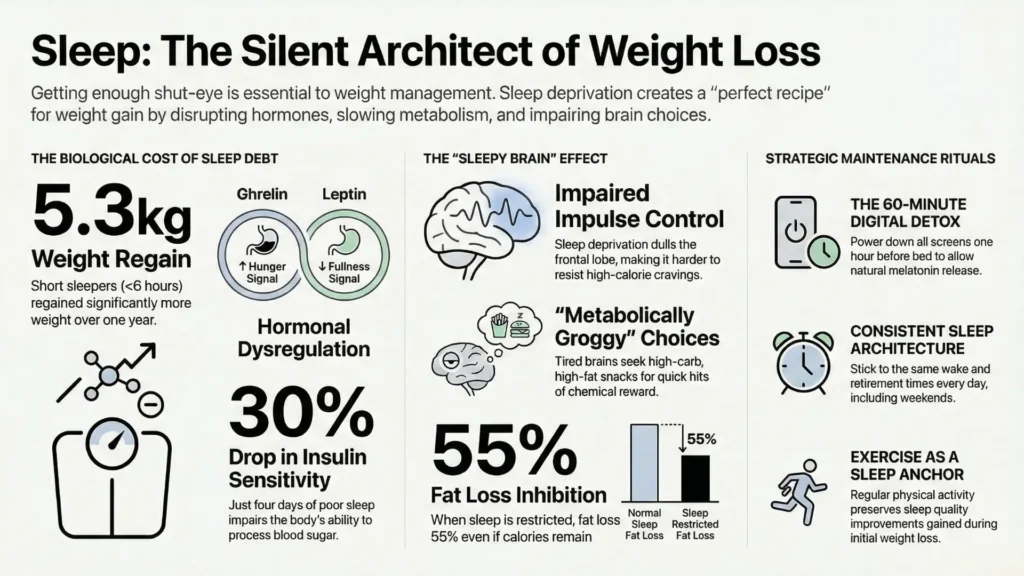
The phenomenon of “midnight munching” on high-carb Indian snacks like bhujia, biscuits, or leftover rotis is rarely a matter of poor willpower. Instead, it is a direct consequence of how sleep deprivation alters brain chemistry and appetite-regulating hormones. The two primary hormones involved are ghrelin, which signals hunger, and leptin, which signals satiety or fullness.
The Science of Ghrelin and Leptin in Simple Terms
In a well-rested state, these hormones maintain a delicate balance. However, when sleep is restricted, ghrelin levels rise significantly, while leptin levels plummet. One specific study found that sleep-deprived individuals experienced a 28% increase in ghrelin and an 18% decrease in leptin, leading to a state of constant, biological hunger. This hormonal shift makes the brain perceive that the body is in a state of starvation, regardless of how much food was consumed during the day.
Furthermore, the “sleepy brain” undergoes changes in the reward center. The frontal lobe, which governs impulse control and decision-making, becomes less active, while the deeper reward-seeking parts of the brain become hyper-responsive to unhealthy food stimuli. This explains why a tired individual is more likely to choose a second helping of gulab jamun or a bag of salty chips over a healthy salad. The brain is essentially searching for a quick “hit” of energy to compensate for the fatigue.
The Endocannabinoid Connection
Recent research from Stanford suggests that sleep deprivation also activates the endocannabinoid system, which is the same system that regulates mood and appetite. An increase in these chemical signals leads to intensified cravings for ultra-processed, calorie-dense foods. For an Indian NRI or professional working night shifts, this biological drive often leads to a cycle of late-night eating that directly conflicts with the body’s natural circadian rhythm.
| Hormone/System | Effect of Sleep Loss | Resulting Behavior |
| Ghrelin | Increases (up to 28%) | Persistent hunger signals |
| Leptin | Decreases (up to 18%) | Inability to feel full after meals |
| Endocannabinoids | Increased activation | Cravings for fats and sugars |
| Frontal Lobe | Decreased activity | Reduced impulse control |

The Silent Culprit: Cortisol and Stubborn Belly Fat
For many Indians, weight gain is most visible as “stubborn belly fat,” a condition known as central obesity. The ICMR has found that central obesity, measured by a waist-to-hip ratio of 0.85 or higher, is a more accurate predictor of health risks in the Indian population than BMI alone. Sleep deprivation is a major contributor to this fat distribution through the elevation of cortisol, the body’s primary stress hormone.
How Lack of Rest Increases Stress Hormones
Cortisol levels naturally fluctuate throughout the day, peaking in the morning to provide alertness and reaching a low point around midnight. When sleep is inadequate, this pattern is disrupted. Delayed bedtimes or fragmented sleep lead to elevated cortisol levels in the evening and throughout the night. High cortisol acts as a signal to the body to conserve energy and store fat for protection, particularly in the abdominal area where cortisol receptors are highly concentrated.
This elevation in cortisol does not happen in isolation. It triggers a cascade of metabolic issues, including an increase in blood sugar and a corresponding rise in insulin. When insulin and cortisol are both high, the body enters a fat-storage mode that is extremely difficult to reverse through exercise alone. This state is often referred to as being “metabolically groggy,” where the cells effectively “refuse” to respond to insulin.
Insulin Resistance and Free Fatty Acids
Sleep restriction has been shown to increase the concentration of non-esterified (free) fatty acids in the blood. These elevated fatty acids are a primary cause of insulin resistance, a condition where the body’s cells do not respond properly to insulin, leading to higher blood glucose levels and the eventual risk of Type 2 Diabetes. Within just four days of insufficient sleep, insulin sensitivity can drop by over 30%, mimicking the metabolic profile of a prediabetic individual.
| Physiological Marker | Impact of Sleep Deprivation | Clinical Outcome |
| Cortisol | Elevated evening levels | Increased visceral (belly) fat |
| Insulin Sensitivity | Decreased by ~30% | Higher risk of Type 2 Diabetes |
| Free Fatty Acids | Increased nocturnal levels | Promotion of systemic insulin resistance |
| Glucose Levels | Elevated fasting levels | Prediabetic metabolic state |
Managing Weight with PCOS, Thyroid, and Diabetes: The Role of Sleep
For individuals managing medical conditions like PCOS, thyroid disorders, or diabetes, the importance of sleep and weight loss is magnified. These conditions involve existing hormonal imbalances that are further aggravated by poor sleep quality.
Sleep Challenges in PCOS and PCOD
Polycystic Ovary Syndrome (PCOS) affects a significant percentage of Indian women and is characterized by hyperinsulinemia and hyperandrogenism. Research indicates that women with PCOS have a much higher frequency of sleep disturbances, including Obstructive Sleep Apnea (OSA). Fragmented sleep can lead to tissue hypoxia and oxidative stress, which further worsens insulin resistance and inflammation in PCOS patients.
For these women, sleep quality is a key component of the health state. Studies have shown that poor sleep hygiene is linked to increased triglycerides and higher blood pressure in adolescents with PCOS. Improving sleep can help regulate the circadian clock genes that are often dysregulated in this condition, potentially aiding in weight reduction and hormonal balance.

The Thyroid and Sleep Connection
Hypothyroidism is another common barrier to weight loss in the Indian context. Sleep deprivation has a direct impact on the thyrotropic axis. Specifically, prolonged mild sleep restriction can reduce levels of Thyroid Stimulating Hormone (TSH) in women. While free thyroxine (FT4) may remain unaffected in the short term, the long-term disruption of TSH can contribute to a sluggish metabolism, making weight loss even more challenging. Furthermore, the prevalence of PCOS is higher among women with hypothyroidism, creating a complex web of metabolic hurdles that require restorative sleep to manage.
Diabetes and Hypertension Management
The ICMR-INDIAB study has reported high rates of diabetes, prediabetes, and hypertension across urban and rural India. Short sleep duration is a recognized risk factor for the incidence of Type 2 Diabetes, as it impairs glucose tolerance and reduces the resting metabolic rate (RMR). For those with hypertension, sleep loss causes the sympathetic nervous system—the “fight-or-flight” response—to stay active, leading to higher blood pressure and increased strain on the heart.
5 Practical Indian Sleep Hygiene Habits for Better Metabolism
To harness the power of sleep for weight loss, individuals must adopt practical, home-based habits that align with the Indian lifestyle and the body’s natural biological clock.
1. The Early Dinner Method (Before 7 PM)
One of the most effective lifestyle changes is finishing dinner before sunset or at least three hours before bedtime. In many Indian homes, dinner is a heavy meal eaten late at night, which forces the digestive system to work when the metabolism is naturally slowing down. An early dinner allows the body to complete digestion and transition into a fat-burning state during the overnight fast.
2. Avoiding Caffeine and Chai After 5 PM
Chai is a staple of the Indian routine, but the caffeine it contains can disrupt sleep patterns if consumed too late in the day. Caffeine stays in the system for several hours, blocking the sleep-inducing chemicals in the brain. Switching to caffeine-free herbal teas like ginger or fennel after 5:00 PM can significantly improve sleep onset and quality.
3. Creating a Digital-Free “Sleep Sanctuary”
Exposure to blue light from smartphones and televisions suppresses the production of melatonin, the hormone responsible for sleep. Professionals and students should aim to shut down all electronic devices at least one hour before sleep. The bedroom should be kept dark, cool, and quiet to signal the brain that it is time to rest.
4. The Warm Ritual (Bath and Moon Milk)
Taking a warm bath about 90 minutes before bed can improve sleep quality by helping the body’s core temperature drop more efficiently afterward. Following this with a cup of “Moon Milk”—warm milk with turmeric, nutmeg, or ashwagandha—is a traditional Indian remedy that supports relaxation and hormonal balance.
5. Post-Dinner Light Activity
Instead of sitting on the couch after a meal, a gentle 15–20 minute stroll can help lower post-meal blood sugar levels. This prevents excess glucose from being stored as fat and helps the body transition more smoothly into a state of rest.

Your Daily Sleep-to-Slim Schedule (8 PM to 10 PM)
Creating a consistent evening routine is vital for helping the body prepare for fat-burning sleep. The following schedule is designed for the typical Indian household.
| Time | Activity | Metabolic Benefit |
| 7:00 PM – 8:00 PM | Light, Protein-Rich Dinner | Provides nutrients without straining digestion |
| 8:00 PM – 8:20 PM | Gentle Walk | Stabilizes blood sugar and aids digestion |
| 8:30 PM – 9:00 PM | Digital Sunset | Stimulates natural melatonin production |
| 9:00 PM – 9:30 PM | Warm Bath & Herbal Tea | Lowers core temperature and calms the mind |
| 9:30 PM – 10:00 PM | Relaxation / Meditation | Reduces cortisol and prepares the body for NREM sleep |
| 10:00 PM | Lights Out | Aligns with the biological clock for maximum fat oxidation |
Ayurvedic Insights: Ashwagandha and Metabolism
Ayurveda has long recognized the importance of the nidra (sleep) for rasayana (rejuvenation). Ashwagandha (Withania somnifera) is a particularly effective herb for those struggling with sleep and weight loss. It acts as an adaptogen, helping the body manage stressors and lowering the cortisol levels that lead to belly fat.
Clinical studies have shown that regular consumption of ashwagandha can increase total sleep time and improve sleep efficiency. It can be taken as a simple decoction or as part of the traditional Ksheerapaka method (milk decoction), which enhances its grounding and sleep-promoting properties.
Preparation of Ashwagandha Tea:
- Simmer 1 teaspoon of ashwagandha root powder in a cup of water or a mix of milk and water for 5-10 minutes.
- Add a pinch of cinnamon or cardamom for flavor.
- Strain and consume about an hour before bedtime.

Frequently Asked Questions (FAQs)
1. How many hours of sleep are actually needed for weight loss?
Most adults require between 7 and 9 hours of quality sleep per night. Consistently sleeping less than 7 hours is strongly associated with a higher BMI and an increased risk of obesity. The quality of sleep—meaning uninterrupted, deep sleep—is just as important as the duration.
2. Can I catch up on sleep during the weekends to lose weight?
While “catch-up” sleep may reduce some daytime sleepiness, it does not fully reverse the metabolic damage caused by chronic sleep restriction during the week. Inconsistent sleep patterns, known as “social jetlag,” can still disrupt the circadian rhythm and lead to unfavorable metabolic profiles and weight gain. Consistency is key for hormonal regulation.
3. Does poor sleep affect everyone’s weight the same way?
The impact of sleep and weight loss can vary based on age, sex, and existing health conditions. For instance, the association between short sleep and obesity is often stronger in children and younger adults. Women managing PCOS or thyroid issues may also see more immediate weight fluctuations due to the sensitivity of their hormonal systems.
4. Is it better to wake up early for the gym or get more sleep?
If you are currently sleeping less than 6 hours, prioritizing sleep may be more beneficial for fat loss than an early morning workout. Exercise is a stressor on the body; without adequate sleep to recover, your cortisol levels may stay elevated, causing your body to hold onto fat despite the workout.
5. What are the best foods to eat if I have to stay up late?
If late-night hunger occurs, it is best to avoid sugary or high-carb snacks. Instead, choose a light, protein-rich option like a handful of nuts (almonds or walnuts), a small bowl of Greek yogurt, or a piece of paneer. These help stabilize blood sugar and contain tryptophan, which can help induce sleep later.

Conclusion
Sleep is the silent engine of weight loss. For the busy Indian professional, the dedicated homemaker, or the individual managing PCOS and diabetes, sleep must be treated with the same importance as a balanced meal or a structured workout. By addressing the physiological link between sleep and weight loss—balancing hunger hormones, reducing cortisol, and improving insulin sensitivity—one can finally see the results of their hard work.
At DietDekho, the focus is on practical, supportive guidance that fits into your unique life. I know it’s hard to find time for yourself, but simplifying your evening routine can be the most transformative step you take. What this means for your daily routine is that tonight, instead of scrolling through your phone, you choose rest. Your metabolism will thank you in the morning.
Contact Us
We understand how overwhelming nutrition and weight loss information can feel. With so many opinions and confusing advice online, it’s easy to feel stuck or unsure about what to do next.
At Diet Dekho, you never have to figure it out alone. You can contact us anytime with any questions or concerns. Our expert dietitians are available 24/7 to guide, support, and help you stay on track. Whether your goal is weight loss or building healthier habits, we’re here to make the journey simpler and more sustainable for you.
Disclaimer
This blog is intended to help readers make healthier food choices. Your health should always be the top priority. Before starting any restrictive or special diet, especially if you have a medical condition or health concern, please consult a doctor or a qualified dietitian. Each body responds differently to food and lifestyle changes. Always choose what is safe and suitable for you.

Dr. Ritika is a nutrition and lifestyle expert with 2+ years of experience, helping clients manage weight and health through practical, personalized diet plans.