Think back to the last time you felt truly parched on a sweltering afternoon. You probably didn’t crave a heavy meal or a sugary soda; you likely imagined something crisp, cold, and dripping with juice. For most people, that image is a thick wedge of watermelon. But here is the thing: what we often dismiss as a simple summer treat is actually one of the most sophisticated functional foods in nature’s pharmacy. While you might just see a pink, watery fruit, a clinical dietitian sees a complex matrix of bioactive compounds that can redefine your vascular health, metabolic rate, and even your skin’s resilience against the sun. Understanding watermelon benefits starts with looking past the water and into the cellular mechanisms that make this fruit a powerhouse for fitness beginners and health veterans alike.
The Biochemical Architecture of Hydration
Table of Contents
- 1 The Biochemical Architecture of Hydration
- 2 Exploring the L-Citrulline and Nitric Oxide Connection
- 3 The Satiety Secret: Watermelon Weight Loss Mechanisms
- 4 Lycopene: The Potent Antioxidant Shield
- 5 Watermelon for Skin: Beauty from the Inside Out
- 6 Benefits of Watermelon for Men: Circulation and Beyond
- 7 Watermelon Benefits for Women: Pregnancy and Bone Health
- 8 Don’t Throw Away the Best Parts: Rinds and Seeds
- 9 Timing Matters: Best Time to Eat Watermelon
- 10 Quality Control: How to Identify Organic and Ripe Watermelon
- 11 Myths vs. Reality: Addressing Common Concerns
- 12 Watermelon Juice Benefits: Liquid Gold for Athletes
- 13 Integrating Watermelon into Your Daily Routine
- 14 Final Verdict from the Dietitians
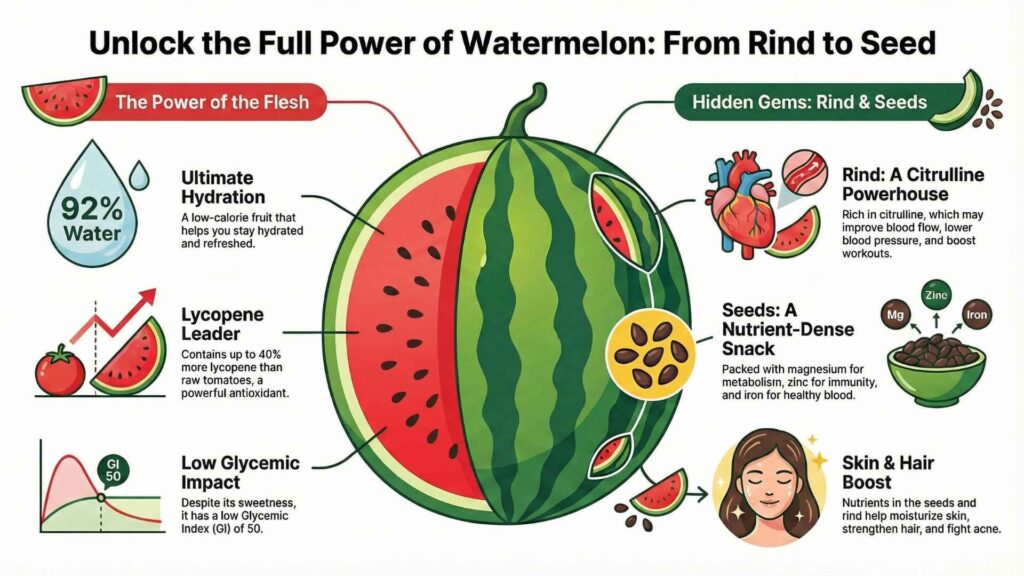
Watermelon belongs to the Cucurbitaceae family, making it a close relative to cucumbers and pumpkins. Its most famous attribute is its water content, which sits at roughly 91% to 92% of its total weight. However, calling it just “water in a rind” misses the point entirely. This is structured, nutrient-dense water. When you eat watermelon, you are consuming hydration that comes pre-packaged with electrolytes and simple sugars, which your body can use to restore cellular fluid balance much faster than plain tap water.
This high moisture profile is a primary driver for the many watermelon health benefits we see in clinical studies. For someone starting a fitness journey, staying hydrated is the difference between a productive workout and a fatigue-heavy failure. The Mayo Clinic suggests that about 20% of our fluid intake comes from food, and watermelon is the undisputed champion of this category. It provides a steady release of moisture into the system, helping to maintain blood volume and support kidney function without the “bloated” feeling that often comes from chugging a gallon of water in one sitting.
| Nutrient Component | Value per 100g (Raw) | Clinical Significance |
| Water | 91.45 g | Intracellular hydration and thermoregulation |
| Energy | 30 kcal | Low-density fueling for weight management |
| Total Carbohydrates | 7.55 g | Glycogen replenishment for muscle recovery |
| Total Sugars | 6.20 g | Natural energy boost without refined spikes |
| Dietary Fiber | 0.40 g | Modest digestive support and satiety |
| Protein | 0.61 g | Precursor amino acid transport |
Exploring the L-Citrulline and Nitric Oxide Connection
If you want to understand why watermelon heart health is a major topic in nutritional science, you have to look at an amino acid called L-citrulline. Watermelon is the richest known natural source of this non-essential amino acid. What this really means for your body is a direct line to improved circulation. When you ingest L-citrulline, your kidneys convert it into another amino acid called L-arginine, which is the immediate precursor to nitric oxide (NO).
Nitric oxide is a gas that acts as a signaling molecule to relax the smooth muscles of your blood vessels. This process, known as vasodilation, allows your blood to flow more freely with less pressure on the arterial walls. Unlike direct L-arginine supplements, which often get broken down in the liver before they can do any good, the L-citrulline in watermelon bypasses this “first-pass” metabolism. This makes watermelon juice or flesh a more effective way to boost your body’s internal nitric oxide production than many synthetic supplements.
Vascular Resistance and Blood Pressure Management
The benefits of eating watermelon for the cardiovascular system are backed by significant research from institutions like the National Institutes of Health (NIH). In studies of pre-hypertensive adults, regular watermelon intake was shown to significantly lower systolic and diastolic blood pressure. By reducing the workload on the heart, it lowers the long-term risk of stroke and myocardial infarction.
What is fascinating is that these effects aren’t just for those with existing heart issues. For a fitness beginner, better vasodilation means your muscles get more oxygen and nutrients during a workout. This leads to better endurance and less of that “burning” sensation caused by lactic acid buildup. It is essentially nature’s version of a pre-workout pump supplement, but without the jittery side effects of caffeine or artificial dyes.
The Satiety Secret: Watermelon Weight Loss Mechanisms
One of the biggest hurdles for anyone looking for simple weight loss strategies is managing hunger while staying in a calorie deficit. This is where the nutritional value of watermelon becomes a tactical advantage. Watermelon is exceptionally low in calories—about 30 to 46 calories per cup. However, because it is so heavy and voluminous, it takes up a lot of space in your stomach.
A landmark study compared 33 individuals living in higher-weight bodies who ate either two cups of watermelon or isocaloric low-fat cookies daily for four weeks. Despite the cookies having the same number of calories, the watermelon group experienced significantly higher levels of fullness and a reduced desire to eat for up to two hours after consumption. What this means is that watermelon triggers the “stretch receptors” in your stomach, signaling your brain that you are full far more effectively than a processed snack would.
| Parameter | Watermelon Group (4 Weeks) | Low-Fat Cookie Group (4 Weeks) |
| Body Weight | Significant Decrease | Increase |
| BMI | Significant Decrease | Increase |
| Waist-to-Hip Ratio | Significant Decrease | No Change |
| Satiety Duration | Up to 120 minutes | ~20 minutes |
| Systolic Blood Pressure | Decrease | Increase |
Adiposity and Metabolic Markers
The weight loss benefits extend beyond just feeling full. The study also noted that the watermelon group saw a decrease in their body mass index (BMI) and waist-to-hip ratio. This suggests that the fruit might influence how the body stores fat or manages metabolic waste. Furthermore, despite the natural sugar content, watermelon consumption did not lead to spikes in glucose or insulin when compared to the processed cookie snack. If you are looking for a customized plan to integrate these benefits, you can consult the experts at Diet Dekho by visiting https://dietdekho.com/form/.

Lycopene: The Potent Antioxidant Shield
When we talk about lycopene in watermelon, we are talking about a superpower. Lycopene is the carotenoid pigment responsible for the fruit’s deep red color, and watermelon actually contains about 40% more of it than raw tomatoes. But it isn’t just about the quantity; it is about the bioavailability. Most lycopene in tomatoes requires cooking to be fully absorbed, but the lycopene in watermelon is naturally found in a cis-isomeric form that our bodies can absorb quite easily without heat.
Lycopene is a formidable antioxidant that hunts down free radicals—unstable molecules that damage your cells and contribute to aging and disease. This makes it a central player in preventing chronic inflammation. Research has linked higher lycopene intake to a reduced risk of certain types of cancer, particularly prostate cancer in men. By protecting the DNA inside your cells from oxidative stress, lycopene acts as a long-term insurance policy for your cellular health.
Cardiovascular Defense and Cholesterol
Beyond cancer prevention, lycopene supports heart health by preventing the oxidation of LDL cholesterol. When LDL (the “bad” cholesterol) becomes oxidized, it is much more likely to stick to your artery walls and form plaque. By keeping your cholesterol “clean,” lycopene helps maintain smooth, flexible arteries. This is a critical insight for anyone over the age of 40 or those with a family history of heart disease.
Watermelon for Skin: Beauty from the Inside Out
If you have ever spent a bit too much time in the sun, you know the damage UV rays can do. Here is a surprising fact: eating watermelon can actually increase your skin’s natural resistance to sunburn. This isn’t a replacement for topical sunscreen, but lycopene and beta-carotene act as an internal defense mechanism. They absorb UV radiation and neutralize the free radicals that cause skin aging and reddening.
But the skin benefits don’t stop at sun protection. Watermelon is packed with Vitamin C, which is the foundational building block for collagen production. Collagen is the protein that keeps your skin firm, elastic, and wrinkle-free. Without enough Vitamin C, your body can’t effectively repair the skin’s support structure, leading to sagging and fine lines. By eating watermelon, you are essentially providing your body with the raw materials it needs to perform a natural facelift from the inside out.
Hydration and Topical Application
The sheer volume of water in the fruit also plumps up skin cells, making your complexion look more “dewy” and hydrated. Some dermatologists even recommend using the rind or juice topically. The rind has cooling, anti-inflammatory properties that can soothe heat rashes, while the natural malic and citric acids in the juice act as very gentle exfoliants to brighten the skin.
Benefits of Watermelon for Men: Circulation and Beyond
For men, the benefits of watermelon are particularly centered on vascular and reproductive health. We already discussed how L-citrulline improves blood flow, but the practical application of this is often compared to a natural form of Viagra. While it is not a drug and won’t work instantly, consistent consumption helps maintain the health of the penile blood vessels, which is essential for erectile function.
A study published in Urology found that men with mild erectile dysfunction who took L-citrulline supplements saw a significant improvement in erection hardness and sexual satisfaction. Since watermelon is the best natural source of this amino acid, it is a safe and delicious way for men to support their sexual health without side effects.
Prostate Health and Fertility
As mentioned earlier, the high lycopene content is a major factor in prostate health. The Harvard T.H. Chan School of Public Health has highlighted research showing that men who consume more lycopene-rich foods have a lower incidence of lethal prostate cancer. Furthermore, the antioxidants in watermelon have been shown in animal studies to improve sperm quality and protect testicular health from environmental toxins.

Watermelon Benefits for Women: Pregnancy and Bone Health
Women have their own set of unique reasons to reach for a slice of watermelon, particularly during the various stages of the reproductive lifecycle. During pregnancy, watermelon is often a “lifesaver” fruit for several reasons. First, its high water content helps manage the increased fluid needs required for amniotic fluid and increased blood volume.
- Morning Sickness: Many women find that the cold, light texture of watermelon is one of the few things they can tolerate during the first trimester, helping them stay hydrated while soothing nausea.
- Preeclampsia: Some NIH-supported research suggests that the lycopene in watermelon may reduce the risk of preeclampsia—a dangerous high blood pressure condition in pregnancy—by up to 50%.
- Edema (Swelling): The potassium and high water content act as a natural diuretic, helping to flush out the excess fluids that cause swollen feet and ankles in the third trimester.
Postmenopausal Bone Density
As women enter menopause, the risk of osteoporosis increases as estrogen levels drop. Emerging research suggests that lycopene may play a role in maintaining bone density. It helps inhibit the cells that break down bone (osteoclasts) and may support the cells that build new bone (osteoblasts). Including lycopene-rich watermelon in the diet is a simple, natural way to support skeletal strength during the later years of life.
Don’t Throw Away the Best Parts: Rinds and Seeds
Most people eat the red flesh and toss the rest, but you are literally throwing away some of the most concentrated nutrients. Let’s break it down: the white rind actually contains higher concentrations of L-citrulline than the pink flesh. While it isn’t as sweet, it is incredibly crunchy and can be pickled, stir-fried, or thrown into a high-powered blender for a morning smoothie.
Watermelon Seeds Benefits
Watermelon seeds are nutritional powerhouses that rival pumpkin or sunflower seeds. They are packed with protein, healthy fats, and minerals like magnesium, zinc, and iron.
- Magnesium: Just a handful of seeds provides a significant portion of your daily requirement, supporting heart health and muscle function.
- Zinc: Essential for a strong immune system and healthy cell division.
- Iron: Crucial for transporting oxygen in the blood and keeping energy levels high.
You don’t have to eat them raw from the fruit. You can collect them, dry them, and roast them with a little olive oil and sea salt for a crispy, protein-packed snack.
| Component | Key Nutrients | Primary Benefit |
| Red Flesh | Lycopene, Sugars, Vit C | Antioxidant boost & Hydration |
| White Rind | High L-Citrulline, Fiber | Blood pressure & Digestion |
| Seeds | Protein, Magnesium, Zinc | Immune & Muscle support |

Timing Matters: Best Time to Eat Watermelon
You might wonder if it matters when you eat your fruit. From a scientific perspective, watermelon is an excellent pre-workout or post-workout snack because it helps with hydration and glycogen replenishment. However, if you look at traditional wisdom like Ayurveda, there are some very specific “rules” for maximizing its benefits.
In Ayurveda, watermelon is considered a “cooling” fruit that is best eaten during the hottest part of the day, specifically between 10 AM and 12 PM. It is recommended to eat it alone—not as a dessert after a heavy meal. Because watermelon digests so quickly, eating it after a heavy protein or grain-based meal can lead to fermentation in the gut, causing gas and bloating.
Should You Eat Watermelon at Night?
While some people enjoy it as a late-night snack, there are two potential downsides. First, the 92% water content means you will likely be making several trips to the bathroom, which can ruin your sleep quality.18 Second, your metabolism slows down at night, and while the sugars are natural, they are still sugars that your body might not need right before bed. The best practice is to enjoy it as a refreshing mid-morning or afternoon snack.
Quality Control: How to Identify Organic and Ripe Watermelon
With the rise of chemical ripening agents, many people are looking for organic watermelon benefits. Organic melons are grown without synthetic pesticides or fertilizers, which often means they have a more robust nutrient profile and a more “natural” sweetness.
The Ultimate Ripeness Checklist
Finding the perfect melon at the grocery store can feel like a guessing game, but these four indicators are backed by agricultural experts:
- The Field Spot: Look at the bottom of the melon. You want a creamy, buttery yellow spot. If it is white or green, it was picked too early and won’t be as sweet.
- The Sound: Give it a firm tap. A ripe watermelon will have a deep, hollow sound like a drum. An unripe one will sound dull or high-pitched.
- The Weight: Pick it up. It should feel heavy for its size. This indicates it is full of juice and perfectly hydrated.
- The Webbing: Look for brown, web-like lines on the surface. These are actually “sugar spots” where bees have touched the flower multiple times. More webbing usually means a sweeter fruit.
Myths vs. Reality: Addressing Common Concerns
There are several myths circulating on social media about watermelon safety. One common one is that “fizzing” or “exploding” watermelons are full of chemicals. In reality, this is usually just natural fermentation caused by high heat or bruising during transport. Another myth is that you shouldn’t drink water after eating watermelon. While it might slightly dilute your digestive enzymes, there is no scientific evidence that it causes “instant” stomach cramps as some old wives’ tales suggest.
However, there is one legitimate concern: contamination. Because watermelons grow on the ground, the rind can carry bacteria like Salmonella or Listeria. It is crucial to wash the outside of the melon before you slice into it, so your knife doesn’t carry bacteria from the surface into the flesh. Once cut, you should never leave it at room temperature for more than two hours.

Watermelon Juice Benefits: Liquid Gold for Athletes
If you find it difficult to eat two or three cups of whole fruit, watermelon juice is a fantastic alternative. It provides the same L-citrulline and lycopene benefits in a more concentrated form. For athletes, unpasteurized, cold-pressed watermelon juice is a superior recovery drink compared to synthetic sports drinks because it contains no added dyes or artificial sweeteners.
Just keep in mind that when you juice a fruit, you lose some of the fiber. Fiber is what slows down the absorption of sugar, so if you are managing diabetes or insulin resistance, it is better to eat the whole fruit or blend it into a smoothie where the fiber remains intact.
Integrating Watermelon into Your Daily Routine
Adding more watermelon to your life doesn’t have to be boring. Here are some creative ways to reap the watermelon health benefits:
- The Savory Salad: Mix watermelon cubes with feta cheese, fresh mint, and a drizzle of lime juice. The salt in the cheese perfectly balances the sweetness and helps with electrolyte absorption.
- The Frozen Treat: Blend watermelon and pour it into popsicle molds for a 30-calorie snack that satisfies your sweet tooth without the guilt.
- The Rind Stir-fry: Slice the white part of the rind into thin strips and sauté it with ginger, garlic, and a little soy sauce for a high-fiber side dish.
Final Verdict from the Dietitians
Watermelon is more than just a seasonal indulgence. It is a scientifically-backed functional food that supports your heart, your weight loss goals, your skin, and your athletic performance. Whether you are a fitness beginner or someone just trying to live a healthier life, the simple act of choosing a slice of watermelon over a processed snack can have a ripple effect on your long-term wellness.
The combination of hydration, L-citrulline, and lycopene makes this fruit a unique powerhouse in the world of nutrition. If you’re ready to take the next step in your health journey and want a personalized nutrition plan that incorporates these power foods, we can help.
Take control of your health today! Fill out our consultation form to get a customized diet plan designed just for you: https://dietdekho.com/form/

Frequently Asked Questions
Is watermelon good for weight loss?
Absolutely. Because it is 92% water and high in volume, it fills you up for very few calories. Studies show that people living in higher-weight bodies who eat watermelon feel fuller for longer compared to those eating processed snacks of the same calorie count.
Can diabetics eat watermelon?
Yes, but in moderation. While it has a high glycemic index, its glycemic load is low because there aren’t many carbs in a single serving. Diabetics should stick to 1 cup at a time and ideally pair it with a healthy fat or protein to slow sugar absorption.
What are the benefits of watermelon for skin?
Watermelon is rich in lycopene and Vitamin C. Lycopene helps protect your skin from the inside out against UV damage, while Vitamin C is essential for collagen production, which keeps your skin looking young and firm.
What is the best time to eat watermelon?
The best time is mid-morning or early afternoon (10 AM to 2 PM). This is when your digestion is most active. Avoid eating it late at night to prevent frequent bathroom trips and potential sleep disruption.
Are watermelon seeds edible?
Yes, and they are highly nutritious! They are a great source of magnesium, zinc, and protein. For the best flavor, try roasting them with a bit of salt and olive oil.
BOOK YOUR APPOINTMENT
Abhinav is the Founder of Diet Dekho, helping people manage weight and lifestyle health through simple, practical nutrition and personalized diet plans.