We understand that struggling to put on muscle can be just as frustrating as trying to lose it. Have you ever felt like you’re eating everything in sight but the scale won’t budge? If you are looking for a sustainable Weekly diet plan for weight gain, you are in the right place to build a stronger, healthier version of yourself.
To gain weight healthily, you must consistently consume 300–500 calories above your daily maintenance level. Focus on a macro-balanced 7-day diet chart rich in complex carbohydrates (brown rice, oats), high-quality proteins (paneer, eggs, pulses), and healthy fats (ghee, nuts) while including functional movement to ensure muscle growth rather than just fat accumulation.
Is gaining healthy weight actually harder than losing it?
Table of Contents
- 1 Is gaining healthy weight actually harder than losing it?
- 2 Why eating anything stops your 7-day weight gain progress
- 3 Common myths about building a weight gain meal plan
- 4 The science behind a healthy Indian diet chart
- 5 Top Indian superfoods for your high calorie meal plan
- 6 Your 7-day weekly weight gain diet plan
- 7 Mistakes that stall your nutritious diet for weight gain
- 8 Why consistency is key for muscle building foods
- 9 Frequently Asked Questions (FAQs)
- 10 Contact Us
- 11 Disclaimer
I know it’s hard to find time to eat enough, especially when you have a naturally fast metabolism or a busy work schedule. Many people think that being thin is a blessing, but for those of us trying to get stronger, it often feels like an uphill battle. This is because your body has a set point it tries to maintain, and breaking through that requires a very specific weight gain diet plan.
What this means for your daily routine is that you cannot rely on hunger cues alone. In simple terms, if you wait until you are hungry to eat, you will likely remain in a calorie deficit. By following a structured weekly weight gain menu, you can systematically provide your body with the fuel it needs to repair tissue and build new muscle mass.
Why eating anything stops your 7-day weight gain progress
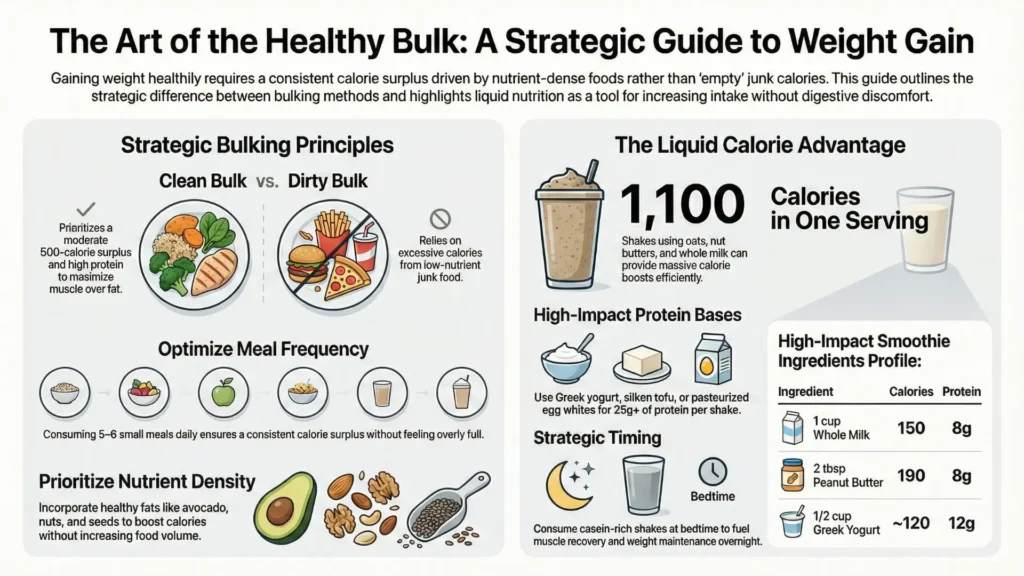
Let’s simplify this: the eat everything approach, often called dirty bulking, is usually a mistake. While it’s tempting to grab samosas or sugary sweets to hit your calorie goals, this often leads to what we call the Desi Belly or being thin-on-the-outside, fat-on-the-inside (TOFI).
For the Indian body type, gaining weight through junk food significantly increases the risk of Type 2 Diabetes and heart disease, even if you still look lean. Consequently, a high-quality weekly diet plan for weight gain focuses on nutrient density rather than just empty calories. This ensures that the weight you put on is functional and doesn’t harm your metabolic health.

Common myths about building a weight gain meal plan
There is a common belief that you need expensive protein powders or mass gainers to see results. However, the Indian Council of Medical Research (ICMR) explicitly advises obtaining proteins from whole-food sources rather than supplements. You don’t need magic pills; you just need a consistent weekly diet plan for weight gain based on Indian kitchen staples.
Another myth is that you should stop all physical activity to save calories. In reality, light strength training or functional movement helps signal your body to use those extra calories for muscle synthesis. Without any exercise, even a healthy nutritious diet for weight gain might lead to unwanted visceral fat around your organs.
The science behind a healthy Indian diet chart
Understanding weight gain requires a look at your Metabolic Capacity. For many Indians, low birth weights can lead to a baseline of lower muscle mass. When we introduce a high Metabolic Load through a high-sugar diet, our bodies struggle to process it safely.
To calculate your needs, we look at your Body Mass Index (BMI).
BMI = weight(kg) / height(m)2
While the global standard for being a person in a higher-weight body is a BMI of 30, the ICMR-NIN guidelines for Indians are stricter to prevent metabolic diseases.
| Category | BMI Cutoff (kg/m2) for Indians |
| Underweight | < 18.5 |
| Normal Weight | 18.5 – 22.9 |
| Higher Weight | 23.0 – 24.9 |
| Obesity | \ge 25.0 |
Top Indian superfoods for your high calorie meal plan
If you want to see faster results, you should leverage calorie-dense staples that are already in your kitchen. Ghee (clarified butter) is a fantastic source of medium-chain fatty acids that provide instant energy without causing systemic inflammation. Similarly, Paneer and Dals provide the essential amino acids required for muscle repair.
Nuts like almonds and walnuts, along with seeds like pumpkin and chia, are calorie bombs that are easy to carry to the office. Furthermore, traditional foods like Sattu (roasted gram flour) can be turned into high-protein drinks that are far more effective and safer than commercial protein shakes.

Your 7-day weekly weight gain diet plan
This weight gain diet plan is designed for the Indian kitchen, focusing on meals that are easy for homemakers to prepare and portable for busy professionals.
Monday: The Energy Foundation
- Breakfast: 2 cucumber-potato sandwiches with butter + 1 glass mango milkshake (no sugar).
- Mid-Morning: 1 cup sweet potato chaat + 1 glass buttermilk.
- Lunch: 2 cups brown rice + 1 cup Rajma curry + 1 cup stir-fried Bhindi + 1 cup curd.
- Evening Snack: 1 glass banana-peanut butter smoothie.
- Dinner: 2 multigrain rotis with ghee + 1 cup Paneer Bhurji + salad.
Tuesday: Protein Power
- Breakfast: 2 Besan Chillas with paneer stuffing + 1 glass pomegranate juice.
- Mid-Morning: 1 apple with a handful of walnuts.
- Lunch: 2 chapatis + 1 cup Chicken or Soya curry + 1 cup Palak Dal + curd.
- Evening Snack: 1 cup roasted makhana + 1 cup tea (with jaggery).
- Dinner: 1 cup Vegetable Pulao + 1 cup Moong Dal + raita.
Wednesday: Fiber & Mineral Focus
- Breakfast: 1 cup Vegetable Upma with peanuts + 1 glass orange juice.
- Mid-Morning: 2 bananas + 1 glass coconut water.
- Lunch: 2 multigrain chapatis + 1 cup Paneer Tikka + 1 cup mixed veg curry + curd.
- Evening Snack: 1 cup boiled chana chaat with lemon and onions.
- Dinner: 1 cup Dal Khichdi with 1 tsp ghee + 1 cup sautéed Lauki.
Thursday: Healthy Fats for Hormones
- Breakfast: 2 Aloo-Paneer parathas with butter + 1 bowl curd.
- Mid-Morning: 1 glass Lassi (sweetened with jaggery) + 5 almonds.
- Lunch: 1 cup Chole + 2 chapatis + ½ cup brown rice + salad.
- Evening Snack: 2 whole-grain toasts with almond butter.
- Dinner: 1 cup Egg Curry + 2 multigrain rotis + seasonal sabzi.
Friday: Gut Health Support
- Breakfast: 1 cup Vegetable Poha with extra peanuts + 2 boiled eggs.
- Mid-Morning: 1 bowl fresh fruit salad (guava/orange).
- Lunch: 1 cup Dal + 1 cup Bhindi fry + 2 chapatis + 1 cup curd.
- Evening Snack: 1 cup sprout salad + 1 glass milk.
- Dinner: 1 cup Soya Chunk Curry + 1 cup brown rice + salad.

Saturday: Muscle Synthesis Focus
- Breakfast: 2 Moong Dal Chillas with paneer filling + 1 glass strawberry shake.
- Mid-Morning: 1 bowl curd with flaxseeds and chia seeds.
- Lunch: 1 cup Fish/Paneer curry + 2 chapatis + ½ cup rice + salad.
- Evening Snack: 1 cup roasted peanuts + 1 glass coconut water.
- Dinner: 1 cup Matar Paneer + 2 multigrain rotis + sautéed carrots.
Sunday: Refueling Day
- Breakfast: 2 eggs (bhurji) + 2 whole-grain toasts + 1 cup milk.
- Mid-Morning: 1 glass banana smoothie with honey and nuts.
- Lunch: 1 cup Chicken/Paneer Biryani + 1 cup Raita + sprout salad.
- Evening Snack: 1 cup vegetable upma + 1 glass fruit juice.
- Dinner: 1 cup Moong Dal + 2 chapatis + 1 tsp ghee + salad.
Mistakes that stall your nutritious diet for weight gain
A very common error is skipping breakfast. When you skip the first meal of the day, you start your metabolic engine in a deficit that is almost impossible to make up later. Additionally, many people drink too much water right before a meal, which fills the stomach and reduces the amount of calorie-dense food they can consume.
Furthermore, failing to manage underlying conditions like PCOS or Thyroid issues can make weight gain difficult. For instance, if you have hypothyroidism, a sluggish metabolism may make you feel tired, but eating the wrong junk calories will only lead to inflammation rather than strength. Always ensure your weight gain diet plan is tailored to your specific medical needs.
Why consistency is key for muscle building foods
Building healthy muscles takes time. While you might see some initial changes in water weight, real muscle growth happens over weeks and months. Therefore, it is vital to stay hopeful and consistent. If you miss a meal, don’t worry—just make sure your next meal is nutrient-dense and fits your weekly diet plan for weight gain.
Moreover, listen to your body. If a certain food causes bloating or discomfort, swap it for another healthy alternative. For example, if milk doesn’t suit you, try curd or paneer, which are often easier to digest while providing the same protein benefits.

Frequently Asked Questions (FAQs)
How can I gain weight in 7 days at home?
To gain weight at home, focus on eating every 3 hours. Include ghee in your rotis, snack on nuts, and drink high-calorie smoothies. Adding 2-3 healthy shakes daily alongside your main meals is a proven way to increase your calorie intake quickly.
Is paneer good for weight gain?
Yes, paneer is a powerhouse of protein and healthy fats. It is particularly effective for vegetarians looking to build muscle mass without the blood sugar spikes associated with refined carbs.
Can I follow this weight gain diet plan if I have diabetes?
Yes, but you must choose complex, low-GI carbohydrates like brown rice, jowar, and bajra. Avoid sugary shakes and stick to whole fruits and high-fiber vegetables to prevent blood sugar spikes while you increase your calories.
Do I need to go to the gym to gain weight?
While a gym isn’t mandatory, functional movement like brisk walking or home-based bodyweight exercises (squats, planks) is recommended. This ensures that the extra weight you gain is muscle rather than visceral fat.
Contact Us
We understand how overwhelming nutrition and weight loss information can feel. With so many opinions and confusing advice online, it’s easy to feel stuck or unsure about what to do next.
At Diet Dekho, you never have to figure it out alone. You can contact us anytime with any questions or concerns. Our expert dietitians are available 24/7 to guide, support, and help you stay on track. Whether your goal is weight loss or building healthier habits, we’re here to make the journey simpler and more sustainable for you.
Disclaimer
This blog is intended to help readers make healthier food choices. Your health should always be the top priority. Before starting any restrictive or special diet, especially if you have a medical condition or health concern, please consult a doctor or a qualified dietitian. Each body responds differently to food and lifestyle changes. Always choose what is safe and suitable for you.

Dr. Ritika is a nutrition and lifestyle expert with 2+ years of experience, helping clients manage weight and health through practical, personalized diet plans.