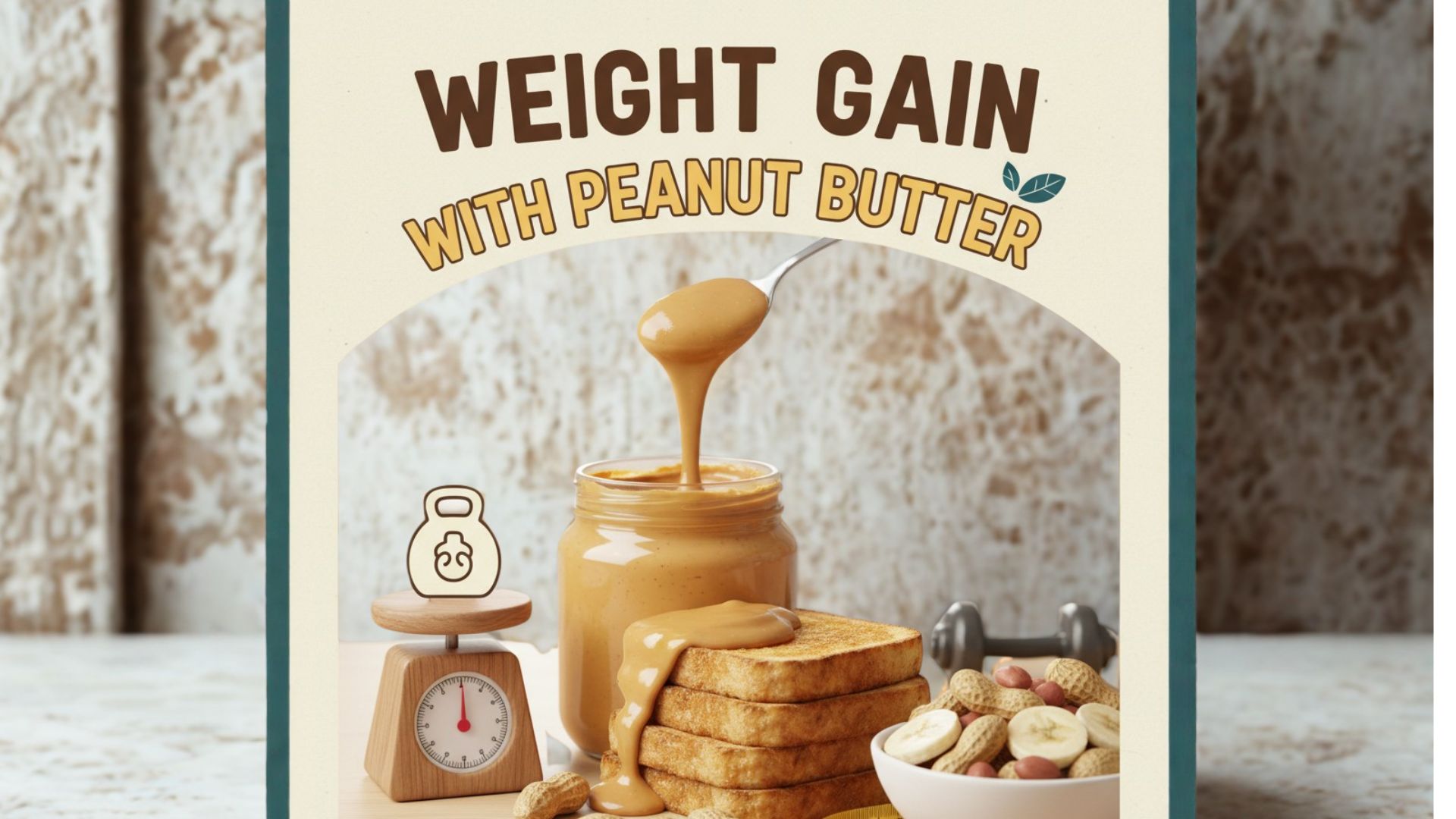
The journey of transformation often begins with a single, relatable frustration. Imagine a young fitness enthusiast named Rohan. Rohan spends hours at the gym, pushes his limits on the bench press, and drinks gallons of water. Yet, despite his dedication, the scale refuses to budge. He feels like he is eating constantly, but his high metabolism acts like a furnace, incinerating every calorie before it can be converted into muscle. This is the classic struggle of the “hard gainer,” and it highlights a fundamental truth in nutrition: volume is not the same as density. For individuals like Rohan, the secret to breaking through a plateau is not necessarily eating more food in terms of physical size, but eating smarter, more calorie-dense options. This is exactly where the strategic use of peanut butter for weight gain becomes a literal life-changer for the body.

Understanding the Hard Gainer’s Bioenergetic Dilemma
Table of Contents
- 1 Understanding the Hard Gainer’s Bioenergetic Dilemma
- 2 The Macro-Nutrient Architecture of Peanut Butter
- 3 The Role of Bioactive Compounds in Muscle Recovery
- 4 Insights from the Harvard T.H. Chan School of Public Health
- 5 Micronutrient Support for Metabolic Efficiency
- 6 Navigating Organic vs. Commercial Peanut Butter
- 7 The Synergy of Peanut Butter and Bananas for Weight Gain
- 8 Strategic Timing for Maximum Mass Gain
- 9 Managing Digestive Health and Avoiding the “Bulking Bloat”
- 10 Peanut Butter vs. Commercial Mass Gainer Shakes
- 11 Crafting a 3000-Calorie Weight Gain Diet Plan
- 12 Creative Recipes: Beyond the Peanut Butter Sandwich
- 13 Summary and Final Thoughts
- 14 Frequently Asked Questions (FAQs)
To understand why peanut butter is so effective, we have to look at the basic math of human biology. Your body operates on a constant energy exchange. If you want to increase your mass, you must maintain a caloric surplus—consuming more energy than your body burns for daily functions and exercise. However, many beginners find it difficult to eat the sheer volume of rice, chicken, and vegetables required to hit a 3,000 or 4,000-calorie target. The stomach has a limited capacity, and the hormone signals for fullness can kick in long before the caloric goal is met. What this really means is that we need a “caloric anchor”—a food that packs massive energy into a tiny physical footprint.
The Caloric Density of Legume-Based Fats
Peanut butter is an energy-dense powerhouse because of its fat content. While carbohydrates and proteins provide 4 calories per gram, fats provide 9 calories per gram. This mathematical reality makes peanut butter one of the most efficient tools in a dietitian’s arsenal. A simple two-tablespoon serving, which is roughly the size of a golf ball, delivers nearly 190 to 200 calories. For a hard gainer, adding four tablespoons of peanut butter to their existing diet is an effortless way to add nearly 400 calories—equivalent to a full extra meal—without the discomfort of feeling overstuffed.
Thermodynamics and Weight Gain Mechanics
The process of gaining weight is governed by the laws of thermodynamics, specifically the first law: energy cannot be created or destroyed, only transformed. When you consume an excess of calories, your body has a choice: it can burn them off as heat, excrete them, or store them as tissue. In a healthy bulking scenario, we want that tissue to be skeletal muscle rather than just adipose fat. Peanut butter facilitates this because it doesn’t just provide “empty” calories from sugar; it provides the structural fats and proteins necessary for building cellular membranes and muscle fibers.

The Macro-Nutrient Architecture of Peanut Butter
When we look at peanut butter nutrition facts, we see a sophisticated balance of macronutrients that supports growth from multiple angles. It isn’t just a fat source; it is a complex food that mirrors the needs of a growing body.
Healthy Fats as Hormonal Precursors
About 75% of the fat in peanut butter is unsaturated, consisting of monounsaturated and polyunsaturated fatty acids. These are the “good fats” that support heart health, but for someone looking to gain weight, they serve an even more critical role: they are precursors to hormones. Testosterone and growth hormone, the primary drivers of muscle synthesis, require dietary fats for their production. A diet too low in fat can actually tank a man’s testosterone levels, making it nearly impossible to gain lean muscle regardless of how much protein is consumed.
The Protein Content and Amino Acid Profile
Peanut butter contains approximately 7 to 8 grams of protein per two-tablespoon serving. While it is often touted as a “high protein” food, here’s the thing: it is actually a high-fat food with a decent protein bonus. From a clinical perspective, peanut protein is “incomplete,” meaning it doesn’t contain all the essential amino acids in the perfect ratios found in animal products. However, when you pair peanut butter with whole-grain bread or dairy, the amino acid profiles complement each other to form a “complete” protein source that the body can use for muscle repair.
| Nutrient Component | Amount per 2 Tbsp (32g) | % Daily Value (approx.) |
| Total Calories | 191 kcal | 10% |
| Total Fat | 16 g | 21% |
| Saturated Fat | 3 g | 15% |
| Monounsaturated Fat | 8 g | N/A |
| Polyunsaturated Fat | 4 g | N/A |
| Protein | 7–8 g | 14–16% |
| Total Carbohydrates | 6–7 g | 2% |
| Dietary Fiber | 2–3 g | 8–10% |
The Role of Bioactive Compounds in Muscle Recovery
Peanuts are technically legumes, but they possess a nutrient profile that rivals the most expensive tree nuts. They are packed with bioactive compounds that most people overlook when they are just counting calories. These compounds act as the “specialized workers” in your body’s city, ensuring that the heavy lifting of weight gain happens smoothly.
Arginine and the Nitric Oxide Pathway
Peanuts have the highest level of arginine among all common foods. Arginine is a semi-essential amino acid that serves as a precursor to nitric oxide. Why does this matter for weight gain? Nitric oxide helps relax the blood vessels, improving circulation. Better blood flow means that when you eat a high-calorie meal, the nutrients are delivered more efficiently to your muscle tissues, facilitating faster healing and growth after a workout.
Resveratrol: The Secret Antioxidant
Most people associate resveratrol with red wine, but peanuts are also an excellent source of this polyphenol antioxidant. Resveratrol has been shown to improve blood flow and may even have protective functions against various diseases. In the context of fitness, it helps manage the systemic inflammation that comes with intense training and a high-calorie diet, ensuring that your body remains a healthy environment for growth.
Phytosterols and Cholesterol Regulation
Peanut butter is rich in phytosterols, which are plant-based compounds that structurally resemble cholesterol. These compounds compete with cholesterol for absorption in the gut. What this really means is that even as you increase your calorie intake to gain weight, the phytosterols in peanut butter help keep your “bad” LDL cholesterol levels in check. This makes peanut butter a much safer tool for bulking than processed fats like butter or lard.

Insights from the Harvard T.H. Chan School of Public Health
A major concern for health-conscious individuals is whether a high intake of peanut butter will lead to metabolic issues like type 2 diabetes. The research suggests the exact opposite. A landmark study from the Harvard School of Public Health, published in the Journal of the American Medical Association, tracked over 83,000 women for 16 years.
Diabetes Risk Reduction Statistics
The findings were profound. Women who consumed at least five tablespoons of peanut butter per week (about 2.5 servings) saw a 21% reduction in the risk of developing type 2 diabetes. If they consumed an ounce of peanuts (the whole-nut equivalent) five or more times a week, the risk dropped by 27% The researchers attributed this to the combination of healthy unsaturated fats, fiber, and magnesium, all of which improve insulin sensitivity.
The Weight Management Paradox
Perhaps the most surprising insight from the Harvard data is that frequent nut eaters tend to have lower Body Mass Indices (BMIs) and lower overall body weights than those who avoid nuts. This seems counterintuitive when we are talking about peanut butter for weight gain. However, it highlights the importance of satiety. Peanut butter is so filling that it naturally prevents overeating later in the day. For someone looking to gain weight, this means we must be intentional about adding peanut butter on top of a healthy diet, rather than letting it displace other foods.
Micronutrient Support for Metabolic Efficiency
When you are pushing your body to grow, you are essentially asking it to run a high-performance engine. You can’t just provide fuel (calories); you need the spark plugs (micronutrients) to make that fuel burn effectively.
Magnesium: The Multi-Tasking Mineral
Peanut butter is a significant source of magnesium, providing about 15% of your daily needs in a single serving. Magnesium is involved in over 300 biochemical reactions, including the synthesis of ATP—the energy currency of your cells. For someone training to gain mass, magnesium is critical for nerve transmission, muscle contraction, and maintaining a healthy heart rhythm.
Vitamin E and Cellular Protection
Bulking puts stress on your cells. The act of lifting heavy weights creates oxidative stress. Peanut butter provides a healthy dose of Vitamin E, a powerful fat-soluble antioxidant that protects your cell membranes from damage.3 It is also essential for repairing the plasma membranes of muscle cells, which are naturally torn during exercise.14 Without sufficient Vitamin E, your muscle growth may be stunted because the cells cannot heal properly.
B-Vitamins for Energy Metabolism
Peanut butter is rich in B-vitamins, particularly Niacin (B3) and Vitamin B6. Niacin is crucial for converting the fats and carbohydrates you eat into usable energy. Meanwhile, Vitamin B6 is involved in protein metabolism. If your goal is to turn peanut butter protein content into actual muscle tissue, these vitamins are the non-negotiable chemical workers that make the transition possible.
As a dietitian, one of the most frequent questions I get is: “Does the brand matter?” The answer is a resounding yes. The way a peanut butter is processed can significantly change its health profile, even if the calorie count remains similar.
The Purity of Natural Selections
A true “natural” peanut butter contains exactly two things: peanuts and maybe a dash of salt. These are superior for weight gain because they lack the “fillers” that commercial brands use to save money. In natural varieties, the oil will separate and rise to the top. While this requires a bit of stirring, it is a sign of purity. You are getting 100% of the peanut’s beneficial oils without any chemical tampering.
The Industrial Additives in Commercial Jars
Conventional peanut butter brands often add hydrogenated vegetable oils (like palm or cottonseed oil) to keep the product smooth and “no-stir”. They also frequently add refined sugar or corn syrup to appeal to a sweeter palate. While these ingredients aren’t necessarily “toxic” in small amounts, they don’t contribute to your muscle-building goals. They add “empty” calories that can lead to inflammation and energy crashes.
Powdered Peanut Butter: A Tool for Cutting, Not Bulking
Lately, powdered peanut butter has become popular. It is made by pressing out nearly 80% of the natural oils, leaving a high-protein powder. While this is great for someone looking to lose weight while keeping protein high, it is generally not the best choice for someone aiming for weight gain. For bulking, we want those fats. The fats are where the caloric density and hormonal support live. If you are struggling to gain weight, stick to the full-fat, creamy or crunchy jarred versions.
| Feature | Natural / Organic | Commercial / Standard |
| Main Ingredient | 100% Roasted Peanuts | 90% Peanuts + Additives |
| Added Sugars | Usually 0g | 2-3g per serving |
| Stabilizers | None (Requires stirring) | Hydrogenated Oils |
| Texture | Gritty/Liquid (Natural oil) | Smooth/Velvety |
| Pesticide Risk | Lower (Organic) | Potentially Higher |
The Synergy of Peanut Butter and Bananas for Weight Gain
There is a reason the peanut butter and banana sandwich is a staple in locker rooms across the world. These two foods share a chemical synergy that makes them a “power couple” for anyone looking to pack on healthy mass.
Electrolyte Balance and Potassium
Bananas are the ultimate source of potassium, a mineral that helps balance fluids in the body and prevents muscle cramps. When you are eating a high-calorie diet, you are often taking in more sodium, which can cause water retention. The potassium in bananas counteracts this sodium, helping you maintain a “leaner” look even as you gain weight.
Glycemic Response and Satiety
Bananas provide quick-releasing natural sugars (fructose and glucose) that are perfect for a pre-workout energy boost. However, eating a banana alone can sometimes cause a blood sugar spike followed by a crash. By adding the healthy fats and protein from peanut butter, you slow down the absorption of those sugars. This provides a steady, sustained release of energy that fuels you through a heavy lifting session and keeps your insulin levels stable.
The Magnesium-Tryptophan Connection for Growth
Growth happens when you sleep, not when you are in the gym. Peanut butter and bananas both contain magnesium and the amino acid tryptophan. Tryptophan is a building block for melatonin and serotonin—the hormones that regulate your sleep cycles. Consuming a peanut butter and banana snack an hour before bed can improve the quality of your deep sleep, which is exactly when your body releases the most growth hormone to repair the tissues you stressed during the day.
Strategic Timing for Maximum Mass Gain
If you want to know how to eat peanut butter to gain weight effectively, you have to look at your daily schedule. Timing is the difference between feeling energized and feeling like a lead weight.
Pre-Workout: The Background Energy
Eating a huge amount of fat right before a workout is usually a mistake. Fat takes a long time to digest, and it can make you feel sluggish if your body is trying to digest a heavy meal while you are trying to squat. Instead, have a small serving—about 1 tablespoon—on a piece of fruit roughly 60 minutes before you hit the gym. This provides a steady background of energy without weighing down your digestive system.
Post-Workout: The Recovery Accelerator
After your workout, your muscles are like sponges. They are screaming for nutrients to begin the repair process. While you should prioritize a fast-digesting protein like whey or egg whites, adding a serving of peanut butter provides the dense calories needed to ensure your body doesn’t burn that protein for energy. Pairing peanut butter with a carbohydrate source like oats or a smoothie helps restock your glycogen (muscle fuel) stores and kickstarts recovery.
Mid-Day Snacks: The Caloric Bridge
For many people, the biggest challenge is the gap between lunch and dinner. This is where catabolism (muscle breakdown) can happen if you go too long without food. A “high calorie snack with peanut butter,” such as peanut butter on a rice cake or mixed into a cup of Greek yogurt, acts as a bridge. It keeps your amino acid levels stable and ensures you are constantly in a “fed” state conducive to growth.
Managing Digestive Health and Avoiding the “Bulking Bloat”
One of the most common complaints among beginners starting a high-calorie diet is bloating. If you go from eating 1,500 calories to 3,000 calories overnight, your gut is going to rebel. But there are ways to use peanut butter for weight gain without feeling like a balloon.
Sodium Sensitivity and Water Retention
Many commercial peanut butters contain significant amounts of added salt. If you are eating four or five tablespoons a day, that sodium adds up quickly. Excess sodium causes your body to hold onto water, which leads to puffiness and bloating. To avoid this, always opt for “unsalted” or “no salt added” natural peanut butter. You can always add a tiny pinch of high-quality sea salt if you need the flavor, but you remain in control of the dosage.
The Role of Hydration and Fiber
Peanut butter has a decent amount of fiber—about 2 to 3 grams per serving. Fiber is great for digestion, but only if you drink enough water. Without adequate hydration, fiber can actually cause constipation and gas. If you are increasing your peanut butter intake, make sure you are also increasing your water intake. Think of water like a “slip-and-slide” for the food in your GI tract.
Digestive Enzymes and Probiotic Support
If you find that peanut butter feels “heavy” in your stomach, try pairing it with a probiotic-rich food like Greek yogurt or kefir. The good bacteria in these foods help break down the fats and proteins more efficiently. Additionally, chewing your food thoroughly—at least 15 to 20 times per bite—mixes it with salivary amylase, which begins the digestive process before the food even hits your stomach.

Peanut Butter vs. Commercial Mass Gainer Shakes
Walk into any supplement store, and you’ll see massive tubs of “Mass Gainer” powder. They promise 1,000 calories per shake and “explosive growth.” But are they better than a simple jar of peanut butter?
Wholesome Nutrition vs. Industrial Fillers
Mass gainers are essentially “chemists’ cocktails.” They are usually made from maltodextrin (a cheap, high-glycemic carbohydrate), whey protein, and a long list of artificial flavors and thickeners. While they provide calories, they can often lead to “dirty bulking”—where you gain a lot of fat and very little muscle due to the massive insulin spikes. Peanut butter, on the other hand, is a whole food. It provides slow-releasing energy, natural vitamins, and essential minerals that mass gainers often lack.
The Cost-Benefit Analysis
Weight gain is an expensive endeavor. Eating 3,000+ calories a day adds up. A high-quality mass gainer can cost $3 to $5 per serving. In contrast, a tablespoon of peanut butter provides about 100 calories for about $0.07. For a student or a beginner on a budget, peanut butter is the most cost-effective way to hit your caloric targets without going broke.
Satiety and “The Fullness Factor”
Mass gainers are designed to be “liquid calories” that don’t make you feel full, which can sometimes lead to over-consumption and unwanted fat gain. Peanut butter is naturally filling because of its fat and fiber content. This acts as a natural regulatory mechanism, limiting excessive energy intake and supporting healthier body-weight regulation. It encourages a “lean bulk” rather than an uncontrolled weight gain.
| Feature | Peanut Butter | Commercial Mass Gainer |
| Source | Whole Food / Legume | Processed Supplement |
| Digestion Speed | Slow / Sustained | Fast / Spike-prone |
| Micronutrients | High (Natural B, E, Mg) | Low (Unless fortified) |
| Cost per 100 kcal | ~$0.07 | ~$0.50 – $1.00 |
| Best For | Consistent growth & health | Emergency calories post-workout |
Crafting a 3000-Calorie Weight Gain Diet Plan
For a beginner, the goal is often to hit the “magic number” of 3,000 calories. Here is how a dietitian would structure a day using peanut butter as the caloric anchor to ensure you reach your goal without feeling overwhelmed.
Breakfast: The Nutty Start (750 Calories)
- 1 cup dry oats cooked in 1.5 cups whole milk.
- 2 tablespoons natural peanut butter stirred in.
- 1 medium banana, sliced on top.
- 1 tablespoon honey and a sprinkle of cinnamon.
- Why this works: You get complex carbs from the oats, protein from the milk, and the “caloric punch” from the peanut butter to keep you fueled until lunch.
Mid-Morning Snack: The Protein Bridge (350 Calories)
- 1 cup Greek yogurt (5% fat).
- 1/4 cup granola.
- 1 tablespoon peanut butter drizzled over the top.
- Why this works: The high protein in the yogurt pairs with the healthy fats in the peanut butter to support muscle protein synthesis.
Lunch: The Structural Meal (650 Calories)
- 5 oz grilled chicken breast or 6 oz Paneer.
- 1.5 cups cooked brown rice.
- 1 cup roasted broccoli in olive oil.
- Why this works: This is your “clean” meal focused on lean protein and complex carbohydrates to provide steady energy for the afternoon.
Afternoon “Bulking” Smoothie (650 Calories)
- 1.5 cups whole milk.
- 2 tablespoons peanut butter.
- 1 scoop whey protein (chocolate or vanilla).
- 1/2 cup frozen berries or a handful of spinach.
- Why this works: Liquid calories are easier to consume when you aren’t feeling particularly hungry. This shake provides a massive infusion of calories and protein.
Dinner: The Recovery Feast (600 Calories)
- 6 oz Salmon or Grilled Steak.
- 1 large sweet potato.
- Mixed green salad with avocado dressing.
- Why this works: Omega-3s from the salmon and healthy fats from the avocado help reduce the inflammation from your training day.
Total Daily Tally: ~3,000 Calories
This plan uses about 5 tablespoons of peanut butter spread across the day. By integrating it into multiple meals, you reach your caloric goal naturally and avoid the “one big heavy meal” that leads to lethargy and bloating.

Creative Recipes: Beyond the Peanut Butter Sandwich
To stick to a weight gain plan, you need variety. Eating the same sandwich every day will eventually lead to “palate fatigue.” Here are a few expert-level ways to keep things interesting.
Peanut Butter Protein Truffles (The “Fat Bomb”)
These are perfect for someone who is always on the go.
- Ingredients: 1/2 cup natural peanut butter, 1/4 cup honey, 1 cup dry oats, 1/2 cup chocolate chips, 1 tablespoon flaxseeds.
- Directions: Mix everything in a bowl until it forms a dough. Roll into small balls (about 1 inch). Store in the fridge.
- The Benefit: Each ball is about 100-150 calories. If you realize at the end of the day you are 300 calories short of your goal, just eat two of these truffles.
Thai-Style Peanut Salad Dressing
Who says peanut butter is only for dessert?
- Ingredients: 2 tablespoons peanut butter, 1 tablespoon soy sauce, 1 teaspoon honey, 1 teaspoon sriracha, a splash of warm water.
- Usage: Whisk until smooth and pour over a large bowl of chicken salad or grain bowls.
- The Benefit: It turns a boring “healthy” salad into a high-calorie, nutrient-dense meal without adding junk fats like ranch dressing.
The “Bedtime” PB & Milk
- Ingredients: 1 cup warm milk, 1 tablespoon peanut butter, a pinch of nutmeg.
- Directions: Whisk the peanut butter into the warm milk until melted.
- The Benefit: The combination of casein protein from the milk and slow-digesting fats from the peanut butter provides a “drip feed” of amino acids to your muscles while you sleep.

Summary and Final Thoughts
Achieving a healthy weight gain is not about eating everything in sight. It is about a calculated, intentional increase in caloric density. Peanut butter is the ultimate tool for this mission. It offers a unique combination of healthy fats for hormonal health, plant-based protein for muscle repair, and a suite of micronutrients that support metabolic efficiency.
Here’s the final takeaway: start slow. Don’t try to eat half a jar today. Add one tablespoon to your breakfast and one to your post-workout shake. Monitor how your body feels, watch the scale move slowly but surely, and prioritize the quality of the peanut butter you buy. In the world of fitness, consistency beats intensity every time.
Are you ready to stop guessing and start growing? Our team of expert dietitians at Diet Dekho can create a fully customized weight gain plan tailored to your body type, metabolism, and lifestyle. Take the first step toward the physique you’ve always wanted.
BOOK YOUR APPOINTMENT
Frequently Asked Questions (FAQs)
How to eat peanut butter to gain weight without getting fat?
To ensure you gain muscle instead of just body fat, you must pair your increased peanut butter intake with a consistent strength-training program. Consuming 2-4 tablespoons of peanut butter daily provides the necessary calories and healthy fats to support muscle growth, but the “stimulus” for that growth must come from the gym.
Is peanut butter for weight gain suitable for bodybuilders?
Yes, peanut butter is a staple for bodybuilders, especially during the “off-season” or bulking phase. Its high calorie-to-volume ratio makes it easy to hit high caloric targets. Additionally, its magnesium and Vitamin E content help with muscle recovery and cellular repair after heavy lifting sessions.
Which is better: creamy or crunchy peanut butter for bulking?
Nutritionally, there is almost no difference between creamy and crunchy peanut butter. Both offer the same amounts of protein, fats, and calories. The choice depends entirely on your preference. Some find crunchy peanut butter more satisfying, while creamy is often easier to mix into smoothies and shakes.
Can I eat peanut butter every day?
For most healthy individuals, eating 1-2 servings of peanut butter daily is perfectly safe and even beneficial for heart health and blood sugar regulation. If you are using it for weight gain, just be mindful of the total caloric balance of your day and ensure you are choosing natural varieties without added hydrogenated oils or excess sugars.
Will peanut butter cause acne or skin issues during a bulk?
While there is no direct link between peanuts and acne for most people, some individuals may be sensitive to the omega-6 fatty acids found in many nuts if their diet is low in omega-3s. To maintain clear skin while bulking, ensure you are also eating sources of omega-3s like salmon, walnuts, or chia seeds to keep your inflammation levels balanced.
BOOK YOUR APPOINTMENT
Abhinav is the Founder of Diet Dekho, helping people manage weight and lifestyle health through simple, practical nutrition and personalized diet plans.