
The challenge of achieving a sustainable weight loss diet for women in the Indian context is increasingly complex, as modern lifestyles intersect with unique physiological and hormonal hurdles. While many struggle with the frustration of a stuck scale despite rigorous efforts, the underlying reasons often span beyond simple calorie counting to include insulin resistance, PCOD, and shifting metabolic rates. Understanding the nuances of a weight loss diet for women is the first step toward reclaiming health, and for many, the journey begins by mastering a balanced Indian diet for weight loss.
A successful weight loss diet for women in India involves prioritizing high-protein sources like dal, paneer, and eggs, while swapping refined grains for high-fiber millets like jowar, bajra, or ragi. By maintaining a 1200–1500-calorie window, finishing dinner by 7:30 PM, and following a structured Indian diet for weight loss, higher-weight individuals can manage hormonal imbalances and achieve sustainable results.
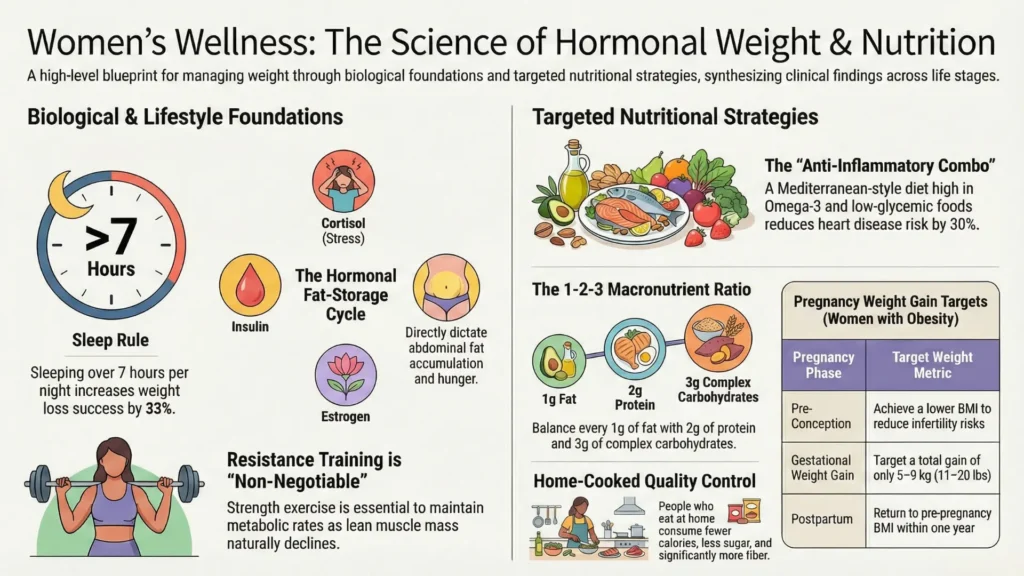
Why is it harder for women to lose weight?
Table of Contents
- 1 Why is it harder for women to lose weight?
- 2 Emotional Connect: The frustration of the stuck scale
- 3 Common Myths: Why crash dieting isn’t the answer for female metabolism
- 4 Real Reasons: Understanding hormones, PCOS, and daily routine impacts
- 5 The ICMR 2024 Guidelines: A Blueprint for Female Nutrition
- 6 Practical Indian Food Solutions: Swaps for Poha, Dalia, and Roti
- 7 Sample Daily Routine: A Simple Morning-to-Night Diet Flow
- 8 Common Mistakes: Why skipping meals actually stops weight loss
- 9 Gentle Motivation: Why slow progress is better than no progress
- 10 Conclusion: Taking the First Step Toward Holistic Health
- 11 Contact Us
- 12 Disclaimer
The biological architecture of the female body is fundamentally designed for energy conservation and reproductive resilience, which often makes weight loss a more strenuous process for women compared to men. Research indicates that higher body weight in women leads to complex interactions among adipose tissue, insulin, and sex hormones, which can cause functional abnormalities in the hypothalamic-pituitary-ovarian (HPO) axis. This axis regulates everything from the menstrual cycle to the metabolic rate, meaning any disruption can cause the body to prioritize fat storage over fat burning.
In the Indian population, this challenge is further influenced by the skinny-fat pattern, clinically described as Metabolically Unhealthy Normal-Weight (MUNW), in which metabolic risk persists despite a normal-looking body weight. A significant portion of Indian women may appear to have a healthy Body Mass Index (BMI) but possess high levels of visceral or abdominal fat. National Family Health Survey (NFHS-5) data reveal that although only 23% of women may be categorized as having a higher body weight by BMI standards, nearly 40% experience abdominal weight challenges. This pattern of fat accumulation around the abdomen increases the risk of early metabolic issues, which is why a well-structured Indian diet for weight loss becomes important even for individuals who may not appear to have a higher body weight.
| Category of Weight/Metabolism | BMI Range (Asian-Indian) | Metabolic Risk Level |
| Underweight | < 18.5 | High (Nutritional Deficiency) |
| Normal | 18.5 – 22.9 | Moderate (if Abdominal Fat is high) |
| Higher weight | 23.0 – 24.9 | High |
| Higher Weight Body | > 25.0 | Very High |
The data suggest that the threshold for health among Indian women is lower than global standards. According to the WHO and ICMR, a BMI of 23 kg/m² is used as the cutoff for higher weight in Indians, rather than the global standard of 25 kg/m². This adjustment reflects evidence that Indian populations are more likely to develop conditions like diabetes and heart disease at comparatively lower body weights. This heightened metabolic vulnerability means that a weight loss diet for women must be more precise and nutrient-dense than a standard global template.
Emotional Connect: The frustration of the stuck scale
For many women, the journey toward a healthier weight is marked by a specific emotional fatigue. The stuck scale represents more than a numerical plateau; it often signals chronic stress and elevated cortisol. When a professional or a homemaker balances a demanding schedule, the body often enters a survival mode, holding onto fat as a protective mechanism. This is particularly true in the Indian context, where women often prioritize the family’s nutritional needs over their own, leading to irregular meal times.
The psychological impact of a weight loss diet plan for women cannot be overlooked. The pressure to see immediate changes often leads to a cycle of restriction and excessive consumption during high-stress periods. However, slow progress is statistically more likely to result in long-term maintenance. The analysis of successful weight management indicates that consistent, small changes to the daily routine—such as moving from white rice to brown rice or adding 15 minutes of walking—are more effective than radical, unsustainable shifts.

Common Myths: Why crash dieting isn’t the answer for female metabolism
The Indian weight-loss landscape is crowded with quick-fix solutions that often do more harm than good to women’s metabolisms. One of the most pervasive myths is that lemon and honey water is an effective primary fat burner. While lemon provides vitamin C and honey offers a more natural sugar alternative, there is no scientific evidence that this mixture triggers a biochemical reaction to melt adipose tissue. Industrialist Harsh Goenka recently highlighted this humorously, noting that after two months of the trend, he had only lost the weight of the lemons and honey he purchased.
Another dangerous myth is that skipping dinner or drastically reducing food intake will lead to fat loss. In reality, severe calorie restriction can trigger a drop in the basal metabolic rate (BMR). When the body receives significantly fewer calories than it needs for basic functions, it slows down energy expenditure. On a weight-loss diet for women, this means that once normal eating resumes, weight gain happens even faster.
| Common Diet Myth | The Scientific Reality |
| Ghee causes instant weight gain | Ghee contains CLA and MCTs that can support metabolism in moderation. |
| Rice at night is always bad | Total daily calories matter more than the specific timing of rice consumption. |
| Chickpeas are a pure protein source | Every 1g of chickpea protein comes with 3g of carbohydrates. |
| No-fat diets are best | Women need healthy fats for hormone production and vitamin absorption. |
The misconception that all fats are harmful has led many women to abandon traditional staples like desi ghee. However, pure A2 ghee, when used correctly (1–2 teaspoons a day), can actually strengthen the Agni, or digestive fire, aiding in the absorption of fat-soluble vitamins (A, D, E, and K), which are critical for hormonal balance.
Real Reasons: Understanding hormones, PCOS, and daily routine impacts
To create a truly effective weight loss diet for women, one must address the underlying hormonal drivers. Polycystic Ovary Syndrome (PCOS) is a major contributor to weight struggles in India, affecting approximately 7.2% to 19.6% of women depending on the diagnostic criteria used. This condition is characterized by insulin resistance, where the body’s cells do not respond effectively to insulin, leading to elevated blood sugar and increased fat storage, particularly in the abdomen.
| PCOS Comorbidity in Indian Women | Prevalence Percentage |
| Dyslipidemia (High Cholesterol) | 91.9% |
| Higher Weight Status (BMI > 25) | 43.2% |
| Non-alcoholic Fatty Liver Disease | 32.9% |
| Metabolic Syndrome | 24.9% |
| Hypertension | 8.3% |
| Diabetes | 3.4% |
In addition to PCOS, thyroid disorders, specifically subclinical hypothyroidism, are prevalent in 15.6% of Indian women. This condition slows metabolic rate, leading to unexplained weight gain and fatigue. An Indian diet for weight loss and managing these conditions must focus on a low-glycemic index (GI) approach to stabilize blood sugar and support thyroid function with specific micronutrients such as selenium and zinc.
The daily routine also plays a pivotal role. The ICMR–National Institute of Nutrition (NIN) Dietary Guidelines 2024 highlight that the modern Indian diet has moved away from traditional coarse grains and pulses toward ultra-processed, calorie-dense foods. This epidemiological transition is responsible for a significant portion of the disease burden in India, with 56.4% of all diseases attributed to unhealthy diets.

The ICMR 2024 Guidelines: A Blueprint for Female Nutrition
The 2024 revised guidelines from the ICMR-NIN represent a progressive shift in addressing the nutritional needs of the Indian population. These guidelines are particularly relevant for women and serve as a blueprint for an effective Indian diet for weight loss, emphasizing increasing vegetable intake and diversifying protein sources.
| Nutritional Aspect | 2011 ICMR Guideline | 2024 ICMR Guideline |
| Total Vegetable Intake | 300g per day | 400g per day |
| Green Leafy Vegetables | 50g per day | 100g per day |
| Added Sugar Limit | General restriction | < 5% of total calories |
| Salt Intake | < 5g per day | < 5g per day (focus on processing) |
| Whole Grains | General preference | 50% of total cereal intake |
The guidelines suggest that a balanced weight loss diet for women should provide no more than 45% of total calories from cereals and millets, while at least 15% should come from pulses, beans, and meat. This is a critical adjustment for many Indian households where rice or roti often constitutes 70–80% of the plate. Reducing the cereal portion and increasing the protein and vegetable portions is the most effective way to lower the meal’s overall glycemic load.
Practical Indian Food Solutions: Swaps for Poha, Dalia, and Roti
The key to a sustainable diet for weight loss for female seekers lies in swapping, not skipping. For the busy professional or the homemaker, these changes are central to an Indian diet for weight loss and are easy to implement in a standard kitchen.
Rethinking the Breakfast Staples
While Poha and Upma are traditional favorites, they are primarily simple carbohydrates. To make them suitable for a weight loss diet for women, one should increase the volume of vegetables and add a protein source.
- Poha Swap: Instead of a large bowl of flattened rice, use a smaller portion and mix in half a cup of boiled sprouts or peanuts.
- Dalia Hack: Vegetable Dalia is an excellent high-fiber option, but adding sautéed paneer or a boiled egg on the side makes it a complete meal that keeps hunger at bay for hours.
- Oats Upma: Switching from semolina (rava) to rolled oats provides beta-glucan, a type of fiber that supports heart health and weight management.
The Roti and Rice Dilemma
Most Indian families consume wheat or rice at every meal. However, refined wheat (maida) and white rice have high glycemic indices.
- The Millet Rotation: Integrating ragi (finger millet), jowar (sorghum), and bajra (pearl millet) into the diet is essential. These nutricereals are higher in fiber and minerals, such as calcium and iron.
- The Roti Strategy: A weight loss diet for women should prioritize multigrain rotis. Adding grated vegetables like bottle gourd (lauki) or spinach to the dough increases the volume and fiber without adding significant calories.

Sample Daily Routine: A Simple Morning-to-Night Diet Flow
Designing an Indian diet chart for weight loss for females requires a balance of convenience and nutrition. The following sample routine is based on a 1200–1400 calorie requirement, which is the average needed for sustainable fat loss in sedentary to moderately active Indian women.
Early Morning (6:30 AM – 7:30 AM)
Starting the day with hydration is non-negotiable.
- Option: 1 glass of warm water with lemon or 1 cup of methi-seed-soaked water.
- Add-on: 5 soaked almonds and 2 walnuts. These provide healthy fats and help stabilize blood sugar levels throughout the day.
Breakfast (8:30 AM – 9:30 AM)
Breakfast should be the most protein-dense meal to prevent mid-morning energy crashes.
- Option 1: Moong Dal Chilla (2) with mint chutney. This is high in protein and fiber.
- Option 2: Vegetable Poha or Upma with a side of 1–2 boiled egg whites.
- Option 3: Ragi Dosa with tomato chutney (no added salt).
Lunch (1:00 PM – 2:00 PM)
The Perfect Plate should be half vegetables, one-quarter protein, and one-quarter complex carbs.
- Fiber: 1 bowl of fresh salad (cucumber, carrot, beetroot).
- Protein: 1 bowl of dal (moong, masoor, or toor) or 100 g of grilled paneer/tofu.
- Carbohydrate: 1 multigrain roti or 1/2 cup of brown rice or millet.
- Probiotic: 1 small bowl of low-fat, sugar-free curd.
Evening Snack (4:30 PM – 5:30 PM)
This is the danger zone where most diet slips happen.
- Option: Roasted Makhana (fox nuts) or a small bowl of sprout chaat.
- Beverage: Coconut water or 1 cup of masala chai (without sugar and with low-fat milk).
Dinner (7:30 PM – 8:30 PM)
Dinner should be light and consumed at least 2–3 hours before sleep to allow for proper digestion.
- Option 1: A large bowl of vegetable soup with 100 g of sautéed chicken or paneer.
- Option 2: 1 jowar roti with a bowl of green leafy vegetables (palak or methi).
- Option 3: 1/2 cup of quinoa or dalia khichdi with plenty of mixed vegetables.

Common Mistakes: Why skipping meals actually stops weight loss
The most common error in an Indian diet for weight loss is skipping meals to save calories. For the busy professional, skipping breakfast often leads to a massive energy dip by noon, resulting in the consumption of unhealthy office snacks or a larger-than-necessary lunch.
Furthermore, many women fall into the trap of liquid calories. Drinking multiple cups of tea with sugar and full-cream milk can easily add 300–400 calories to the day without providing any satiety. Switching to low-fat milk and removing sugar altogether can make a significant difference in a weight-loss diet for women over months.
The Importance of Hydration
Often, the body confuses thirst signals for hunger. Maintaining a 2.5–3 liter water intake is essential for metabolic efficiency. Adding jeera (cumin) or ajwain (carom) to water can help reduce bloating, a common complaint among Indian women due to high-sodium or high-carb intakes.
Gentle Motivation: Why slow progress is better than no progress
The journey toward a healthier weight is a marathon, not a sprint. In a society where festive celebrations often revolve around high-calorie sweets and fried foods, maintaining an Indian diet for weight loss requires resilience and self-compassion. If you indulge in a cheat meal during a family wedding or a festival, it is not a reason to abandon the entire plan.
The most successful participants in the Diet Dekho ecosystem are those who view weight loss as a byproduct of improved health. Focusing on non-scale victories—such as improved energy levels, better skin, and more regular menstrual cycles—can provide the motivation needed to stay the course.
Conclusion: Taking the First Step Toward Holistic Health
Redefining a weight loss diet for women within the Indian lifestyle involves a shift from restriction to nourishment. By understanding the unique challenges faced by the Indian female population—from PCOS to abdominal weight challenges—we can move away from fad diets and toward sustainable, science-backed nutrition.
The 2024 ICMR-NIN guidelines provide a clear roadmap: more vegetables, more protein, and fewer refined carbs. Whether you are a busy professional or a homemaker, starting your Indian diet for weight loss with these principles remains the foundation of lasting health.
Ready to stop guessing and start seeing results? The path to a healthier you begins with a plan tailored to your unique body chemistry and lifestyle.

Frequently Asked Questions (FAQ)
What is the best weight loss diet for women?
There is no single best diet for all women. A balanced diet with adequate protein, fiber-rich foods, healthy fats, and a moderate calorie deficit works best for sustainable weight loss. The diet should match a woman’s age, activity level, and health conditions.
How is a women’s weight loss diet different from men’s?
Women generally require fewer calories than men due to lower muscle mass and different hormonal patterns. Women’s diets also need to support hormonal health, bone health, and iron needs, making extreme calorie restriction riskier for women.
How many calories should a woman eat for weight loss?
Most women lose weight safely by consuming about 300–500 calories less than their daily requirement. For many, this falls roughly between 1,200 and 1,600 calories per day, depending on height, age, and activity level.
What foods should women avoid while trying to lose weight?
Women should limit ultra-processed foods, sugary drinks, refined carbohydrates, fried foods, and excessive added sugars. These foods increase calorie intake without improving fullness or nutrition.
Can women lose weight without strict dieting?
Yes. Many women lose weight through portion control, balanced meals, regular eating patterns, and lifestyle changes without following strict or restrictive diets. Consistency matters more than rigid rules.
How does hormonal imbalance affect weight loss in women?
Hormonal imbalances can affect appetite, fat storage, insulin sensitivity, and metabolism, making weight loss slower or more difficult. This does not make weight loss impossible, but it often requires more structured nutrition and lifestyle support.
Is a weight loss diet safe for women with PCOS or thyroid issues?
Weight loss diets can be safe and beneficial for women with PCOS or thyroid disorders when they are balanced and not overly restrictive. Extreme diets may worsen symptoms and should be avoided. Medical or dietitian guidance is strongly recommended.
Contact Us
We understand how overwhelming nutrition and weight loss information can feel. With so many opinions and confusing advice online, it’s easy to feel stuck or unsure about what to do next.
At Diet Dekho, you never have to figure it out alone. You can contact us anytime with any questions or concerns. Our expert dietitians are available 24/7 to guide, support, and help you stay on track. Whether your goal is weight loss or building healthier habits, we’re here to make the journey simpler and more sustainable for you.
Disclaimer
This blog is intended to help readers make healthier food choices. Your health should always be the top priority. Before starting any restrictive or special diet, especially if you have a medical condition or health concern, please consult a doctor or a qualified dietitian. Each body responds differently to food and lifestyle changes. Always choose what is safe and suitable for you.

Dr. Ritika is a nutrition and lifestyle expert with 2+ years of experience, helping clients manage weight and health through practical, personalized diet plans.