Imagine stepping onto the scale after a week of disciplined dieting and intense workouts, only to find the numbers have jumped up by three pounds overnight. This scenario often triggers a spiral of frustration for those pursuing weight loss during periods, leading many to believe their hard work has been wasted. Here’s the thing: that sudden spike is almost never fat. It is a predictable, physiological response to a complex hormonal dance involving water retention, shifting metabolic rates, and biochemical changes in the brain. What this really means is that the body is not failing; it is simply undergoing a monthly recalibration that requires a different set of strategies for success.
The Physiological Landscape of Menstrual Weight Fluctuations
Table of Contents
- 1 The Physiological Landscape of Menstrual Weight Fluctuations
- 2 The Mechanics of Water Retention and Menstrual Bloating Hacks
- 3 Metabolic Rate Shifts and the Thermic Surge
- 4 Period Cravings Management and Neurotransmitter Dips
- 5 The BMI Correlation: How Weight Affects the Cycle
- 6 Exercise Optimization: Best Exercise for Period Phases
- 7 Micronutrient Focus: Hormonal Weight Loss Tips
- 8 Psychological Barriers: Sleep, Stress, and Cortisol
- 9 Myth-Busting: Period Fat Burning Realities
- 10 Practical Daily Strategies for Pms Weight Management
- 11 Conclusion: Embracing the Cycle for Long-Term Success
- 12 Frequently Asked Questions (FAQs)
The menstrual cycle is a sophisticated endocrine process divided into two primary halves: the follicular phase and the luteal phase. Understanding these phases is the first step toward effective pms weight management. The follicular phase begins with the first day of menstruation and lasts until ovulation. During this time, estrogen levels gradually rise, and insulin sensitivity is generally at its peak. This makes the early part of the cycle an ideal window for higher carbohydrate intake and high-intensity exercise, as the body is primed to use glucose efficiently.
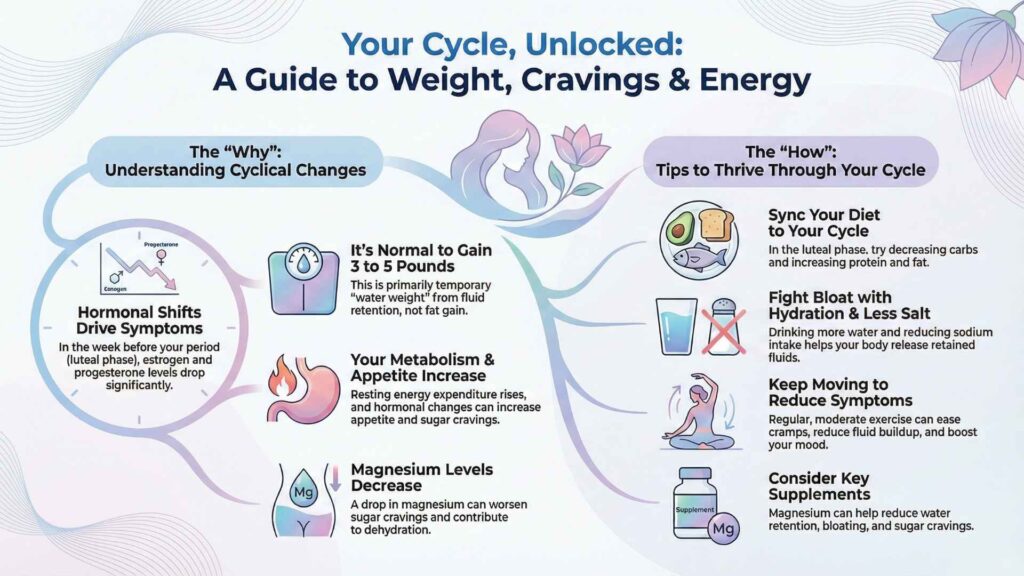
The transition into the luteal phase, which occurs after ovulation, introduces a significant shift in the body’s metabolic priorities. Progesterone becomes the dominant hormone, rising to prepare the uterine lining for a potential pregnancy. This surge in progesterone is the primary driver of period weight gain. It acts on the kidneys and the cardiovascular system, triggering the retention of sodium and water. Research indicates that this fluid accumulation can result in a temporary increase of one to five pounds on the scale.
| Phase | Duration (Approx.) | Primary Hormones | Metabolic Characteristics |
| Menstrual | Days 1–5 | Low Estrogen/Progesterone | Low energy, high iron needs |
| Follicular | Days 1–14 | Rising Estrogen | High insulin sensitivity, high energy |
| Ovulatory | Days 14–16 | Estrogen/LH Peak | Peak strength, high metabolism |
| Luteal | Days 16–28 | High Progesterone | Low insulin sensitivity, high fat burning |
The Mechanics of Water Retention and Menstrual Bloating Hacks
One of the most common questions health-conscious individuals ask is why they weigh more on their period despite no change in diet. The answer lies in the renin-angiotensin-aldosterone system (RAAS). High levels of progesterone during the luteal phase activate this system, causing the body to hold onto extracellular water. This fluid doesn’t sit inside the cells but rather in the spaces between them, leading to that characteristic feeling of puffiness in the abdomen, breasts, and limbs.
What this really means is that water retention relief is best achieved through hydration, not fluid restriction. When the body is dehydrated, it holds onto even more water to protect its systems. Drinking at least eight glasses of water daily helps flush out excess sodium and signals to the kidneys that they can release the stored fluid. Additionally, avoiding high-sodium processed foods is a critical component of any period diet plan. Excess salt forces the body to retain water to maintain a balanced concentration of electrolytes in the bloodstream.
Metabolic Rate Shifts and the Thermic Surge
A fascinating and often overlooked aspect of weight loss during menstruation is the change in Resting Metabolic Rate (RMR). During the luteal phase, the body’s core temperature rises by approximately 0.4 to 0.6 degrees Celsius. Maintaining this higher temperature requires energy, which translates to a metabolic boost. Studies have shown that a woman’s body may burn between 100 and 300 additional calories per day during the week before her period.
This metabolic spike is a double-edged sword. While it theoretically aids in period fat burning, it is almost always accompanied by a significant increase in appetite. The body’s demand for energy goes up, and if an individual is not mindful, they may consume far more than the 300-calorie metabolic surplus, leading to actual fat gain rather than just water weight. To leverage this phase for weight loss, the strategy should focus on high-volume, low-calorie foods that provide satiety without the caloric density.
Period Cravings Management and Neurotransmitter Dips
The desire for chocolate, salty chips, and heavy comfort foods during the premenstrual phase isn’t just a lack of willpower; it’s a biological mandate. As estrogen drops in the days before menstruation, serotonin levels—the brain’s feel-good chemical—often drop with it. Since carbohydrates are a precursor to serotonin production, the brain essentially signals the body to eat sugar and starch to fix the chemical imbalance.
Here’s the thing about managing these cravings: deprivation often leads to consuming excessively. A more effective approach is to opt for healthy period snacks that satisfy the craving while providing nutritional value. Dark chocolate with at least 70% cocoa provides magnesium, which helps relax muscles and reduce cramps, while also satisfying the sweet tooth. Pairing a carbohydrate with a protein, such as an apple with almond butter or Greek yogurt with berries, can stabilize blood sugar and prevent the energy crashes that trigger further hunger.

The BMI Correlation: How Weight Affects the Cycle
Research from the(https://hsph.harvard.edu/research/apple-womens-health-study/study-updates/menstrual-cycles-today-how-menstrual-cycles-vary-by-age-weight-race-and-ethnicity/) highlights a significant link between body weight and menstrual regularity. Individuals in a higher weight body often experience more variable and longer menstrual cycles. This is because adipose tissue (fat) is metabolically active and produces its own estrogen. Excessive estrogen can disrupt the delicate hormonal balance required for regular ovulation.
| BMI Category | Cycle Length Average | Variability (Days) |
| Healthy (18.5–24.9) | 28.9 days | 4.6 |
| Higher weight (25–29.9) | 29.4 days | 5.1 |
| Significantly higher weight (30–34.9) | 29.6 days | 4.8 |
| Highest weight category (40+) | 30.4 days | 5.4 |
For those looking to lose weight, the news is encouraging. Losing as little as 5% of total body weight has been shown to significantly improve ovulatory function and reduce the severity of symptoms like heavy bleeding and painful cramps. This creates a virtuous cycle where weight loss makes the period more manageable, which in turn makes it easier to stay consistent with fitness goals. If you are struggling with irregular cycles, you can find a tailored plan through(https://dietdekho.com/form/).
Exercise Optimization: Best Exercise for Period Phases
One of the biggest mistakes beginners make is trying to push through high-intensity workouts when their energy is at its lowest. In the days leading up to and during menstruation, progesterone can make physical activity feel like an uphill struggle. This is due to a slight increase in resting heart rate and a decreased ability to dissipate heat.
The best exercise for period days involves moving toward restorative practices. Walking, swimming, and light aerobic activity can actually help reduce bloating by improving circulation and encouraging the movement of fluids. Strength training is still beneficial, but it may be wise to lower the weights and focus on higher repetitions or mobility work.
The Power of Yoga for Fluid Retention
Yoga serves as an excellent mechanical tool for water retention relief. Poses that involve gentle inversions or abdominal compression can stimulate the lymphatic system and the gastrointestinal tract.
- Pawanmuktasana (Wind-Relieving Pose): Massages the intestines to relieve gas and bloating.
- Viparita Karani (Legs-Up-the-Wall): Uses gravity to drain fluid from the lower extremities, reducing leg swelling.
- Marjaryasana-Bitilasana (Cat-Cow): Moves the spine and pelvis, relieving the tension that contributes to cramps.

Micronutrient Focus: Hormonal Weight Loss Tips
To effectively manage weight throughout the cycle, one must look beyond calories and toward micronutrients. Several minerals and vitamins play a direct role in how the body processes fluid and regulates mood.
Magnesium and Calcium Synergy
Magnesium is essential for regulating the body’s hydration status. A deficiency in magnesium can lead to dehydration, which paradoxically causes the body to store more water as a survival mechanism. When taken with calcium, it has been shown to reduce premenstrual water retention and breast tenderness significantly. Aim for foods like spinach, nuts, seeds, and low-fat dairy.
The Role of Iron and Vitamin C
Iron loss during the menstrual bleed can lead to debilitating fatigue, which often stalls weight loss efforts. According to the National Institutes of Health (NIH), iron deficiency is a leading cause of low energy in women of reproductive age. Pairing iron-rich foods like lentils or lean meat with Vitamin C sources like citrus or bell peppers enhances absorption and helps maintain the energy needed for daily activity.
Psychological Barriers: Sleep, Stress, and Cortisol
Weight loss is as much a mental game as a physical one. During the luteal phase, the body’s stress response hormone, cortisol, can become more volatile. High cortisol levels encourage the body to store fat in the abdominal region and can increase the intensity of cravings for stress foods.
Managing period fatigue for weight loss requires a focus on sleep hygiene. Getting seven to nine hours of quality rest helps regulate ghrelin and leptin, the hormones that control hunger and satiety. If sleep is disrupted by cramps or night sweats, using relaxation techniques like deep breathing or a warm bath before bed can lower the body’s core temperature and facilitate deeper rest.
Myth-Busting: Period Fat Burning Realities
Many people believe that they cannot lose fat during their period. This is a common misconception. While the scale may not show progress due to water weight, fat oxidation continues if you are in a caloric deficit. In fact, the rise in core temperature during the luteal phase means you are burning slightly more fat at rest than you were a week prior. The key is to ignore the daily fluctuations and look at the weekly or monthly trend.
Another myth is that skipping meals will help offset the weight gain. Here’s the reality: skipping meals during your period can lead to a drastic drop in blood sugar, which triggers intense indulging later in the day. Eating smaller, more frequent meals containing protein and fiber is the most effective way to keep blood sugar stable and energy levels high.

Practical Daily Strategies for Pms Weight Management
Success comes down to the small, daily choices made during the difficult phases of the cycle. Let’s break it down into actionable steps.
Week 1: The Menstrual Phase (Release and Replenish)
Focus on anti-inflammatory foods like ginger, turmeric, and fatty fish to reduce cramp-related discomfort. Keep movement gentle—this is not the time for sprints. Focus on iron-rich stews and hydration.
Week 2: The Follicular Phase (The Power Window)
Take advantage of rising energy levels. This is the time to push your limits with HIIT or heavy lifting. Your body is more insulin-sensitive, so you can enjoy a slightly higher proportion of healthy carbohydrates.
Week 3: The Ovulatory Phase (Strength Peak)
Estrogen peaks here, often leading to a surge in strength and confidence. Focus on lean proteins and fiber-rich vegetables. Be mindful of a slight increase in hunger as you transition toward the luteal phase.
Week 4: The Luteal Phase (Sustain and Soothe)
This is the most critical time for cravings management. Prioritize magnesium-rich foods and complex carbs. Switch to moderate-intensity exercise and prioritize sleep. Remember that the weight on the scale this week is largely a hormonal illusion.
Conclusion: Embracing the Cycle for Long-Term Success
Navigating weight loss during periods requires a shift in perspective. Instead of viewing the monthly fluctuations as a setback, beginners should see them as a sign of a healthy, functioning system. By aligning nutritional intake and exercise intensity with the natural rhythms of the body, one can achieve sustainable progress without the burnout associated with rigid dieting.
Consistency is the most powerful tool in any health journey. While the scale may fluctuate, the underlying metabolic processes are working in your favor if you provide the right fuel and movement. If you’re ready to take the guesswork out of your fitness routine and want a customized period diet plan, help is just a click away.
Take control of your health today. Get a personalized assessment and a strategy designed for your body’s unique needs.(https://dietdekho.com/form/)

Frequently Asked Questions (FAQs)
Why do I experience period weight gain even when eating healthy?
Most period weight gain is caused by water retention, not fat. High progesterone levels in the luteal phase cause the kidneys to retain sodium and water. This can result in a temporary increase of 1 to 5 pounds, which typically disappears once your period begins.
What is the best exercise for period bloating?
Low-intensity aerobic exercises like brisk walking or swimming are ideal. Additionally, yoga poses like Legs-Up-the-Wall or the Wind-Relieving Pose can help mechanically reduce bloating by aiding circulation and digestion.
How do I stop period cravings from ruining my weight loss?
Manage cravings by eating protein-rich meals and snacks that include complex carbohydrates. These help stabilize blood sugar and serotonin levels. Choosing 70% dark chocolate or fruit with nut butter can satisfy your brain’s need for sweetness without the caloric fallout.
How long does it take for period water weight to go away?
Typically, the fluid retention associated with menstruation begins to subside within the first 24 to 48 hours after your period starts. As estrogen and progesterone levels drop, your kidneys signal the body to release the excess water.
Can I actually lose fat during my period?
Yes, you can continue to lose fat during your period if you remain in a caloric deficit. Your metabolism actually increases slightly during the luteal phase, which can aid in fat oxidation. Don’t let the water weight on the scale discourage you from your long-term fat loss progress.
BOOK YOUR APPOINTMENT
Abhinav is the Founder of Diet Dekho, helping people manage weight and lifestyle health through simple, practical nutrition and personalized diet plans.