
Imagine a typical Tuesday afternoon. Ayushi, a 21-year-old student, is standing in her kitchen, looking at a menu for a local burger joint. Like many women her age, she felt the pressure of a busy schedule and the creeping weight gain that often accompanies sedentary study hours. She wanted to change, but the idea of a crowded gym felt intimidating and inconvenient. Here’s the thing: Ayushi didn’t need a membership or expensive equipment to transform her life. By working with a structured plan that focused on portion control and healthier versions of her favorite foods, she began her journey toward health right from her living room. This shift highlights a growing reality for women globally. Achieving effective weight loss for women at home is not just about doing a few squats between chores; it is about understanding the intersection of metabolic science, nutritional density, and the psychology of habit formation.
Let’s break it down. Most people believe that weight loss is an all-or-nothing struggle involving starvation and grueling hours of cardio. What this really means is that we often overlook the most powerful tool we have: our own home environment. Research from Harvard Health suggests that incorporating evidence-based strategies allows for a custom-tailored plan that works without calorie-counting or deprivation. For the beginner, the home is a laboratory where one can control variables like meal timing, ingredient quality, and stress levels. This report provides an exhaustive analysis of how women can leverage their domestic space to achieve clinical-level results in fat loss and metabolic health.
The metabolic machinery of the female body
Table of Contents
- 1 The metabolic machinery of the female body
- 2 Designing an effective home workout for women
- 3 Aerobic conditioning and indoor routines
- 4 NEAT: The hidden key to fat loss
- 5 Nutritional strategies for the home environment
- 6 Cultural application: The Indian diet plan
- 7 Managing stress, sleep, and the “cortisol belly”
- 8 Psychology of the female weight loss journey
- 9 Overcoming the weight loss plateau
- 10 Synthesis of expert recommendations
- 11 Conclusion: Your next steps to transformation
To understand how to lose weight effectively, we must first look at the engine under the hood. The human body burns energy in several ways, but for women, these processes are deeply influenced by hormonal health and body composition. We gain weight when our energy intake exceeds our energy expenditure. This is the fundamental law of energy balance. However, some people need to work harder than others to maintain a healthy weight due to genetic predispositions, though these genes do not explain the massive rise in obesity over the last few decades.
For women, the basal metabolic rate (BMR) accounts for the largest portion of daily calorie burn. This is the energy required to keep your heart beating, lungs breathing, and brain functioning while you are at rest. Because muscle tissue is more metabolically active than fat tissue, increasing lean mass through a home workout for women is one of the most effective ways to raise BMR. When we lose weight, our metabolic rate naturally slows down as the body tries to conserve energy. This is a survival mechanism, but it can be countered by specific types of physical activity.
| Metabolic Component | Description | Percentage of Total Energy Expenditure |
| Basal Metabolic Rate | Energy used for basic life functions at rest | 60–75% |
| Thermic Effect of Food | Energy used to digest and process nutrients | 10% |
| Non-Exercise Activity | Energy from daily movements like cleaning or walking | 15–30% |
| Purposeful Exercise | Structured workouts like HIIT or strength training | 5–10% |
The data indicates that even a modest 5% to 10% weight loss provides significant health benefits, including improved blood pressure and cholesterol levels. This is an achievable target for beginners starting at home.
The role of hormones in fat storage
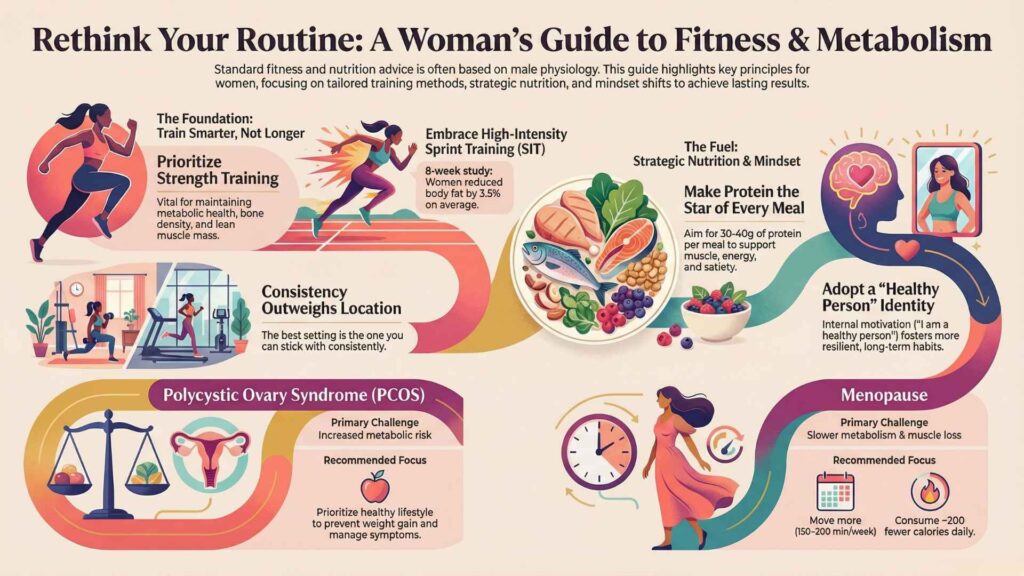
Women face unique biological challenges, particularly regarding hormonal fluctuations. Conditions like PCOS, PCOD, and thyroid imbalances can create a “metabolic logjam” where the body becomes resistant to traditional weight loss methods. This is where a professional approach becomes necessary. Expert-led programs often focus on reviving the metabolism by balancing these hormones through specific dietary interventions.
Cortisol, the body’s primary stress hormone, plays a significant role in where we store fat. Chronic stress signals the body to store energy in the abdominal area, leading to what many call “cortisol belly”. What this really means is that a woman who is over-exercising and under-sleeping may actually see an increase in belly fat due to hormonal signaling. Managing weight at home requires a delicate balance of active movement and intentional rest.
Understanding the energy gap
The “energy gap” is the difference between what we eat and what we burn. Clinical studies by the NIH suggest that a caloric deficit of 500 to 1,000 calories per day is the gold standard for sustainable weight loss. However, calculating this doesn’t have to be a chore. Instead of obsessive tracking, focusing on portion sizes and the quality of macronutrients can achieve the same result.
The goal is to find a way of eating that you can maintain for the rest of your life. Harvard nutritionists emphasize that diets which eliminate entire food groups or rely on supplements are usually unsustainable. Instead, the home-based strategy should focus on building a virtual toolbox of healthy habits, from meal-prep strategies to lifestyle changes.
Designing an effective home workout for women
One of the greatest myths in fitness is that you need a gym to get strong. In reality, your own body weight is a powerful tool for resistance. Female fat loss exercises don’t require heavy machinery; they require consistency and the right mechanical stimulus. Research shows that home-based physical activity programs can be just as effective as facility-based programs, often boasting higher adherence rates because they eliminate the commute and the “gym anxiety” many beginners feel.
For women, a balanced routine should include both aerobic exercise for immediate calorie burn and resistance training for long-term metabolic health. The NIH Obesity Education Initiative suggest at least 45 minutes of moderate-intensity activity 5 days a week for significant results. If that sounds like a lot, don’t worry. Even 30 minutes a day can lead to measurable improvements in body composition.
The power of bodyweight resistance
Strength training is critical because it builds muscle, which in turn preserves your metabolic rate during weight loss. When you are in a calorie deficit, your body may try to burn muscle for energy. By performing strength training for women at home, you send a signal to your body to keep the muscle and burn the fat instead.
| Exercise | Primary Muscle Groups | Recommended Reps for Beginners |
| Squats | Quads, Glutes, Core | 3 sets of 12-15 |
| Lunges | Hamstrings, Glutes, Calves | 3 sets of 10 per leg |
| Push-ups (Knee modified) | Chest, Shoulders, Triceps | 3 sets of 8-10 |
| Planks | Entire Core, Shoulders | 3 sets of 20-30 seconds |
| Glute Bridges | Glutes, Lower Back | 3 sets of 15 |
These easy home exercises for weight loss can be done in a small space with zero equipment. The key is form. For a squat, you should stand with feet shoulder-width apart, lower your hips as if sitting in a chair, and ensure your knees don’t extend past your toes. This mechanical tension is what triggers muscle growth and fat oxidation.
Integrating HIIT for maximum efficiency
If you are short on time, HIIT workouts for women are the most effective way to spike your heart rate and burn calories quickly. HIIT involves short bursts of vigorous activity followed by brief rest periods. This creates an “afterburn effect” where your metabolism stays elevated for hours after the workout is over.
A simple 10-minute HIIT circuit might look like this:
- Jog in place for 2 minutes (Warm-up).
- Jumping jacks for 1 minute.
- Mountain climbers for 1 minute.
- Squat jumps for 1 minute.
- Rest for 1 minute.
- Repeat the circuit.
Research published via NIH indicates that supervised aerobic exercise sessions burning 400 to 600 calories each can lead to a weight loss of 4.3% to 5.7% of total body weight over 10 months, even without dietary changes. When you combine this with a healthy meal plan, the results are amplified.

Aerobic conditioning and indoor routines
While high-intensity training is great, a sustainable female weight loss journey also needs low-impact home workout options. This is especially true for beginners or those with joint concerns. Walking is often underrated, yet Harvard experts suggest it beats many intense workouts for long-term health and longevity. Nordic walking, for instance, has been shown to outperform conventional walking in reducing BMI and improving aerobic capacity.
If you can’t walk outside, an indoor weight loss routine can be just as effective. You can march in place, use a step-up stool, or follow video-guided aerobic sessions. The goal is to keep your heart rate in a moderate zone where you can still hold a conversation but feel your breathing increase.
The momentum effect of small movements
Here’s the thing about exercise: the hardest part is starting. Researchers from the University of California point out a “momentum effect.” If you tell yourself you will walk or move for just 30 seconds, your body often gets into the rhythm, and you end up exercising for much longer. Breaking out of stillness is the primary goal for the brain. Even two minutes of movement can trigger the release of endorphins, which helps counteract stress hormones like cortisol.
| Activity | MET Value (Intensity) | Common Example |
| Light Intensity | 1.6–3.0 | Walking at a leisurely pace |
| Moderate Intensity | 3.0–6.0 | Brisk walking (4 mph), heavy cleaning |
| Vigorous Intensity | 6.0+ | Jogging, jumping rope, HIIT |
What this really means is that “cleaning the house” can actually be a form of aerobic conditioning if done with enough vigor. This leads us to one of the most important concepts in modern weight loss: NEAT.
Non-Exercise Activity Thermogenesis (NEAT) refers to the energy we expend for everything we do that is not sleeping, eating, or purposeful sports-like exercise. This includes walking to the kitchen, fidgeting at a desk, or standing while folding laundry. For women at home, NEAT can be a “sneaky” and powerful way to lose weight without hitting the gym.
Studies show that the calories burned through NEAT can vary by up to 2,000 calories per day between two people of the same size. A person who sits all day at a desk job might burn 100 calories an hour, but if they stand while doing that same work, the burn jumps to 174 calories. Over a year, this small change could result in a 5 lb weight loss.
How to skyrocket your NEAT at home
Maximizing NEAT is about finding opportunities to move in your natural environment. It doesn’t require a sweat-wicking outfit or a timer.
- Pace while talking: Whenever your phone rings, stand up and pace around the room.
- Active commercials: During TV breaks, do a few sets of calf raises or march in place.
- Manual labor: Wash your dishes by hand or clean your windows energetically.
- The “long way”: Make extra trips when carrying groceries or laundry upstairs.
The psychological benefit of NEAT is that it doesn’t feel like a chore. It is a totally “skill-free” way to up your daily movement. Over time, these small victories compound, leading to sustained weight loss that feels effortless.

Nutritional strategies for the home environment
If exercise is the architect of your new body, nutrition is the brick and mortar. You cannot out-train a poor diet, especially when you lose weight without gym access. The most successful approach is a nutritionally balanced, hypocaloric diet. This doesn’t mean eating “diet food.” It means eating whole, minimally processed foods that keep you full and nourish your cells.
A healthy meal plan for women should focus on three things: satiety, metabolic boost, and hormonal balance. Harvard’s nutrition experts emphasize that we should aim for a modest reduction in daily calorie intake while ensuring we get a wide variety of vegetables, fruits, and lean proteins.
The mechanics of satiety and protein
Protein is the most important macronutrient for weight loss. Why? Because the body burns significantly more calories digesting protein than it does fat or carbohydrates. This is known as the thermic effect of food (TEF). Protein also stimulates the production of hormones that tell your brain you are full.
| Protein Source | Why it Works | Best Home Use |
| Eggs | High-quality protein, low calorie | Breakfast with whole-wheat toast |
| Greek Yogurt | Probiotics + high protein | Snack with berries |
| Lentils/Dals | Fiber + iron + plant protein | Lunch soups or stews |
| Chicken Breast | Lean protein, muscle builder | Grilled for dinner |
| Paneer/Tofu | Calcium + vegetarian protein | Stir-fry with veggies |
An easy way to balance your plate is the “half-plate rule”: make half your plate fruits and vegetables, one-quarter whole grains, and one-quarter lean protein. This ensures you get high-fiber options that keep your digestive system moving and your hunger at bay.
Metabolism boosting foods to include
Certain foods have a direct impact on your metabolic rate. While they aren’t “magic pills,” incorporating them into a balanced diet can provide a 4% to 5% boost in fat oxidation.
- Chili Peppers: Contain capsaicin, which increases internal body temperature and temporarily helps you burn more calories.
- Coffee & Green Tea: Caffeine can increase metabolic rate and promote fat burning. Harvard research suggests 4 cups of coffee daily could reduce body fat by 4%.
- Salmon & Fatty Fish: Rich in omega-3 fatty acids, which help boost resting metabolic rate and reduce inflammation.
- Apple Cider Vinegar: May help regulate blood sugar levels and increase feelings of fullness.

Cultural application: The Indian diet plan
For many women in India, weight loss is deeply tied to the traditional “Thali” system. The good news is that Indian cuisine is naturally rich in lentils, legumes, and metabolism-boosting spices like turmeric, ginger, and cumin. A successful Indian diet plan for weight loss focuses on portion control and the use of whole grains like ragi, bajra, and jowar instead of refined flour.
Core principles of the Indian Thali
A balanced Indian meal at home should follow these basic rules:
- Add Protein to Every Meal: Whether it’s a bowl of dal, curd, or a piece of grilled chicken, protein is non-negotiable for fat loss.
- Fiber-Rich Grains: Replace white rice with brown rice or millets. Millets like ragi are gluten-free and rich in calcium and fiber.
- Fresh and Home-Cooked: Avoid packaged “diet snacks.” Cooking at home allows you to control the amount of oil and salt.
- Natural Probiotics: Include a small bowl of curd or buttermilk (chaas) to support gut health, which is essential for a healthy metabolism.
| Meal Timing | Recommended Option |
| Early Morning | Warm lemon water + 5 soaked almonds |
| Breakfast | Moong dal chilla or vegetable poha |
| Mid-Morning | One orange or a handful of berries |
| Lunch | 1-2 Rotis, a bowl of dal, and a large seasonal salad |
| Evening Snack | Roasted makhana or roasted chana |
| Dinner | Vegetable soup and grilled paneer or fish |
This structure ensures that you are never starving, which is the key to sustainable weight loss tips.
Managing stress, sleep, and the “cortisol belly”
We often focus so much on the kitchen and the workout mat that we forget about the bedroom. However, sleep is when your body actually burns fat and repairs muscle. Poor sleep spikes cortisol, which not only makes you crave sugar but also tells your body to hold onto every calorie you eat.
If you are struggling with stubborn belly fat, your stress levels might be the culprit. High cortisol levels drive fat storage in the abdominal area. To break this cycle, you must prioritize sleep hygiene. Aim for 7-9 hours of quality sleep and avoid screens an hour before bed.
The impact of mindfulness at home
Mindful eating is a powerful strategy shown to reduce hunger and excessive eating. When we eat while watching TV or scrolling through our phones, we miss the signals from our body telling us we are full.
- Eat slowly: It takes about 20 minutes for your brain to realize you’re full.
- Eliminate distractions: Focus on the flavor and texture of your food.
- Stop at 80%: Follow the traditional practice of stopping when you are nearly full, not when you are stuffed.
By practicing these simple behaviors, you can naturally reduce your calorie intake without ever feeling deprived.

Psychology of the female weight loss journey
The most successful women are not those with the most willpower, but those with the strongest “Why”. Why do you want to lose weight? Is it to keep up with your kids? To reduce your risk of diabetes? To feel more confident in your skin? Focusing on these health-related reasons is where the real shift happens.
Building a support system
Weight loss can feel lonely, especially when you’re doing it at home. However, research shows that people who have a “buddy” or professional support are much more likely to lose weight and keep it off. This is why community groups and personalized coaching are so effective. Humans are social species; we hate letting others down, which makes accountability a powerful motivator.
- Track your progress: Use photos and measurements, not just the scale. The scale doesn’t account for muscle gain.
- Small wins: Celebrate the fact that you drank an extra glass of water or did five more squats than yesterday.
- Self-compassion: If you have a slip-up and eat a piece of cake, don’t throw away the whole day. One meal won’t ruin your progress, but the “what the hell” attitude that leads to a weekend-long spree will.
Overcoming the weight loss plateau
Eventually, almost every woman hits a plateau where the scale stops moving. This is not a failure; it is a sign that your body has adapted to your current routine. To break through a plateau, you need to change the stimulus.
- Adjust your calories: As you lose weight, your body needs less energy. You may need to slightly decrease your intake or increase your activity to stay in a deficit.
- Change your routine: If you’ve been doing the same home workout for months, try a new modality like dancing, yoga, or increasing the intensity of your HIIT.
- Check your protein: Ensure you’re getting enough protein to support your muscle mass.
- Rest more: Sometimes the body needs a week of light movement (like walking and stretching) to lower cortisol levels and restart the fat-burning process.
Synthesis of expert recommendations
The path to weight loss for women at home is built on a foundation of science and a structure of sustainable habits. According to the NIH and Harvard researchers, the most effective strategy is a combination of modest calorie restriction and a mix of aerobic and resistance training.
What we’ve learned is that consistency beats intensity every time. You don’t need a marathon; you need a 30-minute brisk walk five days a week. You don’t need a starvation diet; you need a plate balanced with protein, fiber, and whole grains. Most importantly, you need to believe in yourself. As the saying goes, the body achieves what the mind believes.
At Diet Dekho, the focus is on making fitness simple and results real. By taking on the “hard work” of crafting personalized plans, they allow women like Ayushi to focus on the journey and enjoy the transformation. Weight loss is not just about the number on the scale; it is about reclaiming your energy, your confidence, and your health.

Frequently Asked Questions
Can I really lose weight with home workouts? Yes. Clinical evidence from the NIH and Harvard shows that bodyweight exercises like squats, lunges, and push-ups are highly effective for fat loss and muscle toning when done consistently.
Do I need any equipment for home exercises? Equipment is not a mandatory requirement. You can achieve significant weight loss using your own bodyweight. For added intensity, you can use household items like water bottles or books as weights.
Is cardio or strength training more important for weight loss? A combination is best. Cardio (like HIIT) helps burn calories immediately, while strength training builds muscle that keeps your metabolism high even when you’re sleeping.
Can yoga contribute to weight loss for women at home? Yes. While it seems slow, active yoga improves metabolism, reduces stress (lowering cortisol), and tones the body. It is an excellent low-impact option for beginners.
How can I stay motivated to work out at home? Tracking your progress, finding a “why” that moves you emotionally, and working with a coach or partner can keep your discipline high when motivation dips.
Conclusion: Your next steps to transformation
The journey of a thousand miles begins with a single step—or in this case, a single squat. Weight loss for women at home is not a mystery; it is a predictable result of eating better, moving more, and sleeping well. Whether you are looking to burn belly fat, boost your metabolism, or simply feel more energetic, the tools are already in your hands.
Don’t wait for the “perfect time” to start. Perfect timing doesn’t exist, but a better you does. By incorporating these strategies, you can turn your home into a sanctuary of health and wellness. For those who want a tailored roadmap to success, professional guidance can make all the difference.
Are you ready to see results made real? Get your personalized weight loss plan today and join thousands of women who have transformed their lives from the comfort of their homes.
Start your journey with Diet Dekho: https://dietdekho.com/form/
BOOK YOUR APPOINTMENT
Abhinav is the Founder of Diet Dekho, helping people manage weight and lifestyle health through simple, practical nutrition and personalized diet plans.