
The journey toward a healthier body often begins with a single, uncomfortable realization. For many, it is the moment a pair of jeans refuses to button or the sudden breathlessness that follows a flight of stairs. This initial spark of motivation frequently directs individuals toward the goal of achieving weight loss in 30 days. While thirty days represents a brief window in a lifetime, it is a scientifically significant period for metabolic recalibration and the establishment of neurobiological pathways for habit formation. This analysis serves as a comprehensive roadmap for beginners, blending clinical evidence from the National Institutes of Health (NIH) and Harvard Health with the practical, client-centered expertise of Diet Dekho.
What this really means is that the first month of a weight loss journey is less about the final number on the scale and more about the physiological “reset” occurring within the body. Let’s break it down: the human body is not a static machine. It is a complex biological system that responds to environmental cues, nutritional inputs, and physical demands. When an individual commits to a 30 day weight loss challenge, they are essentially renegotiating their body’s relationship with energy storage and expenditure.
The Bio-Energetic Foundation of Weight Reduction
Table of Contents
- 1 The Bio-Energetic Foundation of Weight Reduction
- 2 Nutritional Architecture: The Harvard Healthy Eating Plate
- 3 The Indian Context: Fat Burning Foods and Traditional Wisdom
- 4 Specialized Dietary Strategies: IF and Keto
- 5 Exercise Physiology for the 30-Day Window
- 6 The 30-Day Roadmap: Phase-by-Phase Integration
- 7 Behavioral Psychology: The Mind-Body Connection
- 8 Expert Tips for Sustainable Transformation
- 9 Conclusion: Starting Your 30-Day Journey
To understand how to lose weight effectively, one must first grasp the fundamental law of energy balance. At its simplest, weight loss occurs when the energy expended by the body exceeds the energy consumed through food and drink. This state is known as a calorie deficit for beginners, and it is the primary physiological driver of fat oxidation.
The concept of the energy deficit is often grounded in Wishnofsky’s Rule, a principle established in 1958 which suggests that one pound of body fat contains approximately 3,500 calories of stored energy. Under this framework, a daily deficit of 500 calories would theoretically lead to a loss of one pound per week.
Quantifying the Energy Deficit via Wishnofsky’s Rule
While modern research acknowledges that weight loss is not perfectly linear due to metabolic adaptation, Wishnofsky’s Rule remains a helpful baseline for initial goal setting. The relationship between energy deficit and weight loss can be expressed mathematically as follows:
ΔW = (∫(Eout − Ein) dt) / 3500
In this formula, Δ W represents the total weight change in pounds, Eout is the total energy expenditure, and Ein is the total energy intake over a duration t in days. For a beginner aiming for weight loss in 30 days, aiming for a total loss of 4 to 8 pounds is considered a safe and sustainable target by the(https://www.cdc.gov/healthy-weight-growth/losing-weight/index.html) and Harvard experts.
Metabolic Adaptation and the Thermic Effect of Food
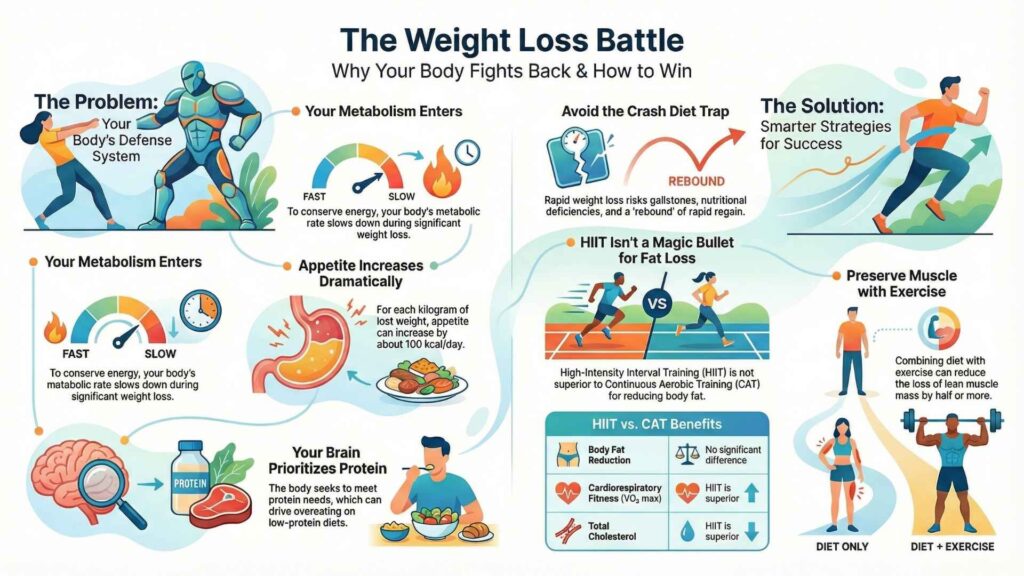
Here’s the thing about caloric restriction: the body eventually notices. When energy intake drops, the body may respond by lowering its resting metabolic rate (RMR) to conserve energy. This is why a high protein diet for fat loss is so critical. Protein has the highest thermic effect of food (TEF), meaning the body uses significantly more energy to process protein than it does to process fats or carbohydrates.
| Macronutrient | Thermic Effect (% of Energy Consumed) | Satiety Level |
| Protein | 20% – 30% | High |
| Carbohydrates | 5% – 10% | Medium |
| Fats | 0% – 3% | Low to Medium |
By prioritizing lean proteins like chicken breast, fish, lentils, or tofu, a person can effectively “boost” their metabolism while simultaneously feeling fuller for longer. This dual benefit is essential for maintaining a fat loss diet without succumbing to the intense hunger that often derails beginners.
Nutritional Architecture: The Harvard Healthy Eating Plate
The success of a 30-day intervention depends heavily on the quality of the nutritional plan. Harvard Health recommends the Healthy Eating Plate as a visual guide that prioritizes nutrient density over obsessive calorie counting. This model focuses on stabilizing blood sugar and reducing systemic inflammation, both of which are key to sustainable weight loss.
Structuring the Plate for Optimal Fat Loss
A healthy meal plan for weight loss should follow specific proportions to ensure the body receives adequate micronutrients while remaining in a deficit.
- Vegetables and Fruits (Half Plate): These should be the star of every meal. Non-starchy vegetables like spinach, broccoli, and peppers are high in fiber and water, allowing for larger portion sizes with very few calories.
- Whole Grains (One-Quarter Plate): Selecting complex carbohydrates like brown rice, quinoa, or whole wheat roti ensures a slow release of energy, preventing the insulin spikes that lead to fat storage.
- Healthy Protein (One-Quarter Plate): Beans, nuts, fish, and poultry are preferred over red or processed meats, which have been linked to higher risks of chronic disease.
- Healthy Oils: Replacing butter or trans fats with olive, canola, or mustard oil can improve cholesterol profiles and provide essential fatty acids.
The Satiety Power of Fiber and Water
What this really means for the beginner is that volume eating—consuming large amounts of low-calorie, high-fiber foods—is the best way to lose weight in a month without feeling deprived. Fiber slows down the gastric emptying process, keeping the stomach full for an extended period. Current guidelines suggest consuming 28 to 36 grams of fiber daily from whole food sources.
Hydration is equally vital. The body often confuses thirst signals with hunger signals. Research has shown that drinking approximately 500ml of water before a meal can lead to a natural reduction in caloric intake and significantly improve weight loss results over a 12-week period.

The Indian Context: Fat Burning Foods and Traditional Wisdom
For clients of Diet Dekho, integrating traditional Indian ingredients into a weight loss program provides both cultural comfort and scientific benefit. The Indian kitchen is uniquely equipped with spices and staples that act as natural metabolism boosters.
Science-Backed Indian Spices
Many common Indian spices contain bioactive compounds that influence thermogenesis and fat oxidation.28
- Turmeric (Haldi): The active compound, curcumin, is a potent anti-inflammatory that helps the body process fat more efficiently and supports liver health.
- Cumin (Jeera): Studies indicate that cumin can help lower LDL cholesterol and improve insulin sensitivity.
- Ginger and Garlic: These thermogenic ingredients increase body temperature slightly, leading to higher energy expenditure. Ginger also aids digestion and reduces bloating.
- Black Pepper: Contains piperine, which may interfere with the formation of new fat cells.
High-Protein Indian Staples
Vegetarians in India often struggle to find adequate protein, but the following staples are foundational to a fat loss diet in the Indian context.
| Indian Superfood | Key Benefit | Suggested Use |
| Moong Dal | High protein, easy to digest | Soups, cheelas, or khichdi |
| Paneer (Low-fat) | Rich in calcium and protein | Grilled tikka or in salads |
| Chana (Chickpeas) | Fiber and protein powerhouse | Boiled salads or roasted snacks |
| Roasted Makhana | Low-calorie, crunchy snack | Dry roasted with minimal ghee |
| Curd (Dahi) | Probiotics for gut health | Raita or plain as a side |
Specialized Dietary Strategies: IF and Keto
For those looking to accelerate their progress or overcome a plateau, specific eating patterns like intermittent fasting for beginners or a keto diet for beginners can be utilized under professional guidance.
Intermittent Fasting (IF) Frameworks
Intermittent fasting is an eating pattern that cycles between periods of fasting and eating. The most popular method for beginners is the 16:8 protocol, where an individual fasts for 16 hours and consumes all their daily calories within an 8-hour window (e.g., 12 PM to 8 PM).
During the fasting window, insulin levels drop significantly, which signals the body to start burning stored body fat for energy. This approach also simplifies the day by reducing the number of meals to plan and track, which is often a relief for busy health-conscious individuals.
The Ketogenic Approach
A keto diet for beginners involves a drastic reduction in carbohydrates, typically to under 50 grams per day, and a high intake of healthy fats. This shift forces the body into a state of ketosis, where it becomes incredibly efficient at burning fat for fuel.
A typical ketogenic distribution includes:
- Fats: 70% – 75%
- Protein: 20% – 25%
- Carbohydrates: 5% – 10%
While the initial weight loss on keto is often rapid—sometimes up to 10 pounds in the first two weeks—it is important to note that much of this is water weight. For long-term health, Diet Dekho recommends transitioning to a more balanced, low-carb approach after the initial “kick-start” phase.

Exercise Physiology for the 30-Day Window
A common myth is that weight loss is purely about diet. While nutrition is the primary lever, a workout routine for weight loss is essential for preserving lean muscle mass and improving metabolic health. For beginners, the goal is to find a sustainable balance between cardiovascular exercise and resistance training.
The Power of Brisk Walking and NEAT
For someone just starting their journey, the simplest and most effective exercise is often brisk walking. Harvard experts suggest that walking for 30 to 60 minutes most days can significantly contribute to a calorie deficit without placing excessive stress on the joints.
Additionally, increasing Non-Exercise Activity Thermogenesis (NEAT)—the energy expended for everything we do that is not sleeping, eating, or sports-like exercise—can burn hundreds of extra calories. This includes taking the stairs, standing while on the phone, or parking further away from the store.
Beginner Resistance Training and Core Strength
Resistance training is the key to transforming body composition. By building muscle, an individual increases their basal metabolic rate, meaning they burn more calories even while resting.
A simple 30-day beginner routine might include two to three days of full-body strength training, focusing on compound movements:
- Squats and Lunges: Target the large muscles of the lower body.
- Push-ups and Rows: Strengthen the chest, shoulders, and back.
- Core Stability: Planks and “dead bugs” build a strong foundation without straining the spine.
The 30-Day Ab Challenge: Myths vs. Reality
While many search for belly fat exercises, it is important to understand that “spot reduction” is a biological impossibility. One cannot choose where the body burns fat. However, core-specific exercises like bicycle crunches, flutter kicks, and mountain climbers are excellent for strengthening the abdominal wall, which helps the midsection appear more toned as overall body fat decreases.
The 30-Day Roadmap: Phase-by-Phase Integration
Successfully navigating a 30-day weight loss journey requires a strategic, tiered approach. Attempting to change every habit on day one often leads to burnout and failure.
Week 1: Detoxification and Habitual Grounding
The first week is about removing the “heavy hitters” from the diet—sugary drinks, fried foods, and ultra-processed snacks. This phase often results in the most dramatic change on the scale due to the reduction of systemic inflammation and water retention.
- Primary Action: Start a food journal to track intake and emotional triggers.
- Key Habit: Drink a glass of water before every meal.
- Activity: Minimum 20 minutes of daily brisk walking.
Week 2: Metabolic Shift and Satiety Management
In the second week, the “honeymoon phase” of water weight loss ends, and the body begins to tap into stored fat.19 This is where protein and fiber become vital to manage the hunger that naturally arises.
- Primary Action: Introduce two days of light strength training.
- Key Habit: Aim for 30 grams of fiber per day.
- Nutritional Focus: Replace white rice and bread with brown rice or oats.

Week 3: Persistence and Plateau Management
Week three is traditionally when motivation begins to wane and weight loss may seemingly stall. Let’s break it down: this is often the body attempting to reach a new equilibrium. Persistence during this week is what separates long-term success from temporary dieting.
- Primary Action: Increase the intensity of walking or add five minutes to the routine.
- Key Habit: Prioritize 7 to 8 hours of sleep to manage cortisol levels.
- Nutritional Focus: Experiment with a 16:8 fasting window to boost insulin sensitivity.
Week 4: Refinement and Long-Term Outlook
The final week is about consolidating habits and preparing for the transition into a sustainable lifestyle. This is the time to measure progress not just by the scale, but by measurements, energy levels, and how clothes fit.
- Primary Action: Compare “before” and “after” measurements and photos.
- Key Habit: Plan for “social situations” and learn how to eat out mindfully.
- Nutritional Focus: Focus on variety and reintroducing healthy versions of favorite foods.
Behavioral Psychology: The Mind-Body Connection
Losing weight is as much a psychological challenge as a physiological one. According to statistics, nearly 50% of adults attempt to lose weight each year, but only a small percentage maintain the loss long-term. The difference often lies in the application of behavioral therapies and mindful eating.
The Hunger Scale and Mindful Eating
Psychologists from the Cleveland Clinic recommend using a “hunger scale” of 1 to 10 to distinguish between physical hunger and emotional eating.
- Levels 1-3: Ravenous or extremely hungry; likely to make poor food choices.
- Levels 4-6: Ideal range; hungry enough to eat but still in control.
- Levels 7-10: Full to “stuffed”; often the result of overeating or emotional indulging.
By aiming to stay between levels 4 and 6, beginners can avoid the biological “starvation mode” that leads to evening overeating.
The Impact of Sleep and Stress
Chronic stress and inadequate sleep are two of the biggest saboteurs of weight loss in 30 days. High cortisol levels from stress promote fat storage in the abdominal area, while lack of sleep increases the production of ghrelin (the hunger hormone) and decreases leptin (the satiety hormone).
| Wellness Factor | 30-Day Goal | Physiological Rationale |
| Sleep Duration | 7-9 Hours | Regulates hunger hormones and supports muscle repair |
| Stress Management | 10 Min Meditation | Lowers cortisol, reducing the drive for “comfort foods” |
| Hydration | 3-4 Liters | Supports kidney function and metabolic rate |

Expert Tips for Sustainable Transformation
Achieving results in 30 days is a powerful motivator, but the ultimate goal is to keep the weight off for good. This requires a shift in mindset from a “temporary fix” to a “permanent change”.
Setting SMART Goals
Generic goals like “I want to lose weight” are rarely effective. Harvard Health advocates for SMART goals:
- Specific: “I will walk for 30 minutes daily.”
- Measurable: “I will track my steps using an app.”
- Achievable: “I will start with 5,000 steps and work up to 10,000.”
- Relevant: “This will help lower my blood pressure.”
- Time-bound: “I will do this for the next 30 days”.
Seeking Professional Support
Weight loss is significantly more successful when accompanied by accountability. Whether it is a friend, a family member, or a professional coach from Diet Dekho, having someone to share concerns and progress with can make a drastic difference. Personalized diet plans that account for an individual’s unique metabolism and lifestyle are much more likely to succeed than “one-size-fits-all” internet diets.
For a personalized consultation and a roadmap designed for your body, visit(https://dietdekho.com/form/).
Conclusion: Starting Your 30-Day Journey
The process of weight loss in 30 days is essentially an act of self-discovery. It is about learning how your body responds to different foods, how movement affects your mood, and how much power you truly have over your daily choices. While 30 days is a short time, the health benefits—including improved energy, better sleep, and reduced joint pain—can be life-changing.
By following a science-backed approach that prioritizes lean protein, high fiber, and consistent movement, any beginner can see meaningful results. Remember, the goal is not perfection, but progress. Every healthy choice made today is a building block for a healthier tomorrow.
Are you ready to transform your life? Take the first step by filling out the(https://dietdekho.com/form/) and let an expert coach guide you through your first 30 days and beyond.

Frequently Asked Questions
How much weight is it safe to lose in 30 days?
For most people, a safe and sustainable rate of weight loss is 1 to 2 pounds per week, which totals 4 to 8 pounds in a month. Losing weight faster than this can lead to muscle loss, gallstones, and nutrient deficiencies.
Can I lose weight without exercising?
Yes, weight loss is primarily driven by a calorie deficit. However, exercise is crucial for maintaining weight loss long-term, boosting metabolism, and improving cardiovascular health.
What are the best fat burning foods to eat?
The most effective foods for fat loss are those high in protein and fiber, such as eggs, leafy greens, lentils, and lean meats. Additionally, Indian spices like turmeric, ginger, and cumin have thermogenic properties that can support metabolism.
Is the keto diet good for beginners?
Keto can offer rapid initial results, which is highly motivating. However, it requires strict adherence and may lead to nutrient deficiencies if not properly managed. It is often best used as a short-term intervention followed by a transition to a balanced, low-carb diet.
How do I handle food cravings during the first month?
Manage cravings by ensuring every meal contains protein and fiber, staying hydrated, and using mindful eating techniques. If you feel an emotional trigger, try a non-food reward like a short walk or meditation.
BOOK YOUR APPOINTMENT
Abhinav is the Founder of Diet Dekho, helping people manage weight and lifestyle health through simple, practical nutrition and personalized diet plans.