
Are you tired of jumping from one diet to another without seeing lasting results? Many people encounter significant cultural barriers when starting a meal plan for weight loss, often believing that Indian staples like rice and ghee are the enemy. However, you can achieve your goals by adopting a balanced nutrition strategy that honors your local palate while respecting modern metabolic science.
As far as Indian culture goes, a meal plan for weight loss is a structured way to eat that keeps the ratio of cereals to pulses at 3:1. This healthy eating plan tells you to eat at least 400 grams of vegetables every day and to cut down on added sugars. You can lose weight in a healthy way without feeling deprived by eating many high-fiber millets and lean proteins.
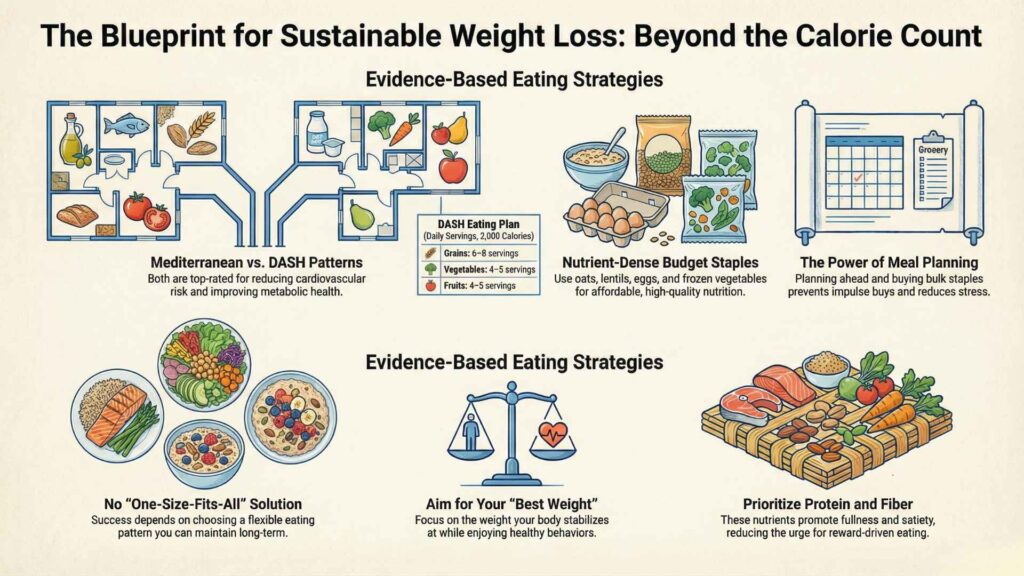
Why do many weight loss plans fail in the first week?
Table of Contents
- 1 Why do many weight loss plans fail in the first week?
- 2 Many people feel frustrated by eating ‘boring’ food without seeing results.
- 3 The myth suggests that quitting Indian spices and rice is necessary for weight loss.
- 4 Energy balance: How a calorie deficit actually works in an Indian kitchen
- 5 Simple kitchen swaps: From heavy gravies to protein-rich sides
- 6 A sample 24-hour weight loss meal plan for the Indian lifestyle
- 7 Are you over-restricting? Common errors in DIY dieting
- 8 Why your weight loss journey is a marathon, not a sprint
- 9 Book a consultation with Diet Dekho for your custom nutrition roadmap
I know it’s challenging to find time to stay consistent, but the reason most plans fail isn’t a lack of willpower. Instead, extreme calorie restriction often triggers a biological “starvation response.” Research shows that nearly 40% of people abandon their dietary goals within seven days because hunger hormones become overwhelming. When you cut energy intake too drastically, your brain up-regulates ghrelin (the hunger hormone) and down-regulates leptin (the fullness hormone).
Understanding Your Body’s Starvation Response
This physiological pushback makes you feel like you are fighting your body. Furthermore, “deprivation thinking” increases the reward value of “off-limits” foods in your brain. For a busy professional, a sudden drop in familiar carbohydrates often lowers serotonin levels. Consequently, you might experience irritability and a strong urge to overindulge in comfort foods. This all-or-nothing mindset sets you up for failure because you might perceive a single slip-up as a total collapse.
The Reality of Initial Weight Changes
What this means for your daily routine is that the initial “success” on the scale can be misleading. Glycogen and water molecules primarily compose the weight you lose in those first few days. As your body burns through stored carbs, the scale drops fast, but the result isn’t true fat loss yet. When the rate naturally slows down, many people feel discouraged. In simple terms, you must realize that the real fat-burning phase only begins after your body adjusts to this new balanced nutrition strategy.
| Factor | Impact on Your Body | Common Consequence |
| Ghrelin Increase | Triggers intense, persistent hunger. | High risk of over-indulgence. |
| Leptin Decrease | Reduces your feeling of fullness. | Constant preoccupation with food. |
| Glycemic Shift | Rapid initial drop in water weight. | False expectations of fat loss speed. |
| Mental Fatigue | Brain craves “forbidden” items. | Psychological burnout within a week. |
Many people feel frustrated by eating ‘boring’ food without seeing results.
Many Indians feel frustrated when they switch to a diet of bland salads that lack flavor. This emotional disconnect often kills long-term adherence. Let’s simplify this: the lack of results usually stems from a failure to address your specific metabolic profile rather than the food being “Indian.”
The MONO phenotype is particularly common in India, affecting about 43.3% of adults. Even if your Body Mass Index (BMI) looks “normal,” you may carry high levels of visceral fat around your internal organs. A generic plan that solely reduces calories without a balanced nutrition strategy is unlikely to improve health markers for someone with this profile.
Why “Normal” Weight Can Be Misleading
Visceral fat is more active and inflammatory than the fat under your skin. It can exhaust your pancreas and lead to type 2 diabetes. Therefore, a truly effective meal plan for weight loss must focus on waist circumference and metabolic health rather than just the number on the scale. To prevent the boredom that ruins most diets, you should use traditional Indian techniques to enhance satiety. Protein, fiber, and healthy fats trigger hormones like GLP-1 that tell your brain you are full.

The myth suggests that quitting Indian spices and rice is necessary for weight loss.
You don’t need to replace your kitchen staples with expensive imports to see a change. Scientific evidence suggests that traditional Indian ingredients, when used correctly within a balanced nutrition strategy, offer significant metabolic advantages.
The Power of Pure Desi Ghee
I know it sounds counterintuitive, but pure desi ghee can actually support your goals. Ghee is rich in conjugated linoleic acid (CLA), which studies link to reduced body fat. It also contains medium-chain triglycerides (MCTs) that your liver uses for immediate energy. In simple terms, a teaspoon of ghee helps your body absorb fat-soluble vitamins like A and D, which are vital for your metabolism.
Managing Rice and Spices
The issue is not with rice itself, but rather with the portion size. White Basmati rice has a moderate glycemic index (50-58), which is lower than many other grains. When you pair rice with fiber-rich dals and leafy greens, you create a balanced nutrition strategy that prevents insulin spikes. Furthermore, spices like cinnamon and fenugreek (methi) improve insulin sensitivity, making them essential tools for anyone managing PCOS or diabetes.
| Staple | Glycemic Index / Benefit | Role in Your Plan |
| Basmati Rice | 50-58 (Moderate) | Provides energy without massive sugar spikes. |
| Desi Ghee | Satiety & CLA source | Supports fat metabolism and vitamin absorption. |
| Turmeric | Anti-inflammatory | Reduces systemic inflammation that blocks fat loss. |
| Cinnamon | Insulin Regulation | Helps stabilize blood sugar after meals. |
Energy balance: How a calorie deficit actually works in an Indian kitchen
The core of any meal plan for weight loss is the calorie deficit. To lose about 0.5 to 1 kg per week, most adults need a deficit of 500 to 1,000 calories daily. However, your balanced nutrition strategy must account for your specific activity level.
Calculating Your Daily Needs
You can estimate your maintenance calories with a simple calculation: multiply your weight (kg) by 15 if you are moderately active. For example, a woman weighing 75 kg would need about 2,250 calories to stay the same. To lose weight safely, she should target 1,250 to 1,750 calories. Remember that women should usually consume at least 1,200 calories to avoid nutrient deficiencies.
ICMR-NIN 2024 Guidelines for Indians
The Indian Council of Medical Research (ICMR) recently updated energy requirements to reflect our more sedentary lifestyles.
| Activity Level | Men (kcal/day) | Women (kcal/day) |
| Sedentary | 2,110 | 1,660 |
| Moderate | 2,710 | 2,130 |
| Heavy | 3,470 | 2,720 |
A balanced nutrition strategy requires shifting your plate’s composition. The 2024 guidelines suggest that cereals should provide only 50-60% of your calories. The rest must come from pulses, vegetables, and healthy fats. This is why the “3:1 Protein Rule”—three parts cereal to one part pulse—is so important for vegetarian health.

Simple kitchen swaps: From heavy gravies to protein-rich sides
You can achieve sustainable fat loss through small, manageable swaps in your kitchen. By identifying high-calorie ingredients and replacing them, you make your weight loss meal plan much easier to follow.
Replace Cream with Curd: Instead of heavy malai, use whisked low-fat curd in your curries. This cuts down on fat and adds probiotics.
Instead of cashews, use bottle gourd. Pureed lauki gives gravies a thick texture without the high calories of nut pastes.
Switch Aloo for Paneer: To get more protein, when you make parathas, use grated paneer or sattu instead of potato.
Swap Frying for Grilling: Using an air fryer or a non-stick pan can reduce your oil intake by up to 80%.
Enhancing Your Protein Profile
A balanced diet should include protein at every meal. Protein keeps you full longer and helps you keep your muscle mass while you lose fat. What this means for your daily routine is that you’ll have fewer energy crashes and fewer cravings for sugary snacks.
| Traditional Choice | Better Swap | Nutritional Benefit |
| White Rice | Millets (Ragi/Jowar) | Higher fiber and essential minerals. |
| Sugary Soda | Chaas (Buttermilk) | Probiotics and hydration with no sugar. |
| Fried Namkeen | Roasted Makhana | Low fat and high crunch satisfaction. |
| Maida Biscuits | Soaked Almonds | Healthy fats and better blood sugar control. |
A sample 24-hour weight loss meal plan for the Indian lifestyle
Let’s simplify this with a practical daily routine. This 1,400–1,500 calorie plan balances traditional tastes with a modern balanced nutrition strategy.
Early Morning (6:30 AM – 7:00 AM)
- Start: 1 glass of warm water with cinnamon or soaked methi seeds.
- Nourish: 5 soaked almonds and 1 walnut.
Breakfast (8:30 AM – 9:00 AM)
- Option: 2 Moong Dal Chillas with spinach and carrots, served with mint chutney.
- Alternative: 1 bowl of Vegetable Oats Upma with 1 boiled egg white.
Mid-Morning & Lunch (11:00 AM – 1:30 PM)
- Snack: 1 seasonal fruit like a guava or orange.
- Lunch: 1 bowl of yellow dal, a large portion of seasonal sabzi (like Bhindi or Lauki), 1 Multigrain Roti, and a bowl of cucumber raita.
Evening & Dinner (4:30 PM – 8:00 PM)
- Snack: Roasted Makhana with sugar-free green tea.
- Dinner: 1 bowl of Vegetable Dalia Khichdi or 100g of grilled paneer with a clear vegetable soup.

Are you over-restricting? Common errors in DIY dieting
I know you want quick results, but over-restricting is a major pitfall. A meal plan for weight loss should never feel like a punishment. If you eliminate all fats or skip breakfast, you often trigger a cycle of intense hunger and subsequent overindulgence.
- Skipping Meals: This procedure often leads to a midday energy crash, making you more likely to over-consume at night.
- Fear of Fats: Your body needs healthy fats for hormone production. A total lack of fat can cause hair loss and skin issues.
- Drinking Your Calories: Sweetened tea and fruit juices add “hidden” calories. Stick to water, lemon water, or buttermilk.
- The “Diet” Food Trap: Processed “low-fat” snacks are often full of sugar and fillers. Whole, natural foods are always the better choice.
The Danger of Crash Diets
The short answer is: don’t do them. Crash diets promising “10 kg in 10 days” lead to muscle loss and a slower metabolism. To keep the weight off for good, your balanced nutrition strategy must be something you can sustain for months, not just days.
Why your weight loss journey is a marathon, not a sprint
The human body resists rapid change. To see permanent results, you must view your weight loss meal plan as a lifestyle evolution. Research suggests that those who lose weight gradually (0.5–1 kg per week) are much more successful at keeping it off.
Small Steps for Big Results
Consistency matters more than being perfect every day. If you have an extra serving at a wedding, don’t let it spiral into a week of poor choices. Simply return to your balanced nutrition strategy the next morning. When you eat mindfully, you pay attention to your food and chew slowly. This helps you know when you’re really full.
| Factor | How It Helps | Daily Goal |
| Sleep | Regulates hunger hormones. | 7-8 hours per night. |
| Water | Boosts metabolism. | 2.5-3 liters daily. |
| Steps | Burns extra calories. | 30 mins of brisk walking. |
| Stress | Lowers belly fat storage. | 10 mins of deep breathing. |
Managing Health Conditions
If you have PCOS or diabetes and are overweight, you need to take extra care of your plan.
- PCOS/Diabetes: Focus on low-GI millets and fiber to manage insulin resistance.
- Thyroid: Ensure your balanced nutrition strategy includes enough natural iodine and selenium to support a slower metabolism.
- Hypertension: Keep your salt intake below 5g a day to manage blood pressure effectively.

Book a consultation with Diet Dekho for your custom nutrition roadmap
Creating a weight loss meal plan that fits your Indian kitchen and busy schedule can be tough. Generic charts often ignore our love for traditional flavors and the reality of our metabolic needs.
At Diet Dekho, we provide a personalized balanced nutrition strategy led by expert coaches. With over 19,600 lives impacted and a 98% success rate, we help you lose fat without losing your sanity. We understand the specific needs of Indian professionals and homemakers.
Personalized Support for Long-Term Success
Our team of 50+ coaches offers a comprehensive roadmap:
- Expert Consultation: A personalized video call to discuss your medical history and lifestyle.
- Tailored Meal Plans: 300+ Indian recipes designed specifically for your goals and palate.
- Live Support: Weekly check-ins and live sessions to keep you motivated and on track.
Ready to start? Visit us here:
Disclaimer:This blog post was written to help you make healthier food choices altogether. So, be aware and take care. The important thing to consider is your health before starting a restrictive diet. Always seek advice from a doctor or dietitian before starting if you have any concerns.

Dr. Ritika is a nutrition and lifestyle expert with 2+ years of experience, helping clients manage weight and health through practical, personalized diet plans.