
Are you waking up at 5 AM for walks and skipping your favorite ghee-laden parathas, only to find the scale hasn’t moved an inch? Many busy Indian professionals and homemakers eventually search for the weight loss supplements truth to see if a pill can finally bridge the gap between their hard work and actual results. I know it is hard to find time for the gym when you are balancing a career or a household, but before you buy that colorful bottle of “fat burners,” let’s look at what is actually happening inside your body.
Start Your Free Diet AssessmentThe Direct Answer: Do They Work?
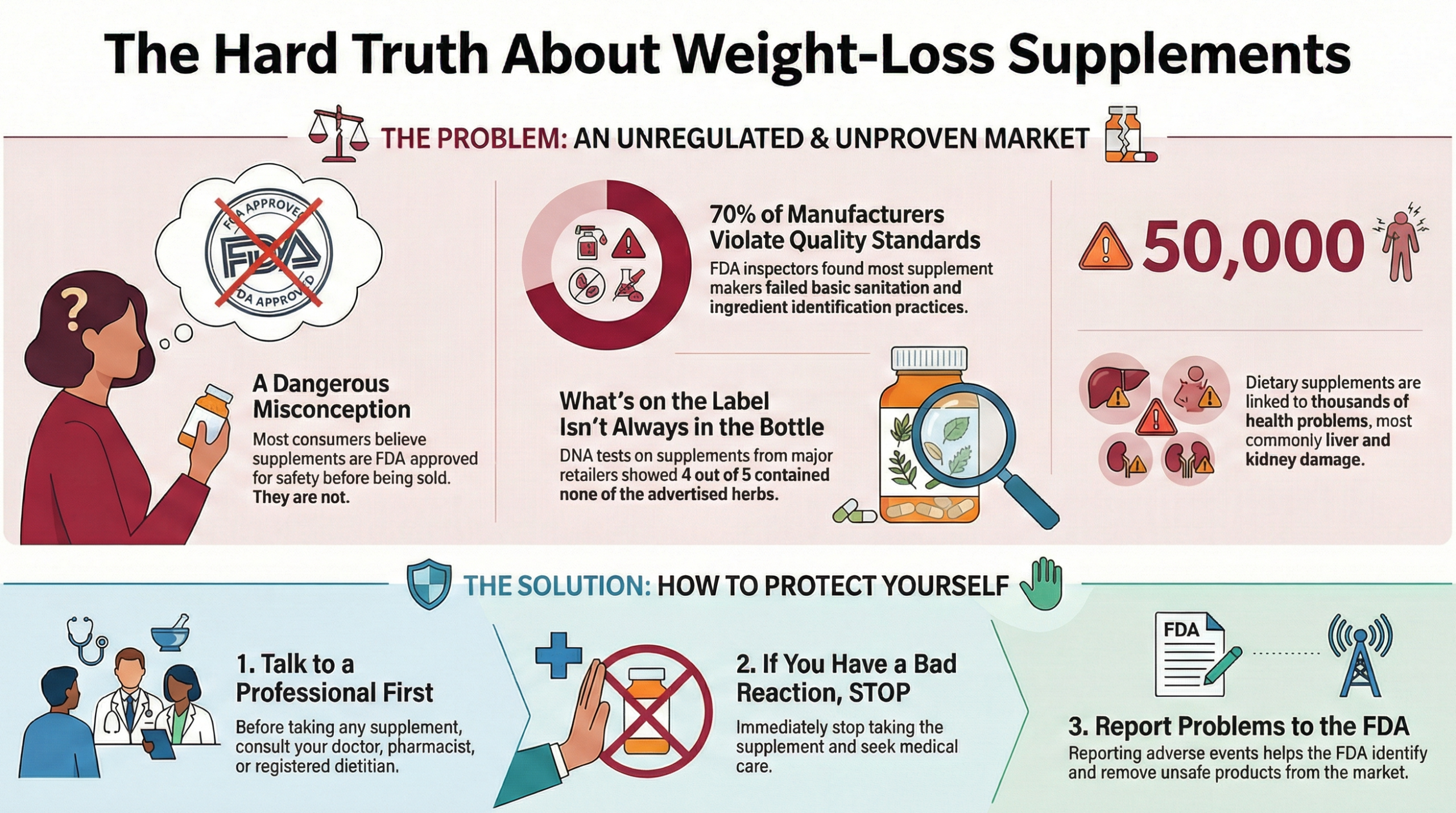
The weight loss supplements truth is that most over-the-counter slimming pills and metabolism boosters lack solid scientific backing and often pose serious health risks. While a few natural ingredients like fiber may offer minor support, they cannot replace a balanced diet. For people in larger bodies managing PCOS, diabetes, or hypertension, these unregulated products can even be life-threatening.
The Struggle: Weight Loss Supplements Truth for the Indian Lifestyle
Table of Contents
- 1 The Struggle: Weight Loss Supplements Truth for the Indian Lifestyle
- 2 Myths Debunked: Does the Truth Behind Weight Loss Supplements Include Magic?
- 3 Fat Burner Side Effects: What Happens Inside Your Body?
- 4 Natural Weight Loss Alternatives: Why Whole Foods Win
- 5 A Realistic 24-Hour Routine to Boost Metabolism Naturally
- 6 Red Flags: The Truth Behind Weight Loss Supplements in India
- 7 Small Sustainable Habits are the Only Real “Super-Supplements”
- 8 Frequently Asked Questions (FAQs)
- 9 Get a Personalized Nutrition Plan: Consult a Diet Dekho Expert Today
It is a common story in Indian households: the day starts with a brisk walk and ends with a home-cooked meal, yet weight loss remains an elusive goal. What this means for your daily routine is a cycle of frustration that often leads people to consider slimming pills India as a last resort. But why does the traditional routine sometimes fail? In simple terms, our modern lifestyle often creates a caloric surplus that a 30-minute walk simply cannot offset.
Furthermore, the Indian diet has evolved significantly. We often consume “hidden calories” through refined oils, sugary chai, and heavy portions of simple carbohydrates like white rice. When you combine this with a sedentary job, your metabolism might not be as “fast” as you think. This is where the temptation of supplements begins. I know it is hard to stay consistent, but reaching for a pill often ignores the underlying metabolic roadblocks like insulin resistance common in PCOS and thyroid conditions.

Myths Debunked: Does the Truth Behind Weight Loss Supplements Include Magic?
The human brain is wired to seek the path of least resistance. When ads promise that you can “melt fat while you sleep,” it appeals to our desire for a quick fix. However, the weight loss supplements truth is that these products are often sold on hope rather than evidence. In the Indian market, sellers frequently use “natural” labels to bypass strict regulations.
Let’s simplify this: no pill can physically “melt” fat. Fat loss is a biological process where your cells release and burn stored energy, typically during a calorie deficit. Most products marketed as “fat burners” claim to increase your Basal Metabolic Rate (BMR). In reality, the formula for weight change is fundamentally linked to your energy balance:
Calories Burned = BMR (basic body needs) + Physical Activity + Thermic Effect of Food (pachane mein lagne wali energy)
Supplements claim to influence this $BMR$, but the actual impact is tiny. For example, the National Institutes of Health (NIH) notes that ingredients like green tea extract may only increase metabolic function by 3-4%. This means you might burn only 60 extra calories a day—the equivalent of one small biscuit.
Start Your Free Diet AssessmentFat Burner Side Effects: What Happens Inside Your Body?
I know it’s scary to think about, but the weight loss supplements truth includes a dark side of severe health complications. Because manufacturers do not face the same strict testing as drug companies, they can hide dangerous ingredients in their formulas.
Specifically, many slimming pills contain high doses of stimulants. These can cause your heart rate to skyrocket, which is especially dangerous for people with hypertension. Common fat burner side effects include:
- Cardiovascular Issues: Heart palpitations, chest pain, and dangerous spikes in blood pressure.
- Liver Damage: Concentrated herbal extracts can overwhelm your liver, sometimes leading to acute liver failure.
- Adulteration: Some “herbal” products contain banned drugs like Sibutramine, which was pulled from the global market because it caused heart attacks.
Consequently, if you are managing a medical condition, the stakes are much higher. Stimulant-based pills can worsen insulin resistance in PCOS and interfere with thyroid medications like Levothyroxine.

Natural Weight Loss Alternatives: Why Whole Foods Win
Let’s simplify this: the most powerful “fat burners” are already in your kitchen. Scientific research consistently shows that high-quality protein and fiber outperform any pill for long-term health.
For instance, protein is the most satiating nutrient. It reduces levels of ghrelin (the hunger hormone) and increases your feeling of fullness. When you eat enough protein, your body burns more calories just to digest it. For a vegetarian Indian diet, this means moving beyond simple dal-chawal.
High-Protein Indian Alternatives to Slimming Pills:
- Soya Chunks: Provide roughly 52g of protein per 100g. They are incredibly filling and support muscle retention.
- Low-Fat Paneer: Contains casein protein, which digests slowly to prevent late-night hunger.
- Roasted Chana: A perfect tea-time snack with a low glycemic index that regulates blood sugar.
Moreover, the(https://main.icmr.nic.in/) 2024 guidelines emphasize that Indians should aim for 400g of vegetables daily. This high-fiber intake acts as a natural fat blocker by slowing down the absorption of sugars and fats.

A Realistic 24-Hour Routine to Boost Metabolism Naturally
I know it is hard to find time, but you don’t need hours at the gym to see results. A 24-hour routine focuses on “metabolic flexibility”—the ability of your body to switch between burning carbs and fat efficiently.
- Morning Energy: Instead of a slow 1-hour walk, try 10 minutes of High-Intensity Interval Training (HIIT). Short bursts of effort, like high knees, create an “afterburn effect” where your metabolism stays elevated for hours.
- Balanced Lunch: Follow the “My Plate” method. Fill half your plate with vegetables, one-quarter with protein (dal/paneer), and only one-quarter with grains (roti).
- Evening Calm: Swap sugary biscuits for makhana. Aim to finish dinner 3 hours before bed to allow for better fat oxidation during sleep.
- Restorative Sleep: The ICMR-NIN 2024 guidelines recommend 7-8 hours of sleep. This helps regulate the hormones that control your appetite.
Red Flags: The Truth Behind Weight Loss Supplements in India
If you still decide to purchase a supplement, you must be a smart consumer. The Indian market faces a significant issue with counterfeit products. What this means for your daily routine is that “checking the label” is not enough; you must verify the source.
Watch for these Red Flags:
- Missing FSSAI Number: Every authentic supplement in India must display a 14-digit FSSAI license number. Verify this on the(https://foscos.fssai.gov.in/) to ensure the brand is registered.
- “Proprietary Blends”: Manufacturers often use this term to hide the exact amounts of ingredients, which often means the product is mostly caffeine or fillers.
- Extreme Claims: The weight loss supplements truth is simple: if a product promises results without diet or exercise, it is a lie.

Small Sustainable Habits are the Only Real “Super-Supplements”
In the end, your body doesn’t need a chemical “boost.” It needs consistency. I know it sounds less exciting than a “magic pill,” but small, daily habits are the only path to permanent success.
Losing just 5% of your body weight can significantly improve insulin sensitivity, regularize periods in PCOS, and lower your risk of diabetes. This is achieved through “Ghar ka khana,” mindful portions, and staying active, not by spending thousands on slimming pills India.
What this means for your daily routine is focusing on the “Big Three”:
- Protein at every meal to stay full.
- Vegetables for fiber to manage insulin.
- 10-20 minutes of movement to keep your metabolic fire burning.
Frequently Asked Questions (FAQs)
Q1: Do fat burners actually work for long-term weight loss?
The short answer is no. While some might cause a very minor increase in metabolism or temporary water weight loss, there is limited evidence that they help keep weight off. Most scientific studies show benefits of less than 1-2kg over several months.
Q2: Are “natural” Ayurvedic weight loss supplements safer?
Not necessarily. The term “natural” is not a guarantee of safety. Many herbal supplements have been found to contain unlisted pharmaceutical drugs or toxic heavy metals. Always look for FSSAI-approved products and consult a doctor first.
Q3: Can I take weight loss supplements if I have a thyroid condition?
You should be very cautious. Many supplements interfere with the absorption of thyroid medications like Levothyroxine. Additionally, the stimulants in these pills can cause heart palpitations in those with thyroid imbalances.
Q4: What is the most effective natural alternative to slimming pills?
The most effective alternatives are a high-protein, high-fiber diet. Foods like soya chunks, paneer, and sprouts are natural metabolism boosters. A 10-minute HIIT session also provides a 24-hour metabolic lift without the side effects.
Q5: How can I tell if a weight loss supplement is fake?
Check for the 14-digit FSSAI license number on the package and verify it on the official FoSCoS portal. Avoid products making extreme claims or those that do not clearly list every ingredient.
Get a Personalized Nutrition Plan: Consult a Diet Dekho Expert Today
I know you want to see progress, and you deserve a plan that works for your body and your medical history. Don’t risk your health with unregulated pills. At Diet Dekho, we help you master the weight loss supplements truth by replacing confusion with a customized, science-backed nutrition plan. Whether you are managing PCOS, diabetes, or a busy work-life balance, our experts will guide you toward sustainable results with real food.
Ready to start your journey the right way?
Start Your Free Diet AssessmentDisclaimer: This blog post was written to help you make healthier food choices altogether. So, be aware and take care. The important thing to consider is your health before starting a restrictive diet. Always seek advice from a doctor or dietitian before starting if you have any concerns.

Abhinav is the Founder of Diet Dekho, helping people manage weight and lifestyle health through simple, practical nutrition and personalized diet plans.