
Have you ever looked at your old clothes and wondered if you will ever feel that light and energetic again? I know it’s hard to find time to focus on yourself when you are balancing a high-pressure job or managing a busy household, but achieving your health goals is entirely possible within your own four walls. If you are looking for effective weight-loss tips at home, the journey begins with a structured Indian diet plan for weight loss and with understanding that your kitchen is more powerful than any expensive gym membership.
The short answer is that effective weight loss tips at home require a combination of eating fiber-rich Indian whole grains like millets, increasing vegetable intake to 400 g daily as per ICMR guidelines, and staying active with 30 minutes of brisk walking or yoga. By following a balanced Indian diet plan for weight loss, you can manage portion sizes and hormones through mindful eating to lose weight naturally and sustainably.
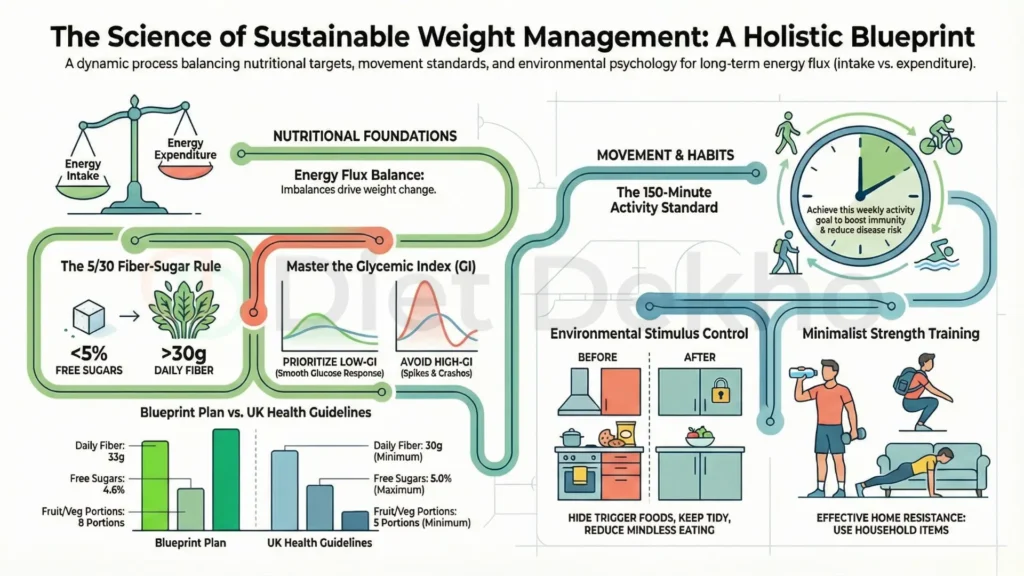
Struggling to shed kilos? Practical weight loss tips at home for busy Indians
Table of Contents
- 1 Struggling to shed kilos? Practical weight loss tips at home for busy Indians
- 2 The frustration of home-based weight loss: Why your efforts might be stalling
- 3 Busting common myths: Why eating less isn’t always the answer
- 4 The science of shedding: How metabolism and Indian lifestyle habits connect
- 5 Kitchen secrets: Indian superfoods for faster results
- 6 Your 7-day home routine: Practical steps for busy Indians
- 7 Avoid these pitfalls: Common mistakes that slow down your progress.
- 8 Staying consistent: Why slow progress is still a win for your health.
- 9 Take the first step: Book a consultation with Diet Dekho experts today.
- 10 Contact Us
- 11 Disclaimer
India is currently facing a unique health crisis where the rise of individuals in higher weight categories is happening alongside traditional nutritional deficiencies. According to the National Family Health Survey (NFHS-5), nearly one-fourth of the adult population is now categorized as higher weight, with urban areas and wealthier households showing the highest risk. For a busy professional or a homemaker in India, the challenge is not just eating less but navigating an environment that has become increasingly obesogenic. What this means for your daily routine is that the traditional ways we cooked and moved are being replaced by sedentary screen time and ultra-processed foods.
The shift in Indian nutritional habits
Let’s simplify this: the core of the problem lies in the shift toward high-fat, high-sugar, and high-salt (HFSS) foods. The consumption of ultra-processed food in India surged from 900 million in 2006 to over 37.9 billion by 2019. For those of us trying to implement weight-loss tips at home, this suggests the battle is fought in the grocery aisle and the kitchen pantry, long before we ever step onto a yoga mat. The ICMR-NIN 2024 guidelines suggest a drastic increase in vegetable intake—moving from 300g to 400g daily—to combat the caloric density of modern diets while addressing micronutrient gaps.
The cultural context of weight management for Indians
For many Indians, especially the NRI community or those living in multi-generational homes, food is the primary language of love. However, a traditional Indian diet plan for weight loss must address the heavy reliance on refined cereals like white rice and maida, which have been linked to a 22% higher risk of general obesity. I know it’s hard to find time to cook separate meals, but making small swaps in your Ghar ka Khana can have a massive impact.
The biological reality is that Indians tend to accumulate fat around the midsection—known as visceral or abdominal fat—even if their overall weight seems normal. This type of fat is particularly dangerous because it wraps around internal organs and increases the risk of lifestyle diseases like hypertension and type 2 diabetes. Therefore, our focus on weight-loss tips at home must prioritize reducing waist circumference as much as the number on the weighing scale.
| Aspect of Diet | 2011 ICMR Guidelines | 2024 ICMR Guidelines | Health Significance |
| Daily Vegetable Intake | 300 g/day | 400 g/day | Addresses fiber and micronutrient gaps |
| Daily Sugar Limit | General restriction | <5% of total calories | Combats rising diabetes and obesity |
| Pulse/Legume Focus | General recommendation | Specific plant-based focus | Supports muscle mass and satiety |
| Daily Salt Intake | <5 g/day | <5 g/day with sodium reduction | Critical for managing hypertension |

The frustration of home-based weight loss: Why your efforts might be stalling
If you have been trying every magic drink on the internet but the scale isn’t moving, you are not alone. I know it’s hard to stay motivated when you feel like you are doing everything right but seeing no results. The frustration often stems from a disconnect between perceived effort and biological reality. Many people believe they are eating healthy because they eat homemade food, but if that food consists primarily of simple carbohydrates, your Indian diet plan for weight loss might need a serious update.
The science of satiety and portioning
One of the biggest reasons home-based efforts stall is the lack of portion control. We often use large plates and eat until we are 100% full, which overrides the body’s natural satiety signals. Research indicates that using smaller plates and focusing on the taste of each bite—mindful eating—can reduce food consumption by up to 25%. Additionally, the prevalence of screen-time eating has become a major risk factor. Spending more than three hours a day on screens is now recognized as a direct contributor to poor dietary habits and metabolic dysfunction.
The hidden impact of stress and sleep on your metabolism
In simple terms, weight loss is not just about calories in vs. calories out. Your hormones act as the master controllers of your weight. If you are sleep-deprived or chronically stressed, your body produces more cortisol, which tells your system to store fat, especially in the belly area. For a busy professional, a lack of 7–8 hours of restorative sleep can lead to false hunger, where you crave sugary snacks simply because your brain is seeking a quick energy fix.
Let’s simplify this: your body’s ability to burn fat is closely tied to your circadian rhythm. Eating late at night disrupts insulin sensitivity. This is why many weight loss tips at home emphasize finishing dinner at least 2–3 hours before bedtime. Without this gap, your body spends the night trying to digest food rather than performing the deep cellular repair and fat metabolism that occur during sleep.
Busting common myths: Why eating less isn’t always the answer
One of the most dangerous myths in the world of weight management is that you must starve yourself to see results. I know it’s hard to believe, but eating too little can actually stop your progress. When you drastically cut calories, your body goes into famine mode, slowing down your metabolism to conserve energy. Instead of burning fat, your body starts breaking down muscle tissue, which is the very thing that helps you burn calories at rest.
The short answer is that you need to eat better, not just less. This means focusing on nutrient density within your Indian diet plan for weight loss. For example, replacing a white bread sandwich with a bowl of vegetable daliya or a moong dal chilla provides your body with the fiber and protein it needs to keep your metabolism active.
The Ghee Myth: Why fat doesn’t always make you fat
In many Indian households, ghee has been treated as a villain for the last few decades. However, modern science and ancient Ayurvedic wisdom both agree that pure desi ghee is a functional fat. Ghee is rich in conjugated linoleic acid (CLA), which research suggests can lower body fat and promote weight loss when consumed in moderation. It also contains medium-chain triglycerides (MCTs), which are quickly metabolized for energy rather than stored as fat.
What this means for your daily routine is that you don’t have to eliminate ghee; you just need to practice portion control. One to two teaspoons of ghee daily can improve digestion and help you absorb fat-soluble vitamins like A, D, E, and K, which are essential for overall health.

The science of shedding: How metabolism and Indian lifestyle habits connect
To understand how to lose weight effectively, we need to look at the math of energy. Your weight is a balance of your calorie intake and your Total Daily Energy Expenditure (TDEE). A major component of this is your Basal Metabolic Rate (BMR), which is the energy your body uses just to keep you alive.
In simple terms, your BMI (Body Mass Index) is a helpful starting point, calculated as
BMI= weight (kg) / height (m)2
However, for Indians, the World Health Organization (WHO) and ICMR suggest a lower cut-off for higher weight—starting at a BMI of 23 instead of 25—because of our higher risk of metabolic complications at lower weights.
Strengthening your digestive fire
In the Indian health context, metabolism is often compared to Agni, or a digestive fire. If you use poor-quality fuel like processed snacks, the fire smolders and creates toxins. One of the best weight loss tips at home is to strengthen this fire by using warming spices like ginger and cinnamon, which boost thermogenesis—the process of heat production in the body that burns calories.
Why muscle mass is your best friend
Many homemakers and professionals focus solely on cardio, such as walking. While walking is excellent, adding light resistance training or yoga is crucial for metabolic health. Muscle tissue is more metabolically active than fat tissue. This means that even when you are sitting at your desk, a body with more muscle will burn more calories. This is why traditional Indian exercises like baithaks (squats) are so effective; they build lower-body muscle that acts as a 24/7 calorie-burning furnace.
Kitchen secrets: Indian superfoods for faster results
Your kitchen is like a pharmacy filled with metabolic boosters. You don’t need non-native berries or expensive supplements when you have these Indian superfoods within arm’s reach.
Fenugreek (Methi): The Hunger Crusher
I know it’s hard to control those 4 PM cravings, but methi seeds can be your secret weapon. Fenugreek is incredibly high in fiber—specifically galactomannan—which is a water-soluble fiber that expands in your stomach, making you feel full for much longer. It also slows down the absorption of sugar and fats. What this means for your daily routine is that soaking a teaspoon of methi seeds overnight and drinking the water in the morning can drastically reduce your appetite throughout the day.
Amla: The Vitamin C Powerhouse
Amla is one of the richest sources of vitamin C, which is a key cofactor in fat metabolism. It helps the body produce carnitine, a molecule that carries fat into the cells to be burned for energy. Amla also acts as a liver cleanser, helping your body process fats more efficiently. If you are implementing weight-loss tips at home, try adding a teaspoon of amla powder to warm water in the morning to kick-start your digestion.
Millets: The Ancient Weight Loss Secret
If there is one change that can transform your health, it is swapping white rice for millets like Ragi, Jowar, and Bajra. These are not just grains; they are nutrient powerhouses. Ragi is exceptionally high in calcium and fiber, while bajra is rich in iron. Because they have a low Glycemic Index (GI), they release energy slowly into your bloodstream, preventing the insulin spikes that lead to fat storage.

Your 7-day home routine: Practical steps for busy Indians
Let’s simplify this: weight loss doesn’t have to be complicated. This 7-day Indian diet plan for weight loss is designed to fit into a typical household and uses ingredients you already have on hand.
Days 1 to 3: Establishing healthy home habits
- Day 1: Kick off with warm lemon water and 5 soaked almonds. Enjoy two moong dal chillas for breakfast. Grab an orange for a mid-morning snack. For lunch, have one whole wheat roti with a large bowl of lauki sabzi. Sip green tea with roasted makhana in the evening. Finish with clear vegetable soup and grilled paneer for dinner.
- Day 2: Start your morning with overnight-soaked methi water. Try vegetable oats upma for breakfast. Eat a small bowl of papaya at mid-morning. Mix one bowl of brown rice with sprouts curry for lunch. Sip buttermilk with roasted chana in the evening. End your day with one bajra roti and stir-fried palak.
- Day 3: Begin with warm water, turmeric, and black pepper. Choose two boiled eggs and multigrain toast for breakfast. Enjoy an apple at mid-morning. Have two multigrain rotis with rajma and salad for lunch. Snack on sprouts bhel in the evening. Finish with moong dal soup and a small portion of vegetable pulao.
Days 4 to 7: Refining your Indian diet plan for weight loss
- Day 4: Drink jeera water upon waking. Eat poha loaded with carrots and peas for breakfast. Sip a glass of coconut water at mid-morning. For lunch, have one jowar roti with bhindi sabzi and dal tadka. Snack on roasted peanuts in the evening. Enjoy besan chilla with mint chutney for dinner.
- Day 5: Start with ginger-tulsi tea. Enjoy ragi idli or ragi porridge for breakfast. Eat a pomegranate or seasonal berries at mid-morning. For lunch, combine brown rice with dal tadka and sautéed beans. Have roasted makhana and herbal tea in the evening. Finish with tofu stir-fry and a large green salad.
- Day 6: Kickstart with diluted amla juice. Try a vegetable paratha with curd for breakfast. Enjoy a guava at mid-morning. For lunch, have two whole wheat rotis with baingan bharta and raita. Sip green tea with roasted chana in the evening. Finish with vegetable khichdi made with plenty of fiber-rich beans and carrots.
- Day 7: Start with warm ajwain water. Enjoy a large sprouts salad for breakfast. Sip buttermilk at mid-morning. For lunch, have one ragi roti with methi sabzi and dal. Enjoy a fresh fruit bowl in the evening. Finish your week with a clear moong dal soup and one multigrain toast.
Avoid these pitfalls: Common mistakes that slow down your progress.
When you are following weight loss tips at home, it is easy to make mistakes that negate your hard work. I know it’s hard to change lifelong habits, but being aware of these pitfalls is the first step.
Pitfall 1: Confusing Thirst with Hunger
The short answer is drink water first. Many of us confuse the body’s signal for thirst with the signal for hunger. Drinking 2.5–3 liters of water daily is one of the most underrated home weight-loss tips. A simple hack is to drink a glass of water 20 minutes before every meal; this can naturally reduce your portion size.
Pitfall 2: The Hidden Calories in Tea and Coffee
We Indians love our chai. However, if you are having 3–4 cups of tea daily with sugar and full-fat milk, you are consuming nearly 300–400 empty calories. What this means for your daily routine is that you should limit tea to two small cups and replace sugar with a small amount of jaggery or none at all.

Pitfall 3: Inadequate Protein and Excessive Evening Consumption
Protein takes more energy to digest than fats or carbs and helps you maintain muscle mass. I know it’s hard to find vegetarian protein sources, but including things like moong dal, paneer, and sprouts in your Indian diet plan for weight loss is vital. Additionally, skipping meals often leads to excessive evening consumption, which significantly slows your metabolic progress.
| Common Mistake | Why it Hurts Progress | How to Fix it |
| Drinking Fruit Juice | High sugar, no fiber | Eat the whole fruit instead |
| Using Too Much Salt | Causes water retention and bloating | Use herbs, lemon, and spices for flavor |
| Mindless Snacking | Adds hundreds of hidden calories | Plan your snacks like makhana or chana |
| Sitting for Long Hours | Slows down circulation and metabolism | Stand up and move every 30-40 minutes |
Staying consistent: Why slow progress is still a win for your health.
I know it’s hard to stay patient, but sustainable weight loss is a slow process. In simple terms, your body needs time to adapt. Losing 0.5 kg to 1 kg per week is considered a healthy and sustainable rate that ensures you are losing fat, not just water or muscle.
Non-scale victories and sustainable habits
This means you should focus on non-scale victories in your daily routine. Are you feeling more energetic? Is your digestion better? Are your blood sugar levels more stable? These are all signs that your Indian diet plan for weight loss is working, even if the scale hasn’t moved yet. You don’t need a massive overhaul; you just need small, consistent changes that compound over time.
Take the first step: Book a consultation with Diet Dekho experts today.
I know it’s hard to navigate all the conflicting information available online. While these weight loss tips at home are a great starting point, everybody is different. What works for one person won’t necessarily work for someone managing hypertension or thyroid issues.
At Diet Dekho, we believe in simple, sustainable, and practical solutions. Our team of 50+ expert dietitians works with you to create a personalized Indian diet plan for weight loss that fits into your lifestyle. Whether you are in India or an NRI living abroad, we provide the tracking tools and professional guidance you need to reach your goals.
Get a personalized macro-balanced plan with a Diet Dekho expert. Start your journey to holistic health with a Diet Dekho consultant.
Ready to take charge of your health from the comfort of your home? Your journey to a fitter, healthier you is just one click away.

FAQs: Your questions about weight loss at home answered
What are the best weight loss tips to follow at home?
The most effective home-based weight loss tips include eating home-cooked meals, controlling portions, staying physically active through daily movement, sleeping well, managing stress, and limiting sugary and ultra-processed foods.
Can I lose weight at home without gym or equipment?
Yes. Weight loss depends mainly on calorie balance. Daily activities like walking, household chores, bodyweight exercises, and portion control can support weight loss without a gym or equipment.
Which home habits help in faster weight loss?
Helpful habits include regular meal timing, drinking enough water, reducing screen-time snacking, cooking most meals at home, and maintaining consistent sleep schedules. These habits support appetite control and energy balance.
How can I control cravings while staying at home?
Cravings can be reduced by eating balanced meals with protein and fiber, avoiding long gaps between meals, staying hydrated, managing stress, and keeping tempting snacks out of sight.
Is home cooking better for weight loss than eating outside?
Yes. Home-cooked meals are generally lower in calories, sugar, and unhealthy fats compared to restaurant or packaged foods, making them more supportive of weight loss.
How much walking is enough for weight loss at home?
For weight loss, most adults benefit from at least 30 to 60 minutes of brisk walking on most days. More walking may lead to greater calorie burn, depending on pace and consistency.
How long does it take to see weight loss results with home-based tips?
Improved energy and reduced bloating may appear within 1 to 2 weeks. Visible weight loss typically occurs within 3 to 6 weeks when home-based habits are followed consistently.
Contact Us
We understand how overwhelming nutrition and weight loss information can feel. With so many opinions and confusing advice online, it’s easy to feel stuck or unsure about what to do next.
At Diet Dekho, you never have to figure it out alone. You can contact us anytime with any questions or concerns. Our expert dietitians are available 24/7 to guide, support, and help you stay on track. Whether your goal is weight loss or building healthier habits, we’re here to make the journey simpler and more sustainable for you.
Disclaimer
This blog is intended to help readers make healthier food choices. Your health should always be the top priority. Before starting any restrictive or special diet, especially if you have a medical condition or health concern, please consult a doctor or a qualified dietitian. Each body responds differently to food and lifestyle changes. Always choose what is safe and suitable for you.

Dr. Ritika is a nutrition and lifestyle expert with 2+ years of experience, helping clients manage weight and health through practical, personalized diet plans.