At DietDekho, we understand that seeing the scale rise again feels like a personal defeat. However, weight regain after weight loss is often a biological defense mechanism rather than a lack of discipline. If you have spent months tracking every bite only to see progress vanish, it is time to look beyond the surface. Your body is likely prioritizing survival over aesthetics.
Direct Answer: Why Weight Regain Occurs Weight regain after weight loss happens because of “metabolic adaptation.” When you lose weight, your body lowers its calorie-burning rate and increases hunger hormones like ghrelin to restore original energy stores. This physiological rebound is intensified by restrictive dieting, high-carb Indian meals, and hormonal issues like PCOS or thyroid dysfunction.
The Frustrating Cycle: Why am I Regaining Weight Back?
Table of Contents
- 1 The Frustrating Cycle: Why am I Regaining Weight Back?
- 2 The “Post-Diet” Struggle: Is a Weight Loss Rebound Defeating Your Progress?
- 3 Common Myths: Why Returning to Original Weight Isn’t Just About Willpower
- 4 The Science of Rebound: Why Your Body Fights a Post-Diet Weight Bounce
- 5 Practical Solutions: Indian Meal Swaps for Sustaining Weight Loss
- 6 Your Daily Maintenance Blueprint: Indian Weight Maintenance Strategies
- 7 Mistakes to Avoid: Preventing Weight Fluctuations and Keeping Weight Off Long-term
- 8 Small Wins: Staying Lean After Dieting
- 9 Ready to Stop the Yo-Yo? Consult Diet Dekho for a Personalized Maintenance Plan
- 10 Contact Us
- 11 Disclaimer
Seeing the weight return after successful shedding is a global issue. However, it carries a unique emotional weight in the Indian context. Statistics from long-term studies reveal a sobering reality. More than 50% of lost weight is typically regained within just two years. By the five-year mark, this figure often exceeds 80%.
This persistent cycle occurs because many focus on short-term “weight loss” instead of long-term “metabolic health.” In India, we often see this after “crash diets” for weddings or festivals. When you restrict calories severely, your body does not recognize your aesthetic goal. Instead, it interprets the lack of food as a famine.
How the Famine Response Triggers a Weight Loss Rebound
To protect you, your body slows its heart rate and drops its temperature. It becomes incredibly efficient at storing every calorie you eat. What this means for your daily routine is simple. When you return to a “normal” diet, your metabolic engine is much slower than before you started.
The Unique Indian “Thin-Fat” Phenotype
The Indian population faces a unique challenge known as the “thin-fat” phenotype. Many Indians have high visceral fat around internal organs, even if they look normal-weight. This type of fat is metabolically stubborn and linked to insulin resistance. If you lose weight too fast, you often lose muscle mass instead of fat. Since muscle drives your metabolic rate, losing it makes a weight loss rebound almost certain.
The “Post-Diet” Struggle: Is a Weight Loss Rebound Defeating Your Progress?
I know it is hard to find time for science while balancing a corporate job or a home. However, the feeling of defeat after dieting must be addressed with empathy. The psychological toll of the “yo-yo” effect often leads to “dietary fatigue”. This is where the mental energy required to resist cravings simply runs out.
Let’s simplify this: your body wants balance. When you force it out of its comfortable weight range, it fights back hard. In an Indian household, food is synonymous with love and hospitality. Refusing a second helping of kheer or a buttered paratha at a family gathering is socially difficult. The pressure to indulge, combined with a hungry body, creates a perfect storm for returning to your original weight.
The Struggle for NRIs and Professionals
For Non-Resident Indians (NRIs), this defeat is often due to convenience. Living in cold climates without domestic help makes frozen, ready-to-eat meals attractive. These processed options are often loaded with hidden sugars and sodium. They contribute to inflammation and fat storage. When the weight returns, shame often prevents people from seeking professional help. You can find more about sustainable habits in our guide to Indian eating habits.

Common Myths: Why Returning to Original Weight Isn’t Just About Willpower
One damaging myth is that weight maintenance is just about “mind over matter.” If that were true, the 80% failure rate would not exist. The reality is that willpower is a limited resource. By the end of a stressful day, your “willpower tank” is empty. This leaves you vulnerable to biological hunger signals.
Another myth is that “Ghar ka khana” (home food) is always healthy. While home cooking gives you control, traditional recipes often use too much oil and ghee. A single home-cooked samosa can have 350 calories. Adding ghee to every roti can add 120 calories to your meal. Without measuring, “healthy home food” can easily exceed your body’s needs.
The Hidden Impact of Home-Cooked Calories
Many believe they have “broken” their metabolism through dieting. In simple terms, your metabolism is flexible, not a fixed machine. Severe restriction can reduce your metabolic rate more than expected, but this is not permanent. With enough protein and strength training, your metabolic rate can recover. You can learn to structure your meals better with our 7-day Indian diet plan.
The Science of Rebound: Why Your Body Fights a Post-Diet Weight Bounce
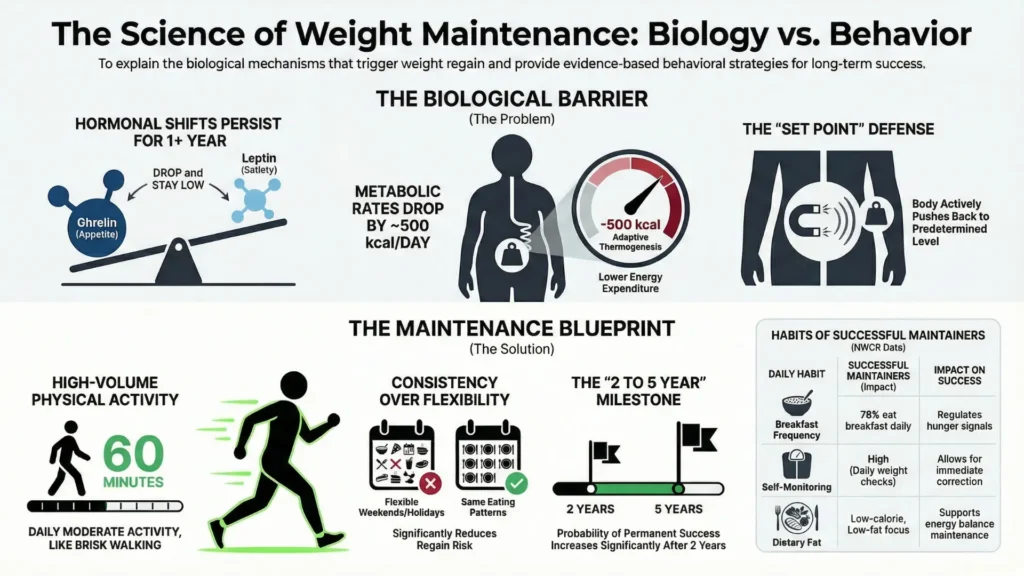
What this means for your daily routine is that you are negotiating with hormones. The primary regulator is a hormone called leptin. Produced by fat cells, it tells your brain you have enough energy stored. When you lose weight, your fat cells shrink and leptin levels drop. Your brain interprets this as an emergency and triggers hunger.
While leptin falls, levels of the hunger hormone ghrelin rise. Produced in the stomach, ghrelin drives you to seek out food. Research shows that even a year after weight loss, ghrelin levels remain high. This combination—less fullness and more hunger—is the foundation of a post-diet weight bounce.
The Hormonal Chain Reaction in PCOS
In the Indian population, this struggle is often worse due to insulin resistance. Insulin clears sugar from your blood. When you are insulin resistant, your body produces more insulin. High insulin levels act as a “fat-storage” signal. This makes it very hard to burn stored fat for energy. This is especially true for women managing.
Cortisol and the “Stress-Belly” Connection
Chronic stress elevates a hormone called cortisol. This hormone has a specific affinity for abdominal fat. It promotes belly fat storage and increases cravings for “high-fat, high-sugar” foods. These foods provide a temporary psychological comfort. This is why weight regain after weight loss often shows up first around the waist during stressful times.

Practical Solutions: Indian Meal Swaps for Sustaining Weight Loss
The short answer to weight maintenance is shifting from “restriction” to “nutrition density.” The 2024 ICMR-NIN guidelines suggest a balanced plate should prioritize vegetables and legumes. They recommend at least 400g of vegetables per day. This provides “mechanical satiety” by stretching the stomach without adding many calories.
Intelligent Indian Meal Swaps for Satiety
Instead of removing foods, focus on “intelligent swaps.” These prioritize fiber and protein to manage hunger.
| Traditional Staple | Healthy Indian Swap | Metabolic Benefit |
| Polished White Rice | Brown Rice or Foxtail Millet | 3x more fiber; lower glycemic load. |
| White Bread / Maida | Jowar or Bajra Rotis | Slower glucose release; gluten-free. |
| Sugary Cereal | Vegetable Poha or Moong Dal Chilla | Higher protein and vegetable fiber. |
| Fried Samosa | Roasted Makhana or Peanuts | Healthy fats; lower calorie density. |
| Sweet Lassi | Salted Buttermilk (Chaas) | Probiotics; no added sugar. |
The Power of Protein in the Indian Context
One major challenge in India is the “protein gap.” Most vegetarians rely on dal, which is also high in carbs. To preserve muscle and prevent regain, every meal needs a dedicated protein source. This includes paneer, tofu, soy chunks, sprouts, or eggs. Aim for 0.8g to 1.0g of protein per kilogram of body weight.
Your Daily Maintenance Blueprint: Indian Weight Maintenance Strategies
Maintaining weight is about doing small things consistently. A successful maintenance blueprint focuses on timing, hydration, and “movement snacks.” Evidence shows that those who eat breakfast and maintain a regular schedule are more successful.
The 12-Hour Circadian Window
Aligning eating with your body’s clock is powerful for metabolic health. Finish dinner by 8:00 PM to create a 12-hour gap before breakfast.
- 7:00 AM: Hydrate with warm water and soaked almonds for brain health.
- 8:30 AM: High-protein breakfast like paneer bhurji or moong sprouts.
- 1:30 PM: Half plate vegetables, one-quarter protein, and one-quarter complex carbs.
- 4:30 PM: Opt for roasted chana or papaya instead of chai-biscuit.
- 7:30 PM: Light dinner of vegetable soup and a small portion of khichdi.
The “15-Minute Rule” After Meals
Instead of exhausting gym sessions, focus on post-meal walks. Walking for 15 minutes after lunch can reduce blood sugar spikes by 30%. This prevents the insulin surge that leads to fat storage. This is a realistic way to hit the 150–300 minutes of weekly activity recommended by the WHO.

Mistakes to Avoid: Preventing Weight Fluctuations and Keeping Weight Off Long-term
A common pitfall is the “all-or-nothing” mentality. Many people diet strictly during the week and “cheat” on weekends. However, your body is sensitive to these swings. A weekend of high-calorie, processed food causes water retention and inflammation. The “cheat month” during Diwali is even worse. It can completely override months of metabolic progress.
Another mistake is neglecting sleep. Sleeping less than 7 hours a night is a major predictor of weight gain. Lack of sleep increases cortisol and disrupts leptin and ghrelin. This makes you feel ravenous the next day. An extra hour of sleep might be more effective than an extra hour on the treadmill.
The Problem with “Liquid Calories”
Many consume hundreds of calories through beverages unknowingly. Traditional chai with sugar and full-fat milk can add 150 calories per cup. If you drink three cups, that is nearly 500 calories. Switching to black coffee or herbal tea can significantly reduce your daily load.
Small Wins: Staying Lean After Dieting
Weight regain after weight loss can sometimes be masked by muscle gain. If you exercise, your weight might stay the same while your waist size drops. Focus on “Non-Scale Victories” (NSVs) instead of just the number.
- Fitting into an old pair of jeans or a kurta.
- Having the energy to climb stairs easily.
- Better sleep quality and stable moods.
- Improved blood pressure and glucose markers.
The NRI Perspective: Global Kitchen Hacks
For Indians living abroad, maintaining habits requires creativity. You do not need to fly in every ingredient.
- Use Local Veggies: Use Brussels sprouts or kale in your sabzis for nutrient density.
- Electric Kettle Mastery: A compact kettle can cook small portions of dal or oats in a hotel room.
- Travel Snacks: Carry homemade thepla or roasted makhana to avoid airport junk.
Ready to Stop the Yo-Yo? Consult Diet Dekho for a Personalized Maintenance Plan
You do not have to fight your biology alone. At Diet Dekho, we provide expert guidance tailored to the Indian metabolic profile. Whether you are a professional in Mumbai or an NRI in New York, we help you build a sustainable lifestyle.
Get a Personalized Macro-Balanced Plan with a Diet Dekho Expert Start Your Journey to Holistic Health with a Diet Dekho Consultant
Weight regain after weight loss is a challenge, but you can overcome it with science. Take the first step toward a healthier you today.

Frequently Asked Questions (FAQs)
1. Why is weight regain after weight loss so common in Indians?
Indians have a genetic predisposition to insulin resistance and the “thin-fat” phenotype. Our diets are often high in refined starches like white rice, which trigger fat storage if not balanced with protein.
2. How many steps should I walk to stop regaining weight back?
The WHO recommends 150–300 minutes of moderate activity per week. Aiming for 8,000 to 10,000 steps daily is great, but 15-minute walks after every meal are better for blood sugar management.
3. Can I maintain weight loss without a gym?
Yes. Weight maintenance is 80% nutrition. Home-based yoga, Vajrasana after meals, and a high-protein Indian diet are highly effective. Consistently eating at home is a huge predictor of success.
4. How does sleep prevent a post-diet weight bounce?
Lack of sleep increases ghrelin (hunger) and decreases leptin (fullness). This hormonal imbalance leads to intense sugar cravings, making maintenance nearly impossible.
5. What are the best Indian snacks for staying lean after dieting?
Choose snacks with protein and fiber. Roasted makhana, roasted chana, or boiled moong sprouts are excellent choices. Avoid biscuits or bhujia, which are high in trans-fats and sodium.
Contact Us
We understand how overwhelming nutrition and weight loss information can feel. With so many opinions and confusing advice online, it’s easy to feel stuck or unsure about what to do next.
At Diet Dekho, you never have to figure it out alone. You can contact us anytime with any questions or concerns. Our expert dietitians are available 24/7 to guide, support, and help you stay on track. Whether your goal is weight loss or building healthier habits, we’re here to make the journey simpler and more sustainable for you.
Disclaimer
This blog is intended to help readers make healthier food choices. Your health should always be the top priority. Before starting any restrictive or special diet, especially if you have a medical condition or health concern, please consult a doctor or a qualified dietitian. Each body responds differently to food and lifestyle changes. Always choose what is safe and suitable for you.

Dr. Ritika is a nutrition and lifestyle expert with 2+ years of experience, helping clients manage weight and health through practical, personalized diet plans.