
Have you ever found yourself standing in front of the mirror just weeks before a family wedding or a major festival, wishing for a magic wand to shed ten kilos instantly? This common desire often leads people to ask: What Is a Crash Diet and Why You Should Avoid It to protect your long-term health?
The short answer is: A crash diet is an extreme, restrictive eating plan designed for rapid weight loss through severe calorie deprivation. You should avoid it because it triggers metabolic slowdown, causes muscle loss, and leads to nutrient deficiencies. Instead, focus on balanced Indian meals and consistent habits for sustainable, healthy weight management.
What is a crash diet and how does it affect your body?
Table of Contents
- 1 What is a crash diet and how does it affect your body?
- 2 Why crash diets are bad for health in the long run?
- 3 What are the side effects of crash dieting on your organs?
- 4 How does crash dieting affect PCOD/PCOS and thyroid health?
- 5 Why rapid weight loss is risky for diabetes and hypertension?
- 6 What are the nutritional deficiencies caused by fad diets?
- 7 Why do celebrities avoid crash diets for long-term fitness?
- 8 How to lose weight naturally without crash dieting?
- 9 What are the best healthy Indian meals for weight loss?
- 10 How to stop weight regain after dieting?
In simple terms, a crash diet is not a single specific program but an umbrella term for any nutritional strategy that prioritizes speed over safety. These diets typically involve reducing your daily food intake to minimal levels, often falling below 800 to 1000 calories per day. Many people in India are drawn to these “single-named food” diets, such as the cabbage soup diet, the fruit-only diet, or the widely discussed GM (General Motors) diet, which promises weight loss of 4 to 7 kg in just one week.
What this means for your daily routine is that your body is forced into a state of metabolic crisis. While the number on the scale might drop quickly during the first few days, this change is rarely due to fat loss. Instead, your body is primarily losing water weight and glycogen—the stored form of carbohydrates that binds to water in your muscles. Once you return to your regular routine, your body works twice as hard to replenish these stores, which is why the weight usually returns just as fast as it left.
The structure of common fad diets in India
I know it’s hard to find time to research every new trend, but most fad diets follow a similar pattern of extreme restriction. The GM diet, for example, is a 7-day schedule that dictates exactly which food group you can eat each day. For the first three days, you are limited to fruits and vegetables, which provides almost no protein or healthy fats. By day four, you are restricted to bananas and milk, which can cause significant digestive distress for many Indians with lactose sensitivity.
| Day | Permitted Food Groups (GM Diet) | Potential Biological Stressors |
| Day 1 | Fruits only (no bananas) | Significant lack of protein and healthy fats |
| Day 2 | Vegetables only (one potato allowed) | Low energy levels and potential hypoglycemia |
| Day 3 | Fruits and vegetables only | Minimal calorie intake leading to dizziness |
| Day 4 | Bananas and milk only | High sugar intake and potential bloating |
| Day 5 | Meat (or brown rice) and tomatoes | High uric acid risk and sudden protein spike |
| Day 6 | Meat (or brown rice) and vegetables | Digestive strain from high-fiber/protein combo |
| Day 7 | Brown rice, fruit juice, and vegetables | Insulin spikes from liquid sugars |
Why crash diets are bad for health in the long run?
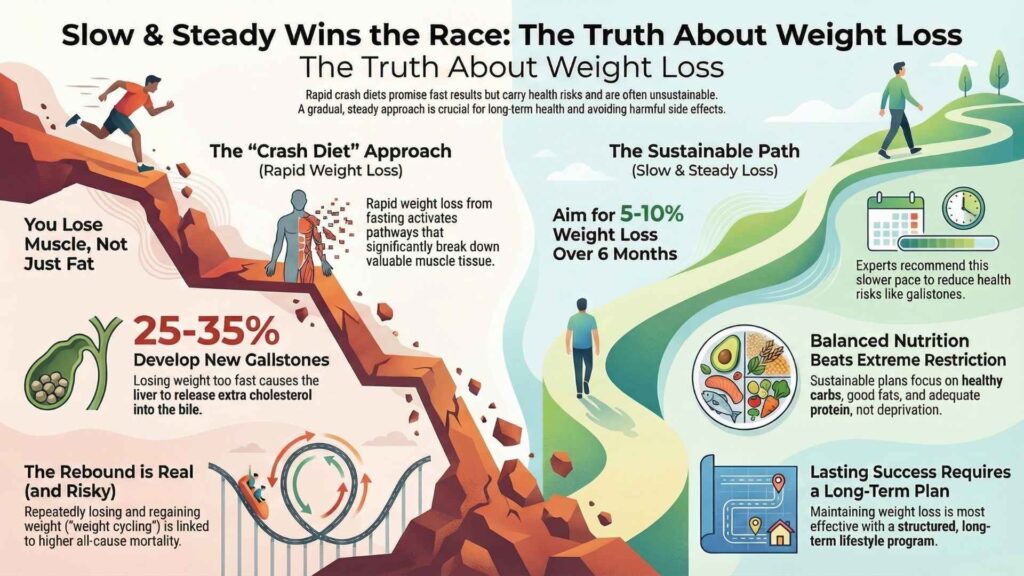
The problem with these methods is that they trick your brain into thinking the body is starving. In simple terms, when you drastically cut calories, your body enters “survival mode”. To protect you from what it perceives as a famine, your brain slows down your metabolic rate to conserve energy. This process, known as metabolic adaptation, means that your body begins to burn fewer calories to perform basic tasks like breathing or circulating blood.
What this means for your daily routine is a frustrating plateau. You might stop losing weight even while eating very little, and once the diet is over, your slower metabolism makes it much easier to regain every gram you lost—and often even more. Research suggests that for every extreme diet attempt, the rate at which you burn food may slow by an additional 15%.
The hidden risk of muscle loss
One of the most concerning side effects of crash dieting is that the body often breaks down muscle tissue for energy instead of burning fat. Muscle is metabolically active tissue, which means it helps you burn calories even when you are sitting still or sleeping. When you lose muscle, your metabolism drops further, creating a vicious cycle of weight gain.
In the Indian context, this is particularly dangerous. Studies show that Indians naturally tend to have less muscle mass and more body fat (especially abdominal fat) compared to other ethnic groups. During severe calorie restriction, Indians lose muscle 3.2 times faster than Europeans. This “thrifty gene” makes crash dieting a significant threat to our metabolic health, as it accelerates the loss of the very tissue we need to stay fit.

What are the side effects of crash dieting on your organs?
Beyond just your weight, these extreme methods put immense pressure on your internal organs. The gallbladder, a small organ located under your liver, is particularly at risk. Its job is to store bile to help break down fats. When you lose weight too rapidly—more than 1.5 kg per week—the balance of cholesterol and bile changes, leading to the formation of painful gallstones.
Your heart is another vital organ that requires a steady supply of nutrients to function properly. Restricting calories too severely deprives the heart of essential minerals like potassium and magnesium, which regulate your heartbeat. This can lead to an abnormal heart rhythm or a weakened pulse, which is why many crash dieters experience palpitations, dizziness, or fainting spells.
The hormonal chaos triggered by rapid weight loss
Let’s simplify this: your body uses hormones to communicate between your brain and your stomach. Crash dieting disrupts the delicate balance of these hormones. Ghrelin, the “hunger hormone,” increases its levels to tell your brain you are starving, while Leptin, the hormone that tells you that you are full, drops significantly.
This hormonal response explains why intense restriction can later trigger powerful cravings, sometimes leading to periods of eating far more than intended. Your body is essentially begging you to replenish the energy it lost. Even after you regain the weight, these hormones may not return to their normal levels for a long time, making you feel constantly hungry even when you have eaten enough.
How does crash dieting affect PCOD/PCOS and thyroid health?
For women managing PCOD or PCOS (Polycystic Ovary Syndrome), weight management is crucial, but crash dieting is not the answer. These conditions are already linked to insulin resistance, and extreme dieting can spike your stress hormone, cortisol. High cortisol levels further increase insulin resistance and can lead to more fat storage around the belly—the exact opposite of what you want.
While moderate, sustainable weight loss can improve PCOS symptoms like inflammation and irregular cycles, the shock of a crash diet can actually stop your period altogether or cause severe hormonal flare-ups. It is essential to choose a balanced approach that supports your hormones rather than stressing them.
The impact on your thyroid function
Your thyroid gland acts as the thermostat for your metabolism. It is highly sensitive to your nutritional intake. When you cut calories too low, your body reduces the production of the active thyroid hormone, T3.
- Reduced Conversion: Your body struggles to convert the inactive hormone T4 into the active T3.
- Metabolic Slump: Lower T3 levels directly slow down your calorie burning.
- Chronic Fatigue: This drop in thyroid activity is why crash dieters often feel cold, tired, and sluggish all the time.
- Inflammation: Severe dietary pressure can worsen autoimmune thyroid conditions, leading to more long-term health issues.

Why rapid weight loss is risky for diabetes and hypertension?
If you are managing Type 2 Diabetes, your blood sugar levels are already a delicate balancing act. A crash diet can cause dangerous drops in blood glucose (hypoglycemia), leading to confusion, shakiness, or even loss of consciousness, especially if you are taking medication. Furthermore, the lack of fiber in many fad diets can lead to sudden sugar spikes when you do eat, making your condition harder to manage.
For those with high blood pressure (hypertension), the rapid loss of water weight that accompanies crash dieting can cause a sudden drop in blood pressure. While losing weight is generally good for BP, doing it too fast can lead to an electrolyte imbalance that puts your kidneys and heart at risk.
The connection to fatty liver and metabolic syndrome
What this means for your daily routine is a higher risk of “silent” health issues. Many Indians develop non-alcoholic fatty liver disease (NAFLD) even at seemingly normal weights due to high refined carbohydrate intake. Crash dieting can actually worsen liver health by causing a sudden influx of fatty acids into the liver as the body breaks down fat stores too rapidly.
| Medical Condition | Risks of Crash Dieting | Safe Sustainable Alternative |
| PCOS | Cortisol spikes, worsening insulin resistance | High-fiber, low-GI Indian meals |
| Thyroid | Significant drop in active T3 hormone | Iodine and protein-rich balanced diet |
| Diabetes | Dangerous hypoglycemia (low blood sugar) | Small, frequent meals with complex carbs |
| Hypertension | Electrolyte imbalance and kidney strain | Low-sodium, potassium-rich whole foods |
What are the nutritional deficiencies caused by fad diets?
India is already facing a “silent epidemic” of micronutrient deficiencies. Even without dieting, many of us are low in Vitamin B12 and Vitamin D3. When you start a crash diet that eliminates whole food groups, these deficiencies can become severe.
- Vitamin B12: Found mostly in animal products and dairy. Deficiency leads to nerve damage, brain fog, and severe fatigue.
- Vitamin D3: Essential for bone health and immunity. Since it is fat-soluble, low-fat crash diets prevent its absorption.
- Iron: Very common in Indian women. Restrictive diets lead to anemia, causing pale skin, hair loss, and breathlessness.
- Protein: Lack of protein during a diet causes your hair to thin, your nails to become brittle, and your wounds to heal slowly.
In simple terms, you might look thinner, but your body is starving on the inside. This is one of the primary reasons why crash diets are bad for health and why you should avoid them.

Why do celebrities avoid crash diets for long-term fitness?
We often see movie stars like Kareena Kapoor looking fit and radiant, but their secret is not a 7-day magic pill. Celebrity nutritionists like Rujuta Diwekar emphasize that sustainable weight loss comes from consistent habits, not extreme restrictions.
In fact, many celebrities avoid crash diets because the side effects—like hair fall, dull skin, and irritability—can affect their work. Instead, they focus on:
- Home-Cooked Meals: Prioritizing dal, rice, and seasonal vegetables.
- Traditional Staples: Including grains like Bajra (pearl millet) to boost energy and immunity.
- Mindful Movement: 15 minutes of daily activity rather than hours of punishing workouts.
- Early Dinners: Finishing the last meal by sunset to allow the body to rest and digest.
Milind Soman, an icon of health at 60, follows a simple routine of seasonal fruits for breakfast and traditional vegetarian lunches, proving that “simple and consistent” beats “complex and extreme” every single time.
How to lose weight naturally without crash dieting?
The best way to lose weight naturally in India is to work with your lifestyle, not against it. The Indian Council of Medical Research (ICMR) recommends a slow and steady approach, aiming for a loss of about 0.5 kg per week. This allows your body to adjust without slowing your metabolism or losing muscle.
The ICMR “Perfect Plate” for sustainable health
Let’s simplify this for your kitchen. A balanced Indian meal should be colorful and varied. The ICMR suggests that at least half of your daily intake should come from plant sources like vegetables and fruits.
| Food Group | Daily Recommendation (ICMR) | Benefits for Weight Loss |
| Vegetables | 400 grams | High fiber to keep you full longer |
| Fruits | 100 grams | Natural vitamins and antioxidants |
| Pulses/Legumes | 80 grams | Essential protein for muscle health |
| Cereals/Millets | 250 grams | Sustained energy without sugar crashes |
| Milk/Curd | 300 ml | Probiotics for a healthy gut |
| Nuts/Seeds | 35 grams | Healthy fats for hormonal balance |

What are the best healthy Indian meals for weight loss?
I know it’s hard to find time to cook elaborate meals, so let’s focus on simple, home-based solutions. You don’t need expensive foreign superfoods to stay healthy; your local market has everything you need.
- Breakfast Options: Moong dal chilla, vegetable upma with lots of peas, or poha with roasted peanuts.
- Lunch/Dinner Staples: Roti made from Jowar or Bajra instead of maida, paired with a bowl of dal and a seasonal vegetable like lauki or tinda.
- Healthy Snacks: Dry roasted makhana, a handful of roasted chana, or a piece of seasonal fruit like papaya or guava.
- Hydration Hacks: Instead of sugary sodas, try jeera water or ajwain water. These traditional drinks stimulate digestive enzymes and help reduce bloating naturally.
How to prepare Jeera-Ajwain water at home
This simple drink can be a great addition to your morning routine. Just soak one teaspoon of jeera and one teaspoon of ajwain in two cups of water overnight. In the morning, boil the mixture for 5 minutes, strain it, and sip it while it’s warm. This helps wake up your metabolism without the jitters of caffeine.
How to stop weight regain after dieting?
If you have already tried a crash diet and are worried about the weight coming back, don’t panic. The key is to slowly “re-teach” your metabolism how to burn fuel. This is often called reverse dieting.
- Slowly Increase Calories: Don’t go back to your old eating habits overnight. Gradually add about 100−200 calories of healthy food back into your day each week.
- Add Protein: Focus on increasing your protein intake from sources like dal, paneer, curd, or eggs. Protein helps build back the muscle you might have lost.
- Start Strength Training: You don’t need a gym. Simple body-weight exercises like squats, lunges, or even carrying heavy groceries can help rebuild muscle and fire up your metabolism.
- Prioritize Sleep: Your body does most of its repair work—and fat burning—while you sleep. Aim for 7-8 hours of quality rest every night.
Conclusion
I know the temptation of a quick fix is strong, especially when you have a big event coming up. But What Is a Crash Diet and Why You Should Avoid It is a question that deserves a thoughtful answer. Your body is not a machine that can be forced into submission; it is a complex system that requires care, respect, and the right fuel.
True health isn’t a number on a scale that you reach for one day and lose the next. It’s the energy you have to play with your kids, the strength to work through a busy day, and the peace of mind knowing you are taking care of your long-term wellness. Start small—swap one processed snack for a fruit, walk for 15 minutes today, and drink an extra glass of water. These small habits, built over time, are the real “secret” to a fitter, happier you.

Frequently Asked Questions (FAQs)
1. Is a 3-day detox also considered a crash diet?
Yes, most “detoxes” or “cleanses” that involve only juices or specific liquids are forms of crash dieting. They are extremely low in calories and lack protein and fiber. Your body naturally detoxes itself every day through your liver and kidneys—you just need to provide it with balanced nutrition to help it do its job.
2. Can I lose weight without exercising at all?
While diet is responsible for about 70−80% of weight loss, some form of movement is essential to keep your metabolism healthy and prevent muscle loss. You don’t have to join a gym; even a 20-minute brisk walk daily can make a huge difference for your heart and bones.
3. Why do I feel so irritable and moody when I skip meals?
This is often due to a drop in blood sugar and an increase in cortisol (the stress hormone). When your brain doesn’t get enough glucose, it can’t regulate your mood effectively. This is why crash dieters often experience “hanger” or irritability.
4. Are there any “good” fats I should include in my Indian diet?
Absolutely! Fats are essential for hormone production and vitamin absorption. Include small amounts of ghee, cold-pressed mustard or coconut oil, and handfuls of nuts and seeds like walnuts, almonds, and flaxseeds in your daily routine.
5. How do I manage weight if I have a busy office job?
Focus on “Non-Exercise Activity” (NEAT). Take the stairs, walk while you are on phone calls, and use a smaller water bottle so you have to get up more often to refill it. Pre-pack healthy snacks like roasted makhana so you aren’t tempted by office biscuits.
Break the Cycle Today! Tired of the weight loss and regain roller coaster? Get a personalized, sustainable Indian diet plan that fits your busy life and supports your medical needs. (https://dietdekho.com/form/)
Disclaimer: This blog post was written to help you make healthier food choices altogether. So, be aware and take care. The important thing to consider is your health before starting a restrictive diet. Always seek advice from a doctor or dietitian before starting if you have any concerns.
BOOK YOUR APPOINTMENT
Dr. Ritika is a nutrition and lifestyle expert with 2+ years of experience, helping clients manage weight and health through practical, personalized diet plans.