Ingredients
Equipment
Method
- Rinse the raw rice and urad dal separately in water and soak them for 4–5 hours. If using poha, soak it slightly along with rice. Then drain water. Blend rice + dal (+ poha) with enough water to get a smooth pouring batter. The consistency should be smooth but not too thin.
- Transfer batter to a bowl, cover and ferment for 6–8 hours (or overnight) in a warm place until it slightly rises and becomes airy.
- Meanwhile prepare the vegetable masala filling: heat 1 tbsp oil in a pan over medium flame. Add chopped onion and sauté until translucent.
- Add ginger-garlic paste and chopped tomato; sauté for 1–2 minutes. Then add chopped carrot, capsicum, green peas. Stir well.
- Add turmeric powder, red chilli powder, garam masala (if using), salt and 2–3 tbsp water. Mix and cook covered for 5–6 minutes until vegetables are tender but still hold slight crunch.
- Mash the boiled potatoes and add to the cooked vegetables. Mix gently so potato and vegetables combine without becoming mushy. Cook for another 2 minutes. Then stir in chopped coriander. Turn off heat and keep aside the filling.
- Heat a non-stick tawa or cast-iron griddle on medium heat. Pour a ladleful of fermented batter and spread gently in circular motion to form a thin dosa.
- Drizzle a few drops of oil around the edges and on top. Cook for 2–3 minutes until underside turns golden brown and edges lift easily.
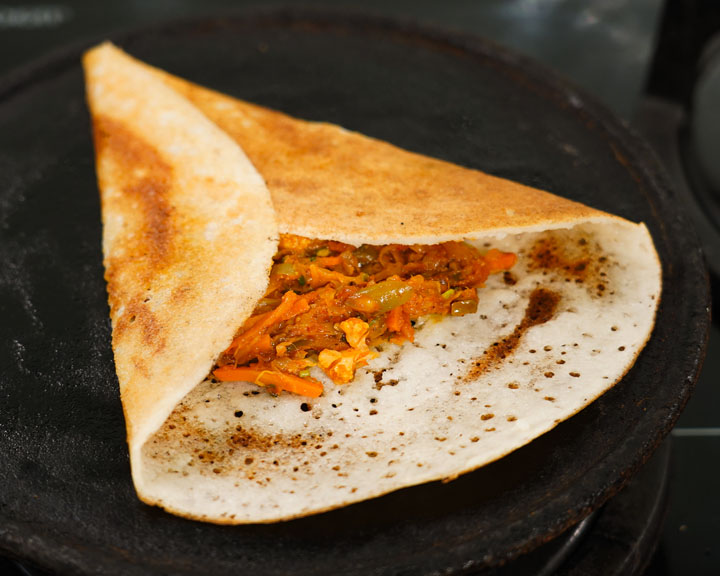
- Spread 2–3 tbsp of prepared vegetable masala on one half of the dosa. Fold the dosa over the filling. Press gently and cook for another 30 seconds.
- Slide the vegetable masala dosa onto a plate. Serve hot with coconut chutney or sambar.
Notes
You can adjust spices according to taste. Using minimal oil makes this dosa lighter on calories. Ensure the batter is well fermented for soft and crisp dosa. You can add other seasonal vegetables (peas, beans, cauliflower) to make it more nutritious.