Imagine coming home after a long day at the office, feeling that familiar tightness in your chest or a slight puffiness in your fingers. You look at the dinner table and see the comforting sight of dal, roti, and your favorite spicy pickle. You know that little jar of achar is calling your name, but you also remember your doctor mentioning that your blood pressure numbers are creeping up. It feels like a constant battle between the flavors you love and the health you need. I know it is hard to find time to cook elaborate meals, but making a small change like a low sodium diet plan for BP can truly save your life.
A low sodium diet plan for BP helps manage hypertension by limiting daily salt intake to less than 5 grams while increasing potassium-rich foods like leafy greens and lentils. By replacing high-sodium pickles and papads with lemon, ginger, and fresh herbs, you can naturally lower your blood pressure, reduce water retention, and protect your heart from long-term damage.
The Current State of Hypertension in Our Neighborhoods
Table of Contents
- 1 The Current State of Hypertension in Our Neighborhoods
- 2 Why Salt Makes Your Blood Pressure Rise
- 3 Identifying the Hidden Sodium Traps in Indian Meals
- 4 The DASH Approach for the Indian Palette
- 5 Smart Kitchen Swaps to Cut Salt Without Losing Taste
- 6 Practical Strategies for Busy Professionals
- 7 Homemaker Hacks for a Healthier Family Kitchen
- 8 A 7-Day Low Sodium Indian Meal Plan
- 9 Monitoring Your Progress at Home
- 10 Frequently Asked Questions
- 11 Conclusion: Taking Your First Step Toward a Healthier Heart
I want to share something that might surprise you about what is happening in our country. We often think of high blood pressure as something that only affects older people or those who are very stressed. However, the latest research from the Indian Council of Medical Research (ICMR) tells a different story. About 35.5% of adults in India now have hypertension. That means nearly one in every three people you meet is struggling with this silent killer. What is even more concerning is how many of us do not even know we have it. In urban areas, only about 42% of people are aware of their condition.

I know you are busy managing work and home, but these numbers show why we need to pay attention now. The prevalence is rising quickly in our cities. In places like Punjab, the rates have soared to over 51%. This isn’t just a medical statistic; it represents our friends, our parents, and our colleagues. When we look at the data across different regions, we see that the salt trap is everywhere.
Regional Breakdown of Hypertension Prevalence
| Region of India | Urban Prevalence (%) | Rural Prevalence (%) | Key Dietary Drivers |
| North India | 28.8% | 14.5% | Heavy reliance on pickles and salted breads. |
| East India | 34.5% | 31.7% | High consumption of fermented and preserved foods. |
| West India | 35.8% | 18.1% | Frequent intake of salted namkeens and farsan. |
| South India | 31.8% | 21.1% | Salt-heavy batters for idli and dosa. |
| Overall Weighted Avg | 33.8% | 27.6% | Increased processed food consumption nationwide. |
What this means for your daily routine is that the risk is likely closer than you think. In the urban west, for instance, over 35% of the population is hypertensive. This high number is often linked to our love for salty snacks like chivda and sev. Even if you feel healthy on the surface, a habitual high-salt diet causes long-term strain on your blood vessels.

Why Salt Makes Your Blood Pressure Rise
Let’s simplify the science behind why that extra pinch of salt is so powerful. Think of your blood vessels like garden hoses. When you eat too much sodium, your body starts to hold on to extra water to dilute that salt. This extra water increases the total volume of blood pumping through your system. It is like turning the tap on full blast; the pressure inside the hose goes up. Over time, this constant high pressure makes the walls of your arteries stiff and thick.
The heart has to work much harder to push blood through these narrowed, stiff pipes. This is how high blood pressure eventually leads to heart attacks or strokes. In fact, hypertension is responsible for 57% of stroke deaths in India. It also puts a massive strain on your kidneys. Your kidneys act like a filter, and when they have to process too much salt, they can become damaged and stop working efficiently.
Essential Minerals for Blood Pressure Balance
| Mineral | Role in Your Body | Common Indian Sources |
| Sodium | Holds water; increases pressure. | Table salt, papads, pickles, bread. |
| Potassium | Flushes out sodium; relaxes vessels. | Bananas, coconut water, spinach, curd. |
| Magnesium | Relaxes artery walls; aids flow. | Almonds, walnuts, ragi, flaxseeds. |
| Calcium | Helps vessels contract properly. | Low-fat milk, paneer, moringa (sahjan). |
I want you to think of potassium as the natural flush for sodium. While sodium pulls water in, potassium signals your kidneys to let it go. This is why a low sodium diet plan for BP isn’t just about what you remove; it is about adding these helpful minerals back in. Adding a banana or a bowl of curd to your day can actually help your body get rid of the salt you ate earlier.

Identifying the Hidden Sodium Traps in Indian Meals
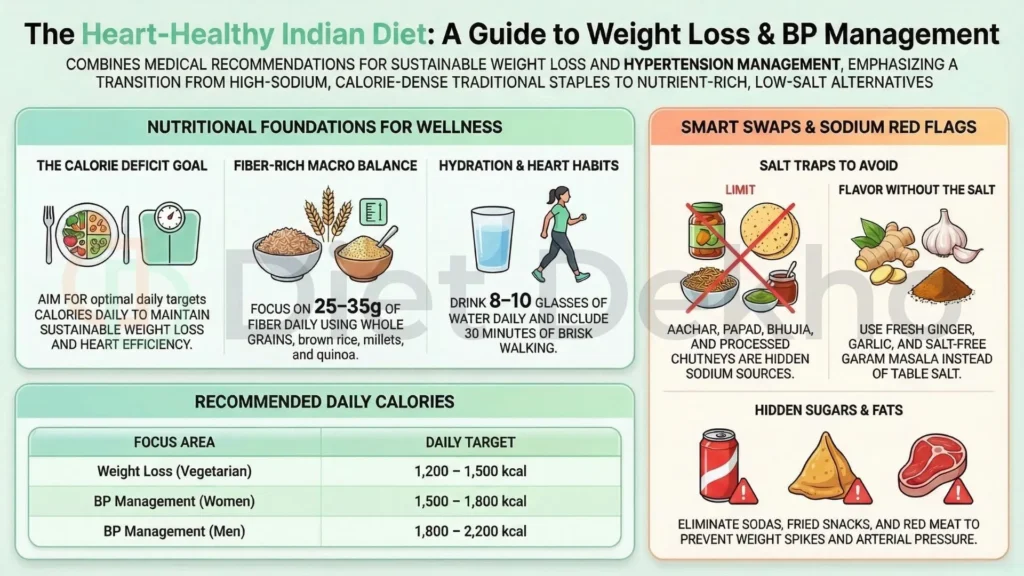
The biggest challenge we face in India is that most of our salt doesn’t come from the shaker on the table. It is already hidden in the foods we consider staples. Unlike in the West, where packaged food is the main culprit, about 75% of our salt intake comes from our home-cooked meals and traditional sides. We often add salt when boiling dal, more when making the sabzi, and even more in the dough for our rotis.
I know it is hard to imagine a meal without a crunch, but items like papads and pickles are essentially sodium bombs. A single piece of papad can have as much as 300 mg of sodium. If you eat two pieces with lunch, you have already consumed a significant portion of your daily limit. Pickles are even more concentrated because salt is used as a preservative to keep them from spoiling.
High-Sodium Foods to Watch Out For
| Category | High-Sodium Examples | Why They Are Dangerous |
| Preserved Sides | Achar (pickles), Papads, Chutneys. | Salt is the primary preservative. |
| Savory Snacks | Sev, Bhujia, Mixture, Salted Nuts. | Large amounts of salt in tiny servings. |
| Instant Foods | Instant noodles, ready-to-eat gravies. | Loaded with salt for shelf-life. |
| Bakery Items | White bread, biscuits, pastries. | Hidden sodium in leavening agents. |
| Street Food | Pani Puri, Bhel, Samosas, Chaat. | Salty masalas and chutneys used for flavor. |
| Condiments | Soy sauce, Ketchup, Chaat Masala. | Extremely high concentration per spoon. |
Another hidden source is our bread and bakery products. Even if a biscuit tastes sweet, it often contains sodium bicarbonate or other salts to give it the right texture. If you are a busy professional grabbing a sandwich or a quick pack of biscuits, you might be eating half your daily salt quota before lunchtime.

The DASH Approach for the Indian Palette
The world’s most successful plan for lowering blood pressure is called the DASH diet, which stands for Dietary Approaches to Stop Hypertension. It focuses on whole foods that are naturally low in salt but high in those flush minerals like potassium and magnesium. I have spent years helping clients adapt these global guidelines to our traditional Indian flavors. You do not have to eat bland food to be healthy.
The main goal is to keep your sodium under 2,300 mg a day, or even better, down to 1,500 mg if your blood pressure is already high. For a typical 2,000-calorie day, this means focusing on grains, lots of vegetables, and lean proteins. Let’s look at how we can fill your plate using common Indian ingredients.
DASH Serving Guidelines for Indian Grains and Veggies
| Food Group | Servings per Day | Indian Examples (1 serving) |
| Whole Grains | 6–8 | 1 Roti, 1/2 cup brown rice, 1/2 cup daliya. |
| Vegetables | 4–5 | 1 cup raw leafy greens, 1/2 cup cooked sabzi. |
| Fruits | 4–5 | 1 medium guava, 1 small apple, 1 banana. |
| Low-fat Dairy | 2–3 | 1 cup curd, 1 glass skimmed milk. |
| Lean Protein | 6 oz or less | 1 bowl of dal, 100g grilled paneer or fish. |
| Nuts/Seeds | 4–5 per week | 5-6 almonds, 1 tbsp flaxseeds. |
What this means for your daily routine is that you should try to make vegetables and fruits the stars of your meal. Instead of having a large portion of rice with a little bit of dal, try having a large bowl of vegetable-rich dal with a smaller portion of brown rice or a multigrain roti. This simple swap increases your fiber and potassium while naturally lowering the salt density of your meal.

Smart Kitchen Swaps to Cut Salt Without Losing Taste
I often hear people say that low-salt food tastes like hospital food. But I promise you, that is only if you don’t know how to use our beautiful Indian spices! Our kitchen is full of natural flavor enhancers that can make you forget the salt shaker ever existed. The secret is to use souring agents and aromatics.
Lemon juice is your best friend here. Citrus and salt actually activate the same sensors on your tongue. This means if you squeeze fresh lemon over your dal or salad, your brain feels satisfied even with less salt. Other tangy additions like tamarind (imli), kokum, or amchur (dried mango powder) can provide that same bright flavor.
Salt-Free Seasoning Recipes You Can Make at Home
| Seasoning Type | Ingredients to Mix | Best Use |
| The All-Purpose | Garlic powder, onion powder, turmeric, black pepper. | Sprinkled on eggs, toast, or sautéed veggies. |
| Tangy Tadka | Roasted cumin, amchur, ginger powder, chili flakes. | Garnish for curd, raita, or roasted chana. |
| Herb Garden | Dried kasuri methi, coriander seeds, basil, thyme. | Rub for grilled paneer or chicken. |
| Spicy Kick | Paprika, cayenne pepper, roasted fennel seeds. | Stir-fries or baked sweet potato wedges. |
When you move beyond salt as your primary flavor improver, you will find that food can be incredibly satisfying. I recommend making these blends in small jars over the weekend. Instead of reaching for a store-bought chaat masala that is full of black salt, use your Tangy Tadka mix. It gives you the zing you crave without the bloat.

Practical Strategies for Busy Professionals
I know it’s hard to find time to cook when you are juggling meetings and commutes. What this means for your daily routine is that you need a plan that doesn’t involve spending hours in the kitchen every night. The key to a successful low sodium diet plan for BP for busy people is component prepping. Instead of cooking full meals, prep the building blocks.
Spend an hour on Sunday boiling a big batch of chickpeas or rajma. Roast some veggies like cauliflower and carrots. Having these ready in the fridge means you can throw together a healthy bowl in five minutes. You can even freeze a salt-free onion-tomato gravy (bhuna masala) in ice cube trays. Just pop two cubes into a pan, add some veggies or paneer, and dinner is served!
Navigating the Office and Social Scenes
Eating out is where most of us fall off the wagon. Restaurants often use extra salt to make their food taste consistent and addictive. But you can still enjoy a meal out if you are selective.
- Ask for Half-Salt: Most chefs are happy to reduce the salt in your dish if you ask politely.
- Skip the Gravies: Creamy curries and gravies are usually the highest in sodium. Opt for dry tandoori or grilled items instead.
- Choose Whole Grains: Always pick a tandoori roti or chapati over a naan or roomali roti.
- The Starter Trap: Avoid the circulating fried appetizers at parties. They are designed to make you thirsty (and therefore eat and drink more salt). Stick to one or two favorites and move on.
If you are traveling, pack a bag of unsalted almonds or roasted makhana. These are shelf-stable and will stop you from buying a salty bag of chips at the airport or station.
Homemaker Hacks for a Healthier Family Kitchen
If you are the one responsible for the family’s meals, you have a huge opportunity to protect everyone’s health. I know you want your family to enjoy their food, and the thought of them complaining about bland meals is scary. But let’s simplify this. You don’t have to tell them you are cutting the salt!
A gradual reduction is much easier to sustain than a sudden change. If you reduce the salt in your recipes by just 10% every week, your family’s taste buds will adjust without them even noticing. Within a month, you will have cut your salt intake by nearly a third!
Secret Salt-Cutting Techniques
- Dough without Salt: Stop adding salt to your roti or paratha dough. Since we eat roti with sabzi or dal that already has seasoning, your tongue won’t miss the salt in the bread.
- Rinse Your Canned Goods: If you use canned beans or chickpeas, rinse them thoroughly under cold water. This removes a massive amount of the briny sodium.
- The Late Salt Rule: Add salt at the very end of cooking. When salt is cooked for a long time, it blends in. If you sprinkle a tiny bit at the end, it stays on the surface of the food, giving a stronger salty hit with much less actual sodium.
- Bulk Up with Veggies: Add grated carrots, bottle gourd (lauki), or spinach to your dals and parathas. This increases the volume of the meal and adds potassium without needing more salt for flavor.
If you do make a mistake and the curry ends up too salty, don’t panic. Drop a few thick slices of raw potato into the pot. They act like sponges and will soak up the extra salt. Just remember to take them out before you serve the meal.

A 7-Day Low Sodium Indian Meal Plan
This plan is designed to be practical, using ingredients you already have in your pantry. It focuses on high-potassium foods that naturally help flush out excess sodium.
| Day | Breakfast | Lunch | Evening Snack | Dinner |
| Day 1 | Moong Dal Chilla with mint-coriander chutney. | 1 bowl Brown Rice, 1 bowl Palak Dal, Cucumber salad. | Roasted makhana with a dash of turmeric. | Grilled paneer or tofu with sautéed bell peppers. |
| Day 2 | Vegetable Poha with peanuts and plenty of curry leaves. | 2 Multigrain Rotis (no salt in dough), Lauki sabzi, 1 cup Curd. | 1 medium Guava or Apple. | Baingan Bharta with jowar roti and a side of salad. |
| Day 3 | Oats porridge with skimmed milk and chopped walnuts. | Brown rice with Rajma (prepared with fresh tomato puree). | 1 glass fresh Coconut water. | Masoor dal soup with a slice of whole-wheat toast. |
| Day 4 | 2-3 Steamed Idlis with sambar (no added salt in batter). | 2 Rotis, Methi-Matar sabzi, bowl of Dal, and salad. | A handful of unsalted almonds or walnuts. | Grilled fish or steamed chicken with stir-fried beans. |
| Day 5 | Ragi daliya with a little jaggery and flaxseeds. | 1 bowl Brown Rice, 1 bowl Chole, cucumber-tomato salad. | 1 cup Buttermilk (chaas) with roasted cumin. | Vegetable stew with ragi or bajra roti. |
| Day 6 | Daliya Upma with colorful veggies and a squeeze of lime. | 2 Multigrain Rotis, Bhindi masala, and a bowl of curd. | Fruit salad sprinkled with a little cinnamon. | Egg bhurji with onions and tomatoes, served with 1 roti. |
| Day 7 | 2 Besan Omelettes with onions and green chilies. | Quinoa or Brown Rice Pulao with plenty of vegetables. | Roasted chana with lemon juice and ginger. | Grilled paneer tikka and stir-fried spinach. |
Relatable Tips for Success
I know it can be overwhelming to change everything at once. What this means for your daily routine is that you should pick just one or two things to start with. Maybe this week you just stop adding salt to your roti dough. Next week, you could try replacing your evening biscuits with roasted makhana.
Always keep your fridge stocked with emergency healthy foods. A bowl of boiled sprouts or some pre-cut carrots can save you when you are tired and hungry. Remember, we are aiming for progress, not perfection. If you have a salty meal at a wedding, don’t beat yourself up. Just start fresh the next morning with some warm lemon water and a potassium-rich breakfast.
Monitoring Your Progress at Home
One of the best ways to stay motivated is to see your numbers actually going down. I highly recommend getting a home blood pressure monitor. It takes the guesswork out of your health. When you see that your blood pressure has dropped by a few points after two weeks of following your low sodium diet plan for BP, it feels amazing!
How to Get an Accurate Reading
- Be Still: Sit quietly for 5 minutes before you take a measurement. No talking, no phone!
- Position Matters: Sit with your back supported and your feet flat on the floor. Keep your arm at heart level.
- The Rule of Three: Take three readings, about a minute apart, and record the average. This helps ignore any one-off high numbers caused by a sudden noise or a quick movement.
Tracking your progress also helps your doctor. Sometimes, we get White Coat Syndrome, where our blood pressure spikes just because we are nervous at the clinic. Having a log of your home readings shows your true, everyday heart health.
Frequently Asked Questions
Is black salt (Kala Namak) safe for high blood pressure?
I know it has a great tangy flavor, but black salt is still salt. It contains high amounts of sodium and will raise your blood pressure just like regular table salt. You should use it very sparingly or replace it with amchur powder.
Can I use a low-sodium salt substitute from the store?
These can be helpful because they replace some sodium with potassium. However, if you have kidney issues or are on certain heart medications, extra potassium can be dangerous. Always check with your doctor before switching to a salt substitute.
How long does it take for my taste buds to change?
It usually takes about 2 to 4 weeks for your palate to reset. At first, the food might taste a bit bland, but soon you will start to notice the actual sweetness of the carrots and the nuttiness of the dal that was hidden by all that salt.
What can I eat at an Indian wedding if I’m on a low-salt diet?
Look for the tandoori counter! Grilled chicken, fish, or paneer tikka are usually better than the heavy gravies. Fill half your plate with salads (skip the dressing) and pick a plain tandoori roti over a butter naan.
Are all low-sodium labeled foods actually healthy?
Not necessarily. Sometimes reduced sodium just means it has 25% less salt than the original version, which might still be a lot. Always check the nutrition label. Aim for foods with less than 140 mg of sodium per serving.
Conclusion: Taking Your First Step Toward a Healthier Heart
Managing your blood pressure doesn’t mean you have to stop enjoying your favorite Indian flavors. It is about being smarter with your choices and learning where the salt is hiding. I know it’s hard to find time, but making these small adjustments in your kitchen today can prevent serious health issues tomorrow. By focusing on fresh ingredients, using tangy spices, and keeping a close eye on your numbers, you are taking back control of your life.
If you feel like you need a more detailed, personalized plan that fits your specific work schedule or family needs, I am here to help. At DietDekho, we specialize in making healthy eating feel like a natural part of your day rather than a chore. Let’s work together to bring those numbers down and get your energy back. You can start your journey with us by filling out our simple consultation form here.

Abhinav is the Founder of Diet Dekho, helping people manage weight and lifestyle health through simple, practical nutrition and personalized diet plans.