Anjali often wonders if she needs an expensive gym membership to fix her rising blood sugar levels. Between packing lunch boxes and managing office calls, finding time for a dedicated aerobics activity feels like a distant, impossible dream for her. I know it is hard to find time, but movement does not have to be complicated to save your life. Let us look at how simple changes can help you feel better today.
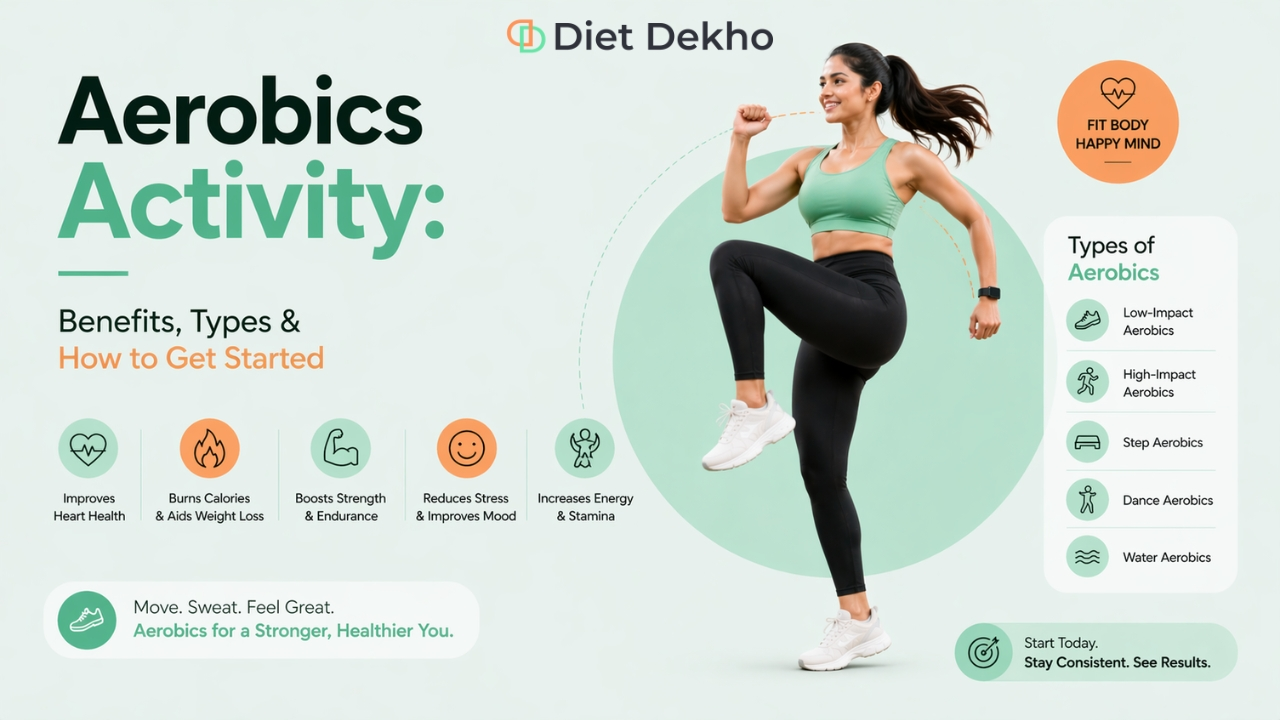
An aerobics activity is any rhythmic movement that increases your heart rate and oxygen use for a sustained period. Common examples include brisk walking, dancing, or cycling. These activities help manage diabetes by lowering blood sugar, improving insulin sensitivity, and boosting heart health. For most adults, 150 minutes of moderate-intensity movement per week is the gold standard for health.
Understanding the Heart of the Matter
When I talk to friends who are struggling with their health, I always start by explaining what is actually happening inside their bodies. You see, an aerobics activity is not just about sweating or losing weight. It is about how your heart, lungs, and blood vessels work together to fuel your life. When you engage in these movements, your large muscles in your arms, legs, and hips move repeatedly, which sends a signal to your heart to pump faster.
Think of your heart like a muscle that needs its own workout. As you get moving, your heart grows stronger. A stronger heart does not need to beat as fast because it becomes more efficient at pumping blood. This improvement in blood flow helps every part of your body receive the oxygen it needs to thrive. What this means for your daily routine is that you will eventually find yourself less winded when climbing stairs or playing with your kids.
I know it feels exhausting at first, but over time, regular movement actually reduces fatigue. You might feel tired after your first few sessions, but your stamina will grow. This process also clears out waste products like carbon dioxide and lactic acid from your system. It is like giving your internal plumbing a thorough cleaning every time you step out for a walk or put on your favorite music to dance.

How Your Cells Handle Sugar
If you are living with diabetes, you probably spend a lot of time thinking about insulin. Let us simplify how an aerobics activity interacts with your blood sugar. Usually, your body needs insulin to open the doors of your cells to let sugar in for energy. When you have insulin resistance, those doors are stuck.
The magic of aerobic exercise is that it creates a second, secret doorway. When your muscles contract during exercise, they can pull sugar directly from your blood without needing extra insulin. This is called the non-insulin-dependent pathway. This effect is so powerful that even a single week of aerobic training can improve your blood sugar levels and insulin sensitivity.
For my friends with Type 2 diabetes, this means your body becomes much better at using the insulin it still produces. For those with Type 1, it can help lower the total amount of insulin you need to stay in range. This improved sensitivity can last anywhere from 2 to 72 hours after you finish your activity. This is why I always suggest not letting more than two days pass between your exercise sessions.
| Exercise Impact | Mechanism | Benefit for Diabetes |
| Acute (During) | GLUT4 Translocation | Immediate drop in blood glucose |
| Short-term (Post-2h) | Insulin-independent uptake | Continued glucose lowering without insulin |
| Mid-term (Up to 72h) | Increased Sensitivity | Easier blood sugar management for days |
| Long-term (8+ weeks) | Mitochondrial Growth | Higher metabolic rate and better fat use |

The Role of Your Cellular Powerhouses
Inside your muscles, you have tiny structures called mitochondria. Think of them as the powerhouses of your cells. They take the sugar and fat you eat and turn it into energy. Regular engagement in an aerobics activity actually stimulates your body to create more of these powerhouses, a process scientists call mitochondrial biogenesis.
When you have more mitochondria, and when they are working efficiently, your body becomes a better furnace for burning fuel. This is why people who exercise regularly often find it easier to manage their weight. Their resting metabolic rate increases because their muscles demand more energy even when they are just sitting at a desk.
I have seen so many people get frustrated because the scale does not move immediately. But remember, the changes happening inside your cells are far more important than the number on the scale. Even if you do not lose a single kilo, your internal health improves significantly. Research shows that exercise can lower your HbA1c by 0.7 percentage points even without weight loss. That is a huge win for your long-term health.
Real Talk About Inactivity in India
I want to be honest with you about the challenges we face in our communities. A major study by the Indian Council of Medical Research (ICMR) found that about 54.4% of Indians are physically inactive. This means more than half of us are not getting the movement we need to stay healthy. It is even tougher for those living in busy urban areas where traffic and lack of parks make it hard to step outside.
The data shows that women in India are often less active than men. This usually happens because we prioritize everyone else’s needs our kids, our parents, our work over our own health. If you feel like you are always on your feet but still not active, you are not alone. Many of us spend our active minutes at work or doing chores rather than in recreation.
What this means for your daily routine is that we need to find ways to make movement intentional. We cannot just rely on our busy schedules to provide the right kind of heart-pumping activity. We have to carve out small windows of time specifically for ourselves. Only about 10% of people in India engage in recreational physical activity. I want to help you be part of that 10% because your health is worth those few minutes.
Breaking Down Regional Activity Levels
It is interesting to see how our activity levels vary depending on where we live in India. Some regions have higher rates of vigorous activity, while others are more sedentary. Understanding this helps us realize that our environment plays a big role in our habits.
| Zone in India | No Activity (%) | Mild Activity (%) | Moderate Activity (%) | Vigorous Activity (%) |
|---|---|---|---|---|
| South | 28.6 | 43.4 | 21.7 | 6.3 |
| North | 23.2 | 33.9 | 30.4 | 12.5 |
| West | 21.7 | 39.4 | 28.8 | 10.1 |
| East | 15.7 | 27.3 | 18.8 | 38.3 |
| Northeast | 14.2 | 42.3 | 32.5 | 11.0 |
As you can see, in the South, nearly 29% of people report doing no activity at all. If you are in one of these regions, it might feel even harder to start because you do not see others around you doing it. But being a trendsetter for your family and neighbors can be a powerful motivator. Whether you are in the North or the South, the goal remains the same: move a little more than you did yesterday.
The Struggle for Time and Space
I hear it all the time: I don’t have time, or there’s no place to walk near my house. These are real barriers. In our cities, we deal with broken sidewalks, heavy traffic, and safety concerns. For many busy professionals, mental exhaustion from a long day at work is the biggest hurdle. When your mind is tired, your body wants to follow suit.
I know it is hard to find energy after a 10-hour shift. Some people even feel that exercising during work hours might make them look lazy to their managers. This is a cultural challenge we need to address. Health is not a luxury; it is a necessity for your productivity and your family’s future.
If outdoor spaces are a problem, we have to get creative. Many of my clients have found that walking on their terrace or even in their living room can work just as well as going to a park. We have to stop waiting for the perfect environment and start using what we have. Even short bursts of activity, like marching in place during a TV commercial, count toward your goal.

Simple Home Solutions: The Power of Chores
If the idea of a workout feels overwhelming, let us simplify it. Did you know that your daily household chores can count as an aerobics activity? If you are moving at a pace that gets your heart beating faster, you are doing it right. Experts use a measure called METs to see how much energy an activity uses.
One MET is the energy you use while sitting still. A moderate activity usually falls between 3 and 6 METs. You might be surprised to see how much you are already doing. The key is to do these tasks with a bit more intensity than usual.
| Household Activity | MET Value | Intensity Category |
| Mopping (standing, moderate effort) | 3.5 | Moderate |
| Sweeping floors (fast, moderate effort) | 3.8 | Moderate |
| Cooking or food preparation | 3.5 | Moderate |
| Scrubbing floors (on hands and knees) | 6.5 | Vigorous |
| Carrying heavy groceries upstairs | 5.3 | Moderate |
| Ironing clothes | 1.8 | Light |
What this means for your daily routine is that 30 minutes of energetic house cleaning can actually meet your daily exercise needs. If you put on some upbeat music and move a little faster while mopping, you are checking the box for your heart health. It is about making the movement you are already doing work harder for you.
Walking: Terrace vs. Treadmill
Walking is perhaps the most natural aerobics activity for most of us. It is free, requires no special gear, and you can do it anywhere. But I often get asked if walking on a treadmill is better than walking outside or on a terrace. Both have their place, but science shows some interesting differences.
Walking outdoors or on a terrace usually burns a few more calories because your body has to deal with wind resistance and uneven ground. Your heart rate often stays slightly higher outdoors, even if it feels the same to you as a treadmill walk. Plus, being in the fresh air and sunlight can really boost your mood and vitamin D levels.
However, I know that for many Indian homemakers, stepping out isn’t always easy. A treadmill or a walking pad at home offers a safe, private, and weather-proof way to get your steps in. If you can’t go outside, walking indoors is infinitely better than not walking at all. The best choice is the one you will actually do every day.
Calorie Burn Comparison for Walking
To help you plan, here is a look at how many calories a 70 kg person might burn in 30 minutes of walking under different conditions.
| Walking Condition | Intensity/Incline | Calories Burned (30 min) |
| Treadmill | 0% Incline | 110-130 kcal |
| Treadmill | 3% Incline | 140-160 kcal |
| Outdoor | Flat Terrain | 120-140 kcal |
| Outdoor | Hilly Terrain | 180-240 kcal |
| Terrace/Home | Moderate Pace | 115-135 kcal |
If you have a treadmill, adding just a small incline can make a big difference in how many calories you burn. If you are walking on your terrace, try to maintain a brisk pace think of it as walking like you are late for a very important meeting. That is the intensity we are aiming for.

Ditch the Workout, Join the Party with Zumba
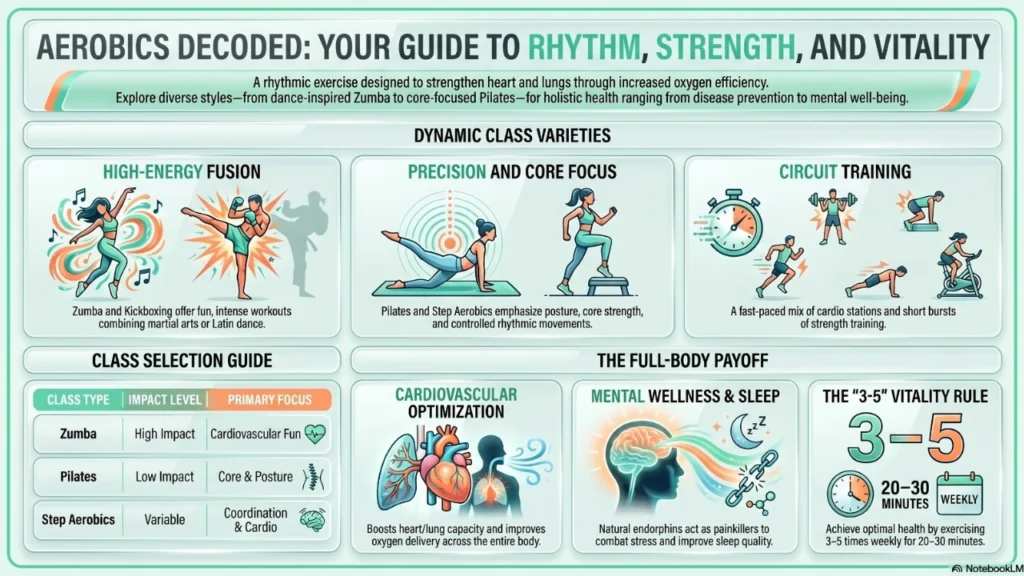
If walking feels boring, let us talk about Zumba. It is a dance-based aerobics activity that has taken India by storm. The motto is Ditch the workout, join the party, and that is exactly how it feels. It combines rhythms like salsa, merengue, and even hip-hop with cardio moves.
One of the best things about Zumba is that you do not have to be a good dancer. You just have to move your body and go with the flow. A typical class lasts about an hour and serves as a full-body interval workout. This means it alternates between fast and slow rhythms to keep your heart rate up without burning you out.
In a study of hypertensive patients in India, Zumba was found to be incredibly effective at lowering blood pressure. It resulted in an average drop of 4.53 mmHg in systolic pressure. It is fun, social, and a great way to forget you are even exercising. You can find plenty of beginner Zumba videos online to try in your living room today.
Step Aerobics for Stronger Legs
Another fantastic option for the non-gym audience is step aerobics. This involves using a small elevated platform to perform rhythmic movements. It is a great way to tone your legs and glutes while getting a solid cardio workout. You can adjust the intensity simply by changing the height of the step.
The basic move is simple: step up with one foot, then the other, then step back down. It is repetitive, which makes it easy to follow along while watching your favorite show. Because you are constantly lifting your body weight up and down, it works your heart and muscles harder than flat walking.
If you do not have a professional aerobic step, you can even use the bottom step of your household staircase. Just make sure it is sturdy and you have something to hold onto if you lose your balance. It is a practical, space-saving way to get a high-quality aerobics activity done right at home.
The Scientific Guidelines for Success
I want to make sure you have a clear map for your journey. Most international organizations, including the NIH and Harvard, recommend at least 150 minutes of moderate-intensity activity each week. I know 150 minutes sounds like a lot when you are busy, but let us break it down.
That is just 30 minutes a day, five days a week. Or, if you are really short on time, you can do three 10-minute sessions throughout the day. Every minute counts toward your goal. If you prefer more intense exercise, like running or vigorous dancing, you only need 75 minutes a week.
For my friends in India, the RSSDI and ICMR actually suggest aiming for 60 minutes of total physical activity daily. This should include 30 minutes of an aerobics activity like brisk walking, plus some work-related movement and muscle strengthening. It is a higher target because our bodies are often more prone to metabolic issues, but it is achievable if we start small.
Using the Talk Test to Gauge Intensity
How do you know if you are working hard enough? You do not need a fancy heart rate monitor. The easiest way is the Talk Test. This is a simple rule of thumb that I use with all my clients.
- Moderate Intensity: You can talk comfortably in full sentences, but you cannot sing. This is the sweet spot for most health benefits.
- Vigorous Intensity: You can only say a few words before needing to pause for a breath. This is a much harder level of effort.
If you are just starting out, aim for that can talk but not sing level. It ensures you are challenging your heart without overdoing it. As you get fitter, you might find that your usual walk becomes too easy, and you have to speed up to reach that moderate intensity again. That is a great sign that your body is getting stronger!
Setting SMART Goals You Can Keep
I know you want to change your health overnight, but that is how most people end up quitting. Let us use the SMART framework to set goals that actually stick. This means your goals should be Specific, Measurable, Achievable, Relevant, and Time-bound.
Instead of saying I’ll start walking more, try: I will walk on my terrace for 15 minutes after dinner on Monday, Wednesday, and Friday for the next two weeks. This is a clear plan. It is small enough to be achievable, even on a bad day.
Once that becomes a habit, you can add five minutes to your walks or add another day to your schedule. The most important thing is to show up for yourself. Even a 5-minute walk is better than zero minutes on the couch. Celebrate every single session you complete, because each one is a deposit into your health bank account.

Fueling Your Movement Safely
If you have diabetes, managing your food around an aerobics activity is very important to avoid low blood sugar, also known as hypoglycemia. I always recommend exercising about one to three hours after a meal. This is when your blood sugar is naturally a bit higher and more stable.
If you take insulin or certain medications, you must test your blood sugar before you start. If it is below 100 mg/dL, have a small snack first. It is also a good idea to keep a source of fast-acting sugar, like glucose tablets or a piece of candy, in your pocket just in case you feel shaky or dizzy.
I know it adds an extra step, but testing your sugar 30 minutes into a workout can help you understand how your body responds to movement. Over time, you will learn your patterns and feel much more confident. Remember, the risk of a sugar drop can last for several hours after a tough session, so keep an eye on how you feel throughout the day.
Healthy Indian Snacks for Active Days
What should you eat before or after your aerobics activity? In India, we have so many great, diabetic-friendly options that won’t cause your sugar to spike. I love recommending snacks that are high in fiber and protein.
| Snack | Why it Works | Best Time |
| Roasted Makhana | Low GI, high in magnesium | Pre-workout crunch |
| Roasted Chana | High fiber and protein | On-the-go fuel |
| Sprouted Moong Chaat | Slower energy release | Post-workout recovery |
| Moong Dal Chilla | Complex carbs for sustained energy | Mini-meal after exercise |
| Buttermilk (Chaas) | Hydrating and probiotic-rich | Refreshing recovery drink |
A small bowl of roasted makhana is a perfect pre-walk snack. It gives you a little energy without a heavy feeling in your stomach. After your activity, a sprouted moong chaat with some lemon and cucumber helps your muscles recover and keeps you full until your next meal. These are simple, traditional foods that fit perfectly into your new lifestyle.
The Mental Health Bonus
We often talk about the physical side of an aerobics activity, but the mental benefits are just as huge. When you get your heart pumping, your brain releases endorphins those feel-good chemicals that act as natural painkillers and mood lifters.
Regular movement has been shown to reduce stress, anxiety, and even symptoms of depression. For a busy professional or a homemaker juggling a thousand tasks, these few minutes of exercise can be your mental reset button. It clears the brain fog and helps you focus better on your work or family.
I have noticed that my clients who prioritize their morning walks often report being much calmer during stressful meetings later in the day. It is like you are building a buffer against the daily grind. Plus, exercise helps you sleep more deeply and fall asleep faster, which is something we all need.
Safety First: Listening to Your Body
Before you jump into a new routine, I want you to be safe. If you haven’t been active for a long time or have any heart issues, please talk to your doctor first. A simple check-up can give you the green light and peace of mind you need.
It is also important to wear the right shoes. Good supportive footwear protects your joints and prevents foot injuries, which is especially important if you have diabetes. Always start your session with a 5-minute warm-up, like slow walking or marching in place, to get your blood flowing.
If you ever feel chest pain, extreme shortness of breath, or sharp joint pain, stop immediately. Your body is very good at giving you signals; you just have to listen to them. It is always better to take a day off and recover than to push through an injury that sets you back for weeks.

Staying Motivated When Life Gets Busy
I know there will be days when you just don’t feel like moving. That is completely normal. Even the most dedicated people have off days. The trick is to not let one missed day turn into a missed month.
One way to stay motivated is to find an accountability partner a friend or family member who can join you for your walks or check in on you. If you are more of a solo person, using a fitness tracker or an app can help you see your progress and keep you engaged.
Try to make it fun. Listen to a podcast you love or create a high-energy music playlist that you only listen to during your aerobics activity. When you associate movement with something you enjoy, you stop seeing it as a chore and start seeing it as a highlight of your day.
The Long-Term Vision for Longevity
When we look at the big picture, regular engagement in an aerobics activity is one of the best ways to live a longer, healthier life. Studies consistently show that active people have a lower risk of early death from all causes, including heart disease and cancer.
As we age, staying active helps us maintain our independence. It keeps our muscles strong, which prevents falls, and keeps our minds sharp, reducing the risk of dementia. You are not just exercising for today; you are exercising for the version of you that is 10, 20, or 30 years older.
I want you to imagine yourself years from now, still active, still mobile, and still enjoying your life to the fullest. That future starts with the decisions you make right now. Whether it is a 10-minute walk or a 30-minute dance session, you are building a legacy of health for yourself and your family.
Summary of Core Benefits
What this means for your daily routine is a total transformation of your well-being. Let’s recap the incredible things that happen when you make an aerobics activity a habit.
- Heart Health: Lowers blood pressure and improves cholesterol levels.
- Diabetes Control: Lowers blood sugar and improves how your body uses insulin.
- Weight Management: Increases your metabolic rate and burns calories.
- Mental Clarity: Reduces stress, anxiety, and boosts your overall mood.
- Longevity: Helps you live longer and maintain independence as you age.
I know it feels like a big hill to climb, but you do not have to do it all at once. Take it one step at a time, one day at a time. You have the power to take control of your health, and I am here to support you every step of the way.
FAQs on Aerobics Activity
1. Is aerobics activity better than weightlifting for diabetes?
Both are important! Aerobic exercise is fantastic for immediate blood sugar lowering and heart health. Resistance training (weightlifting) helps build muscle mass, which improves your resting metabolic rate over the long term. Most experts suggest doing both for the best results.
2. How often should I check my blood sugar when starting an aerobics activity?
If you have diabetes, check your sugar before you start, during the activity (especially if it is a long session), and after you finish. This helps you understand how different intensities affect your levels and keeps you safe from hypoglycemia.
3. I am a busy homemaker; can housework really replace a gym session?
Absolutely. If you are doing chores like vigorous mopping or scrubbing at a pace where you can talk but not sing, you are engaging in a moderate-intensity aerobics activity. If you do this for 30 minutes a day, you are meeting the core health guidelines.
4. What is the best aerobics activity for someone with knee pain?
Low-impact activities are best for your joints. Try walking on a smooth surface like a treadmill, which has more shock absorption than concrete. Swimming or water aerobics are also excellent because the water supports your weight, taking the pressure off your knees.
5. How long does it take to see results from an aerobics activity?
You will feel some benefits immediately, like better mood and improved blood sugar levels that day. More permanent changes, like improved fitness, weight loss, and better chronic blood sugar control (HbA1c), usually take about 8 to 12 weeks of consistent effort.
Final Thoughts and Next Steps
Starting a new routine is never easy, but you have all the information you need to begin. Remember to start small, choose activities you actually enjoy, and be patient with yourself. Your body will thank you for every extra minute of movement you give it.
I know it is hard to navigate all the advice out there, especially when you are also trying to manage a specific diet. If you want a plan that is tailored exactly to your health situation, your food preferences, and your busy schedule, let us help you simplify things.
Get Your Personalized Health Plan Today!
Take the guesswork out of your health journey. Our experts at DietDekho are ready to create a roadmap just for you. Fill out our simple form here to get started:
Contact Us
We understand how overwhelming nutrition and weight loss information can feel. With so many opinions and confusing advice online, it’s easy to feel stuck or unsure about what to do next.
At Diet Dekho, you never have to figure it out alone. You can contact us anytime with any questions or concerns. Our expert dietitians are available 24/7 to guide, support, and help you stay on track. Whether your goal is weight loss or building healthier habits, we’re here to make the journey simpler and more sustainable for you.
Disclaimer
This blog is intended to help readers make healthier food choices. Your health should always be the top priority. Before starting any restrictive or special diet, especially if you have a medical condition or health concern, please consult a doctor or a qualified dietitian. Each body responds differently to food and lifestyle changes. Always choose what is safe and suitable for you.

Abhinav is the Founder of Diet Dekho, helping people manage weight and lifestyle health through simple, practical nutrition and personalized diet plans.