The morning commute in a bustling Indian city often starts with a hurried breakfast of toasted white bread or a bowl of crispy cornflakes, followed by a mid-day office lunch accompanied by a tangy mango pickle, and perhaps a late-evening snack of crunchy namkeen to handle the stress of deadlines. While these choices feel like a normal part of a busy professional’s routine, they often harbor an invisible health threat that works silently behind the scenes. For most people, the concern over salt intake only becomes a priority after a doctor mentions rising blood pressure numbers, yet the cumulative impact of these small daily choices is what defines long-term cardiovascular health. What this means for the daily routine is that the struggle with high blood pressure is often not a result of the salt shaker on the table, but the hidden sodium permeating the modern food system.
To improve blood pressure, the primary high sodium foods to avoid include processed meats like sausages and salami, savory snacks such as chips and namkeen, and traditional Indian sides like pickles and papads. One must also limit instant noodles, canned soups, and white bread. Swapping these for fresh fruits, vegetables, and home-cooked meals seasoned with lemon or amchoor can naturally lower sodium levels and support heart health.
The Physiological Mechanism and Public Health Burden of Sodium
Sodium is a mineral that the human body requires in exceptionally small amounts to regulate the balance of fluids, transmit nerve impulses, and support the contraction and relaxation of muscles. However, the vast majority of the global population consumes far more than the physiological requirement, which is estimated to be as little as 200–500 mg per day. When the intake of sodium consistently exceeds what the kidneys can filter, the body undergoes a series of complex biological changes that directly impact the heart and blood vessels.
The Dynamics of Water Retention and Arterial Pressure
The biological relationship between sodium and blood pressure is primarily driven by the mechanism of osmosis. As sodium levels in the blood rise, the body retains more water to maintain a balanced concentration of the mineral. This process increases the total volume of blood circulating through the arterial system. Because the blood vessels have a fixed capacity, this increased volume exerts greater pressure on the vessel walls, leading to the clinical condition known as hypertension. Over time, chronic exposure to high pressure causes the blood vessels to stiffen and the heart to work harder, which eventually results in heart failure or stroke.

Research from the landmark DASH-Sodium Trial, conducted by investigators at the Harvard T.H. Chan School of Public Health, concluded that the relationship between sodium intake and blood pressure is strong, causal, and dose-dependent. This means that as sodium intake decreases, blood pressure levels tend to follow suit in a linear fashion, providing a clear pathway for dietary intervention.
Global and Indian Statistics on Hypertension
The scale of the hypertension crisis is significant, particularly in India, where lifestyle transitions have led to a rapid increase in salt-related illnesses. The following table illustrates the prevalence of hypertension and the economic implications of excess sodium intake:
| Metric | Global / US Statistic | Indian Context | Source |
| Average Daily Salt Intake | 9-12 grams | 11 grams | – |
| Recommended Limit (WHO) | <5 grams | <5 grams | – |
| Hypertension Prevalence | 1 in 4 adults | 27.2% of adults | – |
| Potential Lives Saved | 92,000 (US) | Significant reduction in CVD | – |
| Economic Cost of Excess Salt | $73.4 billion (US) | Massive out-of-pocket health spend | – |
In India, nearly 1 in 4 adults has developed hypertension, and alarmingly, many are completely unaware of their condition until a severe event like a heart attack or stroke occurs. The National Family Health Survey (NFHS-5) data highlights that the prevalence of hypertension in Maharashtra is approximately 25%, with wealthier individuals in urban settings exhibiting higher rates due to easier access to processed, high-sodium foods.

The Indian Dietary Context: Where the Salt Hides
While Western diets derive about 70% of their sodium from packaged and restaurant foods, the Indian context presents a unique challenge. In India, approximately 70% to 75% of total salt consumption arises from traditional cooking practices and the use of household accompaniments like pickles, papads, and chutneys. This requires a specialized approach to identifying high sodium foods to avoid within the local culinary landscape.
Traditional Salt Bombs: Pickles, Papads, and Chutneys
For many homemakers and professionals, a meal feels incomplete without the crunch of a papad or the tang of a pickle. However, these items are functionally concentrated sources of salt, used primarily for preservation and flavor intensity.
1. Pickles (Achar)
The traditional method of making pickles relies on heavy brining to prevent spoilage. A single tablespoon of mango or mixed vegetable pickle can contribute a substantial portion of the daily sodium limit. For individuals with hypertension, regular consumption of achar can cause immediate spikes in blood pressure and noticeable bloating due to water retention.
2. Papads
Papads are manufactured using various salts and additives to achieve their characteristic texture and shelf life. The mean sodium content in papads is roughly 1,219 mg per 100g, but the range is vast. Some commercial brands contain as much as 4,000 mg of sodium per 100g, making them one of the densest high sodium foods in the Indian pantry.
3. Chutneys and Thesa
While often made at home, chutneys especially those made with preserved ingredients or heavy amounts of salt (like peanut thesa in Maharashtra) add significant invisible salt to the diet. The intense flavors often mask the actual salt content, leading to overconsumption.
The Rise of Processed Healthy Snacks
Busy professionals often turn to diet snacks, believing they are making a healthier choice. However, items like diet chivda, roasted makhana with seasonings, and multi-grain biscuits are frequently loaded with sodium to maintain palatability.
| Snack Item | Typical Sodium (mg/100g) | Health Implication | Source |
| Commercial Bhujia / Sev | 1,000 – 1,500 | High blood pressure, weight gain | |
| Seasoned Makhana | Varies by brand | Often high in added rock salt | |
| Salted Peanuts | 400 – 790 | Fluid retention, arterial stiffening | |
| Diet Chivda | ~200 – 600 | Still contributes to cumulative load |
What this means for the daily routine is that even light snacks can quickly push a person over the recommended 2,000 mg daily limit. For example, consuming 100g of a typical namkeen mix could provide 75% of one’s daily allowance in just a few minutes of mindless snacking.

Hidden Salt in Globalized Staples: Bread, Cereals, and Biscuits
One of the most significant insights for the non-gym audience and homemakers is that salt is not only found in savory items. It is a fundamental component of the modern carbohydrate-rich diet.
The Bread Trap
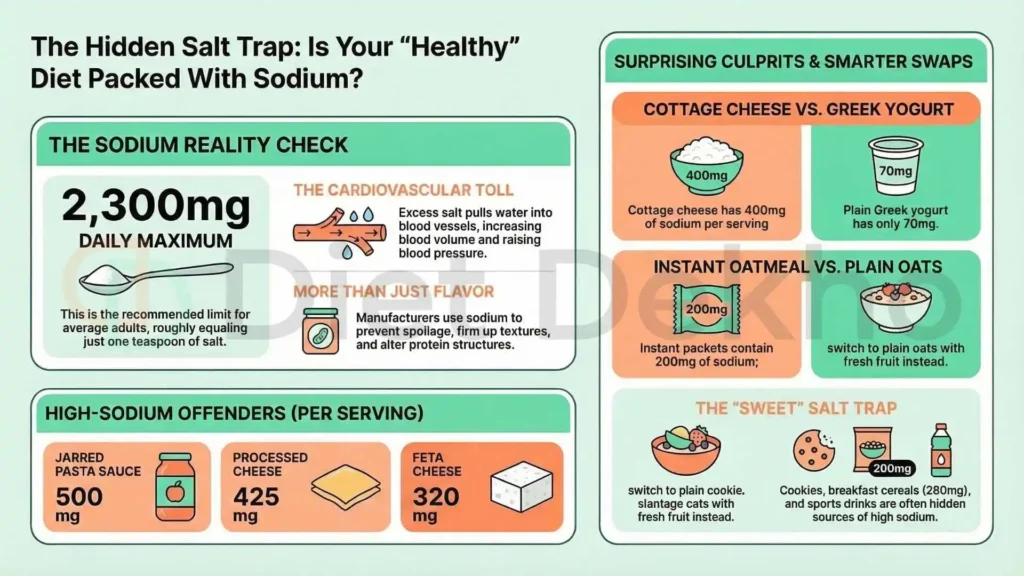
Bread and rolls are among the top sources of sodium globally, not because they are the saltiest items, but because of the frequency with which they are eaten. A single slice of white or whole-wheat bread typically contains 150 mg to 200 mg of sodium. For a professional eating a sandwich for lunch and toast for breakfast, the bread alone can contribute 800 mg of sodium before any fillings or spreads are added.
Breakfast Cereals: The Indian Variant Problem
Breakfast cereals are often marketed as heart-healthy, yet they require salt to balance the high sugar content and to provide texture. A striking study by World Action on Salt and Health (WASH) revealed that Kellogg’s Cornflakes sold in India contained 1.93g of salt per 100g the highest level globally among the countries surveyed. This means an Indian professional eating the same brand of cereal as their counterpart in Brazil is consuming nearly double the salt for the same serving size.
Biscuits and Cookies
Both sweet and savory biscuits are significant contributors. Plain dry biscuits can contain around 460 mg of sodium per 100g, while savory crackers can jump to over 700 mg. For homemakers serving biscuits with tea, these small bites add up to a significant daily sodium load that often goes uncounted.
The Restaurant and Street Food Crisis
For the urban workforce, eating out or ordering through delivery apps has become a standard format of life. However, restaurant and street foods are often engineered for high flavor impact, which almost always involves excessive salt.
Vada Pav and Misal Pav: A Maharashtrian Perspective
In cities like Pune and Mumbai, Vada Pav and Misal Pav are dietary staples. These items contain high sodium foods to avoid for several reasons:
- The Pav: Commercial bread rolls used for pav are high in sodium.
- The Vada: The potato filling is salted, and the gram flour batter often contains baking soda (sodium bicarbonate), which adds to the total sodium load.
- The Farsan: Misal is topped with fried namkeen (farsan), which is a concentrated source of salt.
- The Chutneys: Spicy garlic chutneys used in these dishes are often heavily salted to preserve them and provide a sharp kick.
Street Food Seasonings
Chaat items, including Bhel Puri and Pani Puri, rely on Chaat Masala. Commercial Chaat Masala blends are often very high in black salt (kala namak). A single teaspoon can contain 200 mg to 990 mg of sodium depending on the brand. When street vendors sprinkle this generously over every dish, the sodium content of a light vegetable chaat can rival that of a full meal.

Regulatory Landscape: FSSAI and ICMR-NIN 2024 Guidelines
The Indian government and health authorities have recently updated their guidelines to combat the rising tide of hypertension. Understanding these regulations is crucial for making informed choices in the grocery aisle.
The 2024 ICMR-NIN Recommendations
The National Institute of Nutrition (NIN) has maintained the recommendation of a daily salt intake of no more than 5 grams (approximately 2,000 mg of sodium) for an average adult. Key updates in the 2024 guidelines include:
- HFSS Focus: A strengthened emphasis on limiting High Fat, Sugar, and Salt (HFSS) foods, often called ultra-processed foods.
- Label Literacy: Encouraging consumers to read food labels, defining a product as high salt if it contains more than 625 mg of sodium per 100g.
- Flavor Substitutes: Promoting the use of natural enhancers like lemon, tamarind, and garlic to reduce the reliance on the salt shaker.
FSSAI Labeling Mandates (2025-2026)
The Food Safety and Standards Authority of India (FSSAI) has approved a landmark proposal requiring nutritional information specifically salt, total sugar, and saturated fat to be displayed in bold and larger font sizes on packaged food labels. This regulation, taking effect in mid-2025, is designed to help busy consumers quickly identify high sodium foods to avoid without having to decipher tiny print on the back of the pack.
| FSSAI Label Element | Compliance Requirement (2025) | Impact for Consumers |
| Salt/Sodium Font Size | Increased based on pack size (1mm to 2mm min) | Easier identification of hidden salt |
| Nutrient Highlight | Salt, Sugar, and Fat must be in bold | Quick decision-making at the shelf |
| Ingredient Order | Listed by weight (descending) | See if salt is a primary ingredient |
| Allergen Declaration | Bold or highlighted box | Improved safety for sensitive users |

Strategies for Sodium Reduction: The Smart-Salt Approach
Reducing sodium intake does not mean that food must become tasteless. Instead, it involves retraining the palate and using the rich array of Indian spices to provide flavor depth without the health risks.
1. The Palate Reset
Taste buds can adapt remarkably quickly to lower salt levels. Research suggests that if an individual reduces salt intake gradually, the palate resets within a few weeks, and previously normal foods will begin to taste unpleasantly salty. I know it’s hard to find time to overhaul your kitchen, but starting with a 15-20% reduction in the salt you add to your daily dal can make a measurable difference in your blood pressure within a month.

2. Souring Agents as Salt Replacements
Indian regional cuisines are famous for their use of souring agents, which naturally enhance the saltiness of a dish without adding sodium.
- Amchoor (Dried Mango Powder): A staple in North India, it provides a sharp tang that makes other spices pop.
- Kokum: Widely used in Maharashtra and Karnataka, it offers a deep, fruity sourness to curries and dals.
- Tamarind: A versatile ingredient that balances sweet and savory profiles in South Indian and Maharashtrian dishes.
- Lemon/Lime: Squeezing fresh lemon over a dish just before serving can transform the flavor profile and reduce the need for extra salt at the table.
3. Smart Cooking Techniques for Homemakers
- Rinse Canned Foods: Rinsing canned beans, chickpeas, or vegetables in cold water for 60 seconds can remove up to 40% of the added sodium.
- Skip Salt in Staples: Avoid adding salt to the water when boiling rice or when kneading dough for chapatis. Since these are eaten in large quantities, this one change can cut your daily intake by 20-30%.
- Use Whole Spices: Toasting cumin, coriander, and black pepper releases aromatic oils that provide a savory satisfaction that salt alone cannot match.
The Non-Gym Guide to Potassium Balancing
For those who are not active in a gym but want to improve their blood pressure, increasing potassium intake is as important as reducing sodium. Potassium helps the kidneys excrete excess sodium and reduces the tension in the walls of the blood vessels.
Potassium-Rich Food Options
- Bananas: One of the easiest portable snacks for busy professionals. Eating one banana daily helps balance sodium levels and supports heart function.
- Makhana (Fox Nuts): When roasted at home without added salt, makhana is an ideal high-potassium, low-sodium snack.
- Leafy Greens: Spinach and kale are excellent potassium sources that can be easily added to dals or rotis.
- Coconut Water: A natural electrolyte balancer, provided it is fresh and not the packaged version with added preservatives.
Practical Swaps for the Indian Household
Let’s simplify this. Transitioning to a lower-sodium diet doesn’t require complex recipes. It often just requires a smarter choice at the grocery store or during meal prep.
| Instead of… | Try… | Benefit |
| Store-bought Pickle | Fresh lemon squeeze or fresh chutney | Lowers salt by 90% per serving |
| Commercial Papad | Roasted Makhana or unsalted peanuts | Reduced sodium and added fiber |
| White Bread / Pav | Whole wheat roti or daliya (oatmeal) | Higher fiber and lower sodium |
| Instant Noodles | Home-cooked vermicelli (upma) | Control over salt and spice mix |
| Salted Namkeen | Roasted Chana or fresh fruit | High protein/fiber, zero hidden salt |

Expert Advice on Salt and Hypertension
Cardiologists emphasize that for many patients, controlling sodium intake can be as effective as adding another anti-hypertensive drug. Dr. Sanjay Bhojraj, a functional medicine expert, notes that sodium is directly toxic to blood vessels in high amounts, which is why even a moderate reduction can bring down readings significantly.
However, it is important to go smart-salt rather than no-salt. Sodium is still an essential electrolyte. The goal for a busy professional is to eliminate the excess of the hidden salt in processed and restaurant meals rather than completely stripping the diet of flavor.
FAQs
What are the primary high sodium foods to avoid for high blood pressure?
The most important high sodium foods to avoid include processed meats (sausages, deli meats), savory snacks (chips, namkeen, salted nuts), and canned goods like soups and vegetables. Traditional Indian sides such as pickles (achar) and papads are also extremely high in sodium and should be limited.
Does bread contain hidden sodium?
Yes, bread and bakery products are major sources of hidden sodium. Manufacturers use salt to control yeast and improve texture. A single slice of bread can contain 150-200 mg of sodium, which quickly adds up if you eat sandwiches or toast daily.
Is rock salt or pink Himalayan salt better for hypertension?
No, pink Himalayan salt and rock salt contain approximately the same amount of sodium as regular table salt. While they may have trace minerals, they are not low-sodium alternatives and will raise blood pressure just as much as common salt if consumed in excess.
How can I reduce the sodium content in my home-cooked meals?
To reduce sodium, avoid adding salt to rice and chapati dough. Use natural souring agents like lemon, amchoor, or tamarind to enhance flavor. Additionally, always rinse canned beans or vegetables before use to wash away up to 40% of the brining salt.
Which Indian breakfast cereals have the highest salt?
Studies have found that some brands of Cornflakes sold in India contain nearly 2 grams of salt per 100g, which is significantly higher than versions sold in other countries. Always check the label for sodium content, aiming for products with less than 140 mg per serving.
Contact Us
We understand how overwhelming nutrition and weight loss information can feel. With so many opinions and confusing advice online, it’s easy to feel stuck or unsure about what to do next.
At Diet Dekho, you never have to figure it out alone. You can contact us anytime with any questions or concerns. Our expert dietitians are available 24/7 to guide, support, and help you stay on track. Whether your goal is weight loss or building healthier habits, we’re here to make the journey simpler and more sustainable for you.
Disclaimer
This blog is intended to help readers make healthier food choices. Your health should always be the top priority. Before starting any restrictive or special diet, especially if you have a medical condition or health concern, please consult a doctor or a qualified dietitian. Each body responds differently to food and lifestyle changes. Always choose what is safe and suitable for you.

Abhinav is the Founder of Diet Dekho, helping people manage weight and lifestyle health through simple, practical nutrition and personalized diet plans.