Imagine a morning where the first thing on the mind is not a stressful meeting but the steady rhythm of a calm heart. For many busy professionals and dedicated homemakers, finding a balance between life and health feels like an uphill climb. Incorporating potassium rich foods for BP into a daily routine is the most effective way to help the body find its natural balance again.
To lower blood pressure naturally, individuals should prioritize potassium rich foods for BP such as bananas, spinach, coconut water, and sweet potatoes, which help the body excrete sodium and relax blood vessel walls. Aiming for a daily intake of 3,500 mg to 5,000 mg from diverse whole-food sources supports optimal cardiovascular health and reduces stroke risk.
The Biological Significance of Potassium in Blood Pressure Regulation
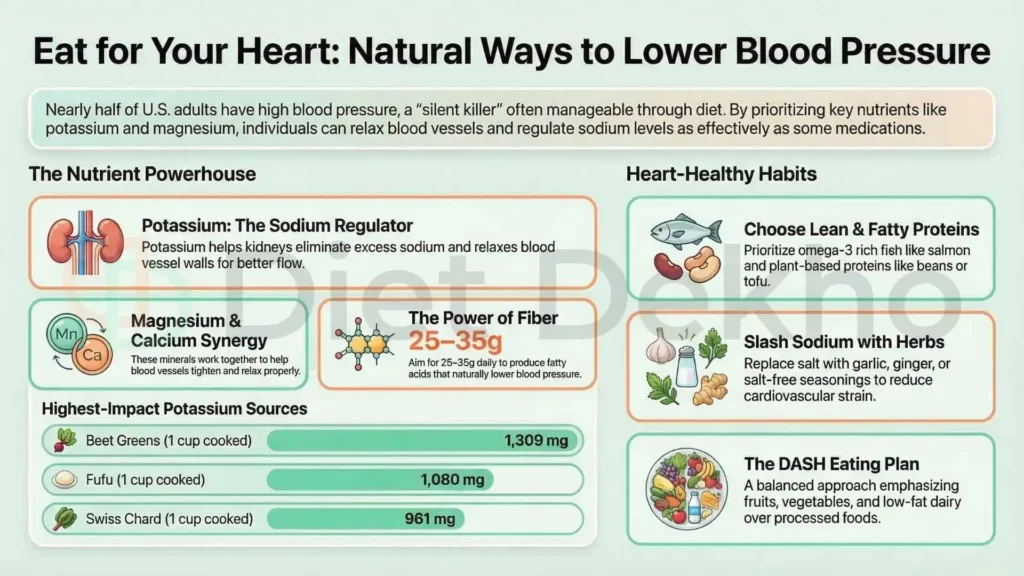
Potassium is an essential mineral that every single tissue in the human body requires to function correctly. It serves as a vital electrolyte because it carries a small electrical charge that activates cell and nerve functions throughout the cardiovascular system. The primary role of this mineral is to maintain normal levels of fluid inside the cells, while sodium manages fluid levels outside the cells.
What this means for your daily routine is that potassium acts like a natural brake for the effects of salt. High salt intake increases blood pressure because sodium holds onto water, which adds volume and pressure to the blood vessels. Potassium counteracts this by helping the kidneys flush out that extra sodium through urine.
Furthermore, this mineral plays a direct role in easing the tension within the blood vessel walls. When these walls are relaxed, blood can flow more easily, which naturally lowers the force against the arteries. Without adequate potassium, the blood vessels remain stiff and the heart has to work much harder to pump blood.

Understanding the Hemodynamic Balance of the Sodium Potassium Pump
The relationship between sodium and potassium is a fine balance that the body works constantly to maintain. In many modern diets, this balance is heavily skewed toward sodium due to the prevalence of processed and packaged foods. Research indicates that reversing this imbalance can prevent or control hypertension and significantly lead to fewer heart attacks and strokes.
Studies involving biological mathematical models have explored how varying the ratios of these two minerals affects the body. These models suggest that increasing dietary potassium while reducing salt is more effective at lowering blood pressure than cutting back on salt alone. This is particularly relevant for men, who may show a stronger response to an increased potassium to sodium ratio than women.
| Biological Mechanism | Effect on Cardiovascular System | Impact on BP |
| Sodium Excretion | Kidneys filter more sodium into urine | Lowers fluid volume |
| Vasodilation | Relaxes smooth muscle in vessel walls | Reduces vascular resistance |
| Fluid Regulation | Maintains intracellular fluid balance | Stabilizes systemic pressure |
| Nerve Transmission | Conducts electrical signals in the heart | Prevents irregular heartbeat |

New Global Standards in Hypertension Management for 2026
The American Heart Association and the American College of Cardiology released updated guidelines in 2025 that emphasize a more proactive approach to heart health. These new standards focus on individualized risk management rather than just looking at a single blood pressure reading. For all adults, lifestyle modifications are now the cornerstone of preventing and treating elevated blood pressure.
The 2025 guidelines classify blood pressure categories to help individuals understand their risk levels clearly. A reading is considered normal if it is less than 120 over 80 mmHg. Readings between 120 and 129 systolic are considered elevated, while anything above 130 over 80 is classified as stage 1 hypertension.
| BP Category | Systolic (mmHg) | Diastolic (mmHg) | Recommended Action |
| Normal | < 120 | < 80 | Maintain healthy habits |
| Elevated | 120 – 129 | < 80 | Lifestyle changes, focus on potassium |
| Stage 1 HTN | 130 – 139 | 80 – 89 | Risk assessment, meds if risk >7.5% |
| Stage 2 HTN | >= 140 | >= 90 | Immediate lifestyle + 2 drug classes |
The Role of the PREVENT Calculator in Heart Health
A major update in the recent guidelines is the replacement of old risk equations with the new PREVENT calculator. This tool uses modern and diverse data to estimate the risk of cardiovascular disease over both 10 and 30 years. It helps doctors decide if a person with stage 1 hypertension needs medication immediately or if they can focus solely on lifestyle changes for three to six months.
I know it is hard to find time for complicated medical calculations, but what this means for your daily routine is that your lifestyle choices carry more weight than ever before. If your 10 year risk is below 7.5 percent, a committed trial of increasing potassium rich foods for BP can often bring your numbers back into a healthy range without the need for pills.

Analyzing the ICMR NIN 2024 Guidelines for India
Closer to home, the Indian Council of Medical Research and the National Institute of Nutrition released updated dietary guidelines in 2024. These guidelines address the unique nutritional needs of the Indian population, which faces a dual burden of undernutrition and rising obesity. The experts have made a progressive shift by increasing the recommended daily intake of vegetables to 400 grams.
This 33 percent increase in the vegetable target specifically addresses widespread micronutrient deficiencies that contribute to hypertension. The guidelines now recommend that at least 100 grams of this daily intake should come from green leafy vegetables. Let’s simplify this by thinking of it as two large bowls of cooked vegetables or fresh salads with every major meal.
| Aspect | 2011 ICMR Targets | 2024 ICMR Targets | Nutritional Significance |
| Total Veg Intake | 300 g/day | 400 g/day | Boosts potassium and fiber |
| Green Leafy Veg | 50 g/day | 100 g/day | Enhances iron and folate |
| Salt Intake | < 5 g/day | < 5 g/day | Controls sodium-potassium balance |
| Sugar Limits | General advice | < 5% total calories | Reduces inflammation and weight |
The Impact of Modern Diets on Mineral Balance in India
The transition from traditional diets to modern urban eating patterns has significantly changed our mineral intake. Early diets were naturally much higher in potassium and lower in sodium than what we eat today. Experts have noted that ancient dietary patterns provided between 150 to 290 mmol of potassium per day, whereas modern adults often consume less than half that amount.
This gap is a primary driver of the hypertension epidemic in India. A cross sectional study in Chennai found that the mean dietary salt intake was 8.5 grams per day, which is far above the global recommendation of less than 5 grams. Higher salt intake was directly linked to a higher prevalence of hypertension, reinforcing the need to increase potassium rich foods for BP to restore the body’s natural chemistry.
Potassium Rich Tubers and Their Hidden Benefits
When we think of potassium rich foods for BP, the humble potato often gets a bad reputation due to its carbohydrate content. However, potatoes are actually one of the most concentrated sources of this mineral when prepared healthily. A medium baked potato with the skin contains about 610 mg of potassium and is naturally very low in sodium.
Sweet potatoes are another powerhouse, providing approximately 540 mg per medium root. They are also rich in beta carotene, Vitamin C, and fiber, making them an excellent choice for heart and digestive health. For a busy professional, a boiled sweet potato is a quick and satisfying snack that can be prepped in advance and eaten on the go.
| Root Vegetable | Potassium (mg/100g) | Other Nutrients | Dietitian Tip |
| White Potato | 421 | Vitamin C, B6 | Keep the skin on for more fiber |
| Sweet Potato | 337 | Vitamin A, Antioxidants | Roast with olive oil for flavor |
| Yam | 670 | Fiber, Vitamin C | Great in slow cooked curries |
| Carrot | 320 | Beta-carotene | Use fresh juice as a base |
Leafy Greens as a Daily Hypertension Shield
Green leafy vegetables are perhaps the most nutrient dense options available for managing high blood pressure. Spinach is a standout choice, offering around 558 mg of potassium per 100 grams. It is also packed with magnesium and nitrates, which help dilate blood vessels and improve blood flow.
I know it is hard to find time to clean and chop greens every day, but prep work can make this much easier. You can wash and store fresh spinach in an airtight container for up to four days. Adding a handful of these greens to your morning smoothie or your afternoon dal can significantly boost your daily potassium rich foods for BP intake without requiring a separate meal.

The Power of Pulses and Legumes in Indian Cooking
Lentils and beans are dietary staples in the Indian home and are incredibly effective for heart health. Cooked lentils provide a massive 731 mg of potassium per cup. They are also excellent sources of plant based protein and fiber, which help you feel full longer and assist in weight management.
Pulses like Rajma (kidney beans) and Chole (chickpeas) are not just comfort foods; they are clinical tools for lowering blood pressure. One cup of canned kidney beans contains about 607 mg of potassium. Incorporating these into salads or traditional gravies provides the magnesium and potassium that act as natural calcium channel blockers to relax your heart.
| Pulse / Legume | Potassium (mg/cup) | Protein (g/cup) | Benefit for Busy People |
| Cooked Lentils | 731 | 18 | Batch cook and freeze for weeks |
| Kidney Beans | 607 | 15 | Satiating for long work days |
| Soybeans | 886 | 28 | Highest potassium among beans |
| Chickpeas | 474 | 14.5 | Perfect for quick cold salads |

Fruits as Functional Snacks for BP Control
Bananas are often the first thing people reach for when they want to increase their potassium. A medium banana delivers around 422 to 451 mg of the mineral and is incredibly convenient for a non gym audience. They require no preparation and can be easily kept in a desk drawer or a handbag for a mid afternoon boost.
However, other fruits are equally impressive and offer different nutritional profiles. For example, half a cup of dried apricots provides a staggering 755 mg of potassium, which is nearly double that of a banana. Avocados are another top tier choice, with one full fruit containing about 1,067 mg of potassium alongside healthy fats that improve cholesterol levels.
| Fruit Category | Potassium Content | Unique Feature | BP Impact |
| Banana | 451 mg/med | Fiber and B6 | Steady energy release |
| Avocado | 1,067 mg/full | Healthy fats | Lowers LDL cholesterol |
| Dried Apricots | 755 mg/half-cup | Highly concentrated | Easy to carry anywhere |
| Pomegranate | 666 mg/cup juice | Nitrates | Improves artery health |

Coconut Water: Nature’s Electrolyte for Busy Days
If you are a busy professional working in a warm climate, coconut water is your secret weapon for hydration and heart health. It is naturally high in electrolytes and contains around 600 mg of potassium per cup. It is far better than carbonated energy drinks or packaged juices which are often loaded with sugar and sodium.
What this means for your daily routine is that you have an easy way to replenish your minerals after a long commute or a stressful morning. Coconut water is low in calories and has been shown to help with weight management, which is a key factor in long term blood pressure control. Many Indian families already use it as a summer refresher, but it should be a year round staple for anyone managing hypertension.
The Mediterranean and DASH Diet Connection
The DASH (Dietary Approaches to Stop Hypertension) eating plan is the gold standard for nutritional blood pressure management. It emphasizes fruits, vegetables, whole grains, and low fat dairy while limiting saturated fats and sugar. Many traditional Indian dishes can be easily modified to fit these guidelines.
Using whole wheat for chapatis instead of refined flour and incorporating more millets like Bajra or Quinoa into your meals can make a big difference. These grains are naturally higher in potassium and fiber than white rice. Combining these with a variety of seasonal vegetables ensures you are getting a broad spectrum of minerals to support your heart.
Practical Meal Prep for the Busy Indian Household
I know it is hard to find time to cook elaborate meals every day, but a little organization goes a long way. The most successful people at managing their BP are those who spend a couple of hours on the weekend preparing base ingredients. This strategy allows you to assemble healthy meals in minutes during the busy work week.
One of the best techniques is the batch cooking of dals and gravies. You can pressure cook a large pot of lentils or chickpeas and store them in single meal portions in the freezer. Similarly, making a large batch of Bhuna Masala (onion-tomato-ginger paste) and freezing it in ice cube trays can cut your weekday cooking time in half.
| Prep Item | Storage Method | Usage | Time Saved |
| Chopped Veggies | Airtight container | Salads, stir-fry | 15 mins/meal |
| Boiled Dals | Freezer-safe bags | Curries, soups | 30 mins/meal |
| Ginger-Garlic Paste | Small jars | All Indian cooking | 5 mins/meal |
| Paratha Dough | Airtight container | Breakfast/Lunch | 10 mins/meal |
Lunch Box Ideas for Professionals and Homemakers
Packing a lunch is one of the most powerful things you can do for your health. When you eat out, you lose control over the salt and oil used in the food. A simple Rajma Chawal or a Chickpea Salad with plenty of fresh cucumbers and tomatoes is packed with potassium and will keep you energized throughout the afternoon.
For those who prefer traditional meals, Spinach Paratha with a side of plain Greek yogurt is an excellent option. The spinach provides potassium and iron, while the yogurt adds more potassium and calcium. If you are really pressed for time, even a simple Paneer Bhurji wrap with a few slices of avocado can meet a large portion of your daily nutrient requirements.
The Controversy and Benefits of Salt Substitutes
A new and significant recommendation in the 2025 guidelines involves the use of potassium based salt substitutes. These products replace part of the sodium chloride with potassium chloride, providing the same salty flavor with a lower sodium load. For individuals who primarily add salt at home during cooking, this can be a highly effective way to manage blood pressure.
However, these substitutes are not for everyone. They should be used with caution in people with chronic kidney disease or those taking certain blood pressure medications that affect potassium excretion. Let’s simplify this by saying that if you have healthy kidneys, a salt substitute might be a great tool, but you should always verify this with your doctor first.
Clinical Statistics on Potassium and Stroke Risk
The evidence supporting increased potassium intake is backed by large scale research studies. A meta-analysis of clinical trials found that oral potassium supplements significantly lowered systolic blood pressure by nearly 6 mmHg and diastolic by 3.4 mmHg in people with hypertension. This may seem like a small number, but on a population level, it translates to thousands of lives saved from heart attacks and strokes.
Furthermore, observational studies have shown that higher potassium intake is linked to a 24 percent lower risk of stroke. For every additional gram of potassium consumed daily, the risk of cardiovascular events decreases substantially. This highlights why choosing potassium rich foods for BP is not just a diet choice but a long term insurance policy for your brain and heart health.
The Importance of the Sodium to Potassium Ratio
Many experts now believe that the ratio of sodium to potassium in your diet is more important than the amount of either mineral alone. In a study that tracked more than 12,000 adults for 15 years, those with the highest sodium to potassium ratio had the highest risk of cardiovascular disease and mortality.
Modern processed diets often have a ratio that is heavily tilted toward sodium. By consciously choosing potassium rich foods for BP and reading food labels to avoid hidden salts, you can shift this ratio back in your favor. Aim to consume more fresh produce and fewer “packets” to help your kidneys maintain the ideal biological balance.
Potential Risks and Hyperkalemia Awareness
While potassium is generally very healthy, it is possible to have too much of a good thing. The kidneys do an amazing job of removing extra potassium in healthy individuals, but they can become overwhelmed if there is underlying disease. When potassium levels in the blood become too high, it is called hyperkalemia, which can be life threatening.
Symptoms of hyperkalemia often do not appear until levels are dangerously high. They can include nausea, vomiting, a slow or irregular heart rate, and sudden muscle weakness or fainting. This is why people with advanced kidney disease or those taking specific medications must get a tailored plan from their healthcare provider before significantly increasing their potassium intake.
| Medication Class | Interaction with Potassium | Dietitian Advice |
| ACE Inhibitors | Can increase potassium levels | Avoid supplements unless prescribed |
| ARBs | Can increase potassium levels | Monitor blood levels regularly |
| K-Sparing Diuretics | Retains potassium in the body | Use salt substitutes with caution |
| NSAIDs (high dose) | Can interfere with regulation | Limit usage of ibuprofen/naproxen |
Lifestyle Modifications Beyond Nutrition
I know it is hard to find time for everything, but managing your blood pressure is about the whole picture. While potassium rich foods for BP are crucial, they work best alongside other healthy habits. Regular physical activity, such as 30 minutes of brisk walking most days of the week, can significantly lower your numbers.
Weight management is also a critical factor. Research shows that even a modest weight reduction of 4 to 5 kilograms can lead to a proven benefit in blood pressure reduction. Combining a potassium rich diet with stress management techniques like yoga or deep breathing creates a supportive environment for your heart to thrive.
Managing Stress and Sleep for Heart Resilience
Chronic stress is a major contributor to rising hypertension rates in busy professionals. When the body is under stress, it releases hormones that constrict blood vessels and increase the heart rate. Finding ways to decompress, whether through short breaks at work or spending time with family, is essential for maintaining a healthy cardiovascular system.
Sleep is another often overlooked pillar of health. Adults should aim for 7 to 9 hours of quality sleep every night. During sleep, the body regulates stress hormones and repairs the blood vessels. Lack of sleep can disrupt the fine balance of minerals in the body and make it harder to manage blood pressure effectively.

Addressing the “Silent Killer” Myth in the Indian Home
One of the most dangerous misconceptions is that you will feel symptoms if your blood pressure is high. Many people feel perfectly fine while their heart and arteries are being damaged internally. This is why hypertension is known as the “silent killer”.
The only way to truly know your status is through regular monitoring. Experts suggest that having a validated electronic blood pressure device at home is a great way for busy professionals and homemakers to stay on top of their health. Recording these numbers over time provides your doctor with valuable information that a single office reading cannot capture.
Debunking Family History and Genetics Myths
Many people believe that because their parents had high blood pressure, they are destined to have it too. While genetics does play a role, lifestyle choices can often delay or even prevent the onset of hypertension. Even if you have a strong family history, focusing on potassium rich foods for BP and staying active can rewrite your health story.
Proactive management should start early in life. We are seeing an increasing number of young adults with elevated blood pressure due to sedentary lifestyles and poor eating habits. By making heart healthy choices a part of the family culture now, you can protect the next generation from the complications of hypertension.
Detailed Analysis of Specific Indian Dishes for BP
Traditional Indian cuisine is naturally diverse and can be a fantastic source of heart healthy nutrients. For example, Dal Palak (lentils with spinach) is an unbeatable combination that nourishes the body with protein, iron, and potassium. Similarly, Matki Sabzi (sprouted moth beans) is an excellent accompaniment to whole wheat chapati and is rich in magnesium and potassium.
South Indian dishes also offer great options. Idli and Sambar are comforting and can be made even healthier by adding more vegetables like drumsticks or pumpkin to the sambar. Coconut based curries, when used with moderation in fats, provide the benefits of potassium from both the vegetables and the coconut. The key is to minimize the added salt and emphasize the natural flavors of spices and herbs.
| Indian Dish | Key Potassium Sources | Dietitian Hack |
| Dal Palak | Lentils, Spinach, Tomatoes | Use minimal oil in tadka |
| Baingan Bharta | Eggplant, Onions, Garlic | Roast eggplant for smoky flavor |
| Rajma Curry | Kidney Beans, Tomato base | Pair with brown rice for fiber |
| Vegetable Pulao | Carrots, Peas, Beans | Add extra veggies to rice ratio |
The Role of Spices in Flavoring Low Sodium Meals
I know it is hard to reduce salt when it provides so much flavor, but Indian spices are your greatest allies here. Spices like cumin, coriander, turmeric, and garlic provide depth and complexity to food without raising your blood pressure. Lemon juice and tamarind are also excellent for adding a tangy kick that mimics the satisfaction of salt.
What this means for your daily routine is that you can experiment with “salt free” or “low salt” cooking while still enjoying your favorite flavors. Using fresh herbs like cilantro or mint at the end of cooking can also brighten a dish and make the reduction in salt less noticeable. Over time, your taste buds will adjust, and you will find that you actually enjoy the natural taste of your food more.
Comparing Potassium Bioavailability: Food vs Supplements
There is a growing debate about whether it is better to get potassium from whole foods or supplements. Most health experts agree that food sources are superior for several reasons. When you eat potassium rich foods for BP, you also get fiber, vitamins, and antioxidants that work together to protect your heart.
Supplements can sometimes lead to dangerously high blood levels if not monitored correctly. Most over the counter supplements are also limited by law to provide only small amounts of potassium, usually no more than 99 mg. In contrast, a single potato or a cup of cooked lentils provides five to seven times that amount naturally and safely.
Special Considerations for Pregnant and Lactating Women
The 2024 ICMR guidelines place a heavy emphasis on the “1000 day nutrition” concept, which includes pregnancy and the first two years of a child’s life. Pregnancy has an increased need for many nutrients, including potassium, to support the expanding blood volume and the development of the baby.
| Life Stage | Recommended Potassium (mg) | Nutritional Focus |
| Pregnant people | 2,900 | Support fetal development |
| Breastfeeding Women | 2,800 | Maintain milk quality |
| Adult Men (19+) | 3,400 | Cardiovascular protection |
| Adult Women (19+) | 2,600 | Overall mineral balance |
During these stages, the body goes through significant physiological changes that can affect blood pressure. Ensuring a diet rich in fruits and vegetables helps manage the risk of gestational hypertension and supports the long term health of both the mother and the child.
Conclusion: Taking Control of Your Cardiovascular Future
I know it feels like there is a lot of information to juggle, but managing your heart health is one of the most rewarding investments you can make. Every time you choose a banana over a bag of chips, or a bowl of home cooked dal over a salty takeout meal, you are casting a vote for a longer and healthier life.
Blood pressure management is a journey, not a destination. It requires consistency and a commitment to small, daily improvements. By incorporating potassium rich foods for BP and staying active, you are taking a powerful stand against the “silent killer” and protecting your future.
Ready to transform your health with a plan tailored just for you? Fill out our form here
FAQs
What are the best potassium rich foods for BP control?
The most effective potassium rich foods for BP include bananas, coconut water, white and sweet potatoes, spinach, and lentils. These foods help the body remove excess sodium and relax the blood vessels. For the best results, try to incorporate a variety of these sources into your daily meals.
How much potassium should I have daily for high blood pressure?
For adults looking to prevent or treat high blood pressure, the American Heart Association recommends a daily intake of 3,500 mg to 5,000 mg. This target is best achieved through a diet rich in fruits, vegetables, and legumes rather than relying on supplements.
Can I use a salt substitute if I have high blood pressure?
Potassium based salt substitutes can be a great way to lower sodium intake and manage blood pressure. However, they are not suitable for everyone, particularly those with kidney disease or people on specific blood pressure medications. You should always consult your doctor before making the switch.
Why is potassium important for a non gym audience with high BP?
Even if you don’t exercise intensely, potassium is vital because it manages the electrical signals in your heart and regulates systemic blood pressure. For busy professionals and homemakers, eating potassium rich foods for BP provides a simple, home based solution to counteract the effects of a sedentary lifestyle and dietary salt.
Are there side effects to eating too much potassium?
In healthy people, excess potassium is usually flushed out by the kidneys. However, for those with kidney issues, high potassium can lead to hyperkalemia, which may cause nausea, an irregular heartbeat, or muscle weakness. It is important to increase your intake under medical supervision if you have pre-existing conditions.
Contact Us
We understand how overwhelming nutrition and weight loss information can feel. With so many opinions and confusing advice online, it’s easy to feel stuck or unsure about what to do next.
At Diet Dekho, you never have to figure it out alone. You can contact us anytime with any questions or concerns. Our expert dietitians are available 24/7 to guide, support, and help you stay on track. Whether your goal is weight loss or building healthier habits, we’re here to make the journey simpler and more sustainable for you.
Disclaimer
This blog is intended to help readers make healthier food choices. Your health should always be the top priority. Before starting any restrictive or special diet, especially if you have a medical condition or health concern, please consult a doctor or a qualified dietitian. Each body responds differently to food and lifestyle changes. Always choose what is safe and suitable for you.

Abhinav is the Founder of Diet Dekho, helping people manage weight and lifestyle health through simple, practical nutrition and personalized diet plans.