
You wake up at 6:00 AM to the sound of a pressure cooker whistling or a phone buzzing with office notifications. Your head feels heavy. Perhaps there is a dull throb behind your eyes that you dismiss as just another poor night of sleep. I know it is hard to find time to focus on yourself when everyone else depends on you. But that heaviness is often your body’s way of asking for help with your blood pressure. Finding the right drinks for high BP can be a simple way to start your day with a win. Let’s simplify this so you can protect your heart without needing hours at the gym or a degree in nutrition.
Effective drinks for high BP include nitrate-rich beetroot juice, which relaxes blood vessels, and hibiscus tea, which acts as a natural ACE inhibitor. Fresh coconut water provides essential potassium to flush out excess sodium. Low-fat milk and unsalted tomato juice offer calcium and lycopene to support arterial health and reduce overall vascular resistance.
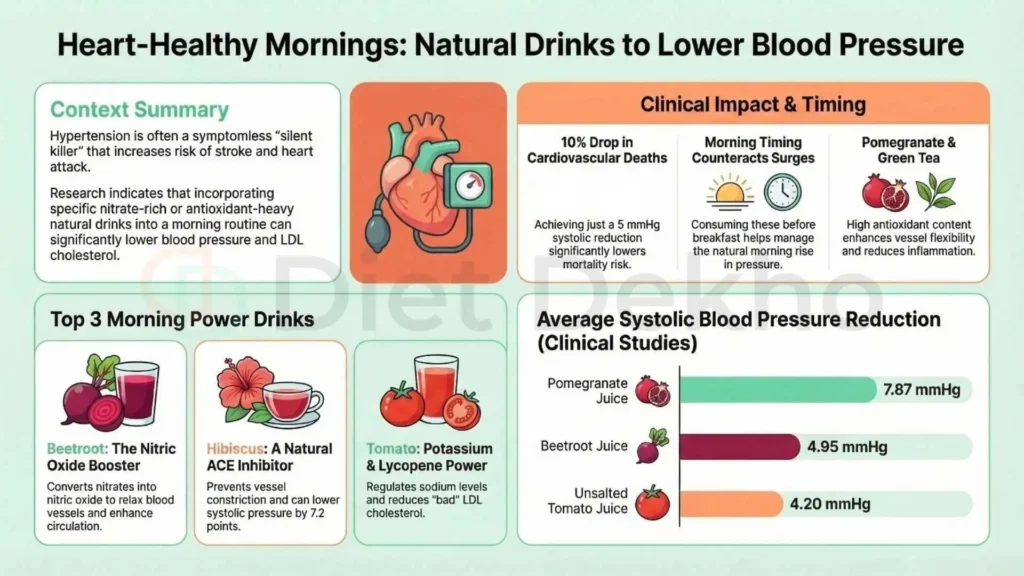
The Physiological Context of Hypertension and Hydration

Hypertension acts as a silent strain on your cardiovascular system. It gradually wears down the elasticity of your arteries and forces your heart to pump with much more effort than necessary. When you are busy with work or home chores, you might not notice the internal pressure rising. I see this often in my clients who manage high-stress roles. They feel fine until a routine check-up reveals numbers that are too high.
What this means for your daily routine is that hydration is not just about thirst. It is about blood volume. When you are dehydrated, your blood becomes thicker. Your body compensates by narrowing the blood vessels. This raises your blood pressure immediately. Drinking water right after you wake up helps reset this balance. It works like a quiet reset for your system.
| Component | Role in Blood Pressure Regulation | Common Sources |
| Potassium | Counteracts sodium and relaxes vessel walls | Coconut water, Pomegranate juice |
| Magnesium | Improves blood flow and prevents stiffness | Low-fat milk, Pumpkin seed water |
| Nitrates | Converts to nitric oxide for vasodilation | Beetroot juice, Spinach smoothies |
| Calcium | Supports vascular contraction and relaxation | Skim milk, Buttermilk |

The Role of Nitric Oxide in Vascular Health
The most effective drinks for high BP often work through a process called vasodilation. This is a fancy way of saying they help your blood vessels relax and widen. This relaxation is largely controlled by a molecule called nitric oxide. Certain vegetables are loaded with nitrates. Your body converts these into nitric oxide. This gas signals the muscles around your arteries to let go of their tension.
Beetroot Juice as a Natural Vasodilator
I often tell my friends that if they could only make one change, it should be adding beetroot juice to their morning. Beetroot is one of the most studied foods for blood pressure. It contains a high concentration of inorganic nitrates. When you drink it, the effect is almost immediate. Research shows that systolic blood pressure can drop by 4 to 10 mmHg within just a few hours of consumption.
For a busy professional, this is a massive health hack. You can drink a small glass while checking your emails. A 2022 review of seven studies confirmed that this crimson juice significantly reduces systolic pressure in people with hypertension. I know the taste can be earthy. If you don’t like the flavor, try blending it with a bit of ginger or apple. This makes it more refreshing and adds even more heart-friendly antioxidants.

Pomegranate Juice and Endothelial Function
Pomegranates are more than just a tasty snack. They are rich in polyphenols and anthocyanins. These compounds help protect the lining of your blood vessels. This lining is called the endothelium. When it is healthy, your blood flows much more smoothly.
Studies have found that drinking pomegranate juice daily can lower both systolic and diastolic numbers. One review of 22 trials showed an average reduction of nearly 8 points in the top number. This is especially helpful for people who already have readings above 130/80. I suggest choosing 100 percent pure juice without any added sugars. Sugar can cause inflammation, which works against your goal of lowering pressure.
Herbal Infusions and Traditional Indian Teas
If you enjoy a warm cup in the morning, you have several excellent options. Many traditional Indian kitchen staples are now being recognized by modern science for their impact on heart health.
Hibiscus Tea as a Natural ACE Inhibitor

Hibiscus tea is a vibrant red drink made from dried petals. It is known in India as Gudhal ka Phool tea. I find this to be one of the most pleasant drinks for high BP. It contains antioxidants that work similarly to common blood pressure medications called ACE inhibitors. These compounds prevent the blood vessels from narrowing.
Clinical trials have shown that drinking 2 to 3 cups of hibiscus tea daily can lower systolic pressure by about 7 points. It is caffeine-free, so it won’t give you those jitters that coffee might. To make it at home, simply steep the petals in hot water for 5 to 10 minutes. Add a squeeze of lemon. The lemon not only adds Vitamin C but also turns the tea a beautiful bright pink.
The Benefits of Green and Black Tea
While coffee can sometimes cause a temporary spike in pressure, green and black teas are generally safer. Green tea is packed with catechins. These are antioxidants that improve how your blood vessels function. A 2023 review confirmed that drinking green tea daily helps lower both blood pressure numbers.
Black tea also has benefits. It has been shown to be effective for people who have been drinking it for many years. If you are a busy professional who needs a bit of caffeine to stay focused, switching to green tea is a great move. It provides a more balanced energy without putting as much strain on your heart. I recommend brewing it lightly. Strong infusions can sometimes be bitter and less enjoyable to sip throughout the day.

The Power of Potassium and Electrolyte Balance
Most of us eat too much salt without realizing it. Hidden sodium is in our breads, snacks, and even some healthy-looking packaged foods. Sodium makes your body hold onto water. This increases the pressure in your veins. Potassium is the natural enemy of sodium. It helps your kidneys flush out the extra salt and relaxes the walls of your blood vessels.
Coconut Water: Nature’s Electrolyte
Tender coconut water is widely available in India. It is one of the best sources of natural potassium. One glass can have as much potassium as four bananas. Research shows that drinking coconut water daily can significantly reduce systolic pressure within just a week or two.
In one study, participants who drank 300 ml of fresh coconut water daily for 45 days saw their top number drop by 10 points. This is an incredibly easy solution for homemakers or people on the go. You don’t need to cook anything. Just find a local vendor and enjoy a fresh coconut. It is low in calories and naturally hydrating.

Tomato Juice and Lycopene
Unsalted tomato juice is another excellent source of potassium. It also contains lycopene, a powerful antioxidant that supports heart health. A study showed that older adults who drank about one cup of tomato juice daily saw improvements in their systolic readings over a year.
The key here is to use unsalted juice. Many canned tomato juices are very high in sodium. This will cancel out the benefits. If you are making it at home, just blend fresh tomatoes and strain them. I know it sounds simple, but this daily habit can make a big difference for your arteries.

Dairy and Fermented Drinks for Heart Health
You might be surprised to learn that dairy can play a role in managing your numbers. The key is to choose low-fat options. Dairy contains calcium and magnesium, which are essential for how your muscles and blood vessels contract.
Low-Fat Milk and Buttermilk
Research suggests that low-fat or skim milk can help lower blood pressure over time. The DASH diet, which stands for Dietary Approaches to Stop Hypertension, specifically recommends 2 to 3 servings of low-fat dairy daily.
In India, we have a wonderful tradition of drinking buttermilk, also known as Chaas. This is a perfect heart-friendly drink. It is low in fat compared to regular milk and rich in probiotics. Probiotics support gut health, which is linked to lower cardiovascular risk. I recommend adding roasted cumin powder and fresh coriander to your Chaas. These spices aid digestion and add even more nutrients.
Ragi Malt and Barley Water
If you are looking for a filling breakfast drink, Ragi malt is a great choice. Ragi is high in calcium and fiber. Barley water is also a traditional remedy that science now supports. Barley contains beta-glucan, a type of fiber that can help lower cholesterol and improve blood flow.
| Drink Type | Primary Benefit | Best Time to Consume |
| Barley Water | Fiber-rich; lowers cholesterol | Mid-morning snack |
| Ragi Malt | High calcium; sustained energy | Breakfast |
| Skim Milk | Mineral-rich; supports bone density | With oatmeal |
| Buttermilk | Probiotics; aids digestion | Post-lunch |
Traditional Indian Superfoods for Hypertension
Our kitchens are filled with small ingredients that act like medicine for our heart. I often tell my clients to look at their spice boxes before looking at their medicine cabinets.
Amla (Indian Gooseberry)
Amla is a powerhouse of Vitamin C and antioxidants. Vitamin C helps reduce inflammation and keeps your blood vessels flexible. Drinking fresh amla juice diluted in water on an empty stomach is a classic Ayurvedic remedy. It helps improve circulation and can even lower cholesterol levels.
Kokum and its Cardiovascular Benefits
Kokum is a fruit commonly found on the western coast of India. It contains hydroxycitric acid (HCA) and garcinol. These compounds have strong anti-inflammatory properties. Kokum is also rich in potassium and magnesium. It is traditionally used as a cooling agent, which is great for managing the physical stress of heat. I recommend a simple kokum infusion without sugar to help keep your heart healthy and your body cool.
Morning Spice Waters
- Jeera (Cumin) Water: Soak cumin seeds overnight and drink the water in the morning. This helps with digestion and reduces internal inflammation.
- Methi (Fenugreek) Water: Methi seeds are known to help with blood sugar and cholesterol. Since these often go hand-in-hand with high blood pressure, methi water is a great multi-tasker.
- Ajwain (Carom) Water: This helps relax the walls of your arteries and improves overall blood flow.
Practical Daily Routine for Busy People
I know you are juggling a lot. Let’s create a plan that fits into your life without adding stress. Stress is one of the biggest triggers for high blood pressure, so your health routine should feel like a relief, not a chore.
The Professional’s Office Plan
If you spend your day at a desk, your body can become stiff. This stiffness affects your circulation.
- Start Early: Drink a glass of warm lemon water as soon as you wake up. It hydrates you after hours of sleep.
- The Commute: Carry a bottle of coconut water or buttermilk. This prevents you from reaching for sugary sodas or energy drinks when you are tired.
- The Desk: Keep a large bottle of water on your desk. If you can see it, you will drink it. Add a few slices of cucumber or mint to make it more interesting.
- The Tea Break: Swap your second cup of coffee for green tea or hibiscus tea.
The Homemaker’s Kitchen Plan
Your day is physical and often starts very early. You have the advantage of being close to your kitchen.
- Morning Ritual: While the milk is boiling or the tiffin is being packed, sip on amla juice or ginger-lemon tea.
- Hydration Check: Use a designated bottle to track your water intake. Aim for 8 glasses a day.
- Lunch Companion: Always have a glass of Chaas with your lunch. It helps you feel full and provides the minerals your heart needs.
- Evening Wind-down: Instead of fried snacks, try a small bowl of roasted makhana with a cup of tulsi tea.
Drinks to Avoid and Common Mistakes
Part of managing your pressure is knowing what to skip. Some drinks might look healthy but contain hidden dangers.
The Danger of Sugary Beverages
Sodas, energy drinks, and even some packaged fruit juices are loaded with sugar. Harvard research has shown that these drinks significantly increase your risk of heart attack and high blood pressure. Sugary drinks lead to weight gain and inflammation, which put extra pressure on your heart. According to the Harvard School of Public Health, women who drink more than two sugary beverages a day have a 40 percent higher risk of heart disease.
Hidden Sodium in Packaged Juices
I want you to be a label reader. Many vegetable juices and healthysmoothies in the supermarket contain added salt as a preservative. This sodium can cause your body to retain fluid and spike your numbers. Always look for no added saltor low sodiumon the label. Better yet, make your juices at home using fresh produce.
Alcohol and High-Caffeine Energy Drinks
Alcohol is a major trigger for hypertension. While a very small amount might be okay for some, heavy drinking is a leading cause of heart issues. Energy drinks are even worse. They combine high caffeine with high sugar, which can cause dangerous spikes in your heart rate and blood pressure. If you are tired, try a short walk or a glass of cold water instead of a stimulant.
Expert Insights and Statistics
Medical professionals agree that lifestyle changes are the foundation of heart health. Dr. Sudhanshu Rai, a cardiologist, suggests that consistency is more important than elaborate fixes. He recommends simple steps like walking 40 minutes daily and replacing coffee with green tea.
Data from the Indian Hypertension Control Initiative shows that one in every four Indian adults has high blood pressure. Shockingly, over half of them don’t even know they have it. This is why I am so passionate about these simple daily habits. A small change, like drinking beetroot juice or coconut water, can reduce your risk of stroke by 14 percent.
Frequently Asked Questions
Q1: What is the single best drink to lower blood pressure immediately?
Beetroot juice is your best bet for a quick response. Its high nitrate content helps widen your blood vessels within 30 to 60 minutes. The effect can last for up to 24 hours, making it a powerful daily tool.
Q2: Can I drink lemon water for my BP?
Yes, lemon water is excellent. It provides Vitamin C, which helps keep your arteries flexible. While it may not lower pressure as dramatically as beetroot juice, it is a great foundation for overall heart health.
Q3: Is it okay to drink coconut water if I have diabetes too?
Fresh coconut water is generally safe in moderation, but it does contain some natural sugars. I recommend checking with your doctor and monitoring your blood sugar levels. It is much better than any packaged health drink or soda.
Q4: How many cups of tea can I have in a day?
If you are drinking green or hibiscus tea, 2 to 3 cups a day is the recommended amount to see heart benefits. Avoid adding sugar or heavy cream, as these can negatively impact your health goals.
Q5: Should I stop my medication if these drinks lower my BP?
Absolutely not. These drinks are meant to support your health, not replace medical treatment. Always talk to your doctor before making any changes to your prescribed medication routine.
Final Thoughts and Next Steps
I know it feels like there is never enough time in the day to focus on your health. But remember, you cannot pour from an empty cup. Taking care of your blood pressure with these simple drinks is a way to ensure you have the energy to keep taking care of everyone else. Start with just one change this week. Maybe it’s a glass of coconut water in the afternoon or a cup of hibiscus tea before bed. These small steps add up to a much stronger heart over time.
Let’s simplify your health together. If you want a plan tailored specifically for your busy life, reach out to us here
Contact Us
We understand how overwhelming nutrition and weight loss information can feel. With so many opinions and confusing advice online, it’s easy to feel stuck or unsure about what to do next.
At Diet Dekho, you never have to figure it out alone. You can contact us anytime with any questions or concerns. Our expert dietitians are available 24/7 to guide, support, and help you stay on track. Whether your goal is weight loss or building healthier habits, we’re here to make the journey simpler and more sustainable for you.
Disclaimer
This blog is intended to help readers make healthier food choices. Your health should always be the top priority. Before starting any restrictive or special diet, especially if you have a medical condition or health concern, please consult a doctor or a qualified dietitian. Each body responds differently to food and lifestyle changes. Always choose what is safe and suitable for you.

Abhinav is the Founder of Diet Dekho, helping people manage weight and lifestyle health through simple, practical nutrition and personalized diet plans.