Have you ever felt that persistent tightness in your chest after a long day of back-to-back meetings, or wondered why your head thumps rhythmically after managing a chaotic household morning? You might dismiss it as simple exhaustion, but for many women like you, these are the quiet whispers of rising blood pressure. Transitioning to a sustainable BP diet for women can be the most powerful step you take toward reclaiming your vitality and protecting your heart.
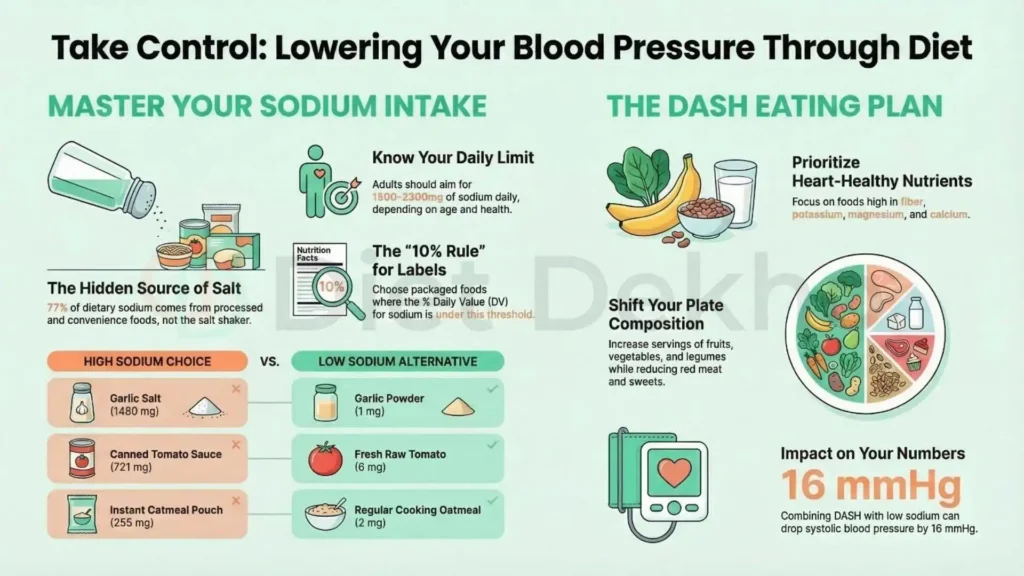
A BP diet for women focuses on the DASH (Dietary Approaches to Stop Hypertension) framework, emphasizing high-potassium millets like ragi and jowar, fiber-rich leafy greens (palak, methi), and lean proteins. This approach limits daily sodium to 1,500–2,300 mg while prioritizing magnesium and calcium to relax blood vessels, flush out excess salt, and support hormonal health through whole, unprocessed foods.
The Invisible Pressure: Understanding the Silent Struggle
I know it is hard to find time to focus on yourself when everyone else’s needs come first. What this means for your daily routine is that small, invisible shifts in your biology often go unnoticed until they become medical concerns. Hypertension is often called the silent killer because it rarely shows outward symptoms until it has already begun to strain the heart, kidneys, and brain. For the Indian woman, this pressure is not just physical; it is the cumulative result of professional stress, nutritional gaps, and unique hormonal transitions that occur throughout our lives.
Evidence suggests that nearly half of all adults in certain regions are living with high blood pressure, and a staggering number remain undiagnosed. In India, approximately 200 million people are estimated to be affected, with the prevalence rising sharply among women in their 40s. When we talk about a BP diet for women, we are not just looking at a weight-loss plan. We are looking at a clinical intervention that supports the very vessels that carry life through your body.

Defining the New Normal in Blood Pressure
The medical community has recently updated the guidelines for what constitutes a healthy reading. Understanding these categories is the first step in deciding how aggressively to modify your diet.
| Blood Pressure Category | Systolic (Upper Number) | Diastolic (Lower Number) |
| Normal | Less than 120 | Less than 80 |
| Elevated | 120–129 | Less than 80 |
| Stage 1 Hypertension | 130–139 | 80–89 |
| Stage 2 Hypertension | 140 or higher | 90 or higher |
| Hypertensive Crisis | Higher than 180 | Higher than 120 |
If your numbers fall into the Elevated or Stage 1 categories, your doctor will likely recommend lifestyle changes as the primary line of defense. This is where your kitchen becomes your pharmacy. By focusing on specific minerals and reducing sodium, you can often bring these numbers back to a safe range without immediate medication.

The Hormone-Heart Axis: Why Women are Different
Let’s simplify the science behind why women face unique cardiovascular risks. For decades, researchers observed that premenopausal women were less likely to develop high blood pressure than men of the same age. We now know that estrogen is the silent protector of the female heart. It plays a crucial role in maintaining the health of the endothelium-the thin lining of your blood vessels.
Estrogen as a Natural Vasodilator
Estrogen helps keep this lining slippery and responsive. It triggers the production of nitric oxide, a molecule that signals your blood vessels to relax and widen, a process known as vasodilation. When blood vessels are wide and relaxed, the heart does not have to pump as hard, and blood pressure remains low. However, as we move toward menopause, our estrogen levels naturally decline.
What this means for your daily routine is that your body loses its built-in chemical defense against hypertension. After menopause, the risk for women often catches up to or even exceeds that of men. A BP diet for women must therefore be rich in phytoestrogens and anti-inflammatory healthy fats to support the vascular system as these natural hormone levels shift.
PCOS and the Insulin Connection
Many younger women struggle with Polycystic Ovary Syndrome (PCOS), which introduces another layer of complexity to blood pressure management. PCOS is frequently linked to insulin resistance, where the body’s cells do not respond well to insulin, leading to higher blood sugar levels. High insulin levels can cause the kidneys to retain more sodium and trigger the sympathetic nervous system, both of which drive up blood pressure.
For my friends managing PCOS, the goal of a heart-healthy diet is to stabilize blood sugar while protecting the arteries. This involves pairing carbohydrates with protein and fiber to avoid the spikes and crashes that strain the cardiovascular system. For example, instead of an apple alone, having it with a spoonful of peanut butter can significantly change how your body processes that meal.

The DASH Diet: A Framework for Indian Kitchens
You have probably heard of the DASH diet, which stands for Dietary Approaches to Stop Hypertension. While it sounds like a clinical term, it is actually a very flexible way of eating that focuses on whole foods. In the Indian context, we do not need to look for foreign ingredients; our traditional pantry is already filled with DASH-friendly staples.
The Mineral Triad: Potassium, Magnesium, and Calcium
The magic of the DASH framework lies in three minerals that work together to balance the effects of salt.
- Potassium: Think of potassium as the direct rival to sodium. It helps your kidneys flush out excess salt and relaxes the walls of your blood vessels.
- Magnesium: This mineral acts as a natural relaxant for the smooth muscles in your arteries. It helps reduce inflammation and supports overall vascular health.
- Calcium: Beyond bone health, calcium is essential for the contraction and relaxation of blood vessels.
| Mineral | Top Indian Sources | Daily Role |
| Potassium | Bananas, Coconut Water, Spinach, Potatoes (with skin) | Flushes sodium, reduces vessel tension |
| Magnesium | Jowar, Almonds, Pumpkin Seeds, Leafy Greens | Relaxes arterial muscles, fights inflammation |
| Calcium | Low-fat Curd, Ragi, Paneer, Broccoli | Supports vessel contraction/relaxation |
I know it’s hard to find time to track every gram of these minerals, so instead of counting, focus on the Half-Platerule. Fill half your plate with colorful vegetables at every meal, and you will naturally hit these mineral targets.

Sodium: The Hidden Saboteur in Your Kitchen
If there is one thing that can derail even the best BP diet for women, it is hidden salt. The World Health Organization and the American Heart Association recommend staying under 2,300 mg of sodium daily, which is roughly one teaspoon of salt. However, a limit of 1,500 mg is even more effective for those already struggling with high readings.
Identifying the Salty Six and Beyond
In many Indian households, salt isn’t just what we add to the kadhai. It is hidden in our favorite accompaniments. Pickles (achaar) and papads are often preserved with massive amounts of sodium. Even processed items like white bread, biscuits, and namkeens contribute significantly to our daily load.
| High-Sodium Item | Better Alternative | Why it Works |
| Store-bought Achaar | Fresh Mint or Coriander Chutney | Uses herbs and lemon for flavor without the salt load |
| Fried Papad | Roasted Makhana (Fox Nuts) | Low in sodium, high in magnesium and fiber |
| Salted Biscuits | Unsalted Almonds or Walnuts | Provides heart-healthy fats and minerals |
| Commercial Chaat Masala | Roasted Cumin and Lemon Juice | Provides tang and depth without hidden sodium |
Let’s simplify this: you do not have to eat bland food. Use spices like garlic, ginger, turmeric, and green chilies to create flavor. I often tell my clients to remove the salt-shaker from the table entirely. If you cook with a small amount of salt, your taste buds will actually adjust within a few weeks, and you will begin to notice the true, sweet flavor of the vegetables.

Indian Superfoods for Heart Resilience
Our local markets are treasure troves for cardiovascular health. From the pungent protector, garlic, to the humble amla, these foods have been scientifically proven to support better blood flow.
Garlic: The Allicin Advantage
Garlic is perhaps the most famous heart-healthy spice in our masala dabba. It contains a compound called allicin, which is created when you crush or chop the clove. Allicin helps relax blood vessels and has been shown in some studies to reduce blood pressure almost as effectively as certain medications. For the best results, try adding raw garlic to your chutneys or use it as a fresh tadka in your dal.
Amla and Hibiscus: Natural ACE Inhibitors
Amla (Indian Gooseberry) is an incredible source of Vitamin C and polyphenols. It strengthens the heart muscle and improves circulation. Similarly, hibiscus tea (made from sabja or dried hibiscus flowers) acts like a natural ACE inhibitor, helping to prevent the constriction of blood vessels. Drinking two cups of hibiscus tea daily can lower your readings by several points over time.
Millets: The Ancient Solution to Modern Pressure
If you are looking for a simple swap that makes a big impact, look at your grains. White rice and refined wheat (maida) can lead to weight gain and inflammation. Traditional millets are far superior for a BP diet for women.
- Ragi (Finger Millet): This is one of my favorite recommendations because it is incredibly rich in calcium and potassium. It acts as a direct antidote to the salt we consume.
- Jowar (Sorghum): Packed with magnesium, jowar helps the arteries stay flexible.
- Bajra (Pearl Millet): A great source of fiber that keeps you full and helps manage cholesterol alongside blood pressure.

The Protein Puzzle: Dals, Legumes, and Lean Choices
Protein is vital for hormone synthesis, but the type of protein you choose matters deeply for your heart. Plant-based proteins are generally better for your blood pressure because they come packaged with fiber and potassium.
The Power of Dals and Legumes
Dals like Moong, Masoor, and Toor are the backbone of a heart-healthy Indian diet. They are naturally low in fat and provide the potassium your body needs to flush out sodium. Legumes like Rajma (kidney beans) and Chana (chickpeas) are also rich in folate, which supports healthy blood vessel function.
Lean Animal Proteins
If you enjoy non-vegetarian food, focus on lean options. Skinless chicken breast and fatty fish are your best bets. Fish like mackerel (bangda) or salmon are rich in omega-3 fatty acids, which reduce inflammation and slow the buildup of plaque in your arteries. The AHA recommends at least two servings of oily fish per week for heart health.
| Protein Source | Recommended Serving | Benefits |
| Moong Dal | 1/2 cup cooked | Easy to digest, high potassium |
| Rajma / Chana | 1/2 cup cooked | High fiber and folate |
| Fatty Fish | 100g (Grilled/Steamed) | Omega-3s for arterial health |
| Low-fat Paneer | 1/2 cup | Calcium without the saturated fat |

Strategies for the Busy Professional Woman
I know it’s hard to find time to cook elaborate meals when you are balancing deadlines and a commute. What this means for your daily routine is that you need hacks that make the healthy choice the easy choice.
- The Sunday Prep: Spend an hour on Sunday pre-chopping vegetables like carrots, beans, and spinach. Store them in airtight containers so you can toss them into an upma or dal in minutes during the week.
- Batch Cooking Dals: Cook a large pot of plain dal on the weekend. You can transform it throughout the week by adding different tadkas-garlic and palak one day, methi and tomato the next.
- The Desk-Side Snack Kit: Keep a jar of roasted makhana, unsalted almonds, and walnuts at your desk. When the 4 PM hunger hits, you won’t be tempted by the office samosas or biscuits.
Navigating Restaurant Menus
Eating out is part of a modern lifestyle, and you don’t have to sacrifice your social life for your heart. When dining out, look for Tandoorior Grilledoptions instead of Makhanior Malaidishes, which are loaded with saturated fats and salt. Ask the chef to go easy on the salt or to serve sauces on the side. Choosing a simple whole-wheat chapati over a butter naan can save you hundreds of calories and a significant amount of sodium.
Support for the Homemaker: Heart Health for the Whole Family
As the primary cook in the house, you have the incredible power to improve the health of your entire family. I know it can be difficult to make different meals for everyone, so the goal is to make the standard family meal heart-healthy.
- Gradual Grain Swaps: Instead of switching to 100% millets overnight, start by mixing Jowar or Bajra flour into your regular whole wheat atta. Your family likely won’t even notice the difference in taste, but their mineral intake will soar.
- The Vegetable Sneak-In: Add finely chopped spinach or grated carrots to your paratha dough or idli batter. It increases the fiber and potassium without changing the meal’s core identity.
- Low-Salt Flavor Boosters: Use amla, tamarind (imli), or kokum to provide that sour kick that traditionally comes from salt and pickles.
Movement for the Non-GymAudience
You do not need a high-end gym membership or expensive sneakers to lower your blood pressure. For the busy woman, movement can be woven into the fabric of your day. Brisk walking for 30 minutes is one of the most effective ways to strengthen your heart. If you can’t do 30 minutes at once, three 10-minute walks after meals are just as effective.
Isometric Holds and Daily Motion
Recent research suggests that static exercises like wall sits or planks are surprisingly good for blood pressure. They challenge the vascular system in a way that encourages vessels to stay flexible. Even simple habits like taking the stairs or standing while on a phone call can help counter the negative effects of a sedentary day.
The Role of Stress, Sleep, and Loneliness
Blood pressure is not just about what is on your plate; it is also about what is in your head. Chronic stress keeps your cortisol levels high, which tells your body to hold onto salt and constrict your arteries. For many women, the mental load of managing work and home is a significant driver of hypertension.
The Power of Social Connection
Interestingly, loneliness and a lack of social support have been clinically linked to higher blood pressure. When we feel isolated, our sympathetic nervous system-the fight or response-stays active. Finding time to talk to a friend or participate in a community group is not a luxury; it is a cardiovascular necessity.
Sleep: The Body’s Repair Shop
If you are sleeping less than six hours a night, your blood pressure is likely to be higher the next day. During deep sleep, our heart rate slows down, and our blood pressure dips,giving the system a much-needed break. Prioritizing a consistent sleep schedule can be just as important as your BP diet for women.
A 7-Day BP Diet Meal Plan for Women
Let’s put all of this together into a practical 7-day plan. This plan focuses on traditional Indian flavors while maximizing the mineral triad.
| Day | Breakfast | Lunch | Snack | Dinner |
| 1 | Vegetable Oats Upma | Bajra & Moong Dal Khichdi + Salad | Roasted Flaxseeds | 2 Jowar Rotis + Lauki Sabzi |
| 2 | 2 Steamed Idlis + Mint Chutney | Brown Rice + Rajma + Cucumber Salad | One Banana | Bajra Roti + Sprouted Matki Sabzi |
| 3 | Ragi Malt or Porridge | Whole Wheat Roti + Palak Paneer | Handful of Walnuts | Mixed Veg Dalia + Curd |
| 4 | Poha with Peanuts and Peas | Brown Rice + Yellow Dal + Steamed Broccoli | Apple Slices | 2 Ragi Rotis + Baingan Bharta |
| 5 | Besan Chilla with Grated Veggies | Grilled Fish/Chicken + Sautéed Greens | Roasted Makhana | Bajra Roti + Dal Paratha |
| 6 | Paneer Bhurji + Whole Wheat Toast | Vegetable Pulao + Onion Raita | Sprouts Salad | Jowar Roti + Dahi Bhindi |
| 7 | Ragi Dosa + Veggie Sambar | Bajra Moong Khichdi + Curd | Coconut Water | Grilled Tofu/Paneer + Veggies |
Frequently Asked Questions (FAQs)
Can I follow a BP diet for women if I am also trying to manage PCOS?
Yes, the two plans overlap perfectly. The high fiber from millets and vegetables in a BP diet for women helps stabilize blood sugar, which is critical for PCOS management. Focus on pairing your carbs with proteins like curd or dals to keep your insulin levels steady.
Is pink Himalayan salt better than regular table salt for hypertension?
This is a common myth. While pink salt has trace minerals, it is still primarily sodium chloride. For a BP diet for women, the total amount of sodium is what matters most. It is better to reduce the quantity of any salt and use herbs and spices for flavor.
What are the best cooling foods if I have high blood pressure and hot flashes?
According to traditional and clinical advice, foods like bananas, spinach, broccoli, and green tea can help cool the body while providing potassium and antioxidants that support healthy pressure levels. Staying well-hydrated with water and coconut water is also essential during this transition.
Can I drink coffee or tea on a BP diet for women?
While moderate caffeine is usually fine, excessive intake (more than 400mg) can temporarily spike blood pressure. I suggest switching to herbal teas like hibiscus or ginger tea, which have natural blood-pressure-lowering properties.
Your Journey to a Stronger Heart
Managing your health is a marathon, not a sprint. I know it’s hard to change everything at once, but you don’t have to. Start by making one swap today-perhaps replace your afternoon biscuit with a handful of walnuts or use lemon juice instead of extra salt in your dal. These small victories add up to a significant change in your vascular health.
Your heart has been working tirelessly for you every second of your life. By adopting a BP diet for women, you are finally giving it the support it deserves. You are not just lowering a number on a machine; you are ensuring that you have the energy and health to be there for all the moments that matter most.
If you are ready to take the next step and want a personalized plan that fits your specific busy schedule, let’s connect. We can work together to create a roadmap that feels like a natural part of your life, not an added burden.
Take the first step toward a healthier heart today.
Contact Us
We understand how overwhelming nutrition and weight loss information can feel. With so many opinions and confusing advice online, it’s easy to feel stuck or unsure about what to do next.
At Diet Dekho, you never have to figure it out alone. You can contact us anytime with any questions or concerns. Our expert dietitians are available 24/7 to guide, support, and help you stay on track. Whether your goal is weight loss or building healthier habits, we’re here to make the journey simpler and more sustainable for you.
Disclaimer
This blog is intended to help readers make healthier food choices. Your health should always be the top priority. Before starting any restrictive or special diet, especially if you have a medical condition or health concern, please consult a doctor or a qualified dietitian. Each body responds differently to food and lifestyle changes. Always choose what is safe and suitable for you.

Abhinav is the Founder of Diet Dekho, helping people manage weight and lifestyle health through simple, practical nutrition and personalized diet plans.