
Every morning in a quiet Mumbai neighborhood, seventy-year-old Ramesh waits for his cup of chai. His daughter, a busy corporate professional, balances morning calls while monitoring his health. Ramesh recently received a diagnosis that changes everything: hypertension. He now needs a specialized BP diet for Seniors to protect his heart. I know it’s hard to find time to cook separate meals, but managing his numbers doesn’t have to be a struggle. Let’s simplify this journey toward health together.
The ideal BP diet for Seniors focuses on reducing daily sodium to under 1,500 mg while increasing potassium-rich, easy-to-chew foods. Specifically, incorporating Indian staples like moong dal khichdi, ragi porridge, and bottle gourd (lauki) help regulate blood pressure naturally. This approach combines the global DASH framework with ICMR-NIN 2024 standards for optimal geriatric heart health.
The Growing Challenge of Senior Hypertension in India
Hypertension has emerged as a significant public health threat in the Indian subcontinent. It often remains undiagnosed until it triggers a severe cardiac event. Consequently, recent data indicates that approximately one in four Indian adults suffers from high blood pressure. For the older people, these statistics are even more alarming.

Specifically, physiological changes like arterial stiffening contribute to higher readings in individuals over sixty. Moreover, a study from the Longitudinal Ageing Study in India found that over 22% of adults aged 45+ remained undiagnosed even after visiting healthcare facilities. What this means for your daily routine is that proactive monitoring and dietary changes are non-negotiable for longevity.

Understanding Your Blood Pressure Numbers
Older people must distinguish between different levels of blood pressure to manage their condition effectively. Essentially, a reading of 140-90 mmHg or higher is generally classified as hypertension. However, modern standards like the ACC/AHA guidelines consider 130/80 mmHg as the threshold for Stage 1 hypertension.
For an Indian senior, the goal is often to maintain levels below 130/80 mmHg to prevent long-term damage. Therefore, understanding these stages helps us decide how strictly we need to monitor salt. If your parent is in the Elevated stage, dietary shifts alone might prevent the need for heavy medication.
| Category | Systolic (mmHg) | Diastolic (mmHg) | Intervention |
| Normal | < 120 | < 80 | Preventive Diet |
| Elevated | 120 – 129 | < 80 | DASH Principles |
| Stage 1 HTN | 130 – 139 | 80 – 89 | Low Sodium + Fiber |
| Stage 2 HTN | ge 140 | ge 90 | Medical + Dietary |

The Science Behind the DASH Diet
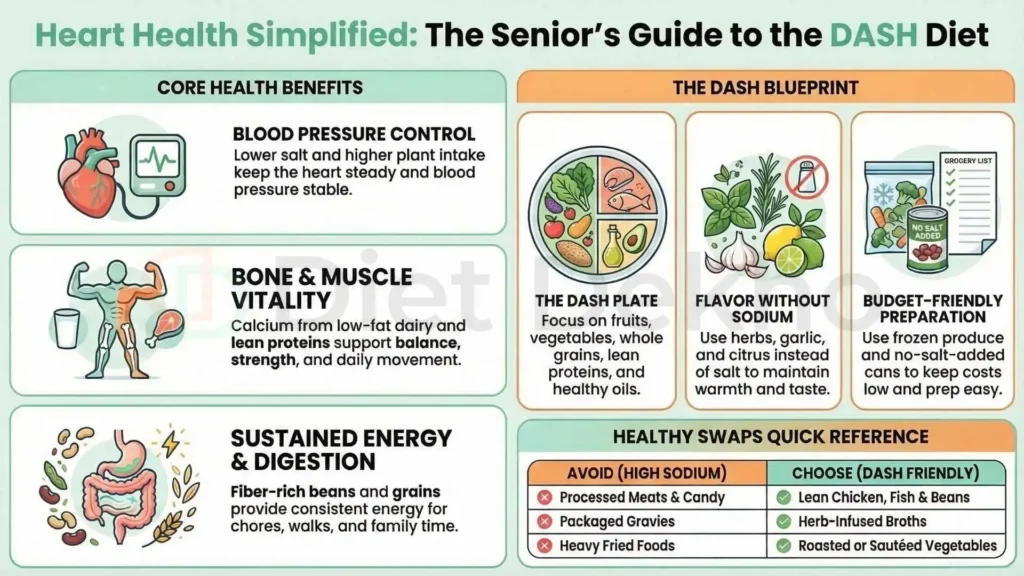
The Dietary Approaches to Stop Hypertension (DASH) eating plan is the most recommended diet for blood pressure control. It is designed to provide a balanced intake of nutrients that support cardiovascular health. Specifically, the core mechanism involves high potassium, magnesium, and calcium while limiting sodium.
Potassium plays a dual role here. It assists the kidneys in excreting excess sodium and helps ease tension in blood vessel walls. Furthermore, magnesium acts as a natural calcium channel blocker, promoting the relaxation of arteries. According to Harvard Health Publishing, following a low-sodium DASH diet can be as effective as a first-line medication.

Adapting ICMR-NIN 2024 Guidelines for Indians
The Indian Council of Medical Research (ICMR) and National Institute of Nutrition (NIN) released updated guidelines in 2024. These guidelines provide a localized framework for implementing a BP diet for older people using indigenous foods. One significant highlight is the call to increase daily vegetable intake to 400 grams.
In addition, the 2024 guidelines mandate that at least 50% of cereal intake should come from whole grains rather than refined flours. This shift is crucial because whole grains provide the fiber and magnesium necessary for heart health. For a homemaker, this means moving away from white rice toward brown rice, ragi, or jowar.

Low Sodium Strategies for the Indian Kitchen
Many older people believe that cutting salt simply means not adding it at the table. However, most dietary sodium in India now comes from processed and packaged foods. Specifically, items like pickles, papads, and commercial biscuits are hidden sodium bombs.
I know it’s hard to change long-standing habits, but identifying these hidden sources is the first step. Cardiologist Dr. Ravi Prakash notes that hidden sodium is often the biggest saboteur of heart health. Therefore, families must learn to read labels, looking for products with less than 140 mg of sodium per serving.
| Hidden Sodium Source | Average Sodium Content | Healthy Alternative |
| Commercial Pickle | Very High | Fresh Lemon/Ginger Chutney |
| White Bread (2 slices) | 300 mg | Homemade Multigrain Roti |
| Canned Soup | 800 mg | Homemade Vegetable Broth |
| Packaged Biscuits | 200 mg | Plain Roasted Makhana |

Why Texture and Digestion Matter for Older people
As we age, dental issues and changes in digestive speed can make eating hard textures difficult. Specifically, many older people avoid nutrient-dense but tough foods like raw vegetables or whole grains due to dental pain. This can result in a diet dominated by soft but unhealthy options like sugary biscuits.
Consequently, a soft-food BP diet for older people ensures they get nutrients without physical discomfort. Soft foods are easier to chew, swallow, and digest. By mashing or over-cooking healthy ingredients, you can maintain their nutritional status. For instance, over-boiling sprouts makes them easy to chew while keeping them heart-healthy.
Soft Food Swaps for Easy Chewing
Instead of a hard wheat roti, consider serving a soft ragi porridge or well-cooked khichdi. Similarly, raw carrots can be replaced with steamed, mashed carrots. These small changes reduce the physical strain of eating while keeping the heart protected.
Indian Superfoods for Natural BP Control
The Indian pantry is filled with bioactive ingredients that modern science now validates. For example, Amla (Indian gooseberry) is a powerhouse of Vitamin C that supports arterial health. Garlic is another staple that promotes the production of nitric oxide to dilate blood vessels.
Moreover, ground flaxseeds (alsi) provide omega-3 fatty acids that protect the heart from inflammation. Similarly, turmeric contains curcumin, which helps ease the pressure on blood vessels. Using these flavor bombs allows you to reduce salt without making the food taste like cardboard.
Morning Rituals: Low-Sodium Breakfast Ideas
For an Indian senior, breakfast is the most important meal. Traditional options like poha, upma, or idli can be easily modified to be heart-healthy. Specifically, a ragi or oats porridge made with water or diluted milk provides sustained energy without a sodium spike.
In addition, adding sliced bananas to their morning meal increases potassium levels. If the senior prefers a savory start, a besan cheela with finely grated vegetables is a soft, protein-rich choice. Ultimately, the goal is to provide a nutrient-dense foundation that prevents the urge to snack on salty namkeens later.
Lunch and Dinner: The Heart of the Diet
The midday and evening meals should center on the combination of a whole grain and a protein-rich legume. For a parent with chewing difficulties, dals should be cooked until very soft. A classic meal might consist of a bowl of yellow moong dal, mashed brown rice, and a soft-cooked vegetable like bottle gourd (lauki).
Furthermore, dahi bhindi is a fantastic heart-healthy option when prepared with minimal oil. Specifically, okra provides fiber while the curd offers calcium. For dinner, a lighter option like moong dal soup or vegetable dalia ensures they stay full without feeling heavy before sleep.
Meal Prep Hacks for Busy Families
Managing a BP diet for older people can be overwhelming when you’re juggling a career. However, strategic meal prepping makes consistency achievable. Spend two hours on a Sunday to boil large batches of lentils or chickpeas. You can store these in the fridge to use as quick salad bases or soup additions during the week.
Additionally, pre-chopping vegetables like beans and carrots saves significant time on weekday evenings. For the non-gym audience, using a pressure cooker is a game-changer. It can cook a soft, complete meal like vegetable khichdi in just fifteen minutes with minimal supervision.
Smart Storage Tips
Use airtight containers to keep your pre-chopped vegetables fresh for up to three days. Similarly, you can prepare a ginger-garlic-tomato puree over the weekend to use as a base for various low-salt curries throughout the week.
The Power of Potassium: Fighting Back Against Salt
For a senior with high blood pressure, potassium is the most important mineral to prioritize. Essentially, it helps the body fight back against the damage caused by salt. It helps maintain fluid balance and relaxes arterial walls.
Excellent Indian sources include coconut water, which is a natural, electrolyte-rich drink perfect for older people. In addition, bananas and sweet potatoes are significant sources of this mineral. According to NIN, it is harder to control blood pressure if there isn’t enough potassium in the diet.
Lifestyle Factors: Movement, Sleep, and Stress
A BP diet for older people works best when paired with healthy daily habits. For the non-gym audience, exercise snacks-five-minute bursts of activity like walking around the house-are incredibly effective. These small sessions boost cardiovascular fitness without the need for a gym membership.
Sleep and stress management are equally critical. Dr. Ravi Prakash explains that sleeping less than 7 hours keeps stress hormones elevated, which strains the heart. Consequently, practicing deep breathing or ensuring a regular sleep schedule can have a measurable impact on their blood pressure readings.
Regional Variations: Customizing the Indian Diet
India’s culinary diversity means a one size fits all plan rarely works. For a senior in the South, this means focusing on steamed idlis while reducing salt in the sambar. In the North, it involves swapping butter-heavy parathas for soft jowar rotis.
Specifically, coastal regions can leverage fresh fish, which is a primary source of heart-healthy omega-3 fatty acids. By respecting regional tastes, we ensure that older people don’t feel they are giving up their culture. Instead, they are simply evolving their traditions for a healthier future.
Frequently Asked Questions
Is Sendha Namak(Rock Salt) safer than regular salt?
No. While marketed as healthier, it is still primarily sodium. For a BP diet for older people, total salt intake-including rock salt-must remain under 5 grams per day.
What are some soft-food snacks that are low in sodium?
Great options include plain yogurt with mashed fruit, a soft-boiled egg, or roasted makhana with black pepper.
How can I make low-sodium food taste better for my parents?
Use natural flavor enhancers like lemon juice, amchur (dry mango powder), fresh garlic, and ginger. These provide the zing older people crave without the heart risk.
Is the DASH diet suitable if my parents don’t go to the gym?
Yes. The DASH diet works through nutritional biochemistry to lower blood pressure. When paired with simple home walks, it provides comprehensive heart support.
Conclusion
The journey toward controlled blood pressure is a marathon of small, consistent choices. For an Indian senior, the most powerful medicine is often found right in the kitchen. By adopting a BP diet for older people that focuses on low-sodium, soft foods, you can significantly reduce their risk of a heart event.
You are the architect of your parent’s health. Through strategic meal prepping and the use of Indian superfoods, you can help them thrive. Let’s make these years their healthiest yet.
Ready to personalize your parent’s heart health journey?
Contact Us
We understand how overwhelming nutrition and weight loss information can feel. With so many opinions and confusing advice online, it’s easy to feel stuck or unsure about what to do next.
At Diet Dekho, you never have to figure it out alone. You can contact us anytime with any questions or concerns. Our expert dietitians are available 24/7 to guide, support, and help you stay on track. Whether your goal is weight loss or building healthier habits, we’re here to make the journey simpler and more sustainable for you.
Disclaimer
This blog is intended to help readers make healthier food choices. Your health should always be the top priority. Before starting any restrictive or special diet, especially if you have a medical condition or health concern, please consult a doctor or a qualified dietitian. Each body responds differently to food and lifestyle changes. Always choose what is safe and suitable for you.

Abhinav is the Founder of Diet Dekho, helping people manage weight and lifestyle health through simple, practical nutrition and personalized diet plans.