Meera stood in her kitchen at 7:00 AM, staring at a bottle of thyroid medication and a blood pressure monitor. Between packing her daughter’s tiffin and preparing for a 9:00 AM meeting, she felt overwhelmed by her new health diagnosis. If you feel like Meera, finding a practical BP diet for thyroid management is your first step toward feeling like yourself again.
An effective BP diet for thyroid health combines the low-sodium principles of the DASH diet with thyroid-supporting nutrients like iodine, selenium, and zinc. Focus on whole grains, lean proteins, and potassium-rich vegetables to manage blood pressure while stimulating your metabolism. This approach helps stabilize hormones and reduces arterial stiffness for better heart health.
Why Your Blood Pressure and Thyroid Are Acting Up Together
I know it is hard to find time to research medical terms, but understanding this link helps you take control. Your thyroid is a tiny, butterfly-shaped gland that acts as the master controller of your energy. When it slows down, which we call hypothyroidism, every system in your body follows suit. This includes how your heart beats and how your blood vessels function.
What this means for your daily routine is that your heart rate may become slower, and your blood vessels might lose some of their natural flexibility. When blood vessels become stiff, your heart has to pump harder to move blood through your body. This extra effort is what leads to high blood pressure. In fact, research shows that nearly 20% of people with an underactive thyroid suffer from both systolic and diastolic hypertension.

For some, the problem is an overactive thyroid, or hyperthyroidism. In this state, your metabolism is on overdrive. Your heart beats faster and harder, which often pushes your systolic blood pressure-that top number on the monitor-to unhealthy levels. Whether your thyroid is too slow or too fast, your blood pressure often pays the price.
| Thyroid Condition | Effect on Heart and Vessels | Common Blood Pressure Change |
| Hypothyroidism (Underactive) | Slower heart rate, stiffening of arteries, and increased vascular resistance | Rise in diastolic (bottom) and sometimes systolic pressure |
| Hyperthyroidism (Overactive) | Rapid heart rate, more forceful contractions, and increased blood volume | Rise in systolic (top) pressure and lower diastolic pressure |
| Subclinical Hypothyroidism | Early signs of arterial stiffness and mild metabolic slowing | Subtle, gradual increase in overall blood pressure |

What the Indian Research Tells Us About This Link
Let’s simplify some of the recent data from our own country. In India, the connection between these two conditions is even more common than we once thought. A major study using data from the National Family Health Survey (NFHS-4) found that about 32.8% of Indians with thyroid dysfunction also have hypertension. That is a significant number of people facing the same struggle as you.
The study also showed that thyroid issues are almost twice as common in people who already have high blood pressure compared to those who do not. This suggests that if you have one condition, it is very important to keep an eye on the other. Different parts of India show different trends. For example, states like Kerala have reported high rates of undetected thyroid disorders, while other areas like Tamil Nadu show a high prevalence of hypertension.
Researchers in West Bengal found that high blood pressure was significantly associated with advancing age and a higher body mass index (BMI) in people with hypothyroidism. This tells us that managing our weight through a BP diet for thyroid health is not just about fitting into old clothes. It is a vital part of protecting our hearts and kidneys as we get older.

Moving Toward a DASH Diet with an Indian Twist
If you have researched blood pressure, you have likely heard of the DASH diet. It stands for Dietary Approaches to Stop Hypertension. It is a world-renowned plan that is proven to lower blood pressure within just a few weeks. But I want to show you how to make it work for your Indian palate and your thyroid.
The heart of the DASH diet is about reducing salt and increasing nutrients like potassium, calcium, and magnesium. These minerals help your blood vessels relax and help your body flush out excess sodium. For your thyroid, we simply add a focus on foods that give your metabolism the fuel it needs.
Instead of plain salads, we think about colorful sabzis, dals, and millets. What this means for your daily routine is that you do not have to give up the flavors you love. We just need to change the ingredients slightly and be mindful of how we season our food.
| DASH Food Group | Daily Servings (2000 Calories) | Indian Food Examples |
| Whole Grains | 6 to 8 servings | Whole wheat roti, brown rice, millets (Ragi, Jowar), oats |
| Vegetables | 4 to 5 servings | Lauki, tori, spinach, carrots, bell peppers |
| Fruits | 4 to 5 servings | Apples, guavas, bananas, papaya, amla |
| Low-fat Dairy | 2 to 3 servings | Homemade curd (dahi), skim milk, unsalted buttermilk |
| Lean Protein | 6 or fewer (1-oz) servings | Moong dal, chickpeas, eggs, grilled fish, chicken breast |
| Nuts and Seeds | 4 to 5 servings per week | Soaked almonds, walnuts, pumpkin seeds, sunflower seeds |

The Iodine Foundation: Why Salt Choice Matters
I know there is a lot of talk about pink salt and rock salt, but let’s talk about the facts for a moment. In India, iodine deficiency was once a major cause of goiter and hypothyroidism. Iodized salt was introduced as a public health measure to fix this. Iodine is the basic building block your thyroid needs to make T3 and T4 hormones.
While you need to limit salt for your blood pressure, the salt you do use should be iodized. Expert Ms. Choudhary from Kailash Healthcare emphasizes that the single most important dietary step is ensuring your family uses only iodized salt. Switching completely to rock salt (Sendha Namak) might leave you short on iodine, which can worsen an underactive thyroid.
The goal for your BP diet for thyroid health is to keep total sodium intake below 2,300 milligrams a day. If your blood pressure is very high, your doctor might suggest 1,500 milligrams, which is about two-thirds of a teaspoon. Use lemon, tamarind, and fresh herbs to add flavor so you do not miss the extra salt.

Fueling the Conversion: Selenium and Zinc
Having enough iodine is only half the battle. Your body needs to convert the hormone T4 into the active version, T3, which actually does the work of boosting your metabolism. This conversion process depends on a mineral called selenium. Selenium also acts as a shield, protecting your thyroid gland from damage.
Zinc is another key player. It helps your brain signal the thyroid to produce hormones and helps those hormones stay active in your body. Without enough zinc, your metabolism can feel like it is stuck in first gear. Including these minerals in your daily meals is a simple way to support your energy levels without a gym.
| Mineral | Role in Your Body | Best Local Sources |
| Selenium | Converts T4 to active T3 and protects the thyroid | Eggs, fish (tuna, sardines), sunflower seeds, mushrooms |
| Zinc | Activates hormones and supports the immune system | Pumpkin seeds, chickpeas (chana), moong dal, walnuts |
| Magnesium | Relaxes blood vessels and improves bowel movements | Spinach, almonds, whole grains, pumpkin seeds |
| Iron | Carries oxygen and supports metabolic enzymes | Lentils, spinach (cooked), beans, fortified cereals |

Understanding the Goitrogen Myth
You might have heard that you should never eat cabbage or cauliflower if you have thyroid issues. I want to clear this up for you. These vegetables contain compounds called goitrogens that can interfere with iodine absorption, but only if eaten in very large amounts and in raw form.
What this means for your daily routine is that you do not have to give up your favorite Aloo Gobhi or Sarson ka Saag. Cooking, steaming, or sautéing these vegetables deactivates most of the goitrogens, making them perfectly safe and very healthy for you. The only thing to avoid is drinking large amounts of raw cabbage or kale juice every day, which is not common in our Indian diet anyway.
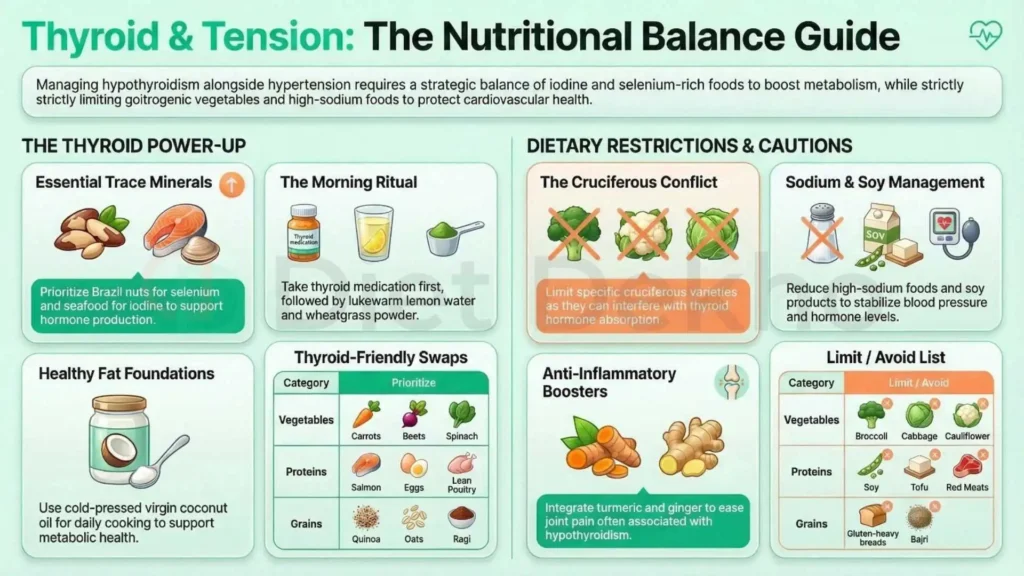
Soy is another food to be mindful of. Soya chunks and tofu are great plant proteins, but they can interfere with how your body absorbs thyroid medication. The solution is simple: keep a 4-hour gap between taking your thyroid pill and eating any soy products. This allows the medicine to do its job without any interference.

Metabolic Spices: The Hidden Gems in Your Dabba
Our Indian kitchen is full of spices that do more than just add taste. Many of the spices we use daily have anti-inflammatory properties that support a healthy BP diet for thyroid management. Using them correctly can give your metabolism a gentle nudge in the right direction.
- Turmeric (Haldi): The curcumin in turmeric is a natural anti-inflammatory that helps protect your blood vessels and can ease the pressure on them.
- Ginger (Adrak): Ginger helps stimulate the digestive fire, which Ayurveda calls Agni. It improves circulation and can help reduce the puffiness and swelling often seen in thyroid patients.
- Black Pepper (Kali Mirch): Pepper contains piperine, which helps your body absorb nutrients better. It also has a slight thermogenic effect, meaning it helps your body burn a few more calories during digestion.
- Cinnamon (Dalchini): This spice is great for balancing blood sugar. When your blood sugar is stable, your energy levels are more consistent throughout the day.
- Cumin (Jeera): Jeera water is a traditional remedy for a reason. It aids digestion and helps your body metabolize fats more efficiently.
Smart Swaps for the Busy Professional and Homemaker
I know it is hard to find time to cook elaborate meals. Let’s look at some simple swaps that fit into a busy life while supporting your BP diet for thyroid goals. These changes do not require hours in the kitchen but make a big difference in your metabolism balance.
Instead of white rice, try brown rice or millets like Jowar and Bajra. Millets are rich in magnesium and potassium, which are essential for keeping your blood pressure in check. They also have a lower glycemic index, which means they keep you full longer and provide steady energy for your busy morning.
Switch from refined vegetable oils to healthier options like mustard oil, virgin coconut oil, or a small amount of ghee. Coconut oil contains medium-chain fatty acids that your body can use for energy almost instantly, rather than storing them as fat. A teaspoon of ghee on your roti is also fine in moderation, as it helps with the absorption of fat-soluble vitamins.
| Instead of This… | Try This Swapped Option | Why It Helps Your BP and Thyroid |
| White Rice or Maida Roti | Brown Rice, Ragi, or Jowar Roti | More fiber, magnesium, and steady energy |
| Refined Vegetable Oil | Mustard Oil, Coconut Oil, or Ghee | Healthier fats that support metabolism |
| Pickles and Papads | Fresh Chutneys or Cucumber Raita | Reduces hidden sodium significantly |
| Sugary Biscuits | Roasted Makhana or Soaked Walnuts | Provides zinc, selenium, and healthy fats |
| Salty Namkeen | Sprouted Moong Chaat with Lemon | High protein and zinc with minimal salt |
A Sample Day of Eating for Metabolism Balance
Let’s see how a BP diet for thyroid plan looks in real life. This menu is designed for someone who has a lot to do and needs energy that lasts. It uses common Indian ingredients and focuses on simple preparations.
Start your morning with a glass of warm water and lemon. This simple ritual helps wake up your digestive system and flushes out toxins from the night before. If you can, take 10 minutes to sit in the morning sunlight. This helps your body produce Vitamin D, which is often low in people with thyroid issues.
For breakfast, try a bowl of vegetable-loaded oats upma or a moong dal chilla. Both are high in protein and fiber, which keeps your metabolism humming until lunch. If you prefer eggs, a boiled egg with a slice of whole-wheat toast provides essential selenium and iodine.
Lunch should be your most substantial meal. A small portion of brown rice or two multigrain chapatis, a large bowl of seasonal sabzi like lauki or bhindi, and a katori of dal provide a perfect balance. Adding a bowl of homemade curd (dahi) gives you a dose of probiotics for gut health and extra iodine for your thyroid.
For your evening snack, skip the tea-time biscuits. Instead, have a handful of roasted makhana or a few soaked almonds and walnuts. If you are feeling hungry, a piece of fruit like an apple or a guava is a great high-fiber choice. For dinner, keep it light with a vegetable khichdi or a simple roti-sabzi. Eating a lighter dinner 2-3 hours before bed helps your body focus on repair rather than heavy digestion while you sleep.
Boosting Metabolism Without the Gym
I know it is hard to find an hour for the gym, but your body does not need a treadmill to stay active. We can increase your metabolism through what experts call NEAT, or Non-Exercise Activity Thermogenesis. These are the small movements you do throughout the day that add up to significant calorie burning.
Household chores can be surprisingly effective. Sweeping, mopping, and gardening engage your core and arm muscles. If you increase your pace slightly while doing these tasks, you can turn them into a low-impact workout. Even standing up while taking phone calls or stretching for five minutes during your lunch break helps keep your metabolic fire burning.
Yoga is especially beneficial for thyroid health. Specific poses like the Fish Pose (Matsyasana) or the Shoulder Stand (Sarvangasana) are traditionally believed to improve circulation to the thyroid gland. Even deep breathing exercises, or Pranayama, can help lower your stress levels. Since stress releases cortisol, which can interfere with your thyroid hormones and raise your blood pressure, taking five minutes to breathe deeply is a vital health practice.
Kitchen Hacks to Lower Sodium Naturally
The hardest part of a BP diet for thyroid management is often reducing salt without losing flavor. Here are some of my favorite dietitian-approved tricks to keep your meals delicious :
- Use Amchur or Tamarind: Tangy flavors can trick your palate into not missing the salt. A squeeze of fresh lemon over your dal or sabzi at the end of cooking adds brightness and Vitamin C.
- Roasted Cumin Powder: Roasting and grinding your own jeera gives a deep, smoky flavor that makes simple vegetables taste gourmet.
- Fresh Herbs: Do not be shy with coriander, mint, and curry leaves. They are packed with antioxidants and add a fresh aroma that salt cannot provide.
- Garlic and Ginger: These pungents are excellent for heart health and add a robust base to your curries.
- Avoid the Salt Shaker: Take the salt shaker off the dining table. We often add extra salt out of habit before even tasting the food.
The Importance of Quality Sleep and Stress Relief
Your metabolism and your blood pressure are both highly sensitive to how much rest you get. When you are sleep-deprived, your body produces more ghrelin, the hormone that makes you hungry, and less leptin, the hormone that tells you that you are full. This often leads to late-night snacking on salty or sugary foods, which is a setback for any BP diet for thyroid plan.
Aim for 7-9 hours of quality sleep each night. This is when your body repairs tissues and regulates hormone production. If you find it hard to wind down, try reading a book or listening to calming music instead of looking at your phone. The blue light from screens can interfere with melatonin, making it harder for you to fall into a deep, metabolic-supporting sleep.
Managing stress is just as important as what you eat. Chronic stress keeps your cortisol levels high, which can slow down your thyroid and cause your blood pressure to spike. Whether it is a quick walk in the park, a hobby you enjoy, or a chat with a friend, making time for joy is a clinical necessity for your heart and hormones.
Frequently Asked Questions
Can I drink tea or coffee on a BP diet for thyroid?
Yes, you can, but keep it in moderation. Caffeine is a stimulant that can temporarily raise your heart rate and blood pressure. It is also important not to have tea or coffee within one hour of taking your thyroid medication, as it can interfere with how the medicine is absorbed.
Is pink salt better for my blood pressure and thyroid?
While pink salt or Himalayan salt contains some trace minerals, it is not significantly lower in sodium than regular salt. More importantly, most pink salts are not iodized. For your thyroid health, it is best to use standard iodized salt in small amounts to ensure you get the iodine your gland needs.
Why am I gaining weight even though I eat very little?
Hypothyroidism slows down your basal metabolic rate, meaning your body burns fewer calories at rest. It also causes your body to retain more water and salt, leading to bloating and puffiness. Focusing on a BP diet for thyroid health that is high in protein and fiber can help restart your metabolism and flush out excess fluids.
Should I avoid all soy if I have high blood pressure and thyroid issues?
You do not need to avoid it completely, but you should be mindful of the timing. Soy can interfere with your thyroid medication. It is best to wait at least 4 hours after taking your medicine before eating soy products like tofu or soya chunks. Also, choose low-sodium soy options to protect your blood pressure.
How soon will I see results from this diet?
Many people notice a difference in their energy levels and a slight decrease in their blood pressure within 2 to 4 weeks of following the DASH principles and supporting their thyroid. However, thyroid hormones take time to stabilize, so it is important to be consistent and patient with your body.
Taking Your First Step Toward Balance
I know it feels like a lot to manage, but you do not have to change everything overnight. Start by swapping your table salt for iodized salt and cutting back on processed snacks. Choose one new millet to try this week, or commit to a 10-minute morning walk. Every small step you take is a win for your heart and your metabolism.
Remember, your diet is a powerful support act, but it works best alongside your prescribed medication and regular check-ups with your doctor. You have the power to influence how you feel and how your body functions. Let’s make today the day you start prioritizing your health with a plan that truly works for your life.
If you need a more personalized meal plan tailored to your specific blood pressure readings and thyroid levels, we are here to help you simplify the journey.
Ready to reclaim your energy and stabilize your blood pressure?
Contact Us
We understand how overwhelming nutrition and weight loss information can feel. With so many opinions and confusing advice online, it’s easy to feel stuck or unsure about what to do next.
At Diet Dekho, you never have to figure it out alone. You can contact us anytime with any questions or concerns. Our expert dietitians are available 24/7 to guide, support, and help you stay on track. Whether your goal is weight loss or building healthier habits, we’re here to make the journey simpler and more sustainable for you.
Disclaimer
This blog is intended to help readers make healthier food choices. Your health should always be the top priority. Before starting any restrictive or special diet, especially if you have a medical condition or health concern, please consult a doctor or a qualified dietitian. Each body responds differently to food and lifestyle changes. Always choose what is safe and suitable for you.

Abhinav is the Founder of Diet Dekho, helping people manage weight and lifestyle health through simple, practical nutrition and personalized diet plans.