Rajesh, a forty-four-year-old software architect in Bengaluru, lived a life defined by high-stakes deadlines and late-night takeout. He viewed his expanding waistline as a natural side effect of professional success until a routine medical check-up changed everything. His blood pressure reading was 155/98 mmHg and his weight had reached 96 kilograms. Consequently, his doctor gave him a stark choice: start lifelong medication or overhaul his lifestyle immediately. Rajesh represents millions of Indians caught in the crosshairs of obesity and hypertension. I know it’s hard to find time for yourself, but understanding the synergy between weight management and vascular health allows anyone to use a BP diet for obesity to lower their blood pressure and shed excess weight through sustainable, home-based changes.
The most effective BP diet for obesity is a calorie-restricted version of the DASH (Dietary Approaches to Stop Hypertension) plan. It emphasizes high-potassium vegetables, whole-grain millets, and lean proteins while limiting sodium to 1,500–2,300 mg daily. This combination reduces fluid retention and relaxes blood vessels, facilitating both weight loss and blood pressure reduction.
The Expanding Crisis: Understanding the Indian Metabolic Landscape
The prevalence of hypertension in India has transitioned from a localized concern to a full-blown public health emergency. Recent data from the National Family Health Survey (NFHS-5) highlights a terrifying surge in metabolic risk factors. Currently, hypertension affects approximately 29.8% of the adult population. Most importantly, the correlation between Body Mass Index (BMI) and vascular health is undeniable. For example, individuals with a BMI exceeding 25 exhibit a hypertension prevalence of 22.76%, whereas those with a normal BMI show a significantly lower prevalence of 9.29%.

The Hidden Toll of Modern Convenience
The crisis extends beyond the older people, as Indian youth are now increasingly susceptible to these conditions. Specifically, nearly 71.8% of hypertensive young adults under the age of thirty-five are also higher weight or heavier. This indicates that metabolic damage begins much earlier than previously thought. Furthermore, the ICMR-INDIAB study suggests a weighted prevalence of hypertension as high as 35.5% across the country. Urbanization and the rapid adoption of sedentary lifestyles have fueled this trend. Surprisingly, high-income groups show a higher prevalence (13.48%) compared to lower-income groups (11.58%), suggesting that affluence often brings calorie-dense, nutrient-poor habits.
| Demographic Category | Hypertension Prevalence | Key Contributing Factors |
| Overall Adult Population | 29.8% | High salt intake, sedentary habits |
| Higher weight Males (BMI > 23) | 33.2% | Visceral fat, occupational stress |
| Higher weight Females | 27.2% | Hormonal changes, abdominal adiposity |
| Diabetics | 39.18% | Metabolic syndrome, insulin resistance |
| Urban Residents | 13.53% | Access to ultra-processed foods |

Regional Variation and the Economic Cost
In addition to demographic shifts, data reveals striking differences in blood pressure control across various Indian states. Punjab and Sikkim report some of the highest rates of hypertension in the country, with Punjab’s prevalence reaching 51.8%. Conversely, states like Meghalaya report a lower prevalence at 24.3%. These variations suggest that local diet and environment play a pivotal role. As a result, unhealthy diets now contribute to 56.4% of India’s total disease burden. Furthermore, obesity-related healthcare expenses may reach 839 billion by 2060. Therefore, taking control of your plate today is an investment in your financial and physical future.

The Biological Link: How Obesity Dictates Blood Pressure
Obesity and hypertension are not merely co-existing conditions; they are biologically tethered. For instance, excess adipose tissue acts as an active endocrine organ. It releases hormones and inflammatory markers that damage the cardiovascular system. When a person carries excess weight, the heart must work harder to pump a larger volume of blood through an expanded network of vessels. Consequently, this increased workload elevates the pressure against arterial walls.
The Danger of Visceral Fat
Specifically, visceral fat is the most dangerous type of fat for blood pressure. This fat surrounds your internal organs in the abdominal area and exerts direct physical pressure on the kidneys. This compression interferes with the kidneys’ ability to excrete sodium. When the body retains sodium, it also retains water, which increases the total volume of blood in your system. Therefore, higher blood volume leads directly to higher blood pressure. What this means for your daily routine is that monitoring your waist circumference is often more vital than checking the weighing scale. For men, a waist over 94 cm is high risk, while for women, the threshold is 80 cm.
Hormonal Disruptions and Sleep Quality
Furthermore, obesity triggers the sympathetic nervous system, causing your fight or flight response to remain overactive. This causes blood vessels to constrict and the heart rate to rise. In addition to this, obesity leads to insulin resistance. High levels of insulin in the blood cause the kidneys to reabsorb even more salt. Another critical link is sleep apnea. Excess fat around the neck can narrow the airway during sleep, causing your breathing to stop and start repeatedly. Each time breathing stops, the brain sends a panic signal that spikes your blood pressure.
| Mechanism of Action | Effect on the Body | Outcome |
| Adipose Inflammation | Arterial stiffening | Permanent vascular damage |
| Insulin Resistance | Sodium reabsorption | Increased blood volume |
| Sympathetic Overdrive | Vessel constriction | High resting heart rate |
| Sleep Apnea | Intermittent hypoxia | Sudden BP spikes during sleep |

The DASH Diet: The Global Standard for Nutritional Intervention
The Dietary Approaches to Stop Hypertension (DASH) diet is the most researched nutritional plan for BP control. Since its development by the NIH in the 1990s, it has consistently ranked as the Best Heart-Healthy Diet. Most importantly, the DASH diet works because it provides a synergistic mix of nutrients. Instead of focusing only on what to avoid, it emphasizes what to include. Therefore, the primary goal of DASH is to increase the intake of potassium, magnesium, and calcium.
The Science of Mineral Balance
These three minerals are essential for vascular health. For example, potassium helps the body excrete sodium through urine. On the other hand, magnesium acts as a natural calcium channel blocker, helping the smooth muscles of the blood vessels to relax. Furthermore, calcium is vital for the contraction and dilation of blood vessels. When you combine these with high fiber and lean protein, you get a powerful tool for a BP diet for obesity. Most women see results on 1,200–1,500 calories, while most men thrive on 1,500–1,800 calories.
| Food Group | Daily Servings (2,000 kcal) | Example Serving Sizes |
| Grains (Whole) | 6 to 8 | 1 slice bread, 1/2 cup cooked rice |
| Vegetables | 4 to 5 | 1 cup raw leaves, 1/2 cup cooked veg |
| Fruits | 4 to 5 | 1 medium fruit, 1/2 cup fresh fruit |
| Low-fat Dairy | 2 to 3 | 1 cup milk or yogurt, 1.5 oz cheese |
| Lean Protein | 6 oz or less | 1 oz cooked meat, 1 egg |
| Nuts & Seeds | 4 to 5 per week | 1/3 cup nuts, 2 tbsp seeds |
| Fats and Oils | 2 to 3 | 1 tsp vegetable oil, 1 tbsp mayonnaise |

The biggest obstacle to success in India is salt. Although the WHO recommends less than 5 grams of salt per day (roughly one teaspoon), the average Indian consumes nearly double this amount. We often think salt only comes from the salt-shaker. In reality, most of our sodium intake is hidden within our traditional staples. Specifically, unlike Western countries, 70% of Indian salt intake comes from home cooking and traditional accompaniments like pickles and papads.
Traditional Salt Bombs and Street Food
For many homemakers, a meal feels incomplete without the crunch of a papad. However, these are sodium bombs for someone with hypertension. For instance, commercial papad can contain between 1,200 to 4,000 mg of sodium per 100g. Regular consumption leads to water retention and bloating, which can mask actual weight loss progress. Furthermore, street foods like Bhel Puri and Pani Puri rely on chaat masala, which is heavily salted with black salt (Kala Namak) to provide an immediate burst of flavor.
| Common Indian Food | Sodium Density | Why It’s a Problem |
| Commercial Papad | 1,200 – 4,000 mg/100g | Contains sodium bicarbonate |
| Mango Pickle (Achar) | 300 mg per tbsp | Salt acts as a preservative |
| Namkeen/Bhujia | 1,000 – 1,500 mg/100g | Fried and salted; promotes overeating |
| Chaat Masala | 200 – 990 mg per tsp | High in black salt |
| White Bread/Pav | High (unspecified) | Contains dough conditioners |
Souring Agents: The Low-Salt Flavour Secret
Let’s simplify this: you don’t need to sacrifice taste to lower your sodium. To reduce salt, you must use souring agents that naturally enhance the perception of saltiness. Specifically, ingredients like Amchoor (dried mango powder), Kokum, tamarind, and lemon juice are vital. Furthermore, fresh herbs like coriander, mint, and curry leaves brighten flavors significantly. By using garlic and ginger in abundance, you provide the kick that people often associate with salt, making the transition to a BP diet for obesity much easier.

Adapting the BP Diet for the Indian Kitchen
Creating an Indian version of the DASH diet is simple if you focus on local ingredients. For example, the ICMR-NIN 2024 guidelines emphasize that half of your plate should consist of vegetables and fruits. The remaining half should be split between whole grains and proteins. For the non-gym audience, fiber is your best friend because it increases satiety,or the feeling of being full.
The Millet Revolution for Metabolism
In addition to fiber, millets like Jowar, Bajra, and Ragi are traditional grains that are perfect for a BP diet for obesity. They have a lower glycemic index than white rice, which means they do not cause sudden spikes in blood sugar. Furthermore, pulses like Moong, Chana, and Rajma are excellent protein sources. However, to lose weight, you must minimize the tadkafat. Specifically, use mustard oil or olive oil in small quantities as they are cardio-protective.
| DASH Component | Indian Substitute | Why It Works |
| Whole Wheat/Oats | Jowar, Bajra, Ragi | High in fiber and magnesium |
| Berries/Apples | Guava, Papaya, Oranges | High in potassium |
| Broccoli/Kale | Lauki, Bhindi, Palak | Low calorie, high water |
| Salmon/Tuna | Rohu, Pomfret, Mackerel | Rich in Omega-3 fatty acids |
| Low-fat Yogurt | Buttermilk (Chaas) | Probiotics and calcium |
Smart Pre-Cooking Hacks for Professionals
I know it’s hard to find time, but meal planning is essential. For instance, you can batch-cook your base masala on Sundays without adding salt and freeze it in ice-cube trays. Additionally, boiling your lentils and beans in large batches and storing them in single-meal portions can save you 20 minutes of prep every day. These micro-habits ensure you don’t reach for high-salt takeout when you’re tired after work.
Weight Loss Secrets: The NEAT Strategy
Most people believe that without a gym, weight loss is impossible. However, this is a total myth. The real secret lies in NEAT: Non-Exercise Activity Thermogenesis. NEAT is the energy you expend during all activities that are not eating, sleeping, or formal exercise. For example, differences in NEAT can account for up to 2,000 calories of difference in energy expenditure between two people of the same size.
Making Movement Invisible at Home
Specifically, for someone with obesity, increasing NEAT is the most sustainable way to create a calorie deficit. What this means for your daily routine is that every little movement counts. Consequently, you can burn an extra 350 calories daily just by adding 2.5 hours of standing or light movement to your day. This is particularly effective for those with obesity-related hypertension because light movement helps lower blood sugar and improve blood flow.
| NEAT Activity | Estimated Benefit | Practical Implementation |
| Standing vs. Sitting | 350 kcal per day | Use a standing desk or high counter |
| Pacing while talking | 100 kcal per hour | Walk during mobile calls |
| Household Chores | 150-200 kcal per hour | Vacuuming, manual laundry |
| Stair Climbing | High Intensity | Avoid elevators for <3 floors |
Herbal Adjuncts and Clinical Evidence for Reversal
While diet and movement are the pillars of recovery, certain natural remedies can support your journey. For instance, Hibiscus sabdariffa (Sour Tea) is gaining international recognition for its antihypertensive properties. Research indicates that hibiscus acts as a natural diuretic and may even inhibit the Angiotensin-Converting Enzyme (ACE), much like certain medications.
The Power of Hibiscus and Garlic
In a clinical trial, participants who drank two cups of hibiscus tea daily for one month saw a mean systolic blood pressure reduction of 7.43 mmHg. Furthermore, garlic contains Allicin,which has been shown to improve blood flow and lower blood pressure. Similarly, Omega-3 fatty acids from fish or flaxseeds help reduce inflammation in the arteries. Therefore, these adjuncts can be powerful tools when integrated into a broader lifestyle plan.
| Antihypertensive Agent | Mode of Action | Effectiveness |
| DASH Diet | Nutrient Synergy (K, Mg, Ca) | Lowers SBP by 8-14 mmHg |
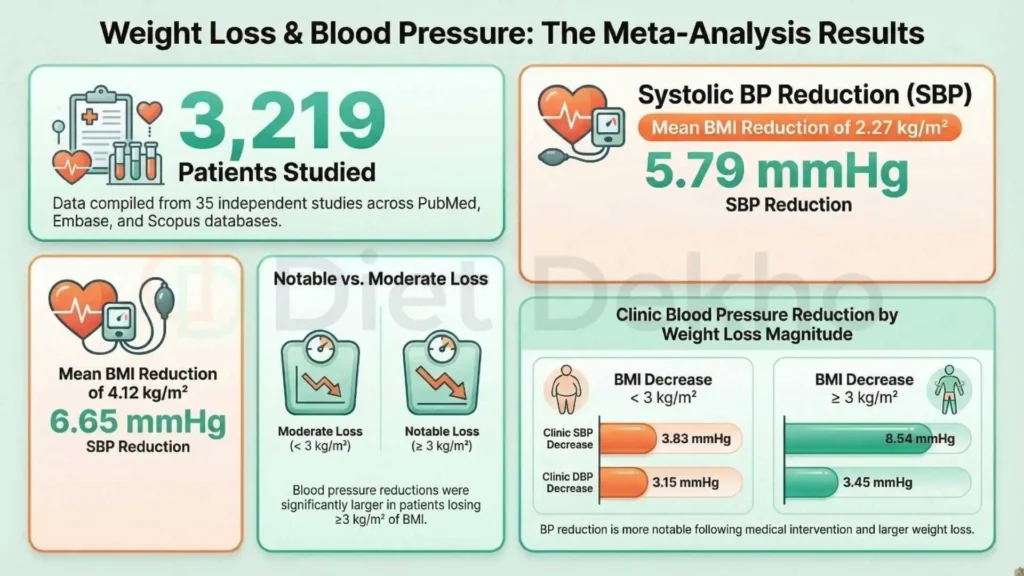
| Weight Loss (per 1 kg) | Reduced cardiac load | Lowers SBP by 1 mmHg |
| Hibiscus Tea (2 cups/day) | ACE inhibition/Diuretic | Lowers SBP by 7 mmHg |
| Sodium Reduction | Decreased fluid retention | Lowers SBP by 2-7 mmHg |
Frequently Asked Questions
Q1: Can I use rock salt (Saindhava Lavana) instead of table salt?
Rock salt is often marketed as a healthier alternative. While it contains trace minerals like magnesium, it is still primarily sodium chloride. For a BP diet for obesity, the total amount of sodium matters most. Therefore, you must still limit your total intake to under 5 grams per day.
Q2: I have a desk job and no time for the gym. Is weight loss possible?
Absolutely. Weight loss is 80% nutrition. By following the Indian DASH principles and increasing your NEAT activity-like standing during calls-you can create a sufficient calorie deficit.
Q3: Why does my BP spike even when I don’t eat salty food?
Check for hidden sodium in healthy foods like brown bread or low-fat biscuits. Furthermore, stress and poor sleep can spike blood pressure. Poor sleep increases cortisol, which triggers salt retention.
Q4: Can I drink coconut water if I have high blood pressure?
Yes, coconut water is an excellent source of potassium. However, it does contain natural sugars. If you are also managing obesity, limit it to once a day or a few times a week.
Q5: Is it true that I should avoid pickles and papads entirely?
For the first few months, it is best to avoid them. They are extremely high in sodium and cause immediate water retention. Once your BP is stable, you may have them as a very rare treat.
Contact Us
We understand how overwhelming nutrition and weight loss information can feel. With so many opinions and confusing advice online, it’s easy to feel stuck or unsure about what to do next.
At Diet Dekho, you never have to figure it out alone. You can contact us anytime with any questions or concerns. Our expert dietitians are available 24/7 to guide, support, and help you stay on track. Whether your goal is weight loss or building healthier habits, we’re here to make the journey simpler and more sustainable for you.
Disclaimer
This blog is intended to help readers make healthier food choices. Your health should always be the top priority. Before starting any restrictive or special diet, especially if you have a medical condition or health concern, please consult a doctor or a qualified dietitian. Each body responds differently to food and lifestyle changes. Always choose what is safe and suitable for you.

Abhinav is the Founder of Diet Dekho, helping people manage weight and lifestyle health through simple, practical nutrition and personalized diet plans.