I want you to imagine a typical Tuesday evening in your home. You have just finished a long day at work, and you sit down to a comforting plate of dal, roti, and a little bit of mango pickle. You might reach for a papad to add that satisfying crunch. A few hours later, you notice your fingers feel a bit swollen, or perhaps you feel a nagging thirst that just won’t go away. This is exactly how many of my clients realize they need to reduce salt intake for their long-term health. I know it is hard to find time for complicated diet changes when you are balancing a career and a household, but the small choices you make in your kitchen can change your life.
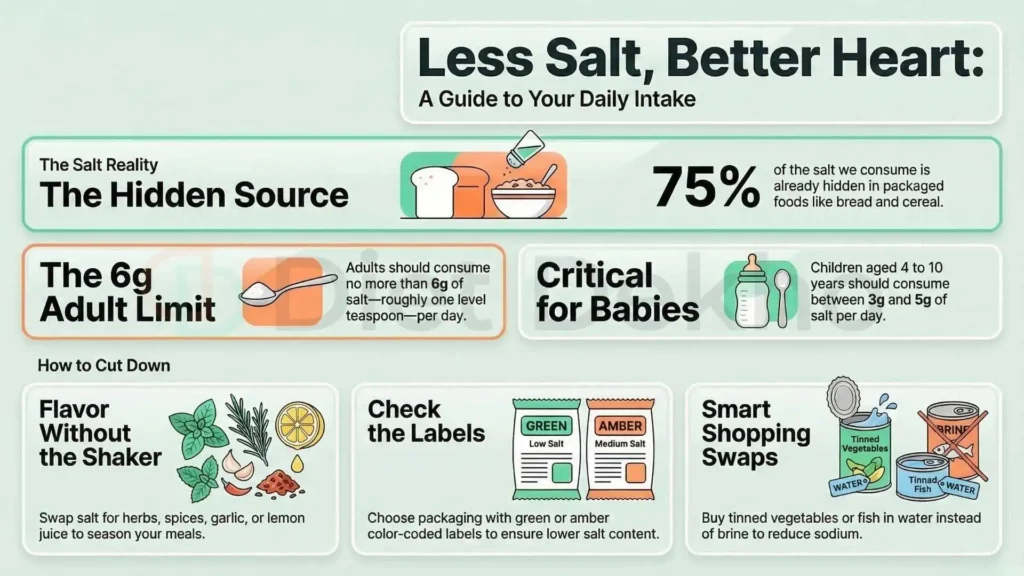
To reduce salt intake effectively, you must swap high-sodium accompaniments like pickles and papads for fresh souring agents such as lemon, amchur, or tamarind while gradually cutting back added salt during cooking. Aim for less than 5 grams of salt daily, which is about one teaspoon, to lower blood pressure and protect your heart.
The Silent Epidemic in Indian Households
What we are seeing across India right now is a silent health crisis that often starts at the dinner table. Most of us grew up thinking that salt is just a way to make food taste better, but the numbers tell a much more serious story. According to the Indian Council of Medical Research (ICMR) and the World Health Organization (WHO), we are currently consuming salt at levels that are nearly double the recommended safety limits. While the global guideline suggests staying under 5 grams of salt per day, the average Indian adult is consuming about 11 grams.
What this means for your daily routine is that your body is constantly working overtime to process this excess sodium. In urban areas like Delhi or Mumbai, the consumption can reach as high as 9.2 grams, while rural areas average around 5.6 grams. Even though rural consumption is lower, it still exceeds the safety threshold. This isn’t just a matter of seasoning; it is a major contributor to hypertension, stroke, and kidney disease.

A Closer Look at Consumption Statistics
When we look at the data from different regions in India, we see how cultural habits influence our health. For instance, research conducted in Tamil Nadu showed an average intake of 13.20 grams per day, whereas regions like Kashmir have recorded even higher numbers due to traditional salty teas and preserved foods.
| Region/Study Group | Average Daily Salt Intake (g) | Methodology |
| National Average (ICMR) | 11.0 | 24-hour urine/Spot urine |
| Urban Indians | 9.2 | Population surveys |
| Rural Indians | 5.6 | Population surveys |
| Tamil Nadu | 13.2 | 24-hour urinary sodium |
| Delhi & Haryana | 8.59 | 24-hour urinary sodium |
| Kashmir | 21.88 | 24-hour urinary sodium |
The ICMR has warned that excessive dietary salt is a major contributor to the 1.89 million deaths associated with high sodium intake globally each year. In response, initiatives like Project Namak have been launched in states like Punjab and Telangana to help communities understand how to lower these numbers.

Why Our Bodies Struggle with Excess Salt
I want to explain what happens inside you when you eat that extra pinch of salt, but without using a lot of medical jargon. Think of your blood vessels like garden hoses. When you consume too much sodium, your body holds onto extra water to dilute that salt. This extra water increases the amount of blood flowing through your veins and arteries, which puts more pressure on the hose walls.
This isn’t just about a number on a blood pressure monitor. Over time, that high pressure makes your blood vessels stiffer and less flexible. This process, known as endothelial dysfunction, reduces the production of nitric oxide, which is the natural gas your body uses to help blood vessels relax and widen. When your vessels can’t relax, your heart has to pump much harder to get blood to your organs.
The Impact on Your Vital Organs
When your heart is forced to work this hard every single day, the muscle in the main pumping chamber can become thick and bulky. While being muscular is good for your arms, it is not good for your heart. This thickening can eventually lead to heart failure because the heart becomes too stiff to pump efficiently.
Your kidneys also bear a heavy burden. They are the primary filters that remove excess sodium from your blood. When you eat too much salt, the high pressure damages the tiny, delicate filters in your kidneys. This can lead to a vicious cycle: damaged kidneys can’t remove salt well, which raises blood pressure even further, causing more kidney damage.
| Organ System | Biological Impact of High Sodium | Long-Term Risk |
| Cardiovascular | Arterial stiffness and water retention | Stroke and Heart Attack |
| Renal (Kidneys) | Pressure on filtration units | Chronic Kidney Disease |
| Skeletal | Calcium loss in urine | Osteoporosis |
| Brain | Impaired circulation/Silent strokes | Vascular Dementia |
| Eyes | Damage to retinal arteries | Vision loss or Blindness |
I know it sounds overwhelming, but the good news is that your body is remarkably resilient. When you reduce salt intake, your blood pressure can show improvement within just a few weeks.

Identifying the Hidden Salt Traps
One of the biggest challenges we face in India is that our salt doesn’t just come from the shaker on the table. In fact, for many of us, about 70% to 75% of our salt intake comes from home-cooked meals and traditional accompaniments that we don’t even realize are salty.
Let’s look at the sodium bombs that might be sitting in your pantry right now. I call them traps because they often taste spicy or tangy rather than just salty, so our brain doesn’t register the danger.
The Traditional Accompaniments
I know a meal feels incomplete without a little bit of crunch or tang. But items like pickles (achar) and papads are concentrated sources of sodium. Pickles use heavy brining to prevent spoilage, and papads use sodium-based additives to get that specific texture.
| Traditional Food | Estimated Sodium Content | Why it is high |
| Mango/Mixed Pickle | 200–300 mg per tablespoon | Salt used as a preservative |
| Commercial Papad | 1,219–4,000 mg per 100g | Contains sodium bicarbonate |
| Store-bought Chutney | Varies (High) | Black salt and preservatives |
| Chaat Masala | 200–990 mg per teaspoon | High in black salt (Kala Namak) |
What this means for your daily routine is that having just two papads and a spoonful of pickle can take you over half of your daily salt limit before you even count the salt in your main sabzi or dal.

The Busy Professional’s Dilemma
If you are a busy professional, I know how hard it is to stay healthy when you are constantly on the move. Between office meetings, commuting, and travel, it is easy to reach for healthy diet snacks. But here is a secret: many diet chivdas or roasted namkeens are loaded with salt to make them taste good after the fat is removed.
When you are at the office, the canteen food can be a major source of hidden sodium. Chefs often add salt at multiple stages-during marination, during cooking, and as a final seasoning-to ensure the taste is consistent. If you find yourself eating out often, it is helpful to follow the Half-Salt Rule. Simply ask the server if the chef can prepare your dish with half the usual amount of salt. Most restaurants are happy to help.
Smart Choices for the Office Canteen
I know you’re busy, but taking a moment to choose your lunch wisely can make a huge difference in how you feel by 4 PM. High-salt meals often cause a sodium slump where you feel sluggish and bloated in the afternoon.
- Choose Tandoori over Gravy: Grilled items like tandoori chicken or paneer tikka are usually marinated in yogurt and spices. While they have salt, they are often lower in sodium than heavy, cream-based curries or Makhani dishes where salt is hidden in the sauce.
- Skip the Bread: Commercial bread and pav are surprisingly high in sodium. They use salt as a dough conditioner. Opt for plain steamed rice or a home-made roti without added salt.
- The Raita Rescue: If you must eat a salty curry, pair it with a large bowl of plain curd or raita. The potassium in the yogurt can help your body manage the sodium better.

The Homemaker’s Kitchen Masterclass
If you are the one managing the kitchen, you have the most powerful role in protecting your family’s health. I know it’s hard to find time to cook everything from scratch, but you don’t have to change everything overnight. Let’s simplify this by focusing on how you season your food.
A common habit in Indian kitchens is adding salt to the dough for rotis or parathas. What this means for your daily routine is that you are consuming salt in every single bite of your meal, even the parts that aren’t supposed to be the star. Try leaving the salt out of the dough entirely. I promise that once you have a flavorful dal or sabzi on the side, you won’t even miss it.
The Late Salt Technique
One of my favorite hacks for homemakers is adding salt at the very end of the cooking process. When you add salt at the beginning, it gets absorbed into the food and you need more of it to taste it. If you sprinkle a much smaller amount at the end, the salt sits on the surface of the food. It hits your taste buds immediately, giving you the same satisfaction with much less sodium.
| Step | Action | Benefit |
| Preparation | Don’t add salt to dough or rice water | Removes 15-20% of daily intake |
| Cooking | Use fresh garlic, ginger, and green chilies | Adds heat and flavor without salt |
| Finishing | Add salt only after the flame is off | Salt stays on the surface for more taste |
| Serving | Replace table salt with a wedge of lemon | Souring agents activate the same sensors |
I know it’s hard to change family habits, but you can do this gradually. Start by reducing the salt in one dish a day and see how everyone reacts. Most people don’t even notice a 10-15% reduction in salt.

Souring Agents: The Real Flavor Heroes
In our Indian kitchens, we are blessed with an incredible variety of souring agents. These are your best friends when you want to reduce salt intake. Scientific research shows that sour tastes and salty tastes are processed in similar ways by our brain. When you add something tangy to your food, your brain feels satisfied even if the salt is low.
I always tell my clients to think of lemon as their liquid salt. Squeezing fresh lemon juice over a bowl of yellow dal or a fresh salad provides that zing we usually look for in salt. But lemon isn’t our only option.
Exploring Regional Souring Agents
Depending on where you are from, you might have access to these wonderful ingredients. They add depth and complexity to your food that salt simply cannot match.
- Amchur (Dry Mango Powder): This is perfect for dry sabzis like bhindi or aloo jeera. It provides a sharp, clean sourness. Just be sure to buy pure amchur and not a chaat masala mix which often has hidden salt.
- Tamarind (Imli): Essential for South Indian cooking, tamarind adds a rich, earthy tang to rasam and sambar. I recommend soaking the pulp yourself rather than using store-bought pastes which might have preservatives.
- Kokum: This is a star of coastal Indian cooking. It has a beautiful deep red color and a subtle, fruity acidity. It’s wonderful in fish curries or even just soaked in water as a refreshing drink.
- Anardana (Dried Pomegranate Seeds): Frequently used in North Indian dishes, it adds a bit of crunch and a sweet-sour flavor that works beautifully with chickpeas (chole).
Using these ingredients means you are not just removing salt; you are adding flavor. This shift in mindset is what makes a low-sodium lifestyle sustainable.
Potassium: Your Heart’s Best Friend
While we talk a lot about reducing sodium, we also need to talk about increasing potassium. Potassium is like a natural antidote to salt. It helps your blood vessels relax and assists your kidneys in flushing out the excess sodium from your blood. Cardiologists often call it the magic mineral for your heart.
The ICMR notes that while Indians eat too much salt, we often eat too little potassium-rich food like fruits and vegetables. Adding more potassium to your diet is one of the simplest things you can do to protect your blood pressure.
Top Indian Sources of Potassium
You don’t need fancy superfoods to get your daily potassium. Our local markets are full of them.
| Food Item | Why it helps | How to eat it |
| Banana | High potassium, low sodium | Perfect as a pre-work or mid-day snack |
| Coconut Water | Natural electrolyte balance | Drink fresh in the morning instead of tea |
| Spinach (Palak) | Relaxes blood vessels | Add to dals or make a quick stir-fry |
| Curd (Dahi) | Probiotics + Potassium | A bowl with every meal helps flush salt |
| Sweet Potato | Complex carbs + Potassium | Roasted as an evening snack |
I know it’s hard to find time for a full meal sometimes, but just grabbing a banana or a glass of coconut water can help your body deal with the salt you might have eaten earlier in the day. However, if you have any history of kidney issues, please talk to your doctor before significantly increasing your potassium intake.
Smart Restaurant and Takeout Ordering
Let’s be realistic: we all enjoy a meal out or a quick takeout on a busy Friday night. You don’t have to give this up entirely to reduce salt intake. It’s all about being a detective with the menu. Most Indian restaurant food is designed to be bold, which usually means it’s high in salt, oil, and sugar.
When you open a menu, look for keywords. Anything labeled Makhani, Korma, Malai, or Butter is a red flag. These dishes rely on heavy, cream-based gravies that hide a lot of salt to balance the fat.
The Low-Sodium Diner’s Checklist
- Ask for Fresh Prep: Street foods like Bhel Puri or Chaat are assembled on the spot. Ask them to skip the chaat masala or use only half the chutney. You still get the crunch and the freshness with much less salt.
- The Bread Selection: A plain Tandoori Roti is much better than a Naan or a Rumali Roti. Naan dough is often fermented with baking soda and salt, and then brushed with salted butter.
- Lentils over Paneer: A yellow Dal Tadka is usually a safer bet than a Paneer Butter Masala. If you ask the chef to go easy on the tadka (tempering), you can significantly reduce both salt and oil.
- Drink Water: Avoid salty lassis (chaas) or sodas. Plain water or a fresh lime soda (without salt or sugar) is the best way to stay hydrated without adding to your sodium load.
I know it might feel awkward to ask for changes at first, but your health is worth it. Most good restaurants are used to these requests now.
Salvaging Kitchen Disasters
We have all been there. You are cooking for a guest or your family, you get distracted, and suddenly you’ve added the salt twice. Don’t worry, you don’t have to throw the food away. There are several ways to fix a salty dish while keeping the flavor intact.
The most famous trick is the Potato Sponge. Peel a raw potato, cut it into large chunks, and drop it into your salty curry or dal. Let it simmer for 15-20 minutes. The potato acts like a sponge, soaking up the salty liquid. Just remember to take the potatoes out before you serve the dish!
Other Quick Fixes for Over-Salty Food
| Method | How to do it | Best for |
| The Flour Ball | Drop 2-3 balls of kneaded atta into the gravy | Thick curries or dals |
| The Dairy Boost | Add a few spoons of fresh cream or curd | Tomato-based gravies |
| The Acid Balance | Squeeze extra lemon or add a dash of vinegar | Dry sabzis or light soups |
| The Volume Fix | Add more unsalted boiled veggies or lentils | Increasing the quantity to dilute salt |
What this means for your daily routine is that you can still enjoy your cooking even if you make a mistake. Adding a little bit of sugar or jaggery can also help balance the taste, though it doesn’t remove the sodium, it just masks the saltiness.
Retraining Your Taste Buds: The 21-Day Journey
The most important thing I want you to know is that your taste buds are not fixed. They are actually very adaptable. If you have grown up eating very salty food, your brain has been conditioned to think that normal is bland. But research shows that if you gradually reduce your salt, your taste receptors become more sensitive.
In about two to three weeks, your palate will reset. You will start to notice the natural sweetness in a carrot or the earthy flavor of whole wheat. I know it’s hard for the first few days, but I promise that after 21 days, the food you used to find perfect will actually taste unpleasantly salty to you.
Your 3-Week Transition Plan
- Week 1: Stop adding salt to your roti dough and rice. This is the easiest hidden salt to remove.
- Week 2: Cut the salt in your main dishes by 25%. Use extra garlic, ginger, and lemon to make up for it.
- Week 3: Eliminate the daily papad and pickle. Replace them with fresh chutneys made of mint, coriander, and lemon.
I know it’s hard to find time for big changes, but this step-by-step approach makes it manageable for even the busiest professional.
Myths vs. Facts: The Salt Debate
In my years at DietDekho, I have heard many myths about salt. Let’s clear some of them up so you can make the best choices for your family.
One of the most common myths is that Sendha Namak (Rock Salt) or Himalayan Pink Salt is perfectly safe for people with high blood pressure. I hear this all the time! But the truth is that these salts are still primarily sodium chloride. While they might have tiny amounts of minerals, they raise your blood pressure in the exact same way as regular table salt.
Common Salt Misconceptions
| Myth | The Reality |
| I only use pink salt, so I’m safe. | Pink salt is about 98% sodium chloride. It is not a low-sodium food. |
| I don’t add salt at the table, so my intake is low. | 75% of Indian salt intake is hidden in cooking and snacks. |
| If I sweat a lot, I need more salt. | Unless you are an elite athlete, your normal diet already has more than enough salt. |
| Salty food always tastes salty. | Biscuits, bread, and even some cereals have high hidden sodium. |
What this means for your daily routine is that you should focus on the total amount of salt, not just the type of salt. Also, remember that most specialty salts are not iodized. If you switch completely, you might risk an iodine deficiency, so it’s best to use a small amount of iodized salt as part of your limit.
The Long-Term Reward: A Healthier You
I know it’s hard to keep motivated when you don’t see immediate results like you might on a scale. But the changes happening inside your body when you reduce salt intake are profound. You are literally adding years to your life.
Within months of reducing salt, many of my clients find they have more energy and less bloating. Their doctors are often able to reduce their blood pressure medication dosage. You are protecting yourself from the leading cause of stroke and heart disease in India.
Expert Advice from the Field
As Dr. Rahul Gupta, a leading cardiologist, points out, high sodium levels are a primary risk factor for not just heart disease, but also kidney problems and even gastric cancer. Another expert, Dr. Dmitry Yaranov, emphasizes that cutting salt is your first line of defense against the silent killer that is hypertension.
I know you want the best for your family. By making these changes in your kitchen today, you are setting a powerful example for your children and ensuring that you will be there for all their big moments in the future.
Frequently Asked Questions (FAQs)
1. How can I reduce salt intake if I eat out frequently for work?
The best way to reduce salt intake when eating out is to follow the Half-Salt Rule. Ask your server to have the chef prepare your meal with half the usual salt and skip the extra butter or cream. Choose grilled items like tandoori chicken or paneer over heavy, salty gravies.
2. Are there any healthy Indian snacks that are low in sodium?
Yes! You can enjoy roasted makhana (fox nuts), unsalted roasted chana, or fresh fruit chaat with a squeeze of lemon and a pinch of black pepper. Avoid packaged diet snacks, as these are often high in hidden sodium to maintain flavor.
3. Will my food taste bland if I reduce salt intake?
Initially, it might feel different, but you can use flavor boosters like lemon, ginger, garlic, amchur, and fresh coriander to add depth. Your taste buds will reset in about 2-3 weeks, and you will begin to enjoy the natural flavors of your food more than ever.
4. Is Himalayan Pink Salt better for blood pressure than regular salt?
No. This is a common myth. Himalayan Pink Salt and Rock Salt (Sendha Namak) are still primarily sodium chloride and will raise your blood pressure just like regular table salt. The key is to reduce the total quantity of any salt you use.
5. How much salt should a person with high blood pressure have daily?
The WHO and ICMR recommend staying under 5 grams of salt per day (about one teaspoon). If your blood pressure is already high, your dietitian might even suggest aiming for closer to 3.75 grams (1,500 mg of sodium) for better results.
Contact Us
We understand how overwhelming nutrition and weight loss information can feel. With so many opinions and confusing advice online, it’s easy to feel stuck or unsure about what to do next.
At Diet Dekho, you never have to figure it out alone. You can contact us anytime with any questions or concerns. Our expert dietitians are available 24/7 to guide, support, and help you stay on track. Whether your goal is weight loss or building healthier habits, we’re here to make the journey simpler and more sustainable for you.
Disclaimer
This blog is intended to help readers make healthier food choices. Your health should always be the top priority. Before starting any restrictive or special diet, especially if you have a medical condition or health concern, please consult a doctor or a qualified dietitian. Each body responds differently to food and lifestyle changes. Always choose what is safe and suitable for you.

Abhinav is the Founder of Diet Dekho, helping people manage weight and lifestyle health through simple, practical nutrition and personalized diet plans.