
The morning rush in an Indian household often begins with the whistle of a pressure cooker or the urgent sound of an alarm. A busy professional might grab a quick cup of salted tea and a biscuit before heading into a long commute. Meanwhile, a homemaker might prioritize the needs of children and elders while ignoring a persistent, dull headache. These common daily scenes often hide a growing cardiovascular concern that requires specific lifestyle changes for high BP. When the heart works harder than necessary to pump blood, it places a quiet strain on the entire body. Most people do not even realize their blood pressure is rising until a routine health check reveals concerning numbers. This situation is particularly common among those who feel they have no time for the gym or complicated health routines.
Lifestyle changes for high BP involve adopting a low-sodium diet and increasing physical activity to lower arterial pressure naturally. Professionals and homemakers can achieve this by following the DASH eating plan, which emphasizes fruits and vegetables. Reducing salt to under 1,500 mg daily and ensuring 7 to 9 hours of quality sleep are also essential steps. These habits improve heart efficiency and prevent long-term complications like stroke or heart failure.
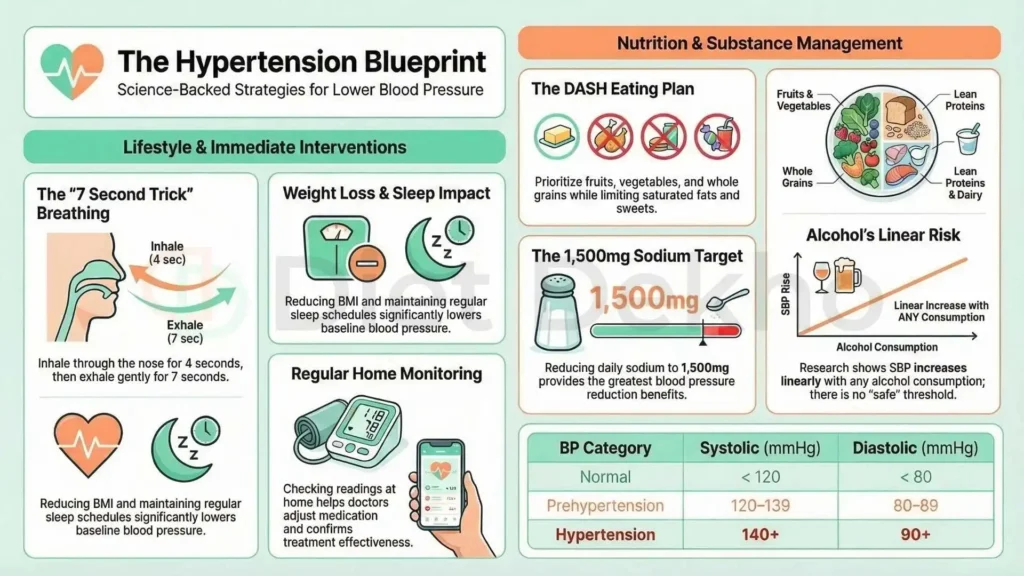
The rising burden of hypertension in the Indian demographic
The prevalence of high blood pressure in India has reached a critical stage according to recent health surveys. Approximately 20 crore adults in the country live with this condition, yet only a small fraction has it under control. Data from the National Family Health Survey (NFHS-5) suggests that hypertension affects roughly one in four men and one in five women. These numbers reflect a growing public health crisis that spans across urban and rural landscapes.
What this means for the daily routine is that proactive monitoring is no longer optional for those over thirty. The Indian middle class often develops hypertension nearly ten years earlier than people in Western countries. This early onset is frequently linked to a genetic predisposition toward insulin resistance and higher levels of visceral fat. Stressful urban environments and dietary transitions toward processed foods also play significant roles in these rising numbers.
| Demographic Group | Estimated Prevalence (NFHS-5) | Control Rate |
| Indian Adult Males | 24.0% | ~10% |
| Indian Adult Females | 21.3% | ~10% |
| Urban Population | 13.53% (JNC-7 criteria) | Low |
| Rural Population | 11.98% (JNC-7 criteria) | Low |
The data indicates that individuals in the highest wealth quintile and those with a BMI over 25 face the greatest risks. However, the silent nature of the condition means many remain undiagnosed for years. Improving awareness about lifestyle changes for high BP is essential for reversing these trends before they lead to irreversible organ damage.
Understanding the physiological mechanism of high blood pressure
To manage the condition effectively, it is helpful to understand how blood pressure works within the body. It represents the force of blood pushing against the walls of the arteries as the heart pumps. When this force remains consistently high, it causes tiny tears in the inner lining of the blood vessels. This damage is known as endothelial dysfunction.
Once the arterial lining is damaged, it becomes easier for cholesterol and other fats to stick to the walls. This leads to the formation of plaque, which eventually narrows the arteries and restricts blood flow. The heart must then pump even harder to move blood through these narrower passages. This creates a dangerous cycle of increasing pressure and further vascular damage.
Lifestyle changes for high BP target this mechanism by reducing the volume of blood and relaxing the vessels. Sodium plays a central role here because it attracts water into the bloodstream. High levels of salt intake lead to an influx of water, which increases the total amount of blood in the vessels. By lowering salt and increasing minerals like potassium, the body can naturally flush out excess fluid and ease arterial tension.
The impact of dietary sodium on cardiovascular health
Reducing salt intake is perhaps the most powerful of all lifestyle changes for high BP. Most Indian households consume far more salt than the recommended five grams per day. The average intake often reaches eleven grams daily, which significantly elevates heart risks. Sodium causes the body to retain water, which puts direct pressure on the heart and kidneys.
| Sodium Intake Level | Impact on Systolic BP | Impact on Diastolic BP |
| High (> 3,000 mg/day) | Baseline | Baseline |
| Moderate (2,300 mg/day) | -2 to -4 mm Hg | -1 to -2 mm Hg |
| Low (1,500 mg/day) | -5 to -6 mm Hg | -3 to -4 mm Hg |
| DASH + Low Sodium | -11.5 mm Hg | -6 to -8 mm Hg |
Research shows that even a small reduction in daily salt can lower blood pressure by 2 to 8 mm Hg. For those over fifty-one or those with existing diabetes, a limit of 1,500 mg per day is ideal. This requires more than just stopping the use of the salt shaker at the table. It involves identifying hidden sources of sodium in common Indian foods.
Identifying hidden sodium in the Indian kitchen
Many items that seem healthy can be high in salt. Pickles, papads, and commercial chutneys are staple parts of many meals but contain excessive sodium for preservation. Canteen gravies and restaurant meals often use high amounts of salt and MSG to enhance flavor. Processed snacks like bhujia, biscuits, and salted peanuts are major contributors to daily sodium loads.
| Common Indian Food | Sodium Risk | Heart-Healthy Alternative |
| Mango Pickle | Very High | Fresh lime juice or amchur |
| Roasted Papad | High | Fresh cucumber or carrot salad |
| Salted Biscuits | Moderate | Unsalted roasted makhana |
| Store-bought Chutney | High | Home-made mint-coriander chutney |
What this means for your daily routine is that cooking from scratch becomes a vital health strategy. When meals are prepared at home, there is total control over the ingredients. Using herbs and spices like garlic, ginger, and cumin can provide a rich taste without the need for excess salt.
Behavioral strategies for reducing salt
It is often hard to change taste preferences overnight. However, the taste buds can adapt to lower salt levels over a few weeks. One effective method is to replace table salt with pungent spices like black pepper or lemon juice. Garlic is particularly beneficial as it naturally helps relax blood vessels.
Homemakers can reduce sodium by not adding salt to the dough when making rotis. Using roasted cumin powder or dry mango powder can add depth to dals and vegetable curries. Reading food labels is also a necessary habit for the modern shopper. Looking for terms like low sodium or no salt added can help in making better choices at the grocery store.
The role of potassium in blood pressure management
While salt raises pressure, potassium is the nutrient that helps lower it. It works as a natural foil to sodium by helping the body excrete excess salt through urine. Potassium also helps ease the tension in the walls of the blood vessels, which further reduces pressure readings.
| Potassium-Rich Food | Approx. Potassium Content | Daily Benefit |
| One Banana | 422 mg | Supports sodium excretion |
| One Sweet Potato | 541 mg | Relaxes arterial walls |
| Half cup Spinach | 420 mg | Improves vascular flexibility |
| One cup Coconut Water | 600 mg | Natural electrolyte balance |
Research suggests that increasing dietary potassium can reduce the risk of stroke by 24%. For the busy professional, a banana or a handful of dates serves as an excellent mid-morning snack. Homemakers can easily include spinach or methi in their daily dal or parathas to boost potassium levels.
Adopting the DASH eating plan in an Indian context
The Dietary Approaches to Stop Hypertension (DASH) diet is a proven framework for blood pressure control. It focuses on eating more fruits, vegetables, whole grains, and low-fat dairy while limiting saturated fats. In India, this can be easily adapted using local ingredients that are both affordable and familiar.
For a professional, this might mean swapping a white rice lunch for millets like jowar or bajra. These grains are higher in fiber and minerals that support heart health. Including a bowl of curd or buttermilk without added salt provides the necessary calcium and probiotics that have been linked to healthier pressure levels.
Indian whole grains and heart health
Whole grains are a fundamental part of lifestyle changes for high BP because they provide fiber and magnesium. Fiber helps keep the digestive system healthy and may prevent blood sugar spikes that indirectly affect the heart. Magnesium acts as a natural calcium channel blocker, helping the blood vessels to dilate more easily.
| Indian Grain | Nutritional Benefit | Daily Serving Suggestion |
| Ragi (Finger Millet) | High Calcium & Fiber | Ragi idli or dosa |
| Jowar (Sorghum) | High Magnesium | Jowar roti at lunch |
| Bajra (Pearl Millet) | High Potassium | Bajra roti with methi dal |
| Oats / Dalia | High Soluble Fiber | Vegetable upma for breakfast |
Swapping refined flours like maida for whole wheat or multigrain options is a simple shift. This provides a steady release of energy throughout the day, which is helpful for professionals facing long afternoon meetings.
Protein sources for a hypertensive diet
Choosing the right protein is also essential. Plant-based proteins like lentils, chickpeas, and moong dal are excellent because they are low in fat and high in fiber. For those who eat meat, focusing on skinless chicken or fish like rohu and mackerel is recommended over red meats.
| Protein Source | Preparation Tip | Why it helps |
| Moong Dal | Cook with turmeric and ginger | Low sodium, high fiber |
| Paneer | Use low-fat milk; do not fry | Provides calcium for vessels |
| Sprouted Chana | Add lemon and coriander | High potassium snack |
| Grilled Fish | Use minimal oil and spices | Omega-3 for arterial health |
What this means for the kitchen routine is avoiding deep-frying protein sources. Grilling, steaming, or baking are much better for maintaining the nutritional value without adding unhealthy fats.
Physical activity for the non-gym audience
Many people believe that lifestyle changes for high BP require intense workouts or expensive gym memberships. However, the most effective exercise for the heart is consistent, moderate movement. Regular aerobic exercise can lower high blood pressure by 5 to 8 mm Hg. For a busy professional or a homemaker, this can be achieved without ever stepping into a gym.
The power of brisk walking
Walking is one of the simplest and most effective forms of exercise. Brisk walking for 30 minutes daily improves blood circulation and strengthens the heart muscle. This makes the heart more efficient at pumping blood, which reduces the force on the arteries.
For a person with no time, this 30-minute goal can be broken into three 10-minute sessions. Taking a short walk after each meal is an excellent way to fit movement into a busy day. Walking at a pace that slightly elevates the heart rate but still allows for conversation is ideal for heart health.
Isometric hacks for the office environment
Recent studies have shown that isometric exercises are remarkably effective at lowering blood pressure. These are exercises where the muscles are contracted without moving a joint. A common example is the wall sit.
| Exercise | How to do it | Time required |
| Wall Sit | Lean against a wall and slide down | 30 seconds x 4 |
| Plank | Hold a push-up position on elbows | 30 seconds x 3 |
| Shoulder Rotations | Circular motions at the desk | 2 minutes |
| Stair Climbing | Use the office stairs instead of lift | 5 minutes |
During a lunch break, a professional can spend two minutes doing a wall sit. This simple act has been shown to lower systolic pressure as effectively as some aerobic exercises. These movements improve vascular function and overall fitness without requiring a change of clothes or a shower.
Movement for the homemaker
A homemaker’s day is often filled with physical tasks, but these are frequently repetitive and stressful. Turning daily chores into a form of intentional movement can help. Using the stairs more often, dancing to music while tidying up, or doing gentle stretches while the tea boils are all valid forms of activity.
The goal is to reach 150 minutes of moderate activity per week. For those who feel the word exercise is intimidating, calling it movement makes it more approachable. The heart does not care if the activity happens in a gym or a hallway; it only cares that the movement is consistent.
Weight management and metabolic health
Blood pressure often increases as body weight increases. Being higher in body weight can also cause disrupted breathing during sleep, known as sleep apnea, which further raises pressure. Losing even a small amount of weight is one of the most effective lifestyle changes for high BP.
For an adult with a BMI over 25, losing just 3% to 5% of body weight can result in noticeable improvements in blood pressure readings. This is particularly critical because Indian populations tend to carry more visceral fat around the internal organs. This type of fat is metabolically active and directly contributes to inflammation and high pressure.
| Measurement | Target for Men | Target for Women |
| BMI | 18.5 – 22.9 | 18.5 – 22.9 |
| Waist Circumference | < 40 inches (102 cm) | < 35 inches (89 cm) |
Note: For Asian populations, the healthy BMI range is lower than Western standards due to higher body fat percentages at lower weights..
Losing weight should be a gradual process through healthy eating and regular movement. Extreme diets are often hard to sustain and can lead to nutrient deficiencies. Small shifts, like reducing sugary drinks and replacing them with water, can lead to sustainable weight loss over time.
The impact of sleep on cardiovascular recovery
Quality sleep is a vital regulator of heart health. When the body sleeps, blood pressure undergoes a natural drop of about 15%. This phenomenon is known as nocturnal dipping and is essential for giving the heart and blood vessels a period of rest.
If sleep is consistently less than seven hours, the body increases its production of cortisol. This stress hormone raises blood pressure and increases sugar levels in the blood. For many Indian households, late dinners and long hours on mobile screens interfere with this recovery process.
Building a heart-friendly sleep routine
Creating a regular sleep schedule is one of the most effective lifestyle changes for high BP. Going to bed and waking up at the same time every day helps regulate the body’s internal 24-hour clock. Consistency is often more important than the total number of hours, as it reduces overall stress on the heart.
| Habit | Impact on Heart | Action Step |
| Fixed Wake-up Time | Regulates body clock | Use an alarm even on weekends |
| No Screen Time | Boosts melatonin levels | Turn off phone 1 hour before bed |
| Cool Bedroom | Promotes deeper sleep | Keep the room at a comfortable temp |
| Early Light Dinner | Reduces metabolic work | Eat 2-3 hours before sleeping |
What this means for your daily routine is prioritizing the hour before bed. Instead of scrolling through social media, reading a physical book or practicing gentle stretching can signal to the brain that it is time to wind down.
Addressing hydration and late-night snacking
Dehydration can cause blood vessels to narrow, which raises pressure. Drinking enough water throughout the day is essential. A good rule is to drink about 35 ml of water for every kilogram of body weight. However, it is better to drink more in the morning and afternoon and limit intake before bed to prevent frequent trips to the bathroom.
Avoiding salty snacks at night is also critical. Cravings often lead to chips or crackers, which are high in hidden sodium. This excess salt causes fluid retention overnight, which disrupts the natural blood pressure dip during sleep.
Managing stress through breathing and mindfulness
Chronic stress is a hidden contributor to hypertension in both professional and home settings. When the body is stressed, the nervous system stays in a state of high alert. This raises the heart rate and constricts blood vessels, keeping blood pressure higher for longer than is healthy.
Learning how to manage stress is a vital part of lifestyle changes for high BP. Simple techniques can be practiced anywhere, from a desk to a kitchen counter. They help shift the nervous system from a state of tension to one of relaxation.
The 2-minute breathing exercise
One of the fastest ways to lower blood pressure naturally is through controlled breathing. Cardiologists recommend a simple technique that takes less than two minutes.
- Inhale through the nose for 4 seconds.
- Exhale slowly for 6 to 8 seconds.
- Repeat this for 2 minutes.
Longer exhalations stimulate the body’s calming response. This lowers vascular resistance and can drop systolic pressure within minutes. Research on slow breathing has shown reductions of 5 to 10 mm Hg when practiced consistently.
Mindfulness for the busy lifestyle
I know it is hard to find time for long meditation sessions, but mindfulness does not have to be complicated. It can be as simple as spending five minutes in quiet reflection or practicing gratitude. Taking a few minutes each morning to breathe deeply before reaching for a phone can set a calm tone for the rest of the day.
For the professional, this might mean taking a minute to relax the shoulders and breathe before answering a difficult email. For the homemaker, it could be enjoying a cup of herbal tea without distractions. These small moments of calm help reduce the cumulative stress load on the heart.
Practical meal planning for the Indian lifestyle
Success with lifestyle changes for high BP often depends on preparation. When a person is hungry and rushed, they are more likely to choose unhealthy, salty foods. Planning meals ahead of time can prevent these situations.
The Sunday prep guide for professionals
For those working in offices, the canteen is often a sodium trap. Batch-prepping on a Sunday can ensure a heart-healthy tiffin is ready every morning.
- Lentils and Pulses: Boil a large batch of chickpeas or moong dal. These can be used in salads, wraps, or as a quick sabzi during the week.
- Vegetable Prep: Wash and chop vegetables like carrots, bell peppers, and broccoli. Having them ready reduces the time needed for evening cooking.
- Base Masalas: Prepare an onion-tomato-ginger paste without salt. Freeze it in small portions. This allows for a healthy curry to be made in under 15 minutes.
Restaurant and social dining strategies
Eating out is a part of modern life, but it does not have to ruin progress. Making smart choices on the menu can keep sodium and fats in check.
| Dining Scenario | Better Choice | Why it helps |
| Indian Restaurant | Tandoori Roti & Yellow Dal | Lower fat and sodium than Naan |
| Office Party | Grilled Chicken or Paneer | Avoids deep-fried starters |
| Quick Lunch | Vegetable Poha or Upma | Less oil than a burger or samosa |
| Wedding Feast | Focus on the salad and dal | Limits heavy cream-based curries |
What this means for your daily routine is being the person who asks for less salt or for oil to be kept on the side. Most chefs are happy to accommodate these requests if they are made politely.
Monitoring and medical adherence
Adopting lifestyle changes for high BP is a critical part of management, but it should not replace medical advice. For many, a combination of healthy habits and medication is necessary to keep numbers in a safe range.
The importance of regular check-ups
Hypertension is often called a silent killer because it usually has no symptoms until it is severe. Regular monitoring is the only way to know if lifestyle changes are working. People over 40 should have their blood pressure checked at least once a year, while those with a family history should check more often.
| BP Category | Frequency of Check | Recommended Action |
| Normal (<120/80) | Every 2 years | Maintain healthy habits |
| Elevated (120-129/<80) | Every 3-6 months | Start lifestyle modifications |
| Stage 1 (130-139/80-89) | Every month | Lifestyle changes + possible meds |
| Stage 2 (>140/>90) | Regularly | Lifestyle changes + medications |
Tips for home monitoring
Checking blood pressure at home can provide a more accurate picture than a single reading in a doctor’s office. It is best to take readings at the same time each day, such as in the morning before breakfast.
- Preparation: Sit quietly for five minutes before taking the measurement. Do not talk or move during the reading.
- Position: Sit with the back supported and feet flat on the floor. Keep the arm at the level of the heart.
- Repetition: Take two or three readings a few minutes apart and record the average.
Addressing common misconceptions about hypertension
There are several myths that can hinder effective management. One common belief is that one can feel when their blood pressure is high. While some people get headaches, most do not feel any different even when their readings are in a dangerous range.
Another myth is that salt should be completely eliminated. The body does need a small amount of sodium to function, but the goal of lifestyle changes for high BP is to bring it down to a healthy level, typically under 2,300 mg for most adults. Some people also believe that rock salt or pink salt is perfectly safe. While these may have different minerals, they are still primarily sodium and must be limited.
FAQ
Q1. What are the most important lifestyle changes for high BP?
The most effective steps are reducing daily sodium intake, following the DASH eating plan, losing excess weight, and engaging in regular physical activity. Managing stress and getting 7 to 9 hours of quality sleep also play crucial roles in lowering readings.
Q2. Can I lower my blood pressure without medication?
In cases of elevated blood pressure or Stage 1 hypertension with low cardiovascular risk, lifestyle changes alone may bring readings back to a normal range. However, for many individuals, a combination of healthy habits and prescribed medication is the safest approach.
Q3. How much salt should I eat daily for heart health?
Most medical guidelines recommend limiting sodium to less than 2,300 mg per day. For those with hypertension, diabetes, or over the age of 51, the ideal target is 1,500 mg or less, which is about two-thirds of a teaspoon of total salt.
Q4. What Indian foods help in lowering blood pressure?
Foods rich in potassium and magnesium are best. These include millets like ragi and jowar, leafy greens like spinach and methi, bananas, coconut water, and lentils. Using garlic, ginger, and turmeric in cooking also supports vascular health.
Q5. Does stress management really help lower blood pressure?
Yes. Stress triggers the sympathetic nervous system, which raises heart rate and constricts blood vessels. Techniques like deep breathing and mindfulness activate the parasympathetic nervous system, which helps the body relax and reduces arterial pressure.
Contact Us
We understand how overwhelming nutrition and weight loss information can feel. With so many opinions and confusing advice online, it’s easy to feel stuck or unsure about what to do next.
At Diet Dekho, you never have to figure it out alone. You can contact us anytime with any questions or concerns. Our expert dietitians are available 24/7 to guide, support, and help you stay on track. Whether your goal is weight loss or building healthier habits, we’re here to make the journey simpler and more sustainable for you.
Disclaimer
This blog is intended to help readers make healthier food choices. Your health should always be the top priority. Before starting any restrictive or special diet, especially if you have a medical condition or health concern, please consult a doctor or a qualified dietitian. Each body responds differently to food and lifestyle changes. Always choose what is safe and suitable for you.

Abhinav is the Founder of Diet Dekho, helping people manage weight and lifestyle health through simple, practical nutrition and personalized diet plans.