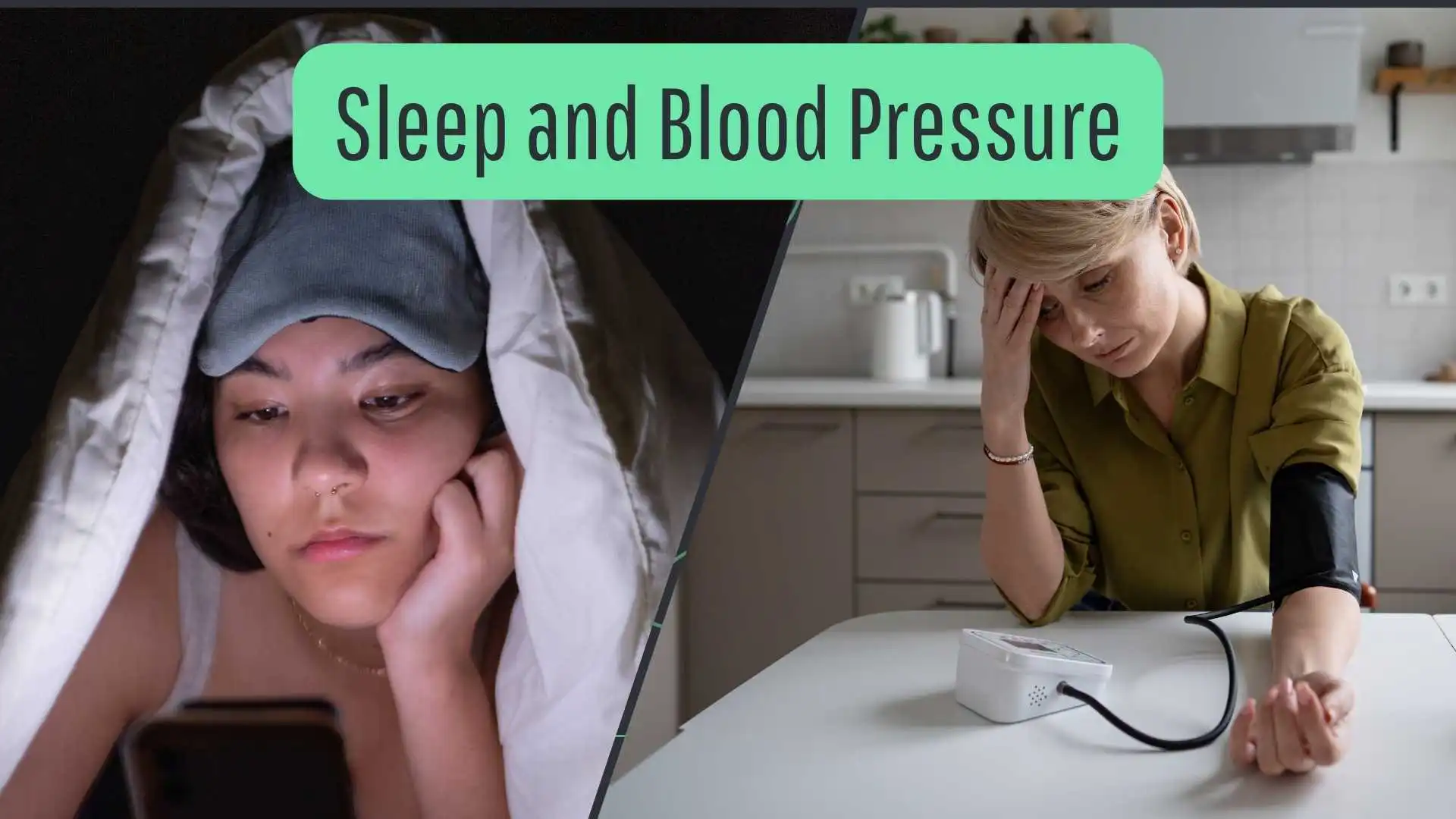
Do you find yourself staring at the ceiling at 2 AM, mentally ticking off tomorrow’s to-do list while your heart feels like it’s pounding against your ribs? I’ve spent years at DietDekho helping busy people just like you, and I’ve noticed that when we talk about sleep and BP, most feel they have to choose between a successful career and a healthy heart.
To manage your blood pressure effectively, you need seven to nine hours of quality sleep to allow your heart rate to slow and your vessels to relax. This natural nocturnal dipping process reduces the strain on your cardiovascular system, preventing the chronic inflammation and sympathetic overdrive that lead to sustained hypertension.
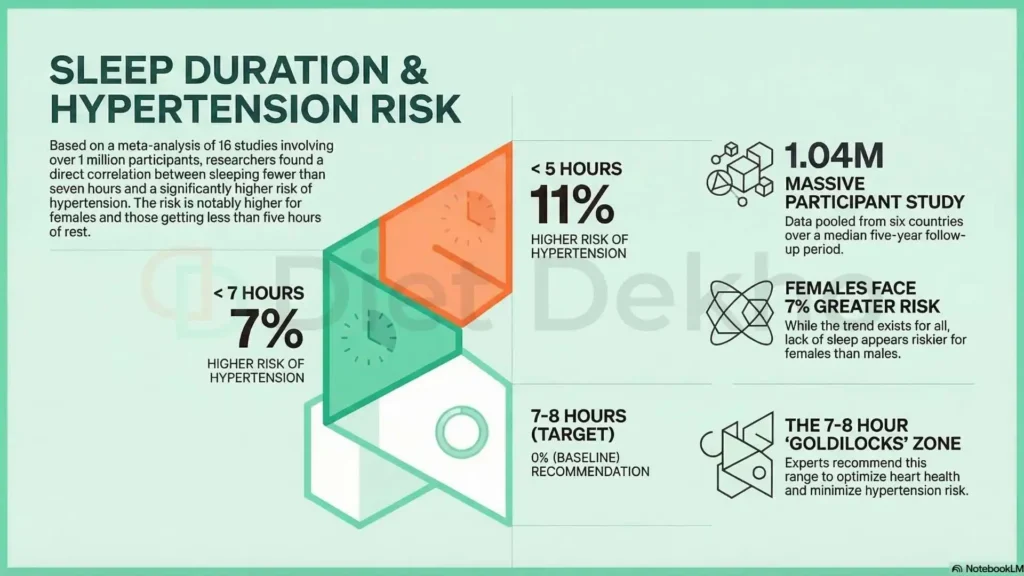
Why Your Heart Needs You to Sleep
I know it’s hard to find time when your day is packed with meetings or household chores, but your blood vessels are essentially doing their best work while you’re unconscious. Think of your cardiovascular system like a high-performance engine that needs a cooling-down period every single night. When you drift off into deep sleep, your body shifts from the high-alert fight or flight mode into a rest and digest state.

What this means for your daily routine is that skipping sleep is like keeping that engine running at redline for days on end without an oil change. During the deeper stages of sleep, specifically slow-wave sleep, your brain signals your heart to slow down and your blood pressure to drop by about 10\% to 20\%. This is what doctors call nocturnal dipping, and it’s the most important recovery period your heart will ever get.
The Science of Nocturnal Dipping
Let’s simplify this concept because it’s the foundation of your heart health. If your blood pressure stays high all night, your arteries never get a break from the pressure. Over time, this constant stretching makes them stiff and less flexible, which only drives your blood pressure higher during the day.

Clinical research shows that non-dippers-people whose BP doesn’t drop enough at night-face a much higher risk of heart attacks and strokes compared to those who get that healthy nighttime dip. It’s not just about the hours you spend in bed; it’s about giving your body the peace it needs to trigger this natural pressure release.
| Sleep Phenotype | Nocturnal BP Change | Cardiovascular Risk Profile |
| Dipper | 10-20\% Decrease | Healthy vascular recovery |
| Non-Dipper | <10\% Decrease | High risk of organ damage |
| Extreme Dipper | >20\% Decrease | Potential risk for certain strokes |
| Reverse Dipper | Increase in BP | Highest risk of cardiovascular events |
Understanding the Sympathetic Overdrive
I often tell my clients that stress doesn’t just stay in your head; it lives in your nervous system. When you don’t sleep enough, your body stays in a state of high alert, flooding your system with stress hormones like cortisol and adrenaline. This is known as sympathetic nervous system activity, and it’s great if you’re running away from a tiger, but it’s exhausting for your heart if it’s happening while you’re trying to sleep.

In a healthy sleep cycle, your sympathetic activity drops, and your parasympathetic system takes the wheel to help you recover. But when sleep is cut short, your body overcompensates. You might feel tired but wired, where your mind is exhausted, but your heart is racing. This chronic state of arousal is a leading cause of sustained high blood pressure because it keeps your blood vessels constricted.
Slow-Wave Sleep: The Restorative Powerhouse
Slow-wave sleep is often considered the most restorative stage for your heart. Research indicates that the time spent in this deep sleep phase is a strong predictor of whether or not someone will develop hypertension later in life. As we get older, we naturally get less of this deep sleep, which is why it becomes even more vital to protect the sleep we do get.
When you miss out on slow-wave sleep, your heart rate remains elevated, and your body struggles to regulate salt and water balance through the kidneys. This is a major reason why I emphasize quality over just quantity. You might be in bed for eight hours, but if you’re waking up frequently, you aren’t spending enough time in that deep, BP-lowering phase.

The Indian Context: Why We Are Struggling
As someone who has worked with the Indian community at DietDekho for over a decade, I see unique challenges that our Western counterparts don’t always face. India is currently the second most sleep-deprived nation in the world. We are a nation of insomniacs trying to fuel ourselves with caffeine and sheer willpower, but it’s catching up to us in the form of heart disease and diabetes.
One of the biggest hurdles I see is the hustle culture that has permeated our cities. Busy professionals in places like Mumbai, Delhi, and Bangalore often view sleep as a sign of weakness. But the truth is, your productivity actually plummets when you’re sleep-deprived. About 47\% of Indian employees have had to take sick leave because they were simply too exhausted to function.
Homemakers and the Second Shift
It’s not just the corporate world, though. I know how hard homemakers work, often being the first ones up and the last ones to bed. In Indian households, women frequently report poorer sleep quality because they are managing everyone else’s schedules alongside their own.
There is also the partner factor. In India, 41% of people report that their partner’s snoring or restlessness keeps them awake-that is more than double the global average. If you’re sleeping next to someone who snores loudly, your own blood pressure might be rising just from the fragmented sleep you’re experiencing.
| Indian Sleep Statistics | Percentage of Respondents | Health Implication |
| Struggle to fall asleep | 49% | Increased risk of chronic hypertension |
| Sleeping < 6 hours nightly | 59% | Double the risk of metabolic syndrome |
| Disruptions by partners | 41% | Fragmented sleep leads to non-dipping BP |
| Willingness to seek help | 58% (Women) | Better proactive management of heart health |
The Diet and Sleep Connection
Let’s simplify how what you eat affects your sleep and BP. I’ve noticed a very common pattern in my clients: a rushed breakfast, a heavy lunch, and then a very late, very spicy dinner. In India, dinner is often the biggest meal of the day, and it’s frequently eaten after 9 PM.
When you eat a heavy meal late at night, your body has to work overtime to digest it. This raises your core body temperature and keeps your metabolism Revved up when it should be slowing down. This mismatch between your food clock and your sleep clock is a recipe for high blood pressure.
The Role of Late-Night Sugar and Salt
Many of us crave something sweet or salty after a long day. However, high-sugar snacks cause a spike in insulin, which can interfere with your body’s ability to enter deep sleep. High salt intake is even more direct; it causes your body to hold onto water, which increases the volume of blood your heart has to pump.
If you’re eating salty snacks while watching TV late at night, you’re essentially giving your heart a double-whammy: the salt raises your pressure, and the blue light from the screen keeps you from falling into the deep sleep that would normally lower it.
| Hormone / Nutrient | Effect on Sleep | Effect on Blood Pressure | Mechanism |
| Cortisol | Keeps you alert | Increases BP | Stress response activation |
| Melatonin | Helps you fall asleep | Supports nocturnal dip | Regulates circadian rhythm |
| Sodium (Salt) | Can fragment sleep | Directly raises BP | Increases fluid retention |
| Magnesium | Relaxes muscles | Helps lower BP | Reduces cortisol levels |
| Tryptophan | Promotes sleepiness | Indirectly supports BP | Precursor to serotonin |

Obstructive Sleep Apnea: The Silent Pressure Spiker
If you wake up feeling tired even after a full night’s sleep, or if your partner says you snore loudly, we need to talk about sleep apnea. Obstructive Sleep Apnea (OSA) is incredibly common, yet so many people ignore it. It happens when your airway partially closes while you sleep, causing you to stop breathing for short periods.
Every time you stop breathing, your brain panics and sends a jolt of adrenaline to wake you up just enough to breathe. This causes your blood pressure to spike violently in the middle of the night. For many people, high blood pressure is actually the first sign that they have sleep apnea. About 50\% of people with OSA have hypertension, and the two conditions feed off each other in a dangerous cycle.
How CPAP Therapy Can Help
The good news is that treating sleep apnea can have a dramatic effect on your blood pressure. Continuous Positive Airway Pressure (CPAP) therapy uses a machine to keep your airway open. I’ve seen clients whose blood pressure dropped significantly within just a few weeks of starting CPAP, simply because their heart finally got to rest at night without those adrenaline spikes.

The 2025 AHA Guidelines: What You Need to Know
The medical world is constantly learning more about the link between sleep and heart health. In 2025, the American Heart Association (AHA) and the American College of Cardiology (ACC) released updated guidelines that emphasize how important sleep is as a modifiable risk factor.
They now use something called the PREVENT™ equation to calculate your risk of heart disease, and it takes into account things like your kidney health and metabolic markers, which are all affected by how well you sleep. The target for almost all adults is now clearly set at staying below 130/80 mmHg.
Why Earlier Treatment Matters
The 2025 guidelines suggest that we shouldn’t wait until someone has Stage 2 hypertension to start making changes. If your blood pressure is consistently between 120 and 129 mmHg, you’re in the Elevated category. This is the perfect time to fix your sleep habits before you need long-term medication.
Even if you are at a low risk for a heart attack in the next ten years, if your BP stays above 130/80 for three to six months despite lifestyle changes, the new guidelines recommend considering medication to prevent damage to your organs.
| BP Category (2025) | Systolic (Top) | Diastolic (Bottom) | Meaning |
| Normal | <120 | <80 | Keep doing what you’re doing! |
| Elevated | 120-129 | <80 | Time to prioritize sleep and diet |
| Stage 1 Hypertension | 130-139 | 80-89 | Lifestyle focus; meds if risk is high |
| Stage 2 Hypertension | geq 140 | geq 90 | Lifestyle plus medication required |
Let’s Fix Your Bedtime Routine
I know you’re busy, so let’s not talk about complicated 10-step routines. Let’s focus on small, manageable shifts that give you the biggest bang for your buck. Improving your sleep and BP doesn’t require a gym membership; it requires a little bit of discipline in your own home.
The 3-2-1 Rule for Busy People
I love this rule because it’s easy to remember even on your most chaotic days.
- 3 Hours Before Bed: No heavy meals. This gives your stomach time to finish the heavy lifting so your heart can take over the night shift.
- 2 Hours Before Bed: No more work emails or stressful life admin. Close the laptop. Your brain needs time to wind down from the daytime pressure.
- 1 Hour Before Bed: No screens. This means no scrolling through Instagram or catching up on the news. The blue light from your phone is like a wake up signal to your brain.
Create a Sleep Sanctuary
Your bedroom should be for two things only: sleep and intimacy. If you’re working from your bed, your brain starts to associate that space with stress instead of rest.
Keep your room cool-around 16 to 19^circC is ideal if you have an AC, though I know that can be chilly for some! A cooler body temperature signals to your brain that it’s time to sleep. Use blackout curtains or an eye mask to keep the room as dark as possible. Even a tiny bit of light can mess with your melatonin production.
Better Choices for Your Chai Craving
I know how much we love our evening tea in India. But that 6 PM cup of masala chai could be the reason you’re still awake at midnight. Caffeine has a half-life of about five to six hours, meaning half of it is still in your system long after you’ve finished the cup.
I recommend switching to herbal alternatives after 2 PM. There are so many wonderful Indian herbs that actually help lower your blood pressure and improve your sleep quality.
My Favorite Bedtime Sips
- Ashwagandha: This is a powerful adaptogen that helps your body manage stress. It lowers evening cortisol levels, which is exactly what we want for your blood pressure.
- Chamomile: It contains a compound called apigenin that binds to receptors in your brain to help you feel sleepy.
- Tulsi (Holy Basil): A cup of Tulsi tea can help calm your mind after a mentally exhausting day at work.
- Turmeric Milk (Haldi Doodh): The golden milk of our ancestors is backed by science. The warmth is soothing, and the tryptophan in the milk helps you drift off.
| Herbal Tea | Primary Benefit | Why It Works for BP |
| Chamomile | Reduces anxiety | Induces mild sedation for deeper sleep |
| Ashwagandha | Lowers cortisol | Reduces the stress-drive on heart rate |
| Valerian Root | Faster sleep onset | Affects GABA receptors to quiet the brain |
| Lavender | Calms racing thoughts | Aromatherapy and tea both reduce heart rate |
The Role of Gentle Movement
You don’t need to go to the gym to help your blood pressure. In fact, for sleep quality, gentle movement is often better than a high-intensity workout late at night. A 15-minute slow walk after dinner is a traditional habit that actually has great scientific backing. It helps regulate your blood sugar and aids digestion, which means you’re less likely to have acid reflux keeping you up at night.
Morning sunlight is another secret weapon. Spending just 10 to 15 minutes outside in the morning helps reset your internal clock. This makes it easier for your body to know when to start producing melatonin in the evening. It’s a simple, free way to improve your sleep-wake cycle.
Managing the Midnight Hunger
If you find yourself raiding the fridge at night, it might be because you didn’t eat enough protein or healthy fats during the day. Sleep deprivation actually makes you hungrier by messing with your hunger hormones.
If you truly need a snack before bed, choose something that supports sleep. A small banana is great because it has potassium and magnesium, which act as natural muscle relaxants. A few soaked almonds are also a good choice; they provide magnesium without causing a big blood sugar spike. Avoid the midnight maggi or biscuits, as the high salt and sugar will only disrupt your rest.
When to Talk to a Professional
I want to be clear: while these lifestyle changes are powerful, they aren’t a substitute for medical advice. If you’ve tried fixing your sleep and your blood pressure is still high, please talk to your doctor. Sometimes, medications like diuretics or beta-blockers can actually interfere with sleep, and your doctor might need to adjust the timing of when you take them.
New treatments like Baxdrostat are showing great promise for people with resistant hypertension-the kind that doesn’t respond to usual meds. There is also Cognitive Behavioral Therapy for Insomnia (CBT-i), which is a non-drug way to train your brain to sleep better. You don’t have to struggle with this alone.
Your Path to a Healthier Heart
Improving your sleep and BP is one of the most loving things you can do for yourself. It’s not about being perfect; it’s about making small, consistent choices that add up. Maybe tonight, you turn off your phone 30 minutes earlier. Maybe tomorrow, you swap your evening chai for chamomile.
Your heart works so hard for you every single second of the day. Giving it those seven to nine hours of quiet, restful sleep is the best thank you you can give it. You’ll wake up with more energy, a clearer mind, and a heart that is ready to take on whatever the day brings.
FAQs
1. Does lack of sleep cause an immediate rise in blood pressure?
Yes, even a single night of poor sleep can cause your blood pressure to be higher the next morning. Chronic sleep deprivation leads to long-term changes in your nervous system that can result in permanent hypertension.
2. How many hours of sleep do I really need for my BP?
Most adults need between seven and nine hours of quality sleep to see the benefits of nocturnal dipping. Sleeping less than six hours consistently is strongly linked to an increased risk of heart disease and stroke.
3. Can I catch up on sleep over the weekend to lower my BP?
While an extra hour of sleep can help, an irregular sleep schedule is actually a risk factor for high blood pressure. It is much better for your heart if you wake up and go to bed at roughly the same time every day, even on weekends.
4. Why does my BP stay high even if I feel I’m sleeping enough?
You might have poor sleep continuity or an undiagnosed condition like sleep apnea. Even if you are in bed for eight hours, if your sleep is fragmented or if you stop breathing during the night, your blood pressure won’t get the chance to drop.
5. Is it safe to take sleep medication if I have high blood pressure?
Some over-the-counter sleep aids can actually affect your heart rate or interact with BP meds. It is always best to focus on natural sleep hygiene first and consult your doctor before starting any new medication.
Contact Us
We understand how overwhelming nutrition and weight loss information can feel. With so many opinions and confusing advice online, it’s easy to feel stuck or unsure about what to do next.
At Diet Dekho, you never have to figure it out alone. You can contact us anytime with any questions or concerns. Our expert dietitians are available 24/7 to guide, support, and help you stay on track. Whether your goal is weight loss or building healthier habits, we’re here to make the journey simpler and more sustainable for you.
Disclaimer
This blog is intended to help readers make healthier food choices. Your health should always be the top priority. Before starting any restrictive or special diet, especially if you have a medical condition or health concern, please consult a doctor or a qualified dietitian. Each body responds differently to food and lifestyle changes. Always choose what is safe and suitable for you.

Abhinav is the Founder of Diet Dekho, helping people manage weight and lifestyle health through simple, practical nutrition and personalized diet plans.