Sunita, a 45-year-old homemaker in Pune, often finds herself exhausted by evening, yet her pedometer shows she has barely moved from her kitchen. Like many balancing family health and personal struggles, she wonders about the actual impact of her daily movement and specifically asks: 10,000 steps how many calories burn in a way that actually changes a person’s health? It is a question that millions of busy professionals and parents grapple with while trying to manage their sugar levels and weight without a gym membership.
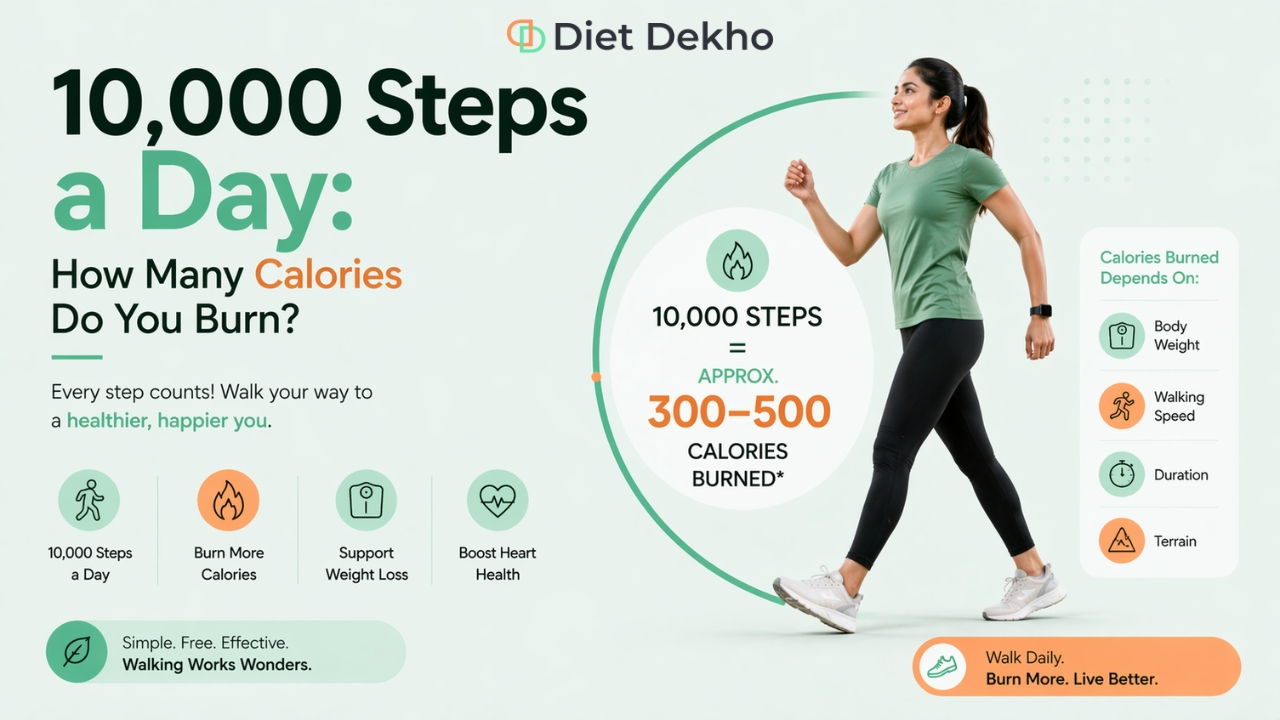
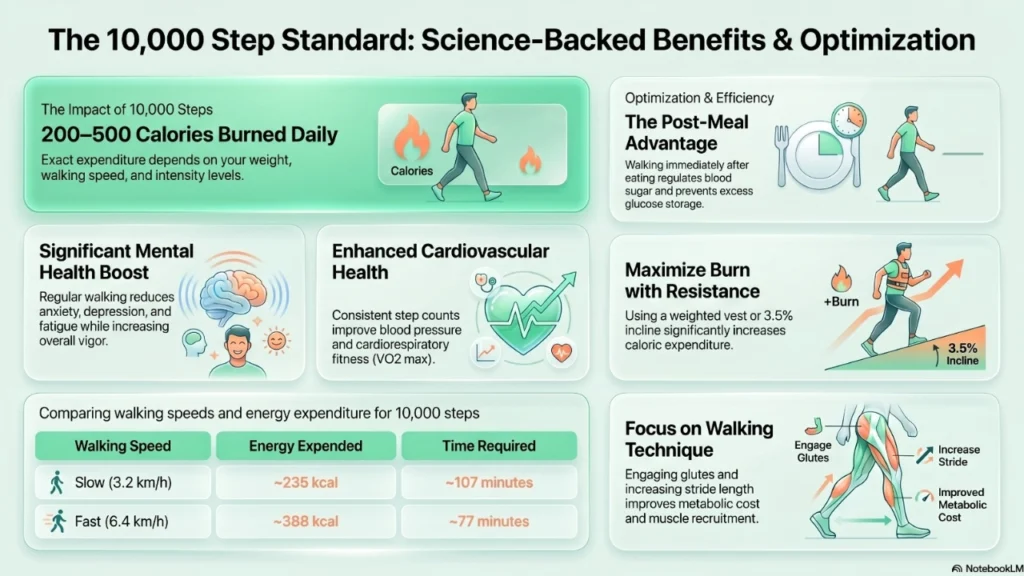
Walking 10,000 steps typically burns between 300 and 500 calories for most adults, depending largely on body weight, walking speed, and the terrain. A 70 kg individual walking at a moderate pace on flat ground will expend approximately 400 calories. Heavier individuals or those increasing their intensity through brisk walking or inclines will naturally achieve a higher caloric expenditure per session.
The Thermodynamic Foundation of Walking and Energy Expenditure
Table of Contents
- 1 The Thermodynamic Foundation of Walking and Energy Expenditure
- 2 The Influence of Intensity and Cadence on Metabolic Rate
- 3 Walking in the Indian Context: Managing Diabetes and the Asian Indian Phenotype
- 4 Nutritional Realities: The Step Cost of the Indian Diet
- 5 Environmental Hurdles: Pollution, Heat, and the Urban Indian Landscape
- 6 Practical Strategies for Busy Professionals and Homemakers
- 7 Long-Term Health Outcomes: Beyond Weight Loss
- 8 Success Stories: Inspiration from the Indian Community
- 9 Conclusion: Taking the First Step Toward a Healthier You
- 10 Frequently Asked Questions
- 11 Contact Us
- 12 Disclaimer
Understanding the relationship between physical activity and weight management requires an analysis of the metabolic cost of locomotion. For the average person, walking is the most accessible form of energy expenditure, yet the precise number of calories burned is not a static figure. It is a dynamic calculation governed by the laws of thermodynamics. When an individual asks about 10,000 steps how many calories burn, the answer must account for the work required to move a specific mass over a specific distance against the forces of gravity and friction.
The energy cost of walking is often measured using the Metabolic Equivalent of Task (MET). One MET is defined as the energy expended while sitting at rest, which is roughly 1 kcal per kilogram of body weight per hour. As the intensity of the walk increases, so does the MET value. For instance, a casual stroll at 2 mph has a MET value of 2.5, while a very brisk walk at 4 mph increases the MET value to 5.0. This doubling of intensity effectively doubles the rate of caloric burn per minute, illustrating why pace is a critical variable in the energy equation.

Calculated Caloric Expenditure by Body Weight and Step Count
The most significant factor in determining the energy cost of 10,000 steps is the individual’s body weight. Physics dictates that moving a larger frame requires more fuel. Consequently, a heavier person will burn more calories than a lighter person over the same distance. The following table illustrates the estimated caloric expenditure for a standard 10,000-step goal across various weight categories at a moderate walking pace.
| Body Weight (kg) | Estimated Calories Burned (10,000 Steps) | Calorie Burn per 1,000 Steps | Estimated Distance (km) |
| 55 kg | 314 kcal | 31.4 kcal | 8.0 km |
| 60 kg | 360 kcal | 36.0 kcal | 8.0 km |
| 70 kg | 400 – 440 kcal | 40.0 – 44.0 kcal | 8.0 km |
| 75 kg | 440 – 480 kcal | 44.0 – 48.0 kcal | 8.0 km |
| 85 kg | 486 – 520 kcal | 48.6 – 52.0 kcal | 8.0 km |
| 90 kg | 520 – 560 kcal | 52.0 – 56.0 kcal | 8.0 km |
| 100 kg | 570 – 620 kcal | 57.0 – 62.0 kcal | 8.0 km |
For a 70 kg person, each step burns approximately 0.04 calories. This means that every 1,000 steps completed adds roughly 40 calories to the daily deficit. While this may seem small in isolation, the cumulative effect of hitting the 10,000-step mark daily can lead to an expenditure of 2,800 to 3,500 calories per week, which is theoretically equivalent to the energy contained in nearly half a kilogram of body fat.

The Influence of Intensity and Cadence on Metabolic Rate
While the total number of steps is a useful metric for tracking volume, the intensity at which those steps are taken, known as cadence, determines the cardiovascular strain and the metabolic efficiency of the workout. Cadence is measured in steps per minute. For most adults, a casual pace is around 100 steps per minute, while a brisk, purposeful walk reaches 115 to 125 steps per minute. Power walking can exceed 140 steps per minute.
The Role of Speed in Weight Loss
The metabolic cost of walking does not just increase because of the distance covered; it increases because the body becomes less efficient at higher speeds, requiring more muscular engagement to maintain a brisk pace. Research indicates that walking at a very brisk pace of 4.5 mph can burn nearly twice as many calories per minute as a leisurely pace of 2.0 mph. This is vital for busy professionals who may not have 100 minutes to spare for a casual walk but can find 70 minutes for a more intense session.
| Walking Intensity | Speed (mph) | MET Value | Time for 10,000 Steps (min) | Total Calories (150 lbs / 68kg) |
| Casual | 2.0 mph | 2.5 | 100 min | 244 kcal |
| Moderate | 3.0 mph | 3.5 | 87 min | 342 kcal |
| Brisk | 3.5 mph | 4.3 | 80 min | 387 kcal |
| Power Walking | 4.5 mph | 5.0 | 71 min | 401 kcal |
The evidence suggests that for those focused on weight management, increasing the pace is one of the most effective ways to maximize the benefits of a 10,000-step routine. Walking faster not only saves time but also keeps the heart rate in a fat-burning zone, which improves aerobic endurance over time.
Walking in the Indian Context: Managing Diabetes and the Asian Indian Phenotype
In India, the conversation around 10,000 steps how many calories burn is inseparable from the management of Type 2 Diabetes Mellitus. The Asian Indian phenotype is characterized by a higher body fat percentage and more visceral (abdominal) fat compared to other ethnic groups, even at a lower Body Mass Index (BMI). This thin-fat profile makes the Indian population particularly susceptible to insulin resistance and early-onset diabetes.
Impact on Glycated Hemoglobin (HbA1c)
Walking is often described by diabetologists as a natural pill for sugar control. Physical activity immediately uses glucose for energy and improves the body’s response to insulin. For an Indian patient struggling with high sugar readings, a consistent walking routine can lead to measurable changes in HbA1c levels, which reflect the average blood sugar over the past three months.
| Research Finding | Impact on Diabetes Indicators | Source |
| Combined Walk & Arm Rotation | Mean decrease of 0.5% in HbA1c | |
| 10-minute Post-Meal Walk | Reduction of 0.7% in HbA1c | |
| 40-minute Morning Walk | Reduction of 0.5% in HbA1c | |
| 150 minutes Weekly Exercise | 4x more likely to reverse prediabetes |
Dr. V. Mohan, a leading Indian diabetologist, suggests that while 10,000 steps is a gold standard, a minimum of 7,000 steps is necessary for cardiometabolic health in the Indian context. Furthermore, the timing of these steps is crucial. Walking for just 10 to 15 minutes after each meal breakfast, lunch, and dinner can be more effective at blunting post-meal sugar spikes than one long walk in the morning. This is particularly helpful for homemakers and office workers who can only find small pockets of time throughout the day.

Nutritional Realities: The Step Cost of the Indian Diet
One of the most sobering realizations for many individuals is the amount of physical activity required to offset traditional Indian snacks. For a professional who consumes a samosa and a cup of masala chai during a mid-afternoon break, the caloric intake can easily reach 350 to 400 calories. As established, for a 70 kg person, this is almost exactly the amount of energy burned in 10,000 steps.
Step Equivalents for Common Indian Foods
Understanding the step cost of food can help individuals make more mindful dietary choices. It is often easier to skip a high-calorie snack than it is to find the two hours necessary to walk it off.
| Indian Food Item | Caloric Content (approx.) | Steps Required to Neutralize |
| 1 Plain Paratha (with oil/ghee) | 220 kcal | 5,500 steps |
| 1 Paneer Paratha | 325 kcal | 8,125 steps |
| 1 Samosa (Deep Fried) | 275 kcal | 6,875 steps |
| 1 Masala Dosa | 375 kcal | 9,375 steps |
| 1 Plate Pav Bhaji (with butter) | 450 kcal | 11,250 steps |
| 1 Cup Poha | 250 kcal | 6,250 steps |
| 1 Gulab Jamun | 150 kcal | 3,750 steps |
| 1 Cup Masala Chai (with sugar) | 60 kcal | 1,500 steps |
What this means for a daily routine is that physical activity cannot be the only tool for health improvement. If an individual hits their 10,000-step goal but rewards themselves with a masala dosa, they have essentially reached a calorie balance rather than a deficit. For weight loss, it is essential to pair the step goal with low-calorie swaps, such as choosing steamed momos (175 kcal) over tandoori momos (394 kcal) or a plain roti (120 kcal) over a buttered naan (313 kcal).

Environmental Hurdles: Pollution, Heat, and the Urban Indian Landscape
Achieving 10,000 steps is not just a matter of willpower; in India, it is also a matter of navigating the environment. Major cities like Delhi, Mumbai, and Bangalore present significant challenges in the form of hazardous air quality and extreme temperatures.
Managing Air Quality and Lung Health
When the Air Quality Index (AQI) reaches poor or severe levels, the risks of outdoor exercise can sometimes outweigh the benefits. Breathing heavily during a brisk walk draws pollutants deeper into the lungs, potentially worsening respiratory conditions.
- Real-time Monitoring: Experts recommend using apps like SAFAR-Air or AQI India to check local pollution levels before stepping out.
- Optimal Timing: Pollution is often highest between 6 AM and 10 AM due to traffic and atmospheric conditions. Early afternoon or late evening (after 8 PM) can sometimes offer slightly better air quality.
- Indoor Alternatives: On hazardous days, individuals should shift their activity indoors. Walking in shopping malls, using a home treadmill, or even pacing within the house are safer options.
Beating the Heat for Sustainable Movement
The Indian summer can make a 10,000-step goal feel physically impossible. High humidity and heat put excessive strain on the heart and increase the risk of dehydration.
- Hydration Strategy: Drink 8 ounces of water 30 minutes before starting and another 8 ounces every 20 minutes during the walk.
- Pre-Cooling: Taking a cool shower or drinking a cold smoothie before heading out can help keep the core body temperature lower for longer.
- Location Choice: Walking on tree-lined paths or in areas with shade can significantly reduce the thermal load on the body.

Practical Strategies for Busy Professionals and Homemakers
The most common barrier to reaching a 10,000-step goal is time. For a busy professional, finding 90 minutes to walk seems like a luxury. For a homemaker, the day is fragmented by chores and family needs. Let’s simplify the approach by breaking the goal into manageable movement snacks.
For the Office-Bound Professional
The sedentary nature of modern desk jobs is a major contributor to cardiovascular risk. However, the office environment offers hidden opportunities for steps.
- The Email Swap: Instead of emailing or messaging a colleague on the same floor, walk to their desk for a face-to-face conversation.
- Phone Pacing: Make it a rule to stand up and pace during every conference call or phone conversation. This can easily add 1,000 to 2,000 steps to a workday.
- The Long Route: Use a restroom or a water cooler on a different floor. Taking the stairs instead of the elevator is a non-negotiable for increasing intensity.
- Active Commuting: Parking the car at the far end of the lot or getting off the metro one station early provides a guaranteed 10-15 minute walk at the start and end of the day.
For the Homemaker and Primary Caregiver
A homemaker’s day is physically active but often lacks the sustained movement necessary for a high caloric burn.
- Spread Out Chores: Instead of combining all tasks into one trip (like carrying all the laundry or groceries at once), do multiple trips. Spreading chores throughout the day naturally increases the total step count.
- The Shopping Stroll: Avoid the weekly haul where a car is necessary. Walk to the local kirana store or vegetable market daily to buy fresh items. Carrying small bags also provides a form of resistance training.
- Digital Walking: While watching a favorite television show or YouTube video, walk in place or do simple laps around the living room. Research shows that spot walking is a legitimate way to accumulate steps without leaving the house.

Long-Term Health Outcomes: Beyond Weight Loss
While the focus is often on the question of 10,000 steps how many calories burn, the most profound benefits are observed in the reduction of chronic disease risk. Consistency in movement acts as a protective shield for the heart, brain, and joints.
Cardiovascular Protection
For individuals with high blood pressure, every extra 1,000 steps (up to 10,000) is linked to a 17% reduction in overall cardiovascular risk. Specifically, it can lead to a 22% reduction in the risk of heart failure and a 24% reduction in the risk of stroke. This is because regular walking improves the elasticity of blood vessels and helps lower harmful LDL cholesterol levels while raising healthy HDL cholesterol.
Mental Health and Cognitive Longevity
Walking is a powerful tool for stress management. A study of higher weight participants showed that reaching 10,000 steps a day significantly lowered scores for anxiety, depression, and anger. For older adults, walking can be a primary defense against cognitive decline. Achieving at least 7,000 steps a day has been associated with a 38% reduction in the risk of dementia.

Success Stories: Inspiration from the Indian Community
Real-world examples demonstrate that these numbers are not just theoretical; they represent a path to health transformation.
- Samuel’s Journey: Samuel, who was struggling with a dangerously high HbA1c of 11.3%, began a lifestyle medicine program that included daily walking. Within six months, his HbA1c dropped to 5.7% (a normal level), he lost 45 pounds, and he was able to discontinue insulin.
- Venkatraman’s Reversal: After living with diabetes for over 12 years, Venkatraman used a structured program involving consistent walking to bring his HbA1c down from 8.2 to 6.5, allowing him to reduce his medications by half.
- Archana’s Consistency: Archana, a homemaker, makes it a priority to hit 12,000 steps daily, specifically focusing on a 20-minute walk after every meal. This habit has been the cornerstone of her success in managing her weight and sugar levels.
Conclusion: Taking the First Step Toward a Healthier You
It is easy to feel overwhelmed by the idea of walking five miles a day, especially when life feels crowded with responsibilities. However, the science is clear: you don’t need to be a marathon runner to see a transformation. Whether it is a 10-minute stroll after dinner or a brisk walk to the office, every step counts toward your goal.
If you are ready to stop guessing and start seeing results, let’s create a plan that fits your life. You don’t have to do this alone. Our experts at DietDekho are here to help you navigate your nutritional needs and movement goals with ease.
Take control of your health today. Fill out our simple health assessment form hereand let’s get started on your personalized journey!
Frequently Asked Questions
1. For an average person, 10,000 steps how many calories burn exactly?
For most adults, walking 10,000 steps burns between 300 and 500 calories. The exact number depends on your weight (heavier people burn more) and your pace (faster walking burns more per minute). For a 70 kg person, the burn is roughly 400 calories.
2. Is it better to do all 10,000 steps at once or break them up?
Breaking them up is actually better for blood sugar control! Walking for 10-15 minutes after each meal can be more effective at managing insulin levels than a single long walk. It also makes the goal feel much more achievable for busy people.
3. Can I lose weight by just walking 10,000 steps without changing my diet?
While 10,000 steps helps, weight loss usually requires a calorie deficit. If you eat high-calorie snacks like samosas or sweets, you may burn off those calories but not lose weight. Combining your steps with healthy food swaps is the most successful strategy.
4. What if I can only manage 7,000 steps a day?
That is still a fantastic achievement! Research shows that significant health benefits, including a lower risk of heart disease and dementia, start as low as 7,000 steps. Consistency is more important than hitting a perfect 10,000 every single day.
5. How many kilometers is 10,000 steps?
For most people, 10,000 steps is approximately 8 kilometers (or about 5 miles). This distance can vary slightly depending on your height and stride length.
Contact Us
We understand how overwhelming nutrition and weight loss information can feel. With so many opinions and confusing advice online, it’s easy to feel stuck or unsure about what to do next.
At Diet Dekho, you never have to figure it out alone. You can contact us anytime with any questions or concerns. Our expert dietitians are available 24/7 to guide, support, and help you stay on track. Whether your goal is weight loss or building healthier habits, we’re here to make the journey simpler and more sustainable for you.
Disclaimer
This blog is intended to help readers make healthier food choices. Your health should always be the top priority. Before starting any restrictive or special diet, especially if you have a medical condition or health concern, please consult a doctor or a qualified dietitian. Each body responds differently to food and lifestyle changes. Always choose what is safe and suitable for you.

Abhinav is the Founder of Diet Dekho, helping people manage weight and lifestyle health through simple, practical nutrition and personalized diet plans.