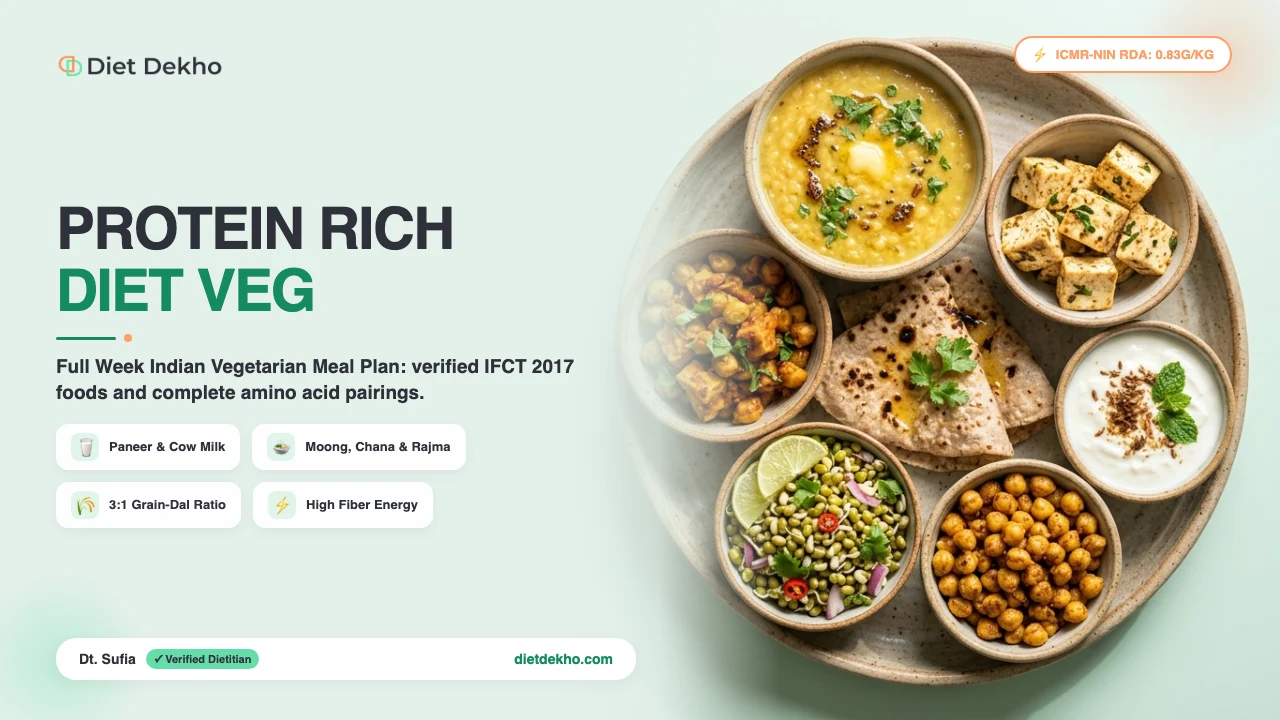
Many Indian vegetarians struggle with afternoon fatigue, stubborn weight gain, and muscle weakness despite eating home-cooked meals daily. You might wonder if a protein rich diet veg is genuinely possible without relying on expensive supplements or non-vegetarian foods.
A balanced protein rich diet veg supplies 50 to 65 grams of protein daily. Traditional kitchen staples like dairy, lentils, and legumes easily fulfill this need. Combining cereals with pulses in a three-to-one ratio creates complete protein. This pairing ensures steady energy, healthy metabolic rate, and natural muscle recovery.
Understanding Daily Protein Requirements for a Protein Rich Diet Veg
First, we must establish your daily nutritional baseline with scientific accuracy. The ICMR-National Institute of Nutrition (ICMR-NIN) establishes clear dietary standards. Healthy Indian adults require 0.83 grams of protein per kilogram of body weight daily.
For example, an individual weighing 65 kilograms requires approximately 54 grams of protein every day. Thus, daily intake must match personal weight. Meanwhile, adults engaging in regular resistance training benefit from 1.0 to 1.2 grams per kilogram. Therefore, maintaining a protein rich diet veg ensures adequate cellular repair and immune protection.
However, traditional Indian vegetarian thalis often lean heavily toward carbohydrates. A standard lunch plate of white rice, thin dal, and aloo sabzi frequently derives 80 percent of calories from starch. In contrast, your body needs adequate amino acids to repair muscle tissues and preserve bone density.
Specifically, single plant sources lack certain essential amino acids. For instance, cereals like wheat and rice are low in lysine but rich in methionine. Conversely, pulses and legumes contain abundant lysine but fall short in methionine.
Consequently, pairing grains and pulses together creates biological balance. Rigorous clinical reviews in National Institutes of Health (NIH) research confirm this fact. Eating varied plant foods across the day delivers all nine essential amino acids.
Top Indian Food Sources for Your Daily Vegetarian Nutrition
Fortunately, an authentic Indian kitchen contains outstanding high-protein ingredients. In particular, traditional pulses provide dense nourishment. You do not need imported powders or artificial capsules to satisfy your goals. Let us examine the best whole-food options readily available in your pantry.
1. Fresh Paneer and Cow Milk
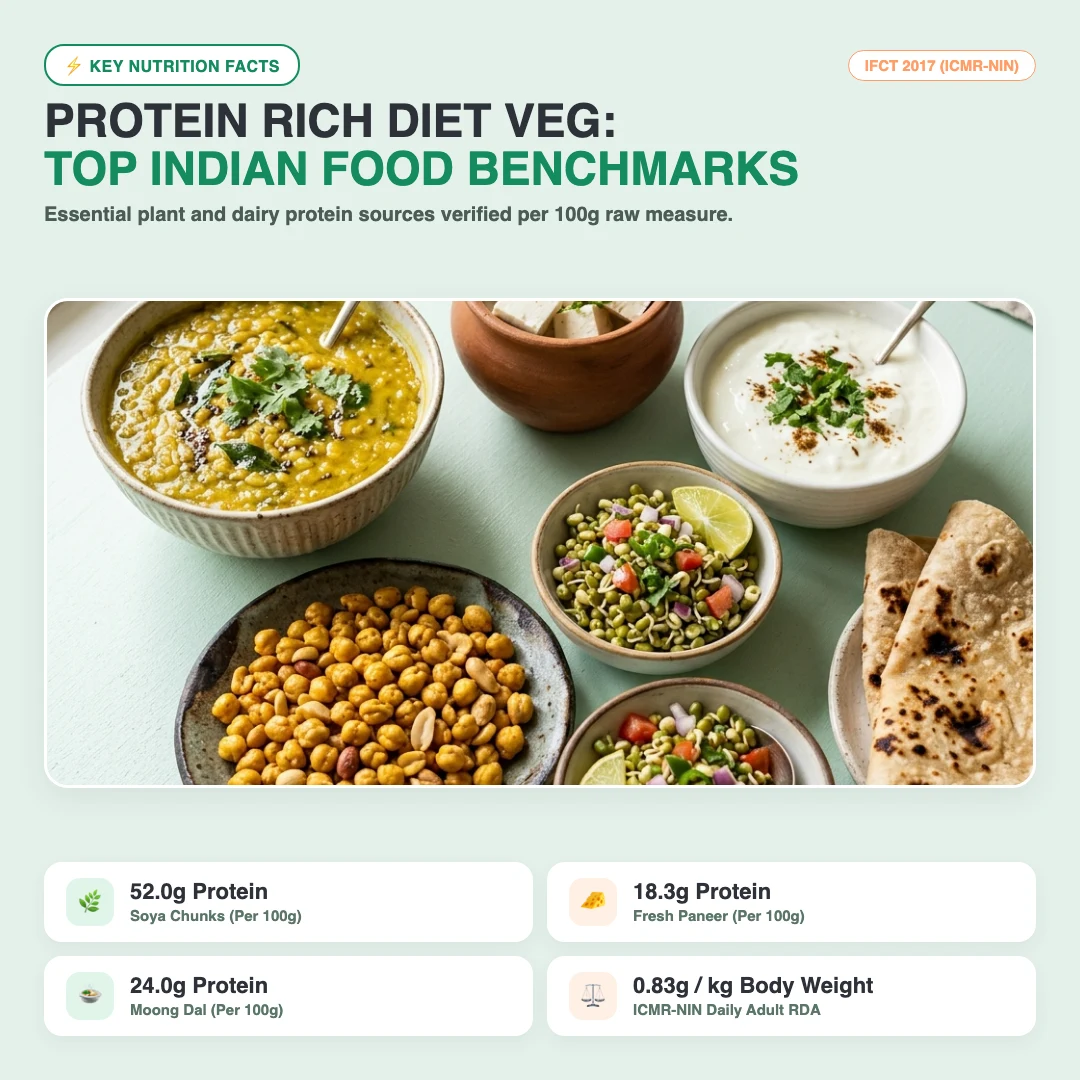
Fresh paneer remains a premier veg protein source for Indian vegetarian households. As a result, a 100g serving of cow milk paneer provides approximately 18.3 grams of bioavailable protein alongside calcium. Additionally, drinking one medium glass of cow milk delivers 8 grams of casein and whey.
2. Green Moong Dal, Chana, and Rajma
Whole and split legumes represent the nutritional backbone of Indian vegetarian cooking. On the other hand, raw green moong dal yields 24 grams of protein per 100 grams. Similarly, black chickpeas (kala chana) and kidney beans (rajma) supply roughly 20 to 22 grams of protein per 100g measure.
3. Defatted Soya Chunks and Tofu
Defatted soya chunks are the most concentrated plant protein on the Indian market. In fact, they deliver over 52 grams of protein per 100 grams while containing minimal fat. Accordingly, they serve as a potent plant protein. Furthermore, firm soy tofu supplies 14 grams of protein per 100g, serving as an excellent dairy-free alternative.
A common Indian misconception suggests that moderate soya intake alters thyroid health or causes estrogen imbalances in men. On the contrary, clinical evidence confirms that consuming twenty-five to thirty grams of defatted soya chunks two to three times a week is completely safe, highly digestible, and exceptional for lean muscle preservation.
4. Homemade Curd, Buttermilk, and Paneer Whey
Fermented dairy supports your intestinal microbiome while providing quality amino acids. Second, one generous katori of homemade dahi offers 7 grams of digestible protein. Moreover, never discard the mineral-rich whey water left after making fresh paneer at home.
5. Roasted Chana, Sattu, and Edible Seeds
Similarly, roasted Bengal gram (bhuna chana) delivers 19 grams of protein per 100 grams. Hence, it acts as an ideal travel-friendly snack for busy working professionals. Likewise, pumpkin seeds and chia seeds provide healthy plant lipids and trace minerals that bolster metabolic recovery.
Accordingly, organizing these wholesome foods into structured meals ensures steady amino acid delivery. Adopting a structured protein rich diet veg prevents sudden energy crashes between meals.
ICMR-NIN Indian Nutrition Comparison
Source: Indian Food Composition Tables (IFCT 2017), National Institute of Nutrition (ICMR-NIN). Digestion speed indicates relative gastric emptying time.
Complete 7-Day Vegetarian Meal Plan for a Protein Rich Diet Veg
To implement this in your routine, follow our comprehensive 7-day vegetarian meal plan. In addition, this plan assumes a healthy adult requiring approximately 1500 to 1600 calories daily. Consequently, each day reliably delivers 58 to 68 grams of clean vegetarian protein.
Additionally, all meals utilize accessible Indian groceries from local markets. Therefore, we emphasize practical portion control using familiar measures like katoris and medium rotis. For wider dietary structuring, consult our balanced Indian food chart to align regional preferences.
Furthermore, distributing protein evenly across meals prevents muscle catabolism. Following this protein rich diet veg schedule supports healthy digestion and sustained afternoon alertness.
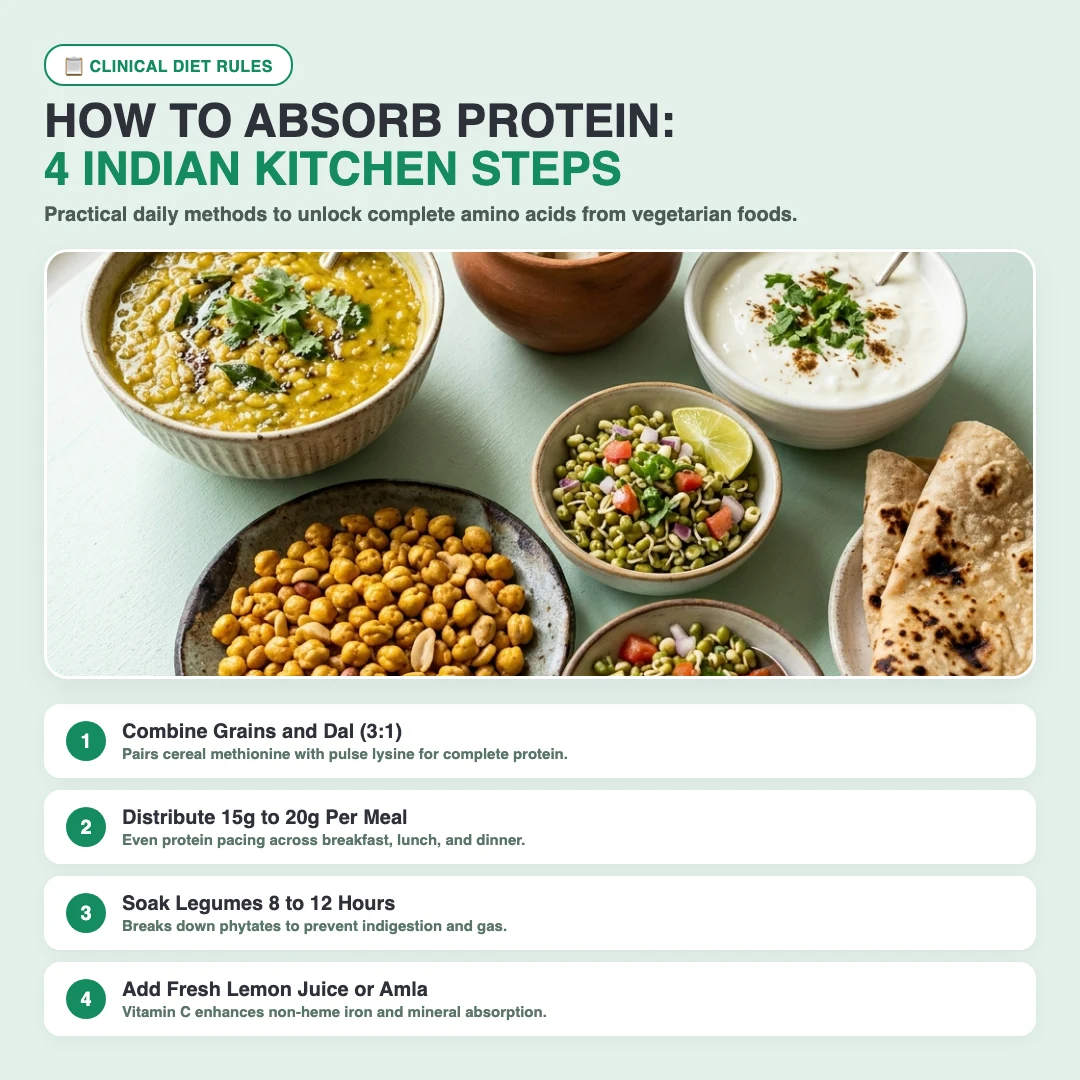

For example, always squeeze fresh lemon juice over cooked dals and salads. The natural vitamin C significantly improves the intestinal uptake of non-heme iron. In addition, soak hard beans like rajma overnight with cumin. This simple step degrades phytates and eliminates digestive heaviness.
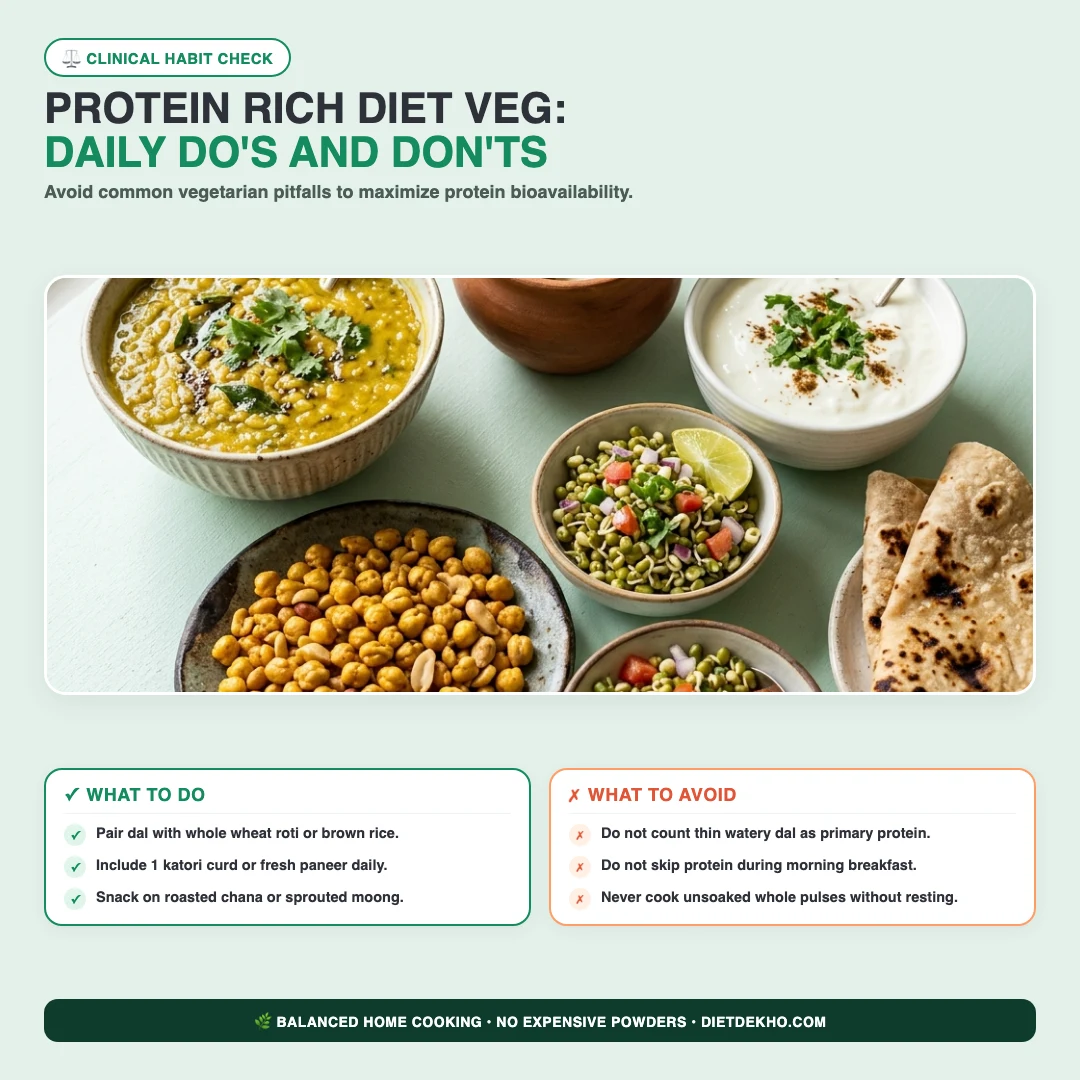
Meanwhile, do not count a thin, watery restaurant dal as your primary protein source. A standard watery katori contains barely 3 to 4 grams of actual protein. Instead, cook thick dals or pair them with paneer cubes and sprouts. This secures genuine muscle-supporting nutrition without excess starch.
Clinical Precautions and Long-Term Health Adaptations
Notably, transitioning to a protein rich diet veg requires mindful adaptation. For instance, increasing dietary fiber and plant protein abruptly can cause temporary flatulence or digestive bloating. Hence, increase your pulse portions gradually over two weeks while maintaining optimal water hydration.
In particular, individuals managing chronic kidney disease or reduced glomerular filtration must monitor protein intake carefully. As a result, excess protein puts additional filtration strain on impaired nephrons. Nevertheless, patients with active gout or elevated serum uric acid must regulate purine-heavy foods like masoor dal.
Additionally, Indian vegetarians must remain mindful of Vitamin B12 and bioavailable iron status. Because unfortified plant foods lack active cobalamin (Vitamin B12), relying purely on pulses can lead to subtle fatigue or nerve exhaustion over time. Consequently, Dt. Sufia advises pairing regular dairy (curd, paneer) with bi-annual micronutrient blood tests, adding physician-guided B12 supplementation when dietary levels require support.
If you require specialized dietary adjustments for metabolic conditions, explore our PCOD and hormonal health diet plan. Finally, individuals seeking structured calorie balance can review our clinical weight loss guidance to harmonize macronutrient intake safely.
Overall, building sustained muscle tone and daily stamina does not demand expensive supplements. Incorporating verified week health facts into home meals yields dependable, lasting metabolic vitality.
Subsequently, staying consistent with your protein rich diet veg ensures steady biological nourishment for muscle and bone health.

Frequently Asked Questions About a Protein Rich Diet Veg
1. How can an Indian vegetarian get 60 grams of protein daily without supplements?
You can easily achieve sixty grams of protein daily by combining familiar Indian home foods. For instance, consume one glass of milk, one katori of curd, and fifty grams of paneer. Add two bowls of thick dal to meet this requirement comfortably.
2. Which Indian vegetarian food provides the highest protein density per 100 grams?
Defatted soya chunks provide the highest protein density among vegetarian items, delivering fifty-two grams per hundred grams. Additionally, raw green moong dal, black chana, and fresh paneer supply substantial protein. Each provides rich amino acids per standard hundred-gram kitchen serving.
3. Can eating dal and rice together provide a complete amino acid profile?
Yes, pairing cereals with pulses in a three-to-one ratio creates a complete amino acid profile. Specifically, rice supplies essential methionine, while lentils supply rich lysine. Together, they enable optimal muscle tissue repair and immune synthesis without meat.
4. Does consuming high-protein vegetarian foods cause digestive gas or bloating?
Whole legumes contain complex oligosaccharides that can trigger intestinal gas when prepared improperly. However, soak beans for eight to twelve hours and rinse thoroughly. Pressure cooking them with cumin and asafoetida eliminates abdominal discomfort.
5. What is the most convenient protein-rich evening snack for Indian office workers?
Roasted Bengal gram or bhuna chana is the most practical non-perishable snack for busy office professionals. Moreover, carry boiled sprouted moong chaat or spiced paneer cubes to work. A small box provides twelve grams of clean sustained energy easily.
Building Sustainable Energy and Muscle Health with Diet Dekho
In summary, achieving a thriving protein rich diet veg is entirely attainable within everyday Indian cuisine. Specifically, pair complementary grains with lentils, honor ICMR-NIN standards, and enjoy fresh dairy. Thus, this simple approach provides your body with genuine, clean cellular fuel.
This is general guidance for healthy adults, not medical advice. If you have a medical condition, are pregnant or breastfeeding, or take regular medication, consult your doctor or dietitian first.
Ready to Build Your Personalized Vegetarian Diet Plan?
Stop guessing your daily macros. Get an authentic, ICMR-aligned Indian vegetarian meal plan. Our certified dietitians tailor every meal to your body weight, daily schedule, and metabolic health.

Senior Clinical Nutritionist & Lifestyle Consultant at Diet Dekho. Specialist in customized Indian meal plans, sustainable fat loss, PCOS reversal, and metabolic health.