
Think about those afternoons when the clock hits 3:00 PM and a sudden, heavy wave of exhaustion feels impossible to shake. Many busy professionals and homemakers across India assume this fatigue is just a part of aging or a consequence of a hectic schedule, yet the reality often points toward a hidden mineral gap. Incorporating magnesium enriched foods into the daily diet is not just a nutritional choice; it is a fundamental step toward reclaiming energy and stabilizing blood sugar. This simple adjustment serves as a baseline for anyone managing diabetes or looking to support a high-pressure lifestyle without resorting to complex medical interventions.
For those seeking an immediate solution, focusing on magnesium enriched foods like roasted pumpkin seeds, almonds, ragi (finger millet), and dark leafy greens like spinach can bridge the nutritional gap effectively. A balanced intake of these staples helps regulate blood pressure, improves insulin sensitivity for diabetics, and provides the necessary cellular fuel to combat daily fatigue. Most healthy adults can meet their requirements by including a variety of nuts, seeds, whole grains, and legumes in at least two meals per day.
The Biological Powerhouse: Understanding the Magnesium-ATP Connection
The human body operates on a cellular currency known as Adenosine Triphosphate (ATP). However, a critical second-order insight often overlooked in general health discussions is that ATP must bind to a magnesium ion to become biologically active. The chemical reality of energy production is expressed as:
ATP4− + Mg2+ ⇌ MgATP2−Without the presence of Mg^2+, the energy stored in ATP remains locked away, leading to the cellular equivalent of a flat battery. This mechanism explains why magnesium deficiency manifests so clearly as physical weakness and mental fog. When the supply of magnesium enriched foods is insufficient, the body’s power stations, or mitochondria, cannot efficiently process fuel, making even simple tasks feel like a struggle.

What this means for the daily routine is that the recurring afternoon slump may not be a need for more caffeine, but rather a cry for the mineral that unlocks energy. Registered dietitians often observe a tired but wired pattern in patients, where they feel physically exhausted but remain mentally restless and unable to achieve deep sleep. This paradox occurs because magnesium is also responsible for calming the nervous system and facilitating muscle relaxation. Without it, the body stays in a state of low-grade physiological stress, further depleting the very mineral it needs to recover.
The Role of Magnesium in Enzymatic Catalysis
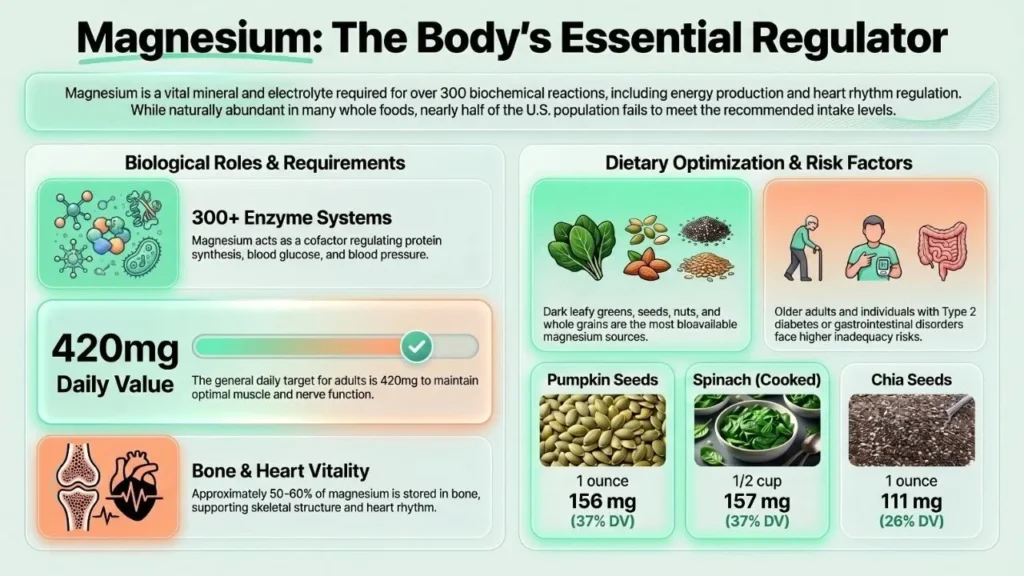
Magnesium serves as a cofactor for more than 300 different enzymes in the human body. These enzymes act as tiny biological machines that carry out essential functions such as building proteins, repairing DNA, and regulating the electrical signals that make the heart beat steadily. For the non-gym audience, these processes are happening behind the scenes to maintain bone density and cardiovascular integrity.
| Enzymatic Process | Role of Magnesium | Health Outcome |
| Glycolysis | Breakdown of glucose for energy | Stable blood sugar |
| Protein Synthesis | Building new tissues and hormones | Recovery and growth |
| Ion Transport | Moving Potassium and Calcium across membranes | Nerve function and heart rhythm |
| DNA Repair | Maintaining genetic stability | Healthy aging and disease prevention |

Managing Diabetes with Magnesium: The Glucose-Insulin Synergy
For individuals managing type 2 diabetes, the importance of magnesium enriched foods cannot be overstated. Clinical research indicates that magnesium plays a pivotal role in how the body handles insulin. Specifically, it is required for the insulin receptor to work properly, a process known as autophosphorylation. When magnesium levels are low, the cells become deaf to insulin’s signal, leading to higher blood sugar levels and increased insulin resistance.
Insights from the Nurses’ Health Study and Harvard Research
Long-term epidemiological studies, including the Nurses’ Health Study and the Health Professionals’ Follow-Up Study, have documented a clear inverse relationship between magnesium intake and diabetes risk. The data suggests that individuals with the highest dietary intake of magnesium are between 15% and 47% less likely to develop type 2 diabetes. This protective effect is even more significant for those who consume diets with a high glycemic index, as magnesium helps mitigate the metabolic damage caused by frequent sugar spikes.
Clinical Evidence: The Mumbai Intervention Study
A notable study conducted at a tertiary care center in Mumbai focused on the impact of magnesium on glycemic control in Indian patients. The study followed 100 participants with diagnosed type 2 diabetes over a three-month period. One group received magnesium supplementation alongside their standard care, while the other received a placebo.
| Metabolic Marker | Intervention Group (Change) | Placebo Group (Change) |
| HbA1c (Three-month average) | 9.85% Decrease | 7.09% Increase |
| Fasting Blood Sugar | 19.11% Decrease | No Significant Change |
| Postprandial Blood Sugar | 26.55% Decrease | 12.38% Increase |
These results, published in the International Journal of Advances in Medicine, demonstrate that optimizing magnesium intake can lead to a drastic improvement in blood sugar stability. For a person living with diabetes, this could mean the difference between progressing to higher medication doses and maintaining a stable, manageable condition.

The Indian Dietary Landscape: ICMR-NIN 2024 Updates
National nutrition surveys in India, including NFHS-5, have revealed a double burden of malnutrition where vitamin and mineral deficiencies persist even as obesity rates rise. In response, the ICMR-National Institute of Nutrition (NIN) released updated dietary guidelines in 2024 to address these gaps.
Understanding the New RDA for Magnesium
The 2024 guidelines emphasize that Indian lifestyles have shifted, necessitating a higher intake of micronutrients like magnesium to combat the rise of non-communicable diseases. The Recommended Dietary Allowance (RDA) is now tailored to age, gender, and physical activity levels.
| Category | Reference Weight (kg) | RDA (mg/day) |
| Adult Men | 65 | 440 |
| Adult Women | 55 | 370 |
| Pregnant Women | 55 | 440 |
| Lactating Women | 55+ | 400 |
What this means for the daily routine is that the average Indian adult needs to actively seek out magnesium enriched foods to meet these targets. Refined diets that rely heavily on white rice and maida (refined flour) often fall short because the magnesium-rich outer layers of the grain are removed during processing.
Soil Depletion and the Nutrient Gap
An emerging challenge in modern nutrition is the depletion of minerals in the soil due to intensive farming. Research suggests that magnesium levels in common vegetables may be significantly lower than they were 50 years ago. This makes it even more important to prioritize whole, unrefined foods and traditional Indian superfoods like millets, which are naturally more resilient and nutrient-dense.

Top 20 Magnesium Enriched Foods: A Deep Dive for Indian Kitchens
Let’s simplify the search for these nutrients by looking at what is already available in most Indian pantries. Each of these foods provides a unique set of benefits beyond just magnesium.
1. Pumpkin Seeds (Kaddu ke Beej)
Often discarded, these are actually the undisputed champions of magnesium. Just 30 grams (a small handful) can provide over 150 mg of magnesium.
- Home Hack: Keep a jar of roasted pumpkin seeds on the office desk. They are the perfect crunchy alternative to biscuits during the 4:00 PM tea break.
2. Almonds (Badam)
Almonds are a staple in Indian households, known for supporting brain health. They provide approximately 270 mg of magnesium per 100g.
- Home Hack: Soaking them overnight and peeling them in the morning not only makes them easier to digest but also neutralizes phytic acid, which can block magnesium absorption.
3. Ragi (Finger Millet)
Ragi is a true Indian superfood. It contains between 137 mg and 560 mg of magnesium per 100g depending on the variety.
- Home Hack: For a diabetic-friendly breakfast, replace bread with ragi dosa or ragi porridge. It helps prevent early morning sugar spikes while providing sustained energy.
4. Spinach (Palak)
Leafy greens are essential, and spinach is one of the best sources. Cooked spinach is more magnesium-dense than raw, providing about 87 mg per 100g.
- Home Hack: Dal Palak is a metabolic powerhouse. The combination of lentils and spinach provides both protein and a heavy dose of minerals.
5. Flax Seeds (Alsi)
Rich in Omega-3 fats and magnesium (392 mg per 100g), flax seeds are great for heart health.
- Home Hack: Ground flax seeds can be mixed into the atta (flour) used for making rotis. This is an invisible way to boost the nutrition of the entire family.
6. Cashews (Kaju)
While often avoided due to calorie concerns, a small portion of cashews provides 260 mg of magnesium per 100g.
- Home Hack: Instead of using cream to thicken gravies, use a small amount of cashew paste. It adds a rich ure along with essential minerals.
7. Sesame Seeds (Til)
A traditional winter staple in India, sesame seeds are loaded with 350 mg of magnesium per 100g.
- Home Hack: Sprinkle toasted til on salads or use it in chutneys. For homemakers, til laddoos (made with jaggery) are a great mineral-rich treat.
8. Chia Seeds
These have gained popularity recently for their fiber content, but they are also exceptional for magnesium (335 mg per 100g).
- Home Hack: Mix chia seeds into a glass of shikanji (lemonade) or curd. They absorb water and help keep the body hydrated while releasing minerals slowly.
9. Bajra (Pearl Millet)
Common in Rajasthan and Gujarat, bajra provides 137 mg of magnesium per 100g.
- Home Hack: Bajra khichdi is an excellent dinner choice for busy professionals. It is easy on the stomach and supports better sleep quality.
10. Jowar (Sorghum)
Jowar is another gluten-free millet that provides 130 mg of magnesium per 100g.
- Home Hack: Jowar rotis are a great alternative for those who feel bloated after eating wheat. They provide more magnesium and iron than standard refined flour.
11. Dark Chocolate (70% Cocoa or higher)
Yes, a treat can be healthy. 100g of high-quality dark chocolate contains 228 mg of magnesium.
- Home Hack: A single square of dark chocolate after dinner can satisfy a sweet craving while helping the nervous system wind down for sleep.
12. Soybeans and Tofu
Soy products are excellent vegetarian protein sources that also happen to be high in magnesium (up to 86 mg per 100g).
- Home Hack: A quick tofu stir-fry with vegetables takes less than 15 minutes to prepare, making it an ideal dinner for someone with a busy schedule.
13. Rajma (Kidney Beans)
A beloved North Indian staple, rajma provides about 45 mg of magnesium per 100g.
- Home Hack: The water used to boil rajma contains leached minerals. Don’t throw it away; use it as a base for the curry or soup to retain the magnesium.
14. Chickpeas (Chole/Chana)
Whether in a salad or a curry, chickpeas offer 48 mg of magnesium per 100g.
- Home Hack: Roasted chana is the ultimate no-cook snack for commuters. It keeps hunger at bay and provides a steady release of energy.
15. Moringa Leaves (Drumstick Leaves)
Moringa is often called a miracle tree, and for good reason-the leaves contain 97 mg of magnesium per 100g.
- Home Hack: Dried moringa powder can be added to almost any dish, from dals to paratha dough, without significantly changing the flavor.
16. Brown Rice
Switching from white to brown rice is one of the simplest ways to increase magnesium intake, as brown rice contains nearly three times more.
- Home Hack: If the ure of brown rice is difficult to get used to, try a 50/50 mix of white and brown rice until the palate adjusts.
17. Avocado
While not traditional, avocados are increasingly available and offer 58 mg of magnesium along with healthy fats that help with absorption.
- Home Hack: Mash avocado on a slice of whole-grain toast for a magnesium-rich breakfast that keeps you full for hours.
18. Banana
Bananas are the perfect portable snack, providing 27-32 mg of magnesium and a good dose of potassium to prevent muscle cramps.
- Home Hack: A banana with a spoonful of peanut butter is an excellent pre-workout snack that supports nerve and muscle function.
19. Jaggery (Gur)
As a natural sweetener, jaggery contains traces of minerals, including about 10 mg of magnesium per tablespoon.
- Home Hack: Replacing refined white sugar with jaggery in tea or coffee is a small step that adds up over time to support mineral balance.
20. Sunflower Seeds
Rich in Vitamin E and magnesium (325 mg per 100g), these are great for skin health and metabolic function.
- Home Hack: Mix sunflower seeds into upma or poha for an easy nutritional upgrade.
Bioavailability: Why Eating Isn’t Always Absorbing
A deep insight into nutritional science is that the amount of a mineral on your plate is not always the amount that reaches your cells. The body typically absorbs only 30% to 40% of the magnesium it consumes. Several factors can either help or hinder this process.
The Magnesium Blockers
- Phytates and Oxalates: These are natural compounds found in grains and greens that can bind to magnesium and prevent its absorption.
- Excessive Caffeine and Alcohol: Both can increase the amount of magnesium the kidneys flush out through urine.
- Soft Drinks and Phosphates: High intake of processed sodas can interfere with magnesium balance in the body.
The Magnesium Boosters
- Vitamin D Pairing: Magnesium and Vitamin D work in a hand-in-glove fashion. Magnesium is required to activate Vitamin D, and Vitamin D helps the gut absorb magnesium more effectively.
- The Power of Soaking: For busy professionals, this is the most important tip. Soaking nuts, seeds, and beans for at least 4-6 hours (or overnight) reduces phytates and makes the magnesium ready for the body to use.
- Gut Health: Including probiotic-rich foods like homemade curd (dahi) supports a healthy gut environment, which is where most magnesium absorption takes place.
| Nutrient / Factor | Impact on Magnesium | Recommendation |
| Vitamin D | Increases Absorption | Get 15 mins of sunlight or eat eggs |
| Vitamin B6 | Improves Cellular Uptake | Eat bananas and chickpeas |
| Phytic Acid | Decreases Absorption | Soak grains and nuts overnight |
| Alcohol | Increases Excretion | Limit to moderate intake |

Stress and the Magnesium Burn
One of the most profound third-order insights for busy professionals is the relationship between stress and magnesium loss. When the body is under stress-whether from a heavy workload or lack of sleep-it releases cortisol and adrenaline. These hormones signal the kidneys to excrete more magnesium.
This creates a vicious circle: stress depletes magnesium, and low magnesium makes the body more sensitive to stress. For someone managing diabetes, this is particularly dangerous because stress also causes blood sugar to rise. By focusing on magnesium enriched foods, you are essentially putting a brake on your stress response, allowing your body to remain calm and your sugar levels to stay stable even on a difficult day.

Practical Steps for a Busy Lifestyle
I know it’s hard to find time to cook elaborate meals every day. What this means for your daily routine is that we need to find low-effort, high-impact ways to get these nutrients in.
- The Desk Jar: Mix roasted pumpkin seeds, sunflower seeds, and almonds in a small jar. Keep it on your desk. This ensures you’re getting your magnesium even when you’re too busy for a full meal.
- The One-Pot Meal: Khichdi made with bajra or brown rice and added spinach is a complete, magnesium-rich meal that takes minimal prep time.
- The Morning Ritual: Start your day with 5-6 soaked almonds. It’s a small habit that signals to your body that it’s time to start producing energy.
- The Atta Fortification: Mix flax seed powder or ragi flour into your regular wheat flour. You won’t notice a huge change in taste, but your body will notice the difference in energy.

Frequently Asked Questions
Which foods are highest in magnesium for Indians?
The best magnesium enriched foods for the Indian diet include pumpkin seeds (kaddu ke beej), almonds, millets like ragi and bajra, and dark leafy greens like spinach and moringa. These staples are easily available and provide significant amounts of the mineral per serving.
Can magnesium help with diabetic sugar control?
Yes, magnesium is essential for insulin sensitivity. It helps the body’s cells respond to insulin, which naturally lowers blood sugar. Research shows that people with higher magnesium intake often have better HbA1c levels and a lower risk of diabetes complications.
How do I know if I am low in magnesium?
Common signs of deficiency include persistent fatigue, muscle cramps (especially in the legs), irritability, and poor sleep quality. If you find yourself feeling tired but wired, or if you have frequent headaches, your body may be asking for more magnesium enriched foods.
Does cooking destroy the magnesium in food?
Magnesium is a stable mineral and is not destroyed by heat. However, it can leach into the water if you boil your vegetables. To keep the magnesium in your food, it is better to steam or sauté your greens, or use the cooking water in a soup or dal.
Is it safe to take magnesium every day?
It is generally safe and recommended to get magnesium through your diet every day. If you are considering a supplement, the safe limit for most adults is around 350 mg per day from supplements alone. However, there is no limit on magnesium from food, as the kidneys naturally flush out any excess you don’t need.

A Step Toward Lasting Health
Let’s simplify this: you don’t need a complete life overhaul to feel better. I know it’s hard to find time, but simply swapping your white rice for brown rice or adding a handful of pumpkin seeds to your daily routine can start changing your energy levels within a few weeks. Magnesium is a silent supporter of your heart, your bones, and your blood sugar. By prioritizing magnesium enriched foods, you are giving your body the fundamental tools it needs to keep you energized, calm, and strong.
Every small step counts. Whether it’s soaking your almonds tonight or choosing a ragi roti tomorrow, these are the practical, home-based solutions that lead to long-term health. You deserve to feel your best, and it starts with the simple nutrition found in your very own kitchen.
Take the first step toward a healthier you today. If you need a personalized nutrition plan tailored to your diabetes management and busy schedule, our experts are here to help.
Contact Us
We understand how overwhelming nutrition and weight loss information can feel. With so many opinions and confusing advice online, it’s easy to feel stuck or unsure about what to do next.
At Diet Dekho, you never have to figure it out alone. You can contact us anytime with any questions or concerns. Our expert dietitians are available 24/7 to guide, support, and help you stay on track. Whether your goal is weight loss or building healthier habits, we’re here to make the journey simpler and more sustainable for you.
Disclaimer
This blog is intended to help readers make healthier food choices. Your health should always be the top priority. Before starting any restrictive or special diet, especially if you have a medical condition or health concern, please consult a doctor or a qualified dietitian. Each body responds differently to food and lifestyle changes. Always choose what is safe and suitable for you.

Abhinav is the Founder of Diet Dekho, helping people manage weight and lifestyle health through simple, practical nutrition and personalized diet plans.