🩺 Medically Reviewed & Nutrition Verified by Dt. Mahi Patel (B.Sc. Clinical Nutrition & Dietetics) | Editorial Lead: Diet Dekho Clinical Nutrition Desk | Cross-referenced with ICMR & NIN Dietary Standards.
Imagine the quiet stillness of a 3:00 a.m. nursing session, where the only sound is the rhythmic breathing of your newborn. Although the house is silent, your mind is likely racing with the pressure to reclaim a body that feels totally unfamiliar. Achieving a postpartum weight loss indian mothers can trust requires more than just willpower; it necessitates a scientific approach that honors your physical transformation while fueling the demands of new motherhood.
How to Lose Weight Safely After Delivery Safe postpartum weight loss indian mothers should aim for involves losing approximately 0.5 kg to 1 kg per week, starting 6–8 weeks after delivery. By prioritizing high-protein dals, fiber-rich vegetables, and complex grains while maintaining a 500-calorie deficit, mothers can shed weight gradually without compromising their energy levels, hormonal recovery, or the nutritional quality of breast milk.
The Physiological Con of Postpartum Recovery in India
To begin with, we must look at the postpartum period, often referred to as the fourth trimester. This represents a stage of extreme metabolic flux and systemic repair. In the Indian con, this phase is governed by cultural rituals and a physical state that Ayurveda describes as Vata-dominant. This means your body is naturally prone to dryness, coldness, and fatigue. Consequently, understanding this biological backdrop is essential before starting any weight reduction journey.
Specifically, clinical data suggests that the immediate loss of roughly 10 to 13 pounds following birth is primarily due to the delivery of the infant, the placenta, and the amniotic fluid. During the first week, you will likely shed additional weight as the body releases retained fluids through increased perspiration and urination. However, the remaining gestational weight is often composed of adipose tissue stored specifically to provide the caloric reservoir needed for lactation.
Furthermore, your hormonal landscape undergoes a drastic shift. For instance, estrogen and progesterone levels plummet while prolactin rises to support milk production. These shifts can alter your appetite and fat storage patterns, making the scale feel particularly stubborn. For the modern Indian mother, balancing these biological realities with a desire for weight management requires a structured, nutrient-dense meal plan that supports healing.

Epidemiological Trends in Maternal Weight Retention Across India
Notably, the National Family Health Survey (NFHS-5) provides a comprehensive look at the rising challenges of maternal obesity in the Indian population. The data indicates that the prevalence of higher weight people and obesity among women of reproductive age has surged significantly. Currently, approximately 24% of women are classified as having a body mass index (BMI \ge 25 kg/m^2). This trend is particularly concerning because postpartum weight retention is a significant predictor of long-term obesity and metabolic disease.
| Region/Group | Overweight/Obesity Prevalence (NFHS-4) | Overweight/Obesity Prevalence (NFHS-5) | Relative Increase |
| National (Women) | 20.6% | 24.0% | 16.5% |
| Urban Women | 31.3% | 33.2% | 6.1% |
| Rural Women | 15.0% | 19.7% | 31.3% |
| Southern Region | 26.0% (Avg) | 29.0% (TN), 25% (KL) | Significant |
| Northwest Region | 28.0% (Avg) | 33% (Delhi), 31% (Punjab) | Significant |
As a result, this increase is driven by a transition toward sedentary occupations and the consumption of nutrient-poor, energy-dense processed foods. The disparities across states highlight that women in more developed or urbanized regions face higher risks. Therefore, this emphasizes the need for a postpartum weight loss indian strategy that addresses lifestyle-specific barriers.

Nutritional Requirements for the Lactating Mother
There is a common misconception in Indian households that a mother must eat for two to produce enough milk. Actually, while lactation is energy-intensive, requiring an additional 330 to 500 calories per day, you should focus on the density of nutrients rather than the volume of food. Essentially, the goal is to provide enough energy for milk production while allowing the body to utilize its stored fat reserves for the remaining caloric needs.
Macronutrient Distribution and Satiety
Protein serves as the cornerstone of your recovery. It facilitates tissue repair and preserves muscle mass during weight loss. The ICMR-NIN guidelines emphasize that lactating women require higher protein quality, often achieved by combining cereals and pulses in a 3:1 ratio. Additionally, high-protein intake increases satiety, which is crucial for managing the intense hunger cues often triggered by breastfeeding.
| Food Group | Recommended Indian Sources | Physiological Role |
| Complex Carbs | Oats, Dalia, Brown Rice, Ragi, Millets | Sustained glucose release, fiber for gut health |
| Lean Protein | Moong Dal, Eggs, Lean Chicken, Paneer, Tofu | Muscle repair and immune support |
| Healthy Fats | Walnuts, Flaxseeds, Ghee (moderate), Mustard Oil | Hormone synthesis and infant brain development |
| Probiotics | Homemade Curd, Buttermilk, Kefir | Gut health and reduction of bloating |
In addition to protein, fiber is equally important. This is especially true for the many mothers who suffer from postpartum constipation. Aiming for 29 grams of fiber daily through green leafy vegetables and whole grains helps maintain digestive regularity.
Essential Micronutrients for Restoration
Moreover, your body’s stores of iron, calcium, and vitamins are often depleted during pregnancy. Iron is vital for restoring blood health and combating the extreme fatigue that often hinders physical activity. Similarly, calcium needs remain high. This is because the body will prioritize the calcium content of breast milk even at the expense of your own bone density.
| Nutrient | Recommended Daily Value (Lactation) | Indian Food Sources |
| Iron | 9 mg – 27 mg | Spinach, Moringa, Jaggery, Roasted Chana |
| Calcium | 1,000 mg | Ragi, Sesame seeds, Milk, Paneer, Curd |
| Vitamin A | 1,300 \mu g | Carrots, Papaya, Sweet Potato, Green Leaves |
| Vitamin C | 120 mg | Amla, Guava, Citrus fruits, Bell peppers |

Traditional Indian Wisdom and Modern Dietetics
I know it’s hard to find time to research every ancient ritual, but Indian culture has a rich heritage of postpartum care centered around the 40-day recovery period, often called Sava mahina. This tradition emphasizes warming foods that improve circulation and stimulate the uterus to contract. While these traditions offer valuable healing components, they often come with high-calorie preparations that can stall your progress.
Managing Caloric Density in Traditional Foods
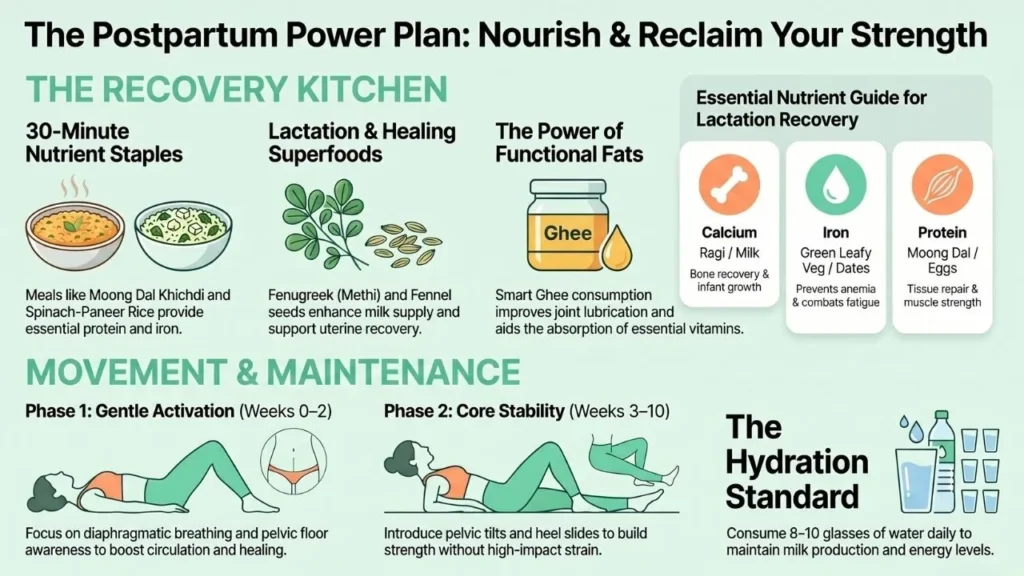
Traditionally, new mothers are encouraged to consume large quantities of ghee, Panjiri, and Gond ke Laddu. These are medicinal supplements containing edible gum for bone strength, nuts for minerals, and spices for digestion. Ghee contains butyric acid, which aids gut healing and serves as a carrier for fat-soluble vitamins.
However, the caloric density of these items is immense. A single Gond Laddu can contain up to 250 calories. From a dietitian’s perspective, the key is portion control. Consuming one small laddu as a mid-morning snack provides the benefits of traditional healing without creating a massive caloric surplus. Consequently, modern research suggests that excessive ghee intake does not significantly improve milk quality but can lead to unnecessary fat accumulation.
Incorporating Indian Superfoods Safely
What this means for your daily routine is that we can use scientific insights into galactagogues (foods believed to increase milk supply) to our advantage. Many staples of the Indian postpartum diet fall into this category.
- Fenugreek (Methi): Contains phytoestrogens. While it is widely used to boost supply, it also has hypoglycemic effects. Therefore, mothers with diabetes must exercise caution.
- Fennel (Saunf): Acts as a digestive aid. It contains estrogen-like compounds that may gently support lactation.
- Moringa (Drumstick Leaves): An Indian superfood rich in iron and calcium. It is a proven galactagogue that significantly enhances the nutritional quality of milk.
- Shatavari (Asparagus racemosus): An Ayurvedic powerhouse that helps balance hormones and supports the production of prolactin.

Postpartum Diabetes Management and Weight Loss
For the many Indian mothers diagnosed with Gestational Diabetes Mellitus (GDM), the postpartum phase is critical for preventing the transition to Type 2 Diabetes. Research indicates that breastfeeding significantly reduces this risk, but dietary management remains the primary tool for long-term health.
Glycemic Control in the Indian Con
Let’s simplify the management of blood glucose. It involves focusing on the Glycemic Index (GI) of Indian staples. For example, white rice and maida-based rotis cause rapid sugar spikes. In contrast, traditional alternatives like ragi, bajra, and brown rice release energy slowly.
| High GI Choice | Better Alternative | Why it Works |
| White Rice | Basmati or Brown Rice | Lower GI, prevents insulin spikes |
| Maida Paratha | Moong Dal Chilla | Higher protein and fiber content |
| Sweetened Lassi | Spiced Buttermilk | Probiotics without the sugar load |
| Fruit Juice | Whole Guava or Apple | Fiber slows sugar absorption |
Furthermore, the Plate Method is an essential strategy. Fill half the plate with non-starchy vegetables like bottle gourd (lauki) or spinach. Then, fill one quarter with protein like dal or chicken, and the remaining quarter with complex carbs like one multigrain roti.

Structural Design of the Postpartum Meal Plan
A successful postpartum weight loss indian mothers can maintain is structured into distinct phases. It is essential not to rush into a deficit before the body has healed from the physical trauma of delivery.
Phase 1: Recovery and Stabilization (Weeks 1–6)
During these first six weeks, the focus is entirely on healing. Caloric restriction is discouraged. Instead, the diet should be warm, soft, and easy to digest to accommodate a sluggish postpartum digestive system.
- Early Morning: Warm water with soaked methi seeds or ajwain water.
- Breakfast: Daliya porridge with milk or a soft Moong Dal Khichdi.
- Mid-Morning: One traditional Gond or Ajwain laddu with warm milk.
- Lunch: One soft roti, a bowl of thin dal, and sautéed Lauki.
- Evening: Vegetable soup or a handful of roasted makhana.
- Dinner: Light vegetable soup or Moong dal with soft rice.
Phase 2: Active Weight Management (Week 7 Onward)
Once cleared by a doctor, you can begin a gradual weight loss plan. This involves a target calorie deficit of approximately 500 kcal per day.
- Breakfast: Vegetable Oats Upma or a Besan Chilla with curd.
- Mid-Morning: A fiber-rich fruit like a pear or apple.
- Lunch: Two multigrain rotis, a bowl of thick dal (like Rajma), and a seasonal sabzi.
- Evening: Green tea or buttermilk with roasted chana.
- Dinner: Grilled paneer or chicken with stir-fried vegetables and brown rice.

Physical Activity and Core Restoration
In addition to your diet, exercise is a vital companion. However, it must be approached with caution. For those who had an uncomplicated vaginal delivery, light walking can often begin within days. On the other hand, those who underwent a C-section must wait at least 6 weeks before starting any routine.
Pelvic Floor and Core Health
Pregnancy often stretches the abdominal muscles (Diastasis Recti) and weakens the pelvic floor. As a result, high-impact exercises too soon can cause long-term issues like incontinence. Therefore, focus on these gentle movements:
- Kegels: Essential for strengthening the pelvic floor and improving circulation.
- Pelvic Tilts: A gentle way to engage the core without excessive pressure.
- Walking: Aiming for 150 minutes of moderate-intensity activity per week is the clinical recommendation.

The Psychology of Postpartum Weight Loss
Finally, weight loss after pregnancy is as much a mental challenge as a physical one. Sleep deprivation increases cortisol and ghrelin levels, which makes it incredibly difficult to resist sugar cravings. Furthermore, the societal pressure in India to bounce back can lead to stress.
Ultimately, many experts recommend a weight-neutral approach. This involves intuitive eating-listening to hunger and fullness cues-and honoring cravings without guilt. In a culture where mothers are often expected to sacrifice their own needs, prioritizing self-care through nutrition is a necessary act of health.

Conclusion: A Balanced Path to Wellness
The journey of postpartum weight loss indian mothers navigate is deeply personal. By respecting the 40-day healing window, prioritizing protein and fiber, and managing blood sugar through low-GI choices, you can reclaim your health safely.
Evidence from the NIH (National Institutes of Health) and ICMR confirms that a slow, steady approach is the safest way to ensure long-term metabolic health. This is not just about fitting into old clothes; it is about building a strong foundation for a lifetime of motherhood. According to the Harvard Health experts, the key to success is finding an approach that works for you specifically and keeps you motivated. Every meal is an opportunity to nourish the body that just performed the ultimate feat of creation.
Are you ready to start your safe and effective weight loss journey today?
Connect with our expert dietitians for a personalized plan that fits your life:

Frequently Asked Questions (FAQs)
Q1: Is it safe to start a diet for postpartum weight loss indian style immediately after birth?
A1: No. Clinical guidelines suggest waiting 6 to 8 weeks before starting a calorie-restricted diet. Rushing into a deficit too soon can hinder tissue repair and negatively impact your breast milk supply.
Q2: How many extra calories do I need if I am breastfeeding?
A2: Well-nourished breastfeeding mothers typically need an additional 330 to 500 calories per day. However, focus on nutrient-dense foods like pulses and leafy greens rather than just eating more.
Q3: Can traditional Indian galactagogues like methi and saunf help with weight loss?
A3: While they primarily boost milk supply, many of these herbs aid digestion and manage blood sugar. Methi, for instance, improves insulin sensitivity, which is beneficial for weight management.
Q4: What should I avoid in my diet for postpartum weight loss indian meals?
A4: You should limit highly processed foods, sugary beverages, and excessive amounts of deep-fried snacks. While ghee is healthy in moderation, consuming it in large, uncontrolled quantities can lead to unhealthy fat gain.
Q5: How can a busy mother find time to eat healthy meals?
A5: Batch cooking is the best solution. Prepare bases like boiled dals or chopped vegetables on the weekend. Keep one-handed healthy snacks like nuts or yogurt nearby for when you are nursing.

Contact Us
We understand how overwhelming nutrition and weight loss information can feel. With so many opinions and confusing advice online, it’s easy to feel stuck or unsure about what to do next.
At Diet Dekho, you never have to figure it out alone. You can contact us anytime with any questions or concerns. Our expert dietitians are available 24/7 to guide, support, and help you stay on track. Whether your goal is weight loss or building healthier habits, we’re here to make the journey simpler and more sustainable for you.
Disclaimer
This blog is intended to help readers make healthier food choices. Your health should always be the top priority. Before starting any restrictive or special diet, especially if you have a medical condition or health concern, please consult a doctor or a qualified dietitian. Each body responds differently to food and lifestyle changes. Always choose what is safe and suitable for you.
Medical & Nutritional Disclaimer: The nutritional charts and recommendations presented in this article are intended solely for educational and preventive wellness guidance. They are not a replacement for clinical consultation, personal diagnosis, or medical prescription. Always consult a qualified medical professional or certified clinical dietitian before making drastic modifications to your clinical diet routine.

Abhinav is the Founder of Diet Dekho, helping people manage weight and lifestyle health through simple, practical nutrition and personalized diet plans.