Waking up after eight hours of sleep only to feel like your battery is still at five percent is a frustrating reality for many. You might dismiss the heavy eyelids, that afternoon brain fog, or the strange tingling in your toes as just stress or signs of a busy life. However, for most Indians, these symptoms are actually your body’s quiet plea for a critical nutrient often missing from your plate. Finding rich foods for vitamin b12 is not just a health goal; it is a fundamental requirement for keeping your nerves sharp and your energy levels steady throughout a long day.
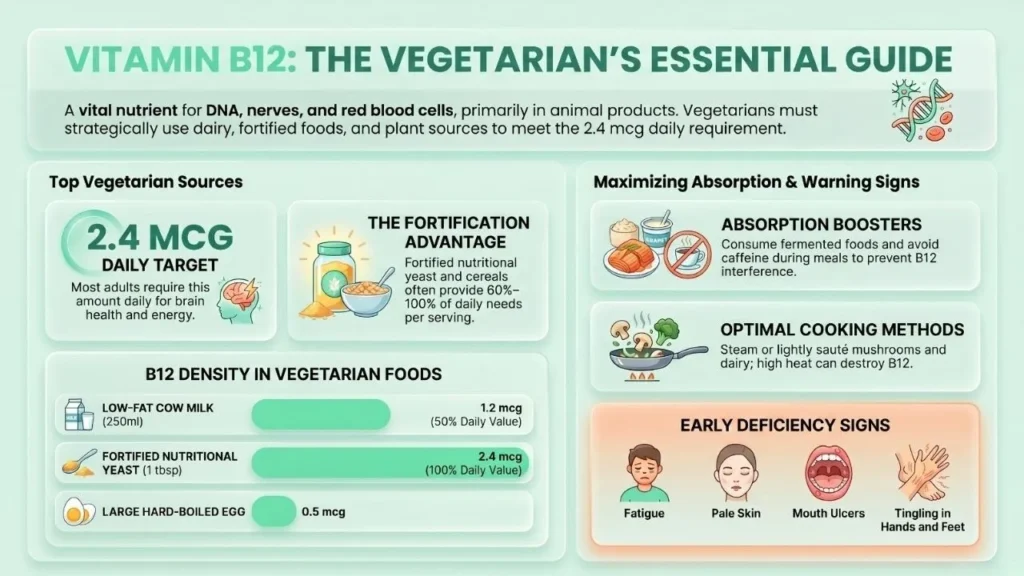
To prevent deficiency, vegetarians should focus on rich foods for vitamin b12 like dairy products (milk, curd, paneer), fortified cereals, and nutritional yeast. These sources provide the necessary 2.2 to 2.4 mcg of cobalamin required daily for healthy nerve function and red blood cell formation, effectively bridging the gap left by a meat-free diet.
The Biological Essentiality of Vitamin B12 in Your Daily Life
Vitamin B12, also known as cobalamin, is a water-soluble vitamin that keeps your brain and nervous system running smoothly. It is unique because it contains cobalt, a trace element essential for its biological activity. Your body uses this nutrient to help synthesize DNA and produce energy within the mitochondria of every cell. Consequently, without it, your cellular engines simply cannot function at their best.

Understanding the Absorption Puzzle
The absorption of Vitamin B12 is a complex process, which explains why many people remain deficient even if they eat the right things. First, gastric acid in your stomach releases the vitamin from food proteins. After that, it must bind to a protein called intrinsic factor produced by your stomach lining. This pair then travels to the end of your small intestine to enter the bloodstream. Because this journey is so delicate, even minor digestive issues can block your body from utilizing the rich foods for vitamin b12 you consume.
| Biological Process | Role of Vitamin B12 | Impact of Deficiency |
| Nerve Protection | Maintains the myelin sheath around nerves | Nerve damage, tingling, and numbness |
| Blood Health | Facilitates red blood cell formation | Fatigue and megaloblastic anemia |
| DNA Synthesis | Essential for cell repair and growth | Impaired immunity and cellular aging |
| Heart Health | Regulates homocysteine levels | Increased risk of cardiovascular issues |
| Energy Production | Converts fats and proteins into fuel | Constant muscle weakness and lethargy |
The amount you need is small, yet the impact is massive. For healthy adults, the Indian Council of Medical Research (ICMR) sets the baseline at 2.2 mcg per day. If you are pregnant or breastfeeding, your requirement increases slightly to support your baby’s development.

The Indian Con: A Silent Health Crisis
In India, Vitamin B12 deficiency has reached levels that experts now call endemic. Unlike Western countries where meat is a dietary staple, a huge portion of our population follows vegetarianism for cultural or religious reasons. In fact, research shows that at least 47% of North Indians are deficient, and that number jumps to 74% if we include borderline cases.
Why Vegetarians Still Struggle
Interestingly, even people who consume dairy regularly often show low B12 levels. This happens because our traditional habit of boiling milk multiple times can reduce its vitamin content by nearly 20%. Furthermore, high stress and irregular meals-common in busy urban lives-can impair the gut’s ability to absorb nutrients effectively. What this means for your daily routine is that your persistent exhaustion might be a biochemical reality rather than a lack of willpower.
| Demographic Group | Deficiency Prevalence | Primary Contributing Factors |
| Urban Professionals | 35.5% | High stress, caffeine, and missed meals |
| Rural Population | 42.3% | Limited dietary diversity and cost |
| Adolescents | 30.0% | High growth demands and junk food |
| Diabetics | 18% – 33% | Long-term Metformin use |
| Older people (60+) | 20% – 63% | Reduced stomach acid and absorption |
Identifying the Warning Signs: Listen to Your Body
The symptoms of a B12 shortage are famously sneaky. They often mimic general tiredness or aging, so many of us ignore them until they become serious. Your brain and nerves usually signal the shortage first because they rely heavily on B12 to maintain their protective coating.
Cognitive Fog and Mental Clarity
Have you noticed yourself struggling to find the right words or forgetting where you put your keys? This brain fog is a classic sign of low B12. Because Vitamin B12 supports neurotransmitters like serotonin and dopamine, a deficiency can also lead to irritability, anxiety, or low mood. Specifically, you might feel mentally slow even after a good night’s sleep.
Physical Red Flags You Shouldn’t Ignore
Physical fatigue is the most common symptom, reported by nearly 96% of deficient individuals. This fatigue feels different from normal tiredness because it doesn’t improve with rest. Additionally, keep an eye out for pins and needles in your hands or a smooth, red, sore tongue. If you feel out of breath while doing simple tasks like climbing stairs, your red blood cells might be struggling to carry enough oxygen.
| Symptom Category | Common Signs | Long-term Risk if Ignored |
| Neurological | Tingling, numbness, burning feet | Permanent nerve damage |
| Cognitive | Memory lapses, confusion, brain fog | Cognitive decline or dementia-like signs |
| Physical | Pallor, shortness of breath, fatigue | Severe anemia and heart strain |
| Emotional | Irritability, anxiety, low mood | Clinical depression |
| Oral Health | Smooth red tongue, mouth ulcers | Loss of appetite and taste |
Dairy Powerhouses: Your Best Bet for B12
For vegetarians looking for rich foods for vitamin b12, the dairy aisle is your strongest ally. Milk and its derivatives are the most accessible sources in an Indian kitchen. I know it is hard to change your entire diet, so let’s focus on these simple additions you can start today.
The Power of a Glass of Milk
Fresh cow’s milk is often called liquid gold for its nutrient density. Just one 250 ml glass provides about 1.1 mcg of Vitamin B12, which is nearly 50% of your daily requirement. Buffalo milk actually contains slightly more B12 than cow’s milk, making it a great choice for those in Northern India. To get the most benefit, try to avoid over-boiling your milk, as high heat can destroy the delicate vitamins.
Curd (Dahi) and Your Gut Health
Curd is perhaps the most gut-friendly way to boost your levels. One cup of curd provides about 1.0 mcg of B12. Most importantly, the probiotics in curd help maintain a healthy gut environment, which ensures you actually absorb the vitamins you eat. If you find milk heavy or difficult to digest, a bowl of fresh homemade curd with lunch is a perfect alternative.
Paneer and Cheese Varieties
Paneer is a staple for a reason. Consuming 100 grams of paneer gives you about 0.8 to 1.1 mcg of B12, covering a significant chunk of your daily needs. Furthermore, aged cheeses like Swiss cheese are incredibly concentrated; just two slices can meet almost your entire daily requirement. For a quick snack, you can simply pair a cheese slice with an apple to improve both energy and absorption.
| Dairy Product | Serving Size | B12 Content (approx.) | % of Daily Value |
| Cow Milk | 1 glass (250 ml) | 1.1 mcg | 45% – 50% |
| Low-fat Curd | 170 grams | 1.0 mcg | 43% |
| Paneer | 100 grams | 0.8 – 1.1 mcg | 35% – 45% |
| Swiss Cheese | 50 grams | 1.5 mcg | 62% |
| Whole Egg | 1 large (for ovo-vegetarians) | 0.6 mcg | 25% |
The Metformin Paradox: A Note for Diabetics
Managing diabetes requires careful attention, but one common medication can unknowingly lower your B12 levels. Metformin is the gold standard for Type 2 Diabetes, yet it is a well-known cause of B12 malabsorption. Studies show that up to 30% of long-term Metformin users develop a deficiency.
Why This Matters for Your Routine
The real danger is that B12 deficiency symptoms-like numbness and tingling-are almost identical to diabetic neuropathy. Consequently, many people mistake nerve pain for a blood sugar issue when it’s actually a vitamin shortage. Experts from the American Diabetes Association recommend that anyone on Metformin should get their B12 levels checked at least once a year. Adding more rich foods for vitamin b12 and discussing a calcium supplement with your doctor can help, as calcium helps reverse this specific absorption problem.
| Metformin Factor | Impact on B12 | Action Step |
| Dosage > 1000 mg/day | Higher risk of malabsorption | Test levels every 12 months |
| Usage for > 4 years | 30% risk of deficiency | Focus on daily fortified foods |
| Acid Reflux Meds (PPIs) | Compounded absorption loss | Avoid tea/coffee near meals |

Modern Solutions: Fortification and Convenience
If you are a busy professional or follow a strict vegan diet, fortified foods provide an essential safety net. Food fortification involves adding nutrients back into items that don’t naturally have them. This makes it much easier to hit your targets without spending hours in the kitchen.
Breakfast Cereals and Plant Milks
Fortified breakfast cereals are among the most reliable sources of B12. Many brands in India now add 25% to 100% of your daily requirement into a single serving. This is especially helpful for older adults because the synthetic B12 in these cereals is often easier for the body to absorb than the kind found in animal proteins. Similarly, fortified almond or soy milk can provide about 2.1 mcg per cup, nearly meeting your full daily need in one go.
Nutritional Yeast: The Cheesy Secret
Nutritional yeast is a deactivated yeast that tastes like nutty cheese. It is a B12 powerhouse; just a quarter cup can provide up to 24 mcg, which is way more than you need for the day. You can sprinkle it over popcorn, mix it into your dal, or toss it into a salad. It’s a perfect no-cook solution for anyone struggling with health and time.
| Fortified Food | Absorption Rate | Practical Use Case |
| Breakfast Cereals | Very High | Quick morning meal for work |
| Nutritional Yeast | High | Flavor booster for snacks and soups |
| Fortified Tofu | Moderate | Healthy meat substitute in curries |
| Plant Milks | High | Base for tea, coffee, or smoothies |
| Fortified Energy Bars | Moderate | On-the-go snack for busy days |

Traditional Grains and the Power of Fermentation
The recent focus on millets in India has opened up new ways to support our nutritional health. While millets like Bajra or Ragi are not direct sources of B12, the way we prepare them can make a huge difference.
Why Fermentation is a Game Changer
Traditional Indian techniques like soaking millets or rice overnight create a fermentation process. This bacterial activity can synthesize trace amounts of B vitamins, including B12. Research indicates that fermented millets (like millet ambari) can contain about 0.7 mcg of B12 per cup. Moreover, these fermented foods provide live probiotics that prep your gut for better nutrient uptake later in the day.
Stable Energy for Diabetics
For those with diabetes, millets like Kodo or Foxtail are excellent because they have a low glycemic index. This means they won’t cause sugar spikes, which protects your nerves from oxidative damage. When you combine these grains with rich foods for vitamin b12 like curd, you create a powerful, nerve-protecting meal that fits perfectly into a traditional Indian diet.

Maximizing Your Intake: Simple Lifestyle Tweaks
Simply eating the right foods isn’t enough; you must ensure your body actually uses them. Your absorption efficiency depends on several small habits you can easily adjust starting tomorrow.
Timing and Smart Pairings
Your body can only absorb about 1.5 to 2.0 mcg of B12 at a single time. Therefore, it is much smarter to spread your intake across the day. For example, have milk in the morning, curd at lunch, and a paneer dish for dinner. Additionally, pairing these foods with Vitamin C-like adding a squeeze of lemon to your meal-can help your gut process nutrients more effectively.
Avoiding the Absorption Blockers
- The Coffee Rule: Caffeine can interfere with how your body takes in B vitamins. Try to keep your tea or coffee at least one hour away from your meals.
- Don’t Overcook: High heat destroys B12. Instead of deep-frying paneer, try lightly sautéing or steaming it to keep the nutrients intact.
- Gut Health First: Since absorption happens in the gut, managing stress and avoiding excessive alcohol is crucial for keeping your stomach lining healthy.
I know it is hard to find time for a complicated health routine, so let’s simplify: just move your morning chai to 30 minutes after breakfast instead of having it with your meal. This tiny shift could significantly boost your energy.

A Practical Diet Plan for Your Busy Week
Maintaining healthy B12 levels shouldn’t feel like a chore. Whether you are managing a household or a high-pressure job, these small steps can make a big difference in how you feel by the end of the week.
For the Homemaker and Professional
If you’re a homemaker, remember that the curd and paneer you serve your family are just as vital for your own stamina. For professionals, swapping a sugary biscuit for a cheese slice or a fortified energy bar can prevent that 4 PM slump. These home-based solutions are practical, relatable, and designed to work within your existing routine.
| Meal | B12 Rich Option | Prep Time |
| Breakfast | Fortified Oats with Cow Milk | 5 Mins |
| Mid-Morning | A glass of Chaas (Buttermilk) | 2 Mins |
| Lunch | Whole wheat roti with Paneer and Curd | 20 Mins |
| Snack | Apple with a slice of Swiss Cheese | 1 Min |
| Dinner | Mushroom Masala with Fermented Rice | 25 Mins |
What this means for your daily routine is that energy is a resource you can manage. By intentionally choosing rich foods for vitamin b12, you can replace that feeling of running on empty with a steady, reliable vitality that lasts all day long.

Conclusion: Take Charge of Your Vitality
Vitamin B12 is the missing piece for many Indian vegetarians struggling with health and time. Whether you are dealing with the brain fog of a long workday or the persistent fatigue of managing a home, the solution often lies in our traditional dairy and modern fortified staples. By understanding how to protect this nutrient-from avoiding over-boiling to managing the impact of medications-you can ensure you never face a deficiency again.
Let’s simplify your path to better health. You don’t have to figure this out alone. At DietDekho, we understand the unique challenges of the Indian lifestyle. Every small dietary change you make today is a massive investment in your future energy.
Start Your Personalized Nutrition Plan Today
Frequently Asked Questions
What are the best rich foods for vitamin b12 for vegetarians?
The most reliable sources in India are milk, curd, paneer, and fortified breakfast cereals. For those who eat eggs, they are a fantastic concentrated source. If you follow a vegan diet, look for fortified plant milks and nutritional yeast.
Can low B12 cause memory problems?
Yes, B12 is essential for maintaining the myelin sheath that protects your nerves. Without it, you may experience brain fog, memory lapses, and difficulty focusing. In long-term cases, it can even lead to symptoms that look like early dementia.
I take Metformin for diabetes; do I need more B12?
Metformin can block B12 absorption in nearly 30% of patients. Since deficiency symptoms like tingling can be confused with diabetic neuropathy, it is very important to test your levels annually and prioritize B12-rich foods.
Does boiling milk destroy the Vitamin B12?
Boiling milk once is fine, but boiling it multiple times or for a long time can reduce B12 levels by 10% to 20%. To keep the nutrition intact, boil only what you need and avoid prolonged simmering.
How long does it take to feel better after increasing B12?
Most people notice a boost in energy within two to three weeks of consistent intake. However, if you have nerve symptoms like tingling, it may take a few months for the nerves to fully repair and for those sensations to disappear.

Contact Us
We understand how overwhelming nutrition and weight loss information can feel. With so many opinions and confusing advice online, it’s easy to feel stuck or unsure about what to do next.
At Diet Dekho, you never have to figure it out alone. You can contact us anytime with any questions or concerns. Our expert dietitians are available 24/7 to guide, support, and help you stay on track. Whether your goal is weight loss or building healthier habits, we’re here to make the journey simpler and more sustainable for you.
Disclaimer
This blog is intended to help readers make healthier food choices. Your health should always be the top priority. Before starting any restrictive or special diet, especially if you have a medical condition or health concern, please consult a doctor or a qualified dietitian. Each body responds differently to food and lifestyle changes. Always choose what is safe and suitable for you.

Abhinav is the Founder of Diet Dekho, helping people manage weight and lifestyle health through simple, practical nutrition and personalized diet plans.