Imagine it is 7:00 AM on a Tuesday in a quiet corner of Pune. You are juggling the morning tea, an early office call, and the persistent, dull pressure behind your eyes that you have been ignoring for weeks. You know your blood pressure has been creeping up, but the thought of adding more pills to your routine feels like admitting defeat. If you are looking for a simple, kitchen-based remedy, drinking beetroot juice for BP might be the most effective change you make today.
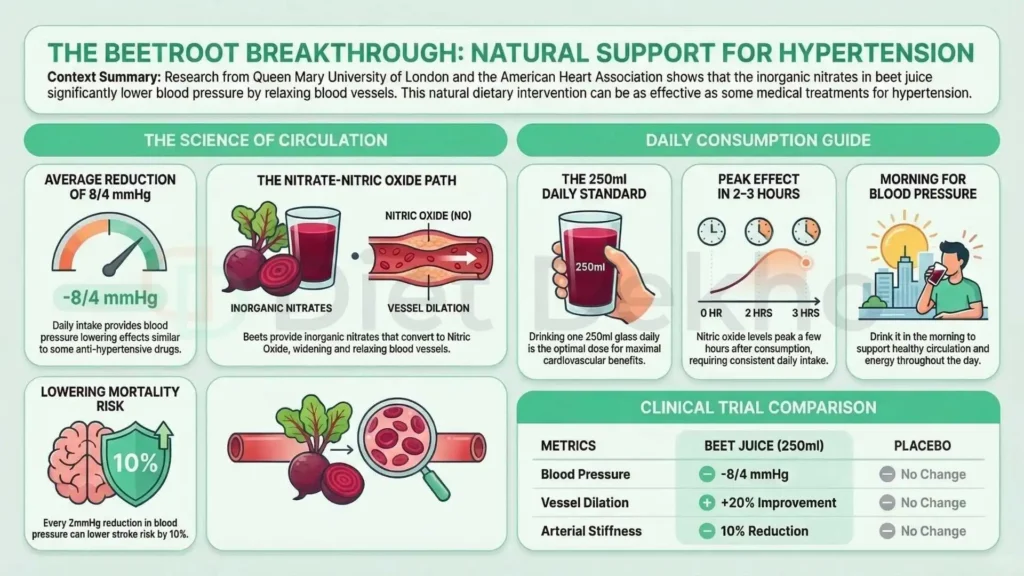
Drinking a daily 250ml glass of beetroot juice for BP can lower systolic blood pressure by 4-10 mmHg within three to six hours. The high concentration of dietary nitrates in beets converts into nitric oxide in the body, which relaxes and dilates blood vessels, improving blood flow and reducing arterial stiffness effectively.
Understanding the Silent Strain in Urban India
I know it is hard to admit when our bodies are struggling, especially when we are so used to the fast pace of city life. In bustling IT hubs like Hinjewadi or busy residential pockets like Kondhwa, hypertension has become a silent companion for many professionals and homemakers. Recent data from Pune shows an alarming rise in lifestyle diseases, with nearly 76% of women screened in specific campaigns showing high blood pressure readings. This is not just a statistic; it represents mothers, fathers, and young workers whose hearts are under constant pressure.

What this means for your daily routine is that the headaches, fatigue, and irritability you might be blaming on work stress could actually be warning signs. High blood pressure often has no dramatic symptoms, quietly stressing the heart, kidneys, and eyes for years before it is detected. The struggle to maintain a consistent home monitoring schedule is real, with research showing that over one-third of patients find it difficult to complete even weekly readings.
Let’s simplify this: your heart is like a pump working against resistance. When your blood vessels are tight and narrow, that pump has to work much harder. Over time, this causes the heart muscle to thicken and weaken. By introducing natural vasodilators like beetroot juice for BP, we can give the heart a much-needed break by relaxing the vessels it pumps through.
The Science of Red: How Beetroot Juice for BP Works
To understand why this deep-red root is so powerful, we need to look at the nitrate-nitrite-nitric oxide pathway. Unlike the nitrates found in processed meats, the inorganic nitrates in vegetables like beets are incredibly beneficial for your cardiovascular system. When you consume beetroot juice for BP, the journey begins right in your mouth.
Your salivary glands concentrate the nitrates you have ingested. Bacteria on the surface of your tongue then convert these nitrates (NO_3^-) into nitrites (NO_2^-). Once you swallow this nitrite-rich saliva, your stomach acid and vascular enzymes further convert it into nitric oxide (NO). Nitric oxide is a gas that acts as a powerful signaling molecule, telling the smooth muscles in your blood vessel walls to relax and widen.

The Biological Conversion Timeline
The effects of beetroot juice for BP are almost immediate but also transient, which is why daily habits matter so much.
| Phase of Action | Time After Consumption | Physiological Effect |
| Initial Absorption | 30 – 60 Minutes | Plasma nitrate levels begin to rise; initial dip in central (aortic) blood pressure. |
| Peak Effect | 3 – 4 Hours | Nitric oxide levels reach their highest; maximum reduction in systolic blood pressure occurs. |
| Duration of Benefit | Up to 24 Hours | Blood pressure remains lower than baseline but gradually begins to return to previous levels. |
| Full Washout | 24+ Hours | Effects typically wear off, requiring another dose to maintain the benefit. |
This timeline suggests that if you have a stressful presentation or a long commute planned, drinking your juice about three hours beforehand could provide the maximum protective benefit during those high-stress moments.
The Critical Role of Your Oral Health
You might be wondering what your teeth have to do with your heart. It turns out that the conversion of nitrate into the blood-pressure-lowering nitrite depends entirely on the bacteria in your mouth. This is a fascinating area of research from the University of Exeter, which found that older adults could significantly improve their blood pressure by supporting a healthy oral microbiome.
The use of strong antibacterial mouthwash can actually kill the good bacteria responsible for this conversion. If you kill those bacteria, the beetroot juice for BP simply passes through your system without being activated. Studies show that drinking beet juice actually helps reshape the oral microbiome, suppressing harmful strains and encouraging the growth of bacteria like Neisseria and Rothia, which are vital for nitric oxide production.
I know it is tempting to use mouthwash for that fresh feeling, but for the sake of your blood pressure, you might want to skip the harsh chemical rinses. Supporting your body’s natural processes is often about doing less, not more.

Clinical Evidence and Real-World Statistics
The effectiveness of beetroot juice for BP is not just anecdotal; it is backed by rigorous clinical trials. A landmark study by the Queen Mary University of London showed that patients with high blood pressure who drank 250ml of the juice daily experienced an average decrease of about 8/4 mmHg. For many, this was enough to bring their readings back into the normal range.
| Research Institution | Study Outcome | Clinical Significance |
| Queen Mary University | 8/4 mmHg reduction | Comparable to the effect of a single anti-hypertensive drug. |
| American Heart Association | 10% lower stroke risk | Even a 2 mmHg reduction can significantly lower mortality from heart disease and stroke. |
| University of Exeter | Two-week improvement | Older adults saw meaningful changes in just 14 days of consistent consumption. |
| Meta-Analysis (2022) | Systolic drop of 3.55 mmHg | Proven effective across diverse populations, including those with obesity or kidney issues. |
What this means for your daily routine is that every glass counts. As Professor Amrita Ahluwalia, a lead researcher in the field, noted, This research has proven that a daily inorganic nitrate dose can be as effective as medical intervention in reducing blood pressure. While it doesn’t replace your doctor’s prescriptions, it offers a powerful, low-cost way to enhance your treatment.
Practical Kitchen Solutions: Indian Beetroot Juice for BP Recipes
I know it is hard to enjoy the earthy taste of raw beets if you are not used to it. The key is to balance that flavor with traditional Indian ingredients that also support digestion and heart health. In Ayurveda, we often use ginger, lemon, and black pepper to improve the Agni or digestive fire, which helps the body absorb the nutrients more effectively.
The Heart-Healthy Morning Elixir
This recipe is designed for the busy professional who needs a quick, refreshing start. It combines the nitrates of the beet with the Vitamin C of the lemon to enhance absorption.
- 1 Medium Beetroot: Peeled and chopped into small pieces.
- 1/2 Inch Fresh Ginger: Adds a spicy kick and aids digestion.
- Juice of 1/2 Lemon: Preserves antioxidants and improves the flavor profile.
- 5-6 Fresh Mint (Pudina) Leaves: Provides a cooling effect, perfect for the Indian climate.
- 1/2 Cup Water: For smooth blending.
Instructions:
- Wash and scrub the beetroot thoroughly to remove any soil or residue.
- Blend the beetroot, ginger, and mint with water until smooth.
- Strain the mixture through a fine mesh if you prefer a smoother texture, though keeping the pulp adds valuable fiber.
- Squeeze in the fresh lemon juice, stir well, and drink immediately.

The IT Professional’s Zero-Effort Option
If you are racing to catch the Hinjewadi office shuttle, you might not have time for a blender. In this case, high-quality beetroot powder is a life-saver.
- 1 Tablespoon Beetroot Powder: Concentrated source of nitrates.
- 1 Cup Low-Sodium Vegetable Juice or Coconut Water: For an electrolyte boost.
- A pinch of Black Salt or Roasted Cumin Powder: To balance the taste.
Instructions: Simply whisk the powder into the liquid until clump-free. This takes less than 60 seconds and requires no heavy cleanup.
Managing Stress and BP at Work: Non-Gym Hacks
I know it is hard to find an hour for the gym when you have back-to-back meetings and a long commute. But managing your blood pressure is about more than just what you drink; it’s about how you move and breathe throughout the day.
The Bee Breath (Bhramari Pranayama)
Dr. Shalini Singh Salunke recommends this simple yogic technique as the best hack for managing blood pressure and stress. It works by stimulating the vagus nerve, which tells your body to switch from fight or flight mode into rest and digest mode.
- Posture: Sit comfortably with your spine straight.
- The Mudra: Lightly close your ears with your thumbs and place your fingers over your eyes.
- The Sound: Take a deep breath in, and as you exhale slowly through your nose, make a steady humming sound like a bee.
- Repetition: Start with 5 rounds every morning. It can naturally decrease your BP by 4 to 5 points.

Desk-Based Movement
Many Hinjewadi IT professionals spend up to 10 hours a day sitting, which is a major risk factor for hypertension. You don’t need a treadmill desk to stay active.
- Walking Meetings: For phone calls or one-on-ones, walk around the office or your home.
- The 90-Degree Rule: Adjust your chair so your feet, hips, and arms are at a 90-degree angle, which reduces physical strain on the body.
- Stair Sprints: Taking the stairs instead of the elevator for just 5 minutes a day strengthens the heart and burns extra calories.
- Leg Raises: While sitting at your desk, straighten one leg under the table and hold it for 10 seconds. Switch legs. No one will even notice.

Safety and Side Effects of Beetroot Juice for BP
As an experienced dietitian, I want to emphasize that beetroot juice for BP is a powerful tool, and with great power comes the need for caution. It is not a magic bullet, and it can interact with certain medical conditions and medications.
The Risk of Hypotension
If you are already on blood pressure-lowering drugs, the nitrates in beetroot juice can have an additive effect. This means your blood pressure could drop too low, leading to dizziness, fainting, or falls-this is especially important for our elders to keep in mind.
| Medication Class | Potential Interaction with Beetroot Juice | Symptoms to Watch For |
| ACE Inhibitors (e.g., Ramipril) | May raise potassium levels too high (hyperkalemia) and cause excessive BP drops. | Dizziness, lightheadedness, heart palpitations. |
| ARBs (e.g., Losartan) | Both relax blood vessels; taking them together can lead to fainting or blurred vision. | Fainting when standing up quickly, confusion, weakness. |
| Beta-Blockers (e.g., Atenolol) | Can cause an excessively slow heart rate and extreme tiredness. | Cold hands/feet, shortness of breath, extreme fatigue. |
| Diuretics (Water Pills) | Combined with nitrates, these can lead to dehydration and sodium imbalances. | Muscle cramps, dry mouth, increased dizziness. |
| PDE5 Inhibitors (e.g., Sildenafil) | Dangerous interaction; can cause a life-threatening drop in blood pressure. | Severe dizziness, syncope. |
Kidney Stones and Oxalates
Beets are very high in oxalates, which are natural substances that can form crystals in the urine. If you have a history of calcium oxalate kidney stones, drinking concentrated beetroot juice for BP every day might not be the best choice for you.
What this means for your daily routine is that you should stay well-hydrated and perhaps limit your beet intake to 2-3 times a week rather than every day. Diluting the juice with water or mixing it with low-oxalate cucumber juice can also help reduce the risk.
The harmless side effect: Beeturia
I have had many clients call me in a panic because their urine or stools turned red after starting beetroot juice for BP. This is called beeturia. It is completely harmless and simply a sign that your body is processing the natural pigments (betalains) of the beet. It is not blood, so please don’t let it worry you!

A Dietitian’s Advice: How to Start Safely
I know it’s hard to make major changes when you’re already feeling overwhelmed. Let’s simplify this. If you want to try beetroot juice for BP, here is my recommended Slow-Start plan to ensure your body adjusts comfortably.
- Consult Your Doctor: This is non-negotiable if you are on medication. Show them the research and ask if a daily glass of juice is safe for your specific health profile.
- The Half-Glass Test: Don’t start with a full 250ml. Start with 100-125ml (about half a glass) and see how your stomach and energy levels respond. Some people find that raw juice on an empty stomach can cause mild bloating or cramping initially.
- Monitor Your Numbers: Use a home blood pressure monitor to track your readings. Take a reading before the juice and another about 3 hours after. This will help you see exactly how your body responds to the nitrates.
- Consistency Over Intensity: You don’t need a beetroot detox or to drink liters of it. A single, consistent glass (200-250ml) is the sweet spot for most people with hypertension.
- Watch the Sugar: Beets are naturally sweet and contain about 20g of natural sugar per serving. If you have diabetes or insulin resistance, talk to your dietitian about how to fit this into your daily carb count.
The Broader Impact: Why Every Sip Matters
When you choose to drink beetroot juice for BP, you are doing more than just lowering a number on a machine. You are choosing to support the long-term health of your arteries. Research shows that dietary nitrates can improve the dilation capacity of your blood vessels by up to 20% and reduce arterial stiffness by 10%.
These changes in vessel function are associated with a much lower risk of heart attack and stroke. For a homemaker who spends her day caring for everyone else, or a professional working late into the night, this small daily ritual is an act of self-care that pays massive dividends in the years to come.
I know it’s hard to find time, but this juice takes less than 10 minutes to prepare. What this means for your daily routine is that you are investing 10 minutes now to potentially save years of health complications later.
Frequently Asked Questions (FAQs)
1. Can beetroot juice for BP replace my current medication?
No, you should never stop or change your prescribed medication without a doctor’s guidance. While beetroot juice for BP is highly effective, it is meant to complement your medical treatment, not replace it. Stopping your BP medication abruptly can be very dangerous.
2. Is there a downside to drinking beetroot juice for BP every day?
For most people, it is very safe. However, if you are prone to kidney stones, the high oxalate content could be an issue. Also, if you have very low blood pressure (hypotension), drinking it regularly could make you feel even more dizzy or tired.
How long do the effects of beetroot juice for BP last?
The blood-pressure-lowering effects typically peak at 3 hours and wear off after about 10 to 24 hours. This is why you need to drink it daily to see a sustained difference in your blood pressure levels.
Can I drink beetroot juice for BP if I have diabetes?
Yes, but you should be mindful of the sugar content. A 250ml serving contains about 10-20g of natural sugar. It is best to consult your doctor or a dietitian to see how it fits into your overall meal plan. Mixing it with high-fiber ingredients like spinach or cucumber can also help slow down the sugar absorption.
Does eating cooked beets have the same effect as drinking the juice?
While both are beneficial, raw beetroot juice for BP is generally more effective for lowering blood pressure. Cooking can break down some of the water-soluble nitrates, and juicing allows you to consume a larger amount of the beneficial compounds more easily.
Contact Us
We understand how overwhelming nutrition and weight loss information can feel. With so many opinions and confusing advice online, it’s easy to feel stuck or unsure about what to do next.
At Diet Dekho, you never have to figure it out alone. You can contact us anytime with any questions or concerns. Our expert dietitians are available 24/7 to guide, support, and help you stay on track. Whether your goal is weight loss or building healthier habits, we’re here to make the journey simpler and more sustainable for you.
Disclaimer
This blog is intended to help readers make healthier food choices. Your health should always be the top priority. Before starting any restrictive or special diet, especially if you have a medical condition or health concern, please consult a doctor or a qualified dietitian. Each body responds differently to food and lifestyle changes. Always choose what is safe and suitable for you.

Mahi Patel is a nutritionist and BSc graduate in Nutritional Science and Dietetics from Symbiosis Skills and Professional University. She is passionate about helping people improve their health through practical nutrition and sustainable lifestyle changes. Her experience includes clinical internships at Aditya Birla Memorial Hospital and VLCC, along with nutrition content writing and education.