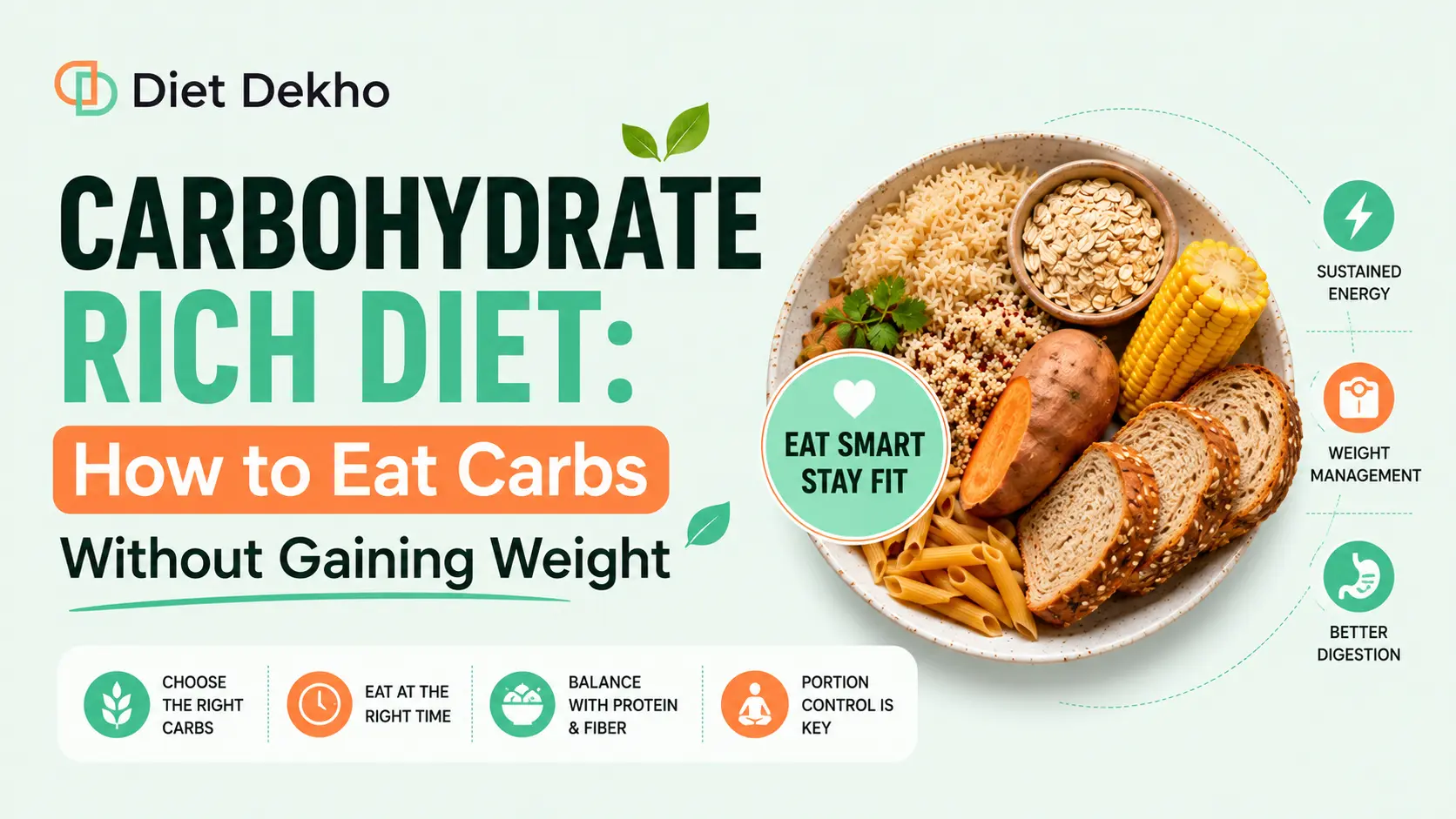
Picture this. You open your tiffin at work, seeing those soft, warm chapatis. You want to eat them, but you are terrified of gaining weight. Can we talk about how a carbohydrate rich diet can actually help you stay slim and energetic?
You can absolutely enjoy carbs without gaining weight by choosing slow-digesting, high-fiber options like brown rice, lentils, and oats instead of refined maida. The secret lies in simple kitchen hacks like cooling your rice overnight to cut its glycemic impact, balancing your plate with protein, and eating your vegetables first.
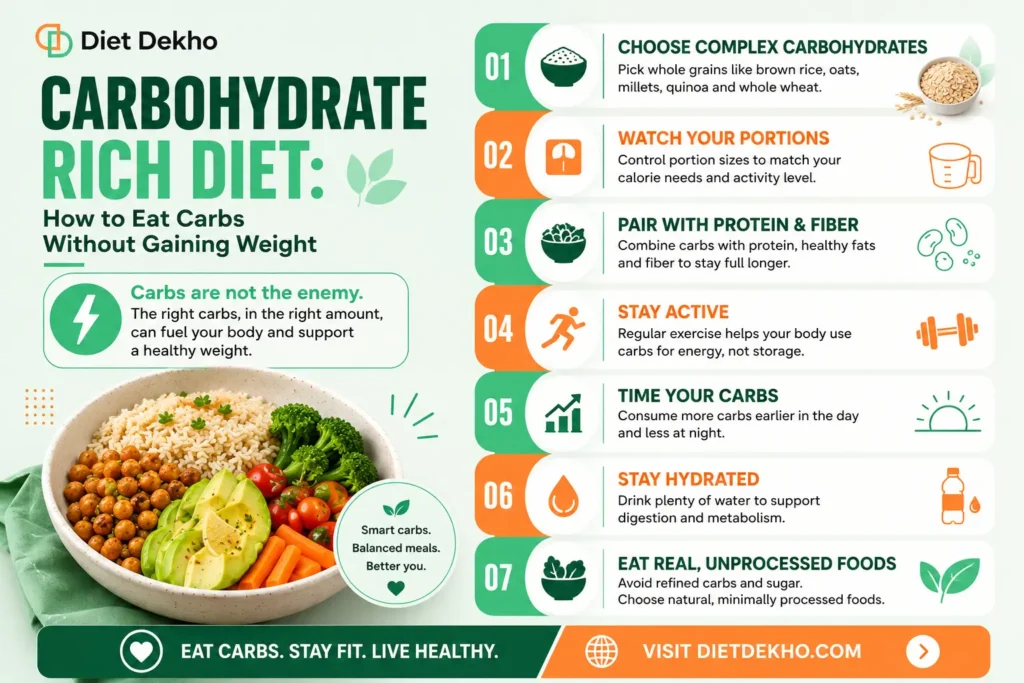
Why a Carbohydrate Rich Diet is Not your Enemy
Honestly, I see so many young professionals in Dehradun completely giving up rotis and rice. They believe that avoiding carbs is the only way to fit into their old clothes. However, the reality is that your body desperately needs carbohydrates to function properly.
Think of it this way. Carbs are your body’s preferred source of fuel, providing glucose to power everything from breathing to thinking. When you starve your system of carbs, you rob it of essential daily energy.
The Crucial Fuel Your Brain Needs
Your brain alone consumes about 120 grams of glucose every single day. If you cut out carbs, your body has to work twice as hard to break down protein and fat for energy. This often leaves you feeling chronically fatigued, moody, and constantly craving sweets.
Indeed, studies by the Institute of Medicine recommend that adults get 45% to 65% of their daily calories from carbs. According to the nutritionsource, choosing whole grains over highly refined white bread is the key to maintaining metabolic health. The secret is not avoiding them, but learning how to make them work for you.
The Quality Over Quantity Rule
When it comes to managing your weight, the quality of your carbs matters infinitely more than the quantity. Unprocessed, whole grains like ragi, bajra, and brown rice are packed with fiber, vitamins, and minerals. These nutrients support your digestion while keeping your energy levels stable.
On the other hand, refined carbs like white bread, biscuits, and maida are stripped of their nutritional value. These foods digest rapidly, causing quick blood sugar spikes and subsequent fat storage. By focusing on complex options, you can enjoy a carbohydrate rich diet without any weight gain anxiety.

The Magic of Starch Retrogradation in Your Kitchen
Let’s simplify a fascinating scientific concept that will change how you cook. Most of my clients at DietDekho.com make the mistake of eating piping hot rice straight from the pressure cooker. While it tastes comforting, hot rice has a very high glycemic index.
But did you know that simply cooling your cooked grains can alter their molecular structure? This simple cooling process turns simple starches into weight-friendly resistant starch.
The Overnight Fridge Hack
When you cook starch in water, the molecules absorb moisture and become incredibly easy for your enzymes to break down. However, when you refrigerate cooked rice or potatoes at 4°C for 12 to 24 hours, the amylose chains crystallize. This crystallization process is called starch retrogradation.
Once retrograded, these starches resist digestion in your small intestine. They travel straight to your large intestine, where they act exactly like dietary fiber. This means your body absorbs far fewer calories from the exact same portion of food.
Adding Coconut Oil for a Tenfold Boost
Here is an incredible secret from a famous Sri Lankan study. If you add just one teaspoon of coconut oil to the boiling water before adding your rice, and then cool it for 12 hours, the resistant starch increases up to tenfold. The lipids in the oil bind with the starch, helping it form tighter, indigestible crystals.
This simple trick can potentially reduce the caloric absorption of your rice by 50% to 60%. What this means for your daily routine is that you can still enjoy your favorite basmati rice guilt-free. Let’s look at how much resistant starch increases in common foods after a 24-hour cooling period :
| Food Item (100g serving) | Resistant Starch (Freshly Cooked) | Resistant Starch (After 24h Cooling) | Percentage Increase |
| White Rice (Long Grain) | 0.6g | 1.7g | ~180% |
| Wheat Pasta | 1.1g | 2.4g | ~120% |
| White Potatoes | 0.8g | 2.8g | ~250% |
| Cooked Lentils | 3.2g | 4.5g | ~40% |
As you can see, white potatoes show a massive 250% increase in resistant starch when cooled. So, making a cold potato salad with olive oil and vinegar is far better for your waistline than hot mashed potatoes. The same rule applies to your favorite pasta dishes.

Demystifying Glycemic Index and Glycemic Load
I know it is easy to get confused by nutritional jargon, but let’s break this down simply. The Glycemic Index (GI) measures how fast a carbohydrate raises your blood sugar compared to pure glucose. However, looking at GI alone can be highly misleading.
This is where the Glycemic Load (GL) comes into play. The GL is a much more accurate tool because it calculates both the speed of the sugar release and the actual quantity of carbs in a normal serving.
The Watermelon versus Potato Comparison
Think of it this way. Watermelon has a very high GI of 74, which sounds alarming. But because watermelon is mostly water and fiber, a standard slice has very few carbs, resulting in a low GL of just 4. It will not cause a major insulin spike or lead to weight gain.
In contrast, a boiled potato has a moderate GI of 60, but a high GL of 18 due to its high starch density. Understanding this distinction helps you make much better choices at the grocery store.
Smarter Kitchen Swaps for Stable Energy
Making a few simple pantry swaps can transform your metabolic health. Instead of polished white rice, try high-amylose basmati, brown rice, or native Indian millets like jowar and bajra. These grains have a lower glycemic index and are rich in natural minerals.
Additionally, try swapping refined maida flour with multigrain atta or high-protein besan (chickpea flour). These easy adjustments keep your blood sugar steady, giving you consistent energy throughout your busy workday.

How to Build a Balanced Indian Plate
Most traditional Indian meals are highly carbohydrate-dominant. We often see a plate filled with a mountain of white rice or three to four large chapatis, with just a tiny cup of dal and sabzi. Trust me on this, this classic layout is a major reason why many struggle with weight loss.
To fix this, let’s use the Indian healthy plate method. It is a simple, visual guide that requires zero calorie counting or kitchen scales.
The Non-Starchy Vegetable Half
First, make sure that exactly half of your plate is filled with non-starchy vegetables. You can choose delicious cooked sabzis like bhindi, tinda, gobi, or capsicum cooked in minimal oil. Alternatively, go for a fresh, colorful salad with cucumber, tomatoes, and onions.
This fiber-rich half acts like a physical barrier in your digestive tract. It slows down how quickly your body breaks down and absorbs the carbs from the rest of your meal. This prevents sudden insulin spikes and keeps you feeling full for hours.
The Protein and Complex Carb Quarters
Next, divide the remaining half of your plate into two equal quarters. Fill one quarter with a reliable protein source, such as moong dal, rajma, boiled eggs, or paneer bhurji. Protein is highly satiating and preserves your muscle mass during weight loss.
Finally, place your complex carbohydrates in the last quarter. This should be about one cup of brown rice, or one to two small multigrain rotis. To complete the meal, add a small bowl of dahi or a glass of spiced chaas to support your gut microbiome.
| Meal Type | Non-Starchy Vegetables (50%) | Protein Source (25%) | Complex Carbohydrates (25%) |
| Breakfast | Vegetable Poha (with peas, onions, and carrots) | A cup of fresh dahi or boiled sprouts | The poha base (preferably brown or red rice poha) |
| Lunch | Cucumber and tomato salad with sautéed capsicum | Yellow moong dal or fresh paneer bhurji | One or two small multigrain rotis |
| Dinner | Stir-fried French beans, tinda, and bell peppers | Grilled chicken breast, fish, or dry soy chunks | A small portion of cooled and reheated brown rice |

Desi Breakfast Hacks for Busy Professionals
We all face the 11 AM tiffin struggle, when our energy levels crash and we reach for biscuits or samosas. I know it is hard to find time for elaborate cooking on busy mornings, but you can easily optimize your favorite breakfast staples. Let’s start with poha, a beloved national favorite.
To combat this growing health crisis and manage weight effectively, the Who focus on increasing the consumption of raw vegetables, legumes, and unprocessed whole grains.
Upgrading Your Poha and Upma
Poha naturally has a moderate glycemic impact because the grains are parboiled during processing, which creates resistant starch. However, eating plain white poha can still cause a rapid glucose rise. The secret is to add plenty of carrots, peas, and a generous handful of roasted peanuts.
The healthy fats and protein from peanuts, combined with vegetable fiber, significantly lower the overall glycemic load. If you prefer upma, swap refined semolina (suji) for cracked wheat dalia or steel-cut oats. Load it with beans and carrots to keep your energy stable until lunchtime.
The Acidity Trick with Fresh Lemon
Here is a simple yet powerful dietitian trick that my clients love. Always squeeze a generous amount of fresh lemon juice over your warm poha or upma before eating. The natural acidity of lemon slows down your stomach’s emptying rate.
This simple addition delays starch digestion and moderates the release of sugar into your blood. Additionally, the vitamin C dramatically boosts your body’s absorption of plant-based iron from the grains. It is a win-win for your energy and your health.

Frequently Asked Questions
Can I eat a carbohydrate rich diet and still lose weight?
Absolutely. You can maintain a carbohydrate rich diet and lose weight by choosing slow-digesting, complex carbs like whole grains, legumes, and non-starchy vegetables. These options provide steady energy and keep you full longer, preventing the insulin spikes that trigger fat storage.
Is cooled and reheated white rice safe for weight loss?
Yes, cooled and reheated rice is excellent for weight loss. Cooling cooked rice in the fridge for 24 hours converts digestible starch into weight-friendly resistant starch. This process reduces its calorie absorption by up to 50% and lowers its overall glycemic impact.
What are the best healthy carbs to include in my daily Indian meals?
The best healthy carbs include whole grains like jowar, bajra, ragi, brown rice, and oats, alongside legumes like lentils, chickpeas, and kidney beans. These foods are naturally high in dietary fiber and essential minerals, which support steady energy and prevent fat accumulation.
Why are high carb foods like refined flour bad for my waistline?
High carb foods like white bread and maida are highly processed, stripping them of fiber and nutrients. These refined carbs digest rapidly, flooding your blood with sugar and triggering an insulin spike. This process makes you feel hungry quickly and promotes fat storage.
How does eating fiber first help when eating carbohydrate rich meals?
Eating your fiber-rich vegetables and proteins before your carbs creates a physical gel-like buffer in your digestive tract. This simple food sequencing trick slows down starch digestion and delays gastric emptying. Consequently, it blunts the post-meal insulin spike and prevents fat storage.
Final Thoughts on Reclaiming Your Health
Ultimately, maintaining a carbohydrate rich diet does not mean you have to compromise on your weight loss goals or feel constantly hungry. By using simple, natural strategies like starch retrogradation, food sequencing, and portion control, you can feed your body the clean fuel it deserves.
Remember, weight management is not about starving your body or following extreme, unsustainable diets. It is about building a loving, balanced relationship with the traditional foods that have nourished us for generations. Let’s make these small, powerful changes together today.
Book a free consultation with our expert dietitians at dietdekho and get a plan made just for you.

Abhinav is the Founder of Diet Dekho, helping people manage weight and lifestyle health through simple, practical nutrition and personalized diet plans.