Imagine sitting at your dining table, staring at a plate of steaming hot white rice and dal, but feeling a wave of anxiety instead of hunger. This is the reality for millions of Indians who, after a diagnosis, find themselves scouring the internet for a trustworthy free diet chart for diabetes patients. I know how overwhelming it feels to think that every meal is now a potential threat to your health. Let’s simplify this journey together and turn that fear back into the joy of eating well-balanced, traditional food.
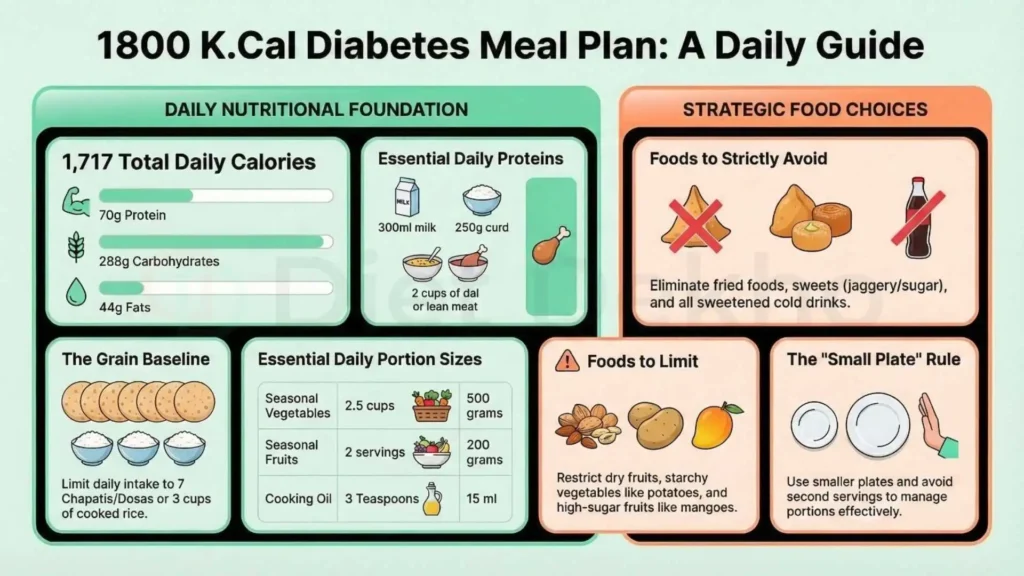
A healthy free diet chart for diabetes patients follows the plate method: fill 50% of your plate with non-starchy vegetables, 25% with lean protein, and 25% with fiber-rich whole grains. Prioritizing low-GI foods like millets and pulses, while maintaining consistent meal timings every 3 to 4 hours, is the most effective way to stabilize blood sugar levels.
The Silent Crisis: Understanding the Indian Diabetes Epidemic
The health landscape in India has shifted dramatically over the last few decades. The findings from the Indian Council of Medical Research–India Diabetes (ICMR-INDIAB) study are a wake-up call for the entire nation. According to the latest data, over 101 million people in India are currently living with diabetes. What is perhaps more concerning is the 136 million individuals identified as being in the prediabetic stage.
This means that nearly one in four Indians is either already managing the condition or is at high risk of developing it soon. This is not just a statistic; it is a lived reality that affects our families, our productivity, and our long-term wellness. I often tell my clients that understanding the scale of this issue helps us realize we are not alone in this struggle.

The prevalence is not uniform across the country. Data shows that southern and northern states like Kerala, Goa, and Punjab exhibit higher rates. Urbanization plays a heavy role here. Sedentary jobs, the easy availability of processed snacks, and high levels of stress create a perfect storm for metabolic dysfunction. Even our rural areas are no longer shielded, as rates there are rising faster than historical projections.
Biology and Age: Why the Indian Context is Unique
Indian biology presents unique challenges when it comes to insulin resistance. Research indicates that Asian Indians tend to develop diabetes at a lower Body Mass Index (BMI) compared to Western populations. We are biologically more prone to accumulating visceral fat, which is the hidden fat around our internal organs like the liver and pancreas.
This biological predisposition means that we must be even more vigilant about our dietary choices. Another alarming trend is the shifting age of diagnosis. Hyperglycemia is no longer a condition reserved for older adults. Significant rises in high blood sugar are now being documented in individuals as young as 30.
| Parameter | Current National Average | Gender Breakdown |
| Diabetes Prevalence | 11.4% | Men: 51.9% tested high, Women: 45.4% |
| Prediabetes Prevalence | 15.3% | 1 in 4 tested show impaired fasting glucose |
| High Blood Pressure | 35.5% | Often co-exists with metabolic syndrome |
| Abdominal Obesity | 39.5% | Primary driver of insulin resistance |

The Impact of the Green Revolution on Our Staples
To understand why a free diet chart for diabetes patient is so necessary today, we have to look back at how our eating habits changed. Historically, the Indian diet was built on a foundation of diverse millets like ragi, bajra, and jowar. However, the Green Revolution of the 1960s prioritized the production of white rice and refined wheat to ensure food security.
While this solved hunger, it inadvertently shifted our primary energy source to high-glycemic carbohydrates. Today, white rice is the staple for about 61% of our population, and whole wheat flour follows at 34%. Indian adults now consume roughly 62.3% of their daily energy from carbohydrates, which is among the highest rates in the world.
What this means for your daily routine is that your body is often processing more sugar than it can use, especially if you have a desk-based job. When this excess glucose is not burned by muscles, it remains in the bloodstream, leading to chronic spikes. Scientific evidence from the Harvard T.H. Chan School of Public Health supports the idea that swapping these refined grains for whole versions can significantly lower risk.

The 2024 ICMR-NIN Dietary Guidelines for Indians
In May 2024, the Indian Council of Medical Research (ICMR) and the National Institute of Nutrition (NIN) released updated guidelines to address this crisis. These 17 guidelines are designed to help us make informed choices in an era dominated by ultra-processed foods. They provide a practical roadmap that I use to design every free diet chart for diabetes patient.
One of the most significant changes is the recommendation for vegetable intake. The target has increased by 33%, moving from 300g to 400g per day. For green leafy vegetables specifically, the recommendation has doubled from 50g to 100g daily. This is crucial for diabetics as these vegetables are high in fiber and low in calories.
The guidelines also emphasize the 1000-day nutrition concept. This focuses on the period from conception to a child’s second birthday. Ensuring optimal nutrition during this phase reduces the risk of the child developing metabolic syndrome and diabetes later in life. It reminds us that diabetes management is truly a multi-generational effort.
| Food Category | Daily Recommendation (2024) | Rationale for Diabetics |
| Vegetables | 400g (100g leafy greens) | High fiber, slows glucose absorption |
| Fruits | 100g | Provides antioxidants and vitamins |
| Pulses/Legumes | 85g | Lean protein source; reduces glucose spikes |
| Whole Grains | 50% of total cereal intake | Lower GI than refined grains |
| Added Sugar | <5% of total calories | Prevents obesity and insulin surges |

Understanding the Glycemic Index: Your Survival Tool
If there is one term you should become familiar with, it is the Glycemic Index (GI). This scale, from 0 to 100, measures how quickly a food raises your blood sugar levels. Foods with a GI of 55 or less are considered Low GI and are the gold standard for your free diet chart for diabetes patients.
I like to explain this to my clients as a slow-release energy system. Instead of the sugar crash you feel after eating white bread or sweets, low-GI foods provide a steady stream of fuel. This prevents the sharp spikes that can damage your blood vessels over time.
However, we must also consider the Glycemic Load (GL). This accounts for the actual quantity of food you eat. Even a healthy, low-GI food can raise your sugar if you eat a massive portion of it. This is why portion control is just as important as food choice in any free diet chart for diabetes patients.
The Superstars of the Indian Pantry: Millets and Grains
Traditional Indian grains are nutritional powerhouses that we often overlook. Barley (Jau), for instance, has a very low GI of 25–28. It contains a soluble fiber called beta-glucan, which is proven to lower cholesterol and improve heart health, both of which are critical for diabetics.
Millets like Ragi (Finger Millet), Jowar (Sorghum), and Bajra (Pearl Millet) are absolute essentials. Ragi is particularly rich in calcium and iron, which are often low in women with metabolic issues. Jowar and Bajra help in weight management and improve insulin sensitivity.
When building your free diet chart for diabetes patient, I suggest starting with simple swaps. Instead of polished white rice, try brown rice or hand-pounded rice in small portions. Mix your regular wheat flour with gram flour (besan) or millet flour to increase the fiber content of your rotis.
| Low GI Grain | GI Value (Approx.) | Why It Works |
| Barley (Jau) | 25 | High in beta-glucan; heart healthy |
| Moong Dal | 38 | High protein; easy to digest |
| Jowar | 50 | Slows glucose release |
| Brown Rice | 50–55 | More fiber than white rice |
| Ragi | 50–68 | Calcium-rich; supports bone health |

The Foundation of Every Meal: The Plate Method
I know it’s hard to find time to measure every gram of food, but the Plate Method is a visual trick that takes seconds to implement. Using a standard 9-inch plate, you can ensure you’re getting the right balance of nutrients without a calculator.
First, draw an imaginary line down the center of your plate. Fill that entire half with non-starchy vegetables. This includes greens like spinach, cauliflower, okra, or gourds like lauki and karela. These provide volume, keeping you full, while adding very few calories or carbohydrates.
Next, divide the remaining half into two equal quarters. Fill one quarter with lean protein. For my vegetarian friends, this means a katori of dal, sprouts, paneer, or tofu. If you eat meat, go for skinless chicken, egg whites, or fatty fish like salmon. The last quarter is for your complex carbohydrates one small millet roti or a small scoop of brown rice.
Regional Solutions: Adapting for North and South Indian Tastes
A general free diet chart for diabetes patient often fails because it doesn’t account for our diverse regional food cultures. If you’re from the South, you don’t have to give up idlis and dosas; you just need to rethink the batter. Swapping white rice for oats or finger millet (ragi) in your batter increases the fiber dramatically.
For my friends in the North, the challenge is often the heavy use of refined flour (maida) and ghee. Instead of a buttery paratha, try a stuffed methi (fenugreek) or mooli (radish) paratha made with multigrain flour and cooked on a non-stick tawa with minimal oil. Fenugreek is particularly effective as its seeds and leaves contain soluble fiber that slows carbohydrate absorption.
Another regional superstar is the Moong Dal Chilla. This savory lentil pancake is high in protein and fiber, making it a perfect breakfast or light dinner. Pairing it with a tangy mint and coriander chutney without added sugar adds a burst of flavor and metabolic-boosting herbs.

Practical Home-Based Solutions for Homemakers
Homemakers are the unsung heroes of diabetes management. I know it’s exhausting to cook multiple versions of the same meal. Let’s simplify this by using stealth health techniques that benefit the whole family.
One of the easiest habits to adopt is serving a Fiber First course. Serve a large bowl of fresh salad cucumber, tomato, and carrot about 10 minutes before the main meal. This acts as a physical barrier in your gut, slowing down the absorption of sugars from the rice or roti that follows.
You can also use Smart Dilution. If the family is eating white rice, mix yours with a generous portion of steamed vegetables or cooked dal. This reduces the overall glycemic load of your plate while allowing you to eat with everyone else. Remember, as celebrity nutritionist Rujuta Diwekar often says, local and traditional food like dal-chawal is not the enemy when eaten in the right proportions.
| Instead of This… | Eat This Instead! | Why the Switch? |
| White Rice Dosa | Ragi or Oats Dosa | Higher fiber and protein content |
| Maida Roti / Naan | Jowar or Bajra Roti | Prevents sharp blood sugar spikes |
| Deep-Fried Samosa | Roasted Makhana or Chana | Low calorie; high satiety |
| Fruit Juice | Whole Fruit (Guava/Apple) | Retains fiber to slow sugar release |
| Sugary Tea | Herbal Tea or Spiced Chaas | Hydrating and improves gut health |

Time-Saving Meal Prep for Busy Professionals
For those of you balancing tight deadlines and long commutes, managing blood sugar can feel like a part-time job you didn’t sign up for. Weekend batch cooking is the secret to staying on track during a hectic week.
Dedicate two hours on Sunday to prepare your building blocks . Boil a big batch of chickpeas, kidney beans, or whole moong dal and store them in airtight containers. These can be quickly tossed into salads or curries when you get home late from work.
You can also prepare base gravies onion, tomato, ginger, and garlic paste and freeze them in ice cube trays. This allows you to cook a healthy, diabetes-friendly curry in under 15 minutes. Having these prepped ingredients ready means you’re less likely to reach for a high-carb delivery app when you’re tired.

The 4 PM Hunger Pang: Office-Friendly Snacking
The most dangerous time for any professional’s blood sugar is late afternoon. When energy dips, the office vending machine or a box of biscuits becomes very tempting.
Always keep a Desk Survival Kit . This should include roasted makhana, roasted chana, or a small jar of unsalted almonds and walnuts. These snacks combine healthy fats and protein, which provide sustained energy without the sugar crash.
If your office has a fridge, keep a small container of sprouts salad or a boiled egg. These protein-rich options are incredibly effective at keeping hunger at bay until dinner. According to NIH guidelines, spreading your carbohydrate intake evenly throughout the day is key to managing type 2 diabetes effectively.

Cooking Methods: Retaining Nutrients and Reducing Fat
The way we cook is just as important as what we cook. The ICMR 2024 guidelines suggest moving away from traditional deep-frying toward techniques that preserve nutrients. Pressure cooking is a staple of Indian kitchens and is actually one of the best methods for diabetics as it retains vitamins while saving time.
Steaming and boiling are ideal for fibrous vegetables. For instance, lightly steaming your okra or broccoli preserves the integrity of the fiber and antioxidants. If you love the crunch of fried snacks, consider investing in an air fryer or simply baking your samosas and tikkis.
Dry roasting spices like cumin and coriander intensifies their flavor without needing extra oil or ghee. We should also be mindful of our cookware. Metal and stainless steel are durable and safe, but earthen pots if properly treated can enhance the mineral content and flavor of our dals.
Movement for the Non-Gym Audience: The 1km Rule
I know many of you feel that if you can’t spend an hour in the gym, exercise isn’t worth doing. That couldn’t be further from the truth. Every bit of movement counts, and for diabetics, muscles are the primary place where blood sugar is cleared from the body.
Try the 1km Rule : for any destination under one kilometer, choose to walk instead of taking a car or rickshaw. This simple habit can cut your heart disease risk significantly. You can also try Micro-Movements like standing up while taking phone calls or taking the stairs if it’s less than three floors.
Non-Exercise Activity Thermogenesis (NEAT) is the fancy term for all the calories you burn just moving through your day. Housework, gardening, and even playing with your children or grandchildren are valid forms of diabetic fitness. The goal is consistency, not intensity.
Yoga: A Beginner-Friendly Tool for Blood Sugar
Yoga is more than just stretching; it is a clinical tool for metabolic health. Specific poses can physically stimulate your internal organs and improve circulation to the pancreas.
- Mandukasana (Frog Pose): By putting gentle pressure on the abdomen while sitting on your heels, this pose stimulates the pancreas to release insulin.
- Bhujangasana (Cobra Pose): This gentle backbend massages the abdominal organs and helps reduce stress, which is a major trigger for sugar spikes.
- Pranayama: Breathing exercises like Anulom Vilom help lower cortisol levels. High cortisol our stress hormone directly tells the liver to dump sugar into the blood.
I suggest starting with just 15 minutes in the morning on an empty stomach. It’s a low-cost, home-based solution that fits perfectly into a busy Indian household.
Remission: The Golden Window of Opportunity
One of the most hopeful developments in recent years is the concept of diabetes remission. Remission means bringing your HbA1c below 6.5% for at least three months without needing medication.
There is a Golden Window of about 2 to 3 years following your diagnosis. During this period, the damage to your pancreas is often reversible. Research shows that nearly 60% of people who intervene early with intensive lifestyle changes can move back to normal sugar ranges.
The key to this reversal is often weight loss. Losing even 5–10% of your body weight specifically fat around the liver can de-clog these organs and allow them to function properly again. It’s hard work, but the reward is a life free from dependency on daily medication.

Debunking Common Myths in Indian Households
Misinformation can be just as harmful as a bad diet. I see many clients making choices based on myths that actually sabotage their health.
- Myth: Swapping white sugar for jaggery or honey is healthy. Fact: Jaggery and honey are still simple sugars with high GI values. Your body processes them similarly to white sugar, and they will still cause spikes.
- Myth: Only older people get diabetes. Fact: Because of our modern lifestyles, we are seeing teenagers and young adults in their 20s being diagnosed with type 2 diabetes.
- Myth: Diabetics should never eat fruit. Fact: Whole fruits like guava, apple, and papaya are excellent sources of fiber and antioxidants. The key is portion control and eating them whole never as juice.
- Myth: Once on insulin, I can eat anything. Fact: Insulin is a management tool, not a free pass. Medication works best when combined with a consistent, healthy diet.
The ABCD Mantra for a Long Life
Dr. V. Mohan, a leading diabetologist, emphasizes the ABCD mantra for anyone living with the condition. If followed religiously, it can help you live a normal, healthy life, potentially even beyond 100 years of age.
- A: HbA1C. Keep your 3-month average blood sugar below 7%.
- B: Blood Pressure. Keep your readings below 140/90 mm of Hg to protect your heart and kidneys.
- C: Cholesterol. Maintain healthy lipid levels to prevent blockages in your blood vessels.
- D: Discipline. This includes staying consistent with your diet, exercise routine, and medication.
Your Sample 7-Day Diabetes Diet Chart
This sample plan is designed to be culturally familiar while adhering to clinical portion sizes. It provides a steady release of energy to keep your sugar levels within a healthy range throughout the day.
| Day | Breakfast (8:00 AM) | Lunch (1:30 PM) | Evening Snack (4:30 PM) | Dinner (8:00 PM) |
| Mon | Veg Oats Upma + Tea (No Sugar) | 2 Multigrain Rotis + Moong Dal + Lauki Sabzi | Handful Roasted Chana + Chaas | Veg Daliya + Sautéed Spinach |
| Tue | Moong Dal Chilla + Mint Chutney | Small bowl Brown Rice + Rajma + Cucumber Salad | Handful Roasted Makhana | 2 Jowar Rotis + Paneer Bhurji |
| Wed | Veg Poha with peanuts | 2 Whole Wheat Rotis + Chole + Steamed Gobi | Handful Mixed Nuts (Unsalted) | Quinoa Khichdi with carrots & beans |
| Thu | 2 small Idlis + Sambar (lots of veg) | 2 Bajra Rotis + Mixed Dal + Baingan Bharta | Sprouted Moong Salad | Veg Soup + Grilled Paneer Cubes |
| Fri | 2 Besan Chillas + Green Chutney | Small portion Brown Rice + Fish/Chicken Curry + Salad | 1 small Guava or Apple | Multigrain Pulao with peas & Curd |
| Sat | Ragi Porridge with almonds | 2 Rotis + Dal Palak + Mixed Veg Curry | Handful Roasted Sunflower Seeds | 1 Roti + Grilled Chicken/Paneer + Salad |
| Sun | Ragi Dosa + Tomato Chutney | Veg Khichdi + Tomato Rasam + Spinach Raita | Green Tea + 5-6 Soaked Almonds | 2 Multigrain Rotis + Karela Sabzi + Dal |
Conclusion: Small Daily Habits, Long-Term Health
Managing diabetes is not about restriction or eating bland food; it is about making smarter choices that fit into your lifestyle. By switching to low-GI staples, adopting the plate method, and finding simple ways to move every day, you can reclaim your energy and health. I know it’s hard to find time, but focusing on these small daily habits will lead to long-term freedom from complications.
Let’s simplify this together. If you’re looking for more personalized advice or a custom meal plan that fits your specific needs, we are here to help. You can start your journey today by filling out our health assessment form here.
Frequently Asked Questions
Can I eat rice and roti if I have diabetes?
Yes, but the choice and portion size matter. You should replace white rice with brown or parboiled rice and use high-fiber flours like jowar, bajra, or multigrain for your rotis. Always pair your grain with a protein (like dal) and a fiber (like salad) to slow down sugar absorption.
Which fruits are safest for sugar patients?
Fruits with a low to moderate glycemic index are safe when eaten in moderation. These include guava, apple, pear, papaya, and citrus fruits like oranges. Avoid fruit juices as they lack fiber and cause rapid sugar spikes.
How often should a diabetes patient eat?
Eating small, balanced meals every 3 to 4 hours is the most effective way to keep blood sugar stable. This prevents the sharp rises and falls that can happen when you have large meals or wait too long between them.
Is jaggery a good substitute for white sugar?
No. Jaggery has a high glycemic index (over 70) and affects your blood glucose levels almost exactly like white sugar. It is a myth that natural sugars are safer for diabetics; both should be avoided or strictly limited.
Can I reverse diabetes through diet alone?
While diet is a cornerstone of management, reversal or remission usually requires a combination of weight loss (5-10% of body weight), a balanced diet, and regular movement. Early intervention during the first 2-3 years after diagnosis offers the highest chance of success.
Contact Us
We understand how overwhelming nutrition and weight loss information can feel. With so many opinions and confusing advice online, it’s easy to feel stuck or unsure about what to do next.
At Diet Dekho, you never have to figure it out alone. You can contact us anytime with any questions or concerns. Our expert dietitians are available 24/7 to guide, support, and help you stay on track. Whether your goal is weight loss or building healthier habits, we’re here to make the journey simpler and more sustainable for you.
Disclaimer
This blog is intended to help readers make healthier food choices. Your health should always be the top priority. Before starting any restrictive or special diet, especially if you have a medical condition or health concern, please consult a doctor or a qualified dietitian. Each body responds differently to food and lifestyle changes. Always choose what is safe and suitable for you.

Abhinav is the Founder of Diet Dekho, helping people manage weight and lifestyle health through simple, practical nutrition and personalized diet plans.