
Imagine waking up on a foggy December morning. The air is crisp and the floor tiles beneath your feet send a chill through your system. You reach for a cup of steaming tea, perhaps with a bit too much sugar. You are seeking that immediate warmth to kickstart your day. I know it is hard to find time for a balanced breakfast. You might be rushing to get the kids to school or preparing for a 9:00 AM boardroom meeting.
For those of you managing diabetes, this morning ritual is often clouded by a silent worry. You wonder how the colder weather and these comfort cravings will affect your blood sugar levels today. Choosing the right fruits winter season provides is simple. It is the most effective way to stabilize your energy and protect your health. Best of all, it adds no stress to your busy schedule.
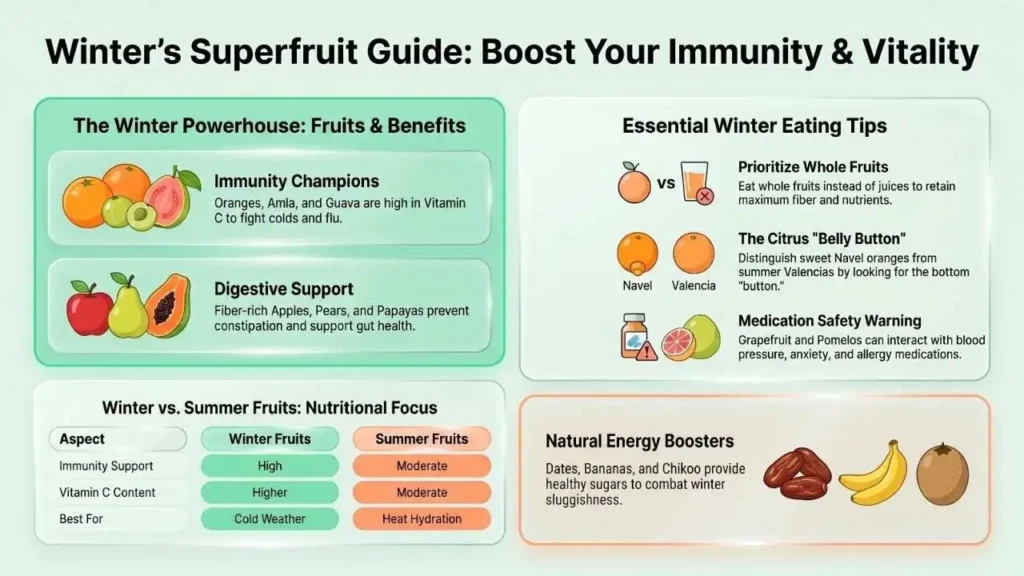
The best fruits winter season offers in India for managing health and diabetes include guava, amla, oranges, apples, and pears. These seasonal choices are naturally high in fiber and Vitamin C. These nutrients help slow down sugar absorption and strengthen immunity against cold-weather infections. Consuming these whole fruits instead of juices ensures stable blood glucose levels and sustained energy throughout the day.
The Physiological Impact of Winter on Metabolic Function and Glucose Regulation
When temperatures drop across the Indian subcontinent, your body undergoes significant changes. This happens from the shivering heights of Himachal to the milder chill in Pune. Cold weather naturally causes your blood vessels to narrow. This process is known as vasoconstriction and can lead to fluctuations in your blood glucose levels.
How the Body Reacts to Winter Chill
I often notice sugar readings creep upward for my DietDekho clients in winter. This is not because they lack discipline. Instead, the body’s internal chemistry is simply shifting. Shorter days and reduced sunlight exposure can affect your mood and activity levels. This often leads to a phenomenon where we seek out high-calorie warm foods. We do this to compensate for the lack of environmental heat.
What this means for your daily routine is that your choice of fruits winter season produces must be strategic. We are looking for foods that provide internal warmth. This comes through efficient metabolism rather than sugar spikes. Research from the Harvard T.H. Chan School of Public Health indicates that a diet rich in whole fruits can lower the risk of chronic diseases. This includes heart disease and diabetes. These fruits provide essential phytochemicals that act as anti-inflammatory agents.
Managing Dehydration and Glycemic Impact
Clinical observations suggest that dehydration is a silent risk during the Indian winter. You do not feel as thirsty as you do in the summer. Consequently, you might unintentionally drink less water. This leads to more concentrated blood sugar and higher readings.
Integrating hydrating fruits into your diet is a brilliant way to sneak in extra moisture. It also provides a dose of vitamins. However, as your dietitian friend, I want to emphasize that not all fruits are equal. We need to look at the Glycemic Index (GI). This measures how quickly a food raises your blood sugar.
| Fruit Category | Glycemic Index (GI) Range | Metabolic Effect | Recommended Winter Examples |
| Low GI | 0-55 | Slow sugar release; ideal for daily use | Guava, Amla, Apple, Pear, Orange |
| Medium GI | 56-69 | Moderate rise; consume occasionally | Papaya, Kiwi, Peaches |
| High GI | 70+ | Rapid spike; best avoided or limited | Watermelon, Overripe Bananas, Chikoo |

Deep Dive into the Nutritional Profiles of Essential Winter Fruits
Let’s simplify this by looking at your local fruit stall. In India, we are blessed with an abundance of seasonal produce. It seems almost designed by nature to help us through the cold. I want to walk you through the heavy hitters. These are the fruits that should be on your dining table every single week.
The Power of Guava: A Diabetic’s Best Friend
If there is one fruit I want you to embrace this winter, it is the humble guava, or amrood. It is widely grown across Uttar Pradesh and Maharashtra. It reaches its peak sweetness and nutritional density when the air turns cool. From a clinical perspective, guava is a powerhouse. It has a Glycemic Index of about 12 to 24, which is incredibly low.
The magic of guava lies in its fiber content. One small guava can provide about 5.4 grams of dietary fiber. Much of this is soluble fiber like pectin. I know it is hard to find time to track your fiber grams. Think of it this way: the fiber in guava acts like a slow-motion filter in your gut. It prevents sugar from rushing into your bloodstream all at once. Furthermore, guava contains nearly four times the Vitamin C of an orange.
Amla: Ancient Wisdom for Modern Immunity
Amla, or the Indian Gooseberry, is a fruit that feels more like medicine. In traditional Ayurvedic systems, it is revered for balancing the body. In modern clinical terms, it is a metabolic marvel. Amla is one of the richest sources of Vitamin C on the planet. Its Vitamin C remains stable even when dried or cooked.
Amla is particularly beneficial for my friends struggling with Type 2 diabetes. It contains high levels of chromium. This mineral directly supports the pancreas and helps regulate blood sugar by improving insulin sensitivity. It also contains polyphenols that protect the body against complications. This includes oxidative damage to the eyes and kidneys.
Nagpur Oranges and the Science of Hesperidin
Winter in India is synonymous with the sight of Nagpur oranges. These oranges have a GI of around 40. This keeps them safely in the low-GI category. Beyond Vitamin C, citrus fruits contain a specific flavonoid called hesperidin. Clinical research shows this improves blood vessel function and reduces inflammation.
However, many busy professionals make a common mistake. They reach for a glass of orange juice during their morning commute. I need to be very clear here-juice is not fruit. When you juice an orange, you strip away the fiber. You concentrate the sugar. This causes a rapid spike in insulin, which is exactly what we are trying to avoid.
Apples: The Soluble Fiber Secret
We have all heard the saying about an apple a day. For a diabetic, it is particularly true because of the fiber it contains. Apples are rich in pectin. This is a soluble fiber that binds to cholesterol and toxins in the digestive tract. It helps clear them from the body.
With a GI of about 36 to 39, apples provide a satisfying crunch without a heavy glycemic load. Research involving over 187,000 participants found that those who ate whole fruits had a lower risk of diabetes. This was especially true for those eating apples and grapes. Always remember to eat the skin. The skin contains half of the apple’s total fiber and most of its polyphenols.
| Essential Nutrient | Highest Fruit Source | Primary Health Benefit |
| Vitamin C | Guava, Amla, Oranges | Immune support and skin repair |
| Soluble Fiber | Apples, Pears, Guava | Sugar regulation and cholesterol reduction |
| Potassium | Pears, Oranges, Kiwi | Blood pressure control and heart health |
| Antioxidants | Berries, Pomegranates | Reduced inflammation and disease protection |

Regional Varieties and the Impact of Climate on Winter Produce
As someone who has worked for a decade at DietDekho, I know your choices are local. India’s geography allows for a stunning variety of regional winter specialties.
The Purandar Fig and Custard Apple Legacy
In the Purandar tehsil of Maharashtra, winter brings figs (Anjeer) and custard apples (Sitaphal). Both have received Geographical Indication (GI) status. Purandar figs are a delight but are highly perishable. This fruit is best enjoyed fresh during its short winter window.
Recent reports from agricultural scientists have highlighted challenges due to unseasonal cold. When temperatures drop too low, it can lead to premature fruit drop. From a health perspective, fresh figs are an excellent source of calcium and magnesium. These are vital for bone health as we age.
The Strawberry Season of Mahabaleshwar
If you are near the Western Ghats, winter means Mahabaleshwar strawberries. These berries are not just delicious. They are a clinical powerhouse for anyone managing diabetes. Berries have some of the lowest sugar contents of all fruits. They are also incredibly high in antioxidants called anthocyanins.
Strawberries have a GI of 41. One cup provides more than 100% of your daily Vitamin C needs. For my busy professional clients, strawberries are a dream snack. They require no peeling and can be easily added to curd. The antioxidants in strawberries help reduce chronic inflammation.

Practical Integration: Tailoring Your Fruit Intake to Your Lifestyle
Knowing which fruits are good is only half the battle. The real challenge is fitting them into a full life. Let’s look at how we can make the fruits of the winter season work for you.
Strategies for the Busy Professional
I know your mornings are a blur. Between emails and getting out the door, breakfast feels like a luxury. But skipping breakfast can lead to a blood sugar crash later. This causes you to reach for unhealthy snacks.
- The Desktop Fruit Basket: Keep a bowl of apples and pears on your desk. They stay fresh for days without refrigeration. Research shows that having healthy food in sight makes you more likely to choose it.
- The Protein Pairing: If you have fruit as a snack, pair it with walnuts or almonds. The healthy fats and protein slow down digestion. This provides steady energy instead of a sugar spike.
Solutions for the Dedicated Homemaker
As the Chief Nutrition Officer of your home, you often think of yourself last. But your health is the foundation of the family.
- Pre-Prep for Success: Take 15 minutes on a Sunday to wash and slice fruits like papaya. Store them in airtight glass containers. This makes them a ready-to-eat option during busy chores.
- The Salad Secret: Winter is the best time for fresh greens. Grate some amla or toss in pomegranate seeds into your daily kachumber salad. It adds a burst of flavor and a massive nutrient boost.

Scientific Advancements: Rethinking Sugar and Fruit Consumption
In the world of nutrition, we are constantly learning. Some research from 2024 and 2025 has challenged old assumptions about fruit and diabetes.
The Mango Paradigm and Prediabetes
For years, we told people with diabetes to avoid mangoes. However, a fascinating clinical trial published in 2025 found surprising results. Daily mango consumption actually improved blood sugar control and reduced body fat in adults with prediabetes. The researchers argued it is about how sugar is packaged with fiber and compounds like mangiferin.
Genetic Insights into Personalized Nutrition
Another groundbreaking study in 2025 looked at how fruit juice affects people based on genetic risk. They found that in certain adults with a high genetic risk, 100% fruit juice was linked to a lower risk of diabetes. This doesn’t mean everyone should start drinking juice. However, it shows that the future of nutrition will be highly personalized. For now, the safest advice remains: eat your fruit whole.
Storage Science: Making Your Winter Harvest Last Longer
There is nothing more frustrating than finding your fruit mushy after two days. In an Indian kitchen, storage is a science.
The Ethylene Factor and Washing
Many winter fruits are climacteric. This means they continue to ripen after being picked. They release ethylene gas, which is nature’s ripening hormone. Never store gassy fruits like apples and bananas near leafy greens. This will cause the greens to spoil faster. Also, remember to wash fruits only right before you eat them. Trapped moisture from early washing can lead to mold.
Refrigerator Zone Management
Your fridge has different climate zones. Using them correctly can extend the life of your fruits by several days.
| Fridge Zone | Typical Temperature | Best for… |
| Bottom Crisper | 2°C – 4°C | Leafy greens and berries |
| Middle Shelves | 4°C – 5°C | Carrots and sturdier fruits like pears |
| Upper Shelves | 6°C – 8°C | Pre-cut fruits and leftovers |
| Door Racks | 8°C – 10°C | Pickles and sauces |

Frequently Asked Questions
Q1: Can I eat fruit during the winter season every day if I have diabetes?
Yes, you absolutely can! Whole fruits provide essential fiber and antioxidants. The key is choosing low-GI options like guava and apples. Stick to 1-2 servings per day and spread them out.
Q2: What is the best time for a diabetic patient to eat fruit?
The best time is usually mid-morning or as an evening snack. I suggest avoiding fruit late at night. Pairing your fruit with a protein, like almonds, is the best way to ensure blood sugar stability.
Q3: Are bananas safe to eat in the winter?
Bananas are a moderate-GI fruit. They are fine in moderation. However, I recommend choosing a slightly under-ripe banana. Avoid those with many brown spots, as the sugar content is higher.
Q4: Which fruit is best for boosting immunity during the cold months?
Amla (Indian Gooseberry) is the undisputed champion of immunity. It has an incredible concentration of Vitamin C. Guavas and oranges are also excellent choices available in India during winter.
Q5: Is it okay to drink fruit juice if it is 100% fresh?
Fresh juice still lacks the fiber found in the whole fruit. For a diabetic patient, whole fruit is always the superior choice. It prevents the rapid sugar spikes that juice can cause.
Conclusion: Your Step-by-Step Action Plan
Managing health, work, and home can feel overwhelming. I don’t want this to be another to-do list. Let’s simplify this into three small steps. First, the next time you go to the market, look for firm guavas. Make it your goal to have one a day as an afternoon snack.
Second, buy a small bottle of amla powder. Try just a teaspoon in warm water tomorrow morning. It takes 30 seconds, but your immune system will thank you. Finally, remember that you don’t have to be perfect. If you have a sweet craving, reaching for a seasonal fruit is a massive victory over reaching for a biscuit.
You are doing a great job. These small, daily choices in the fruits winter season provides are the building blocks of your health. If you ever feel stuck, we are always here to help. For a personalized nutrition plan that takes the guesswork out of your diet, connect with our expert team today.
Contact Us
We understand how overwhelming nutrition and weight loss information can feel. With so many opinions and confusing advice online, it’s easy to feel stuck or unsure about what to do next.
At Diet Dekho, you never have to figure it out alone. You can contact us anytime with any questions or concerns. Our expert dietitians are available 24/7 to guide, support, and help you stay on track. Whether your goal is weight loss or building healthier habits, we’re here to make the journey simpler and more sustainable for you.
Disclaimer
This blog is intended to help readers make healthier food choices. Your health should always be the top priority. Before starting any restrictive or special diet, especially if you have a medical condition or health concern, please consult a doctor or a qualified dietitian. Each body responds differently to food and lifestyle changes. Always choose what is safe and suitable for you.

Abhinav is the Founder of Diet Dekho, helping people manage weight and lifestyle health through simple, practical nutrition and personalized diet plans.