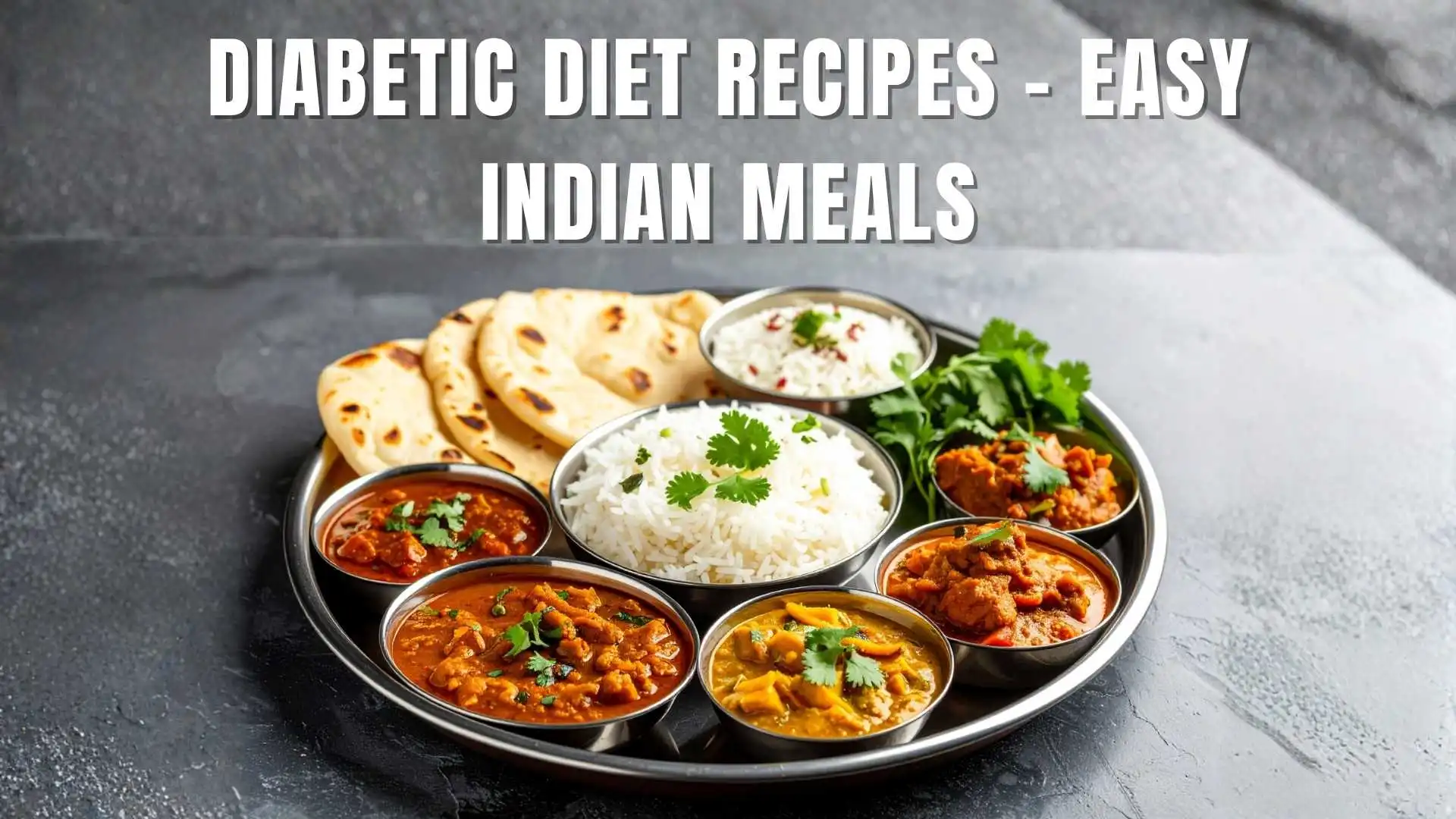
The journey of managing Type 2 Diabetes (T2D) often begins in the quiet, spice-scented kitchens of Indian homes, where tradition meets the modern metabolic challenge. For a project manager in Bengaluru or a schoolteacher in Delhi, the diagnosis of diabetes frequently feels like a sudden departure from the comfort of familiar foods. However, the modern clinical consensus indicates that the path to stability does not require a rejection of heritage, but rather a strategic refinement of it. The metabolic reality for the Indian professional involves balancing high-pressure careers with a biological predisposition to insulin resistance, often referred to as the South Asian phenotype. By integrating low-glycemic index (GI) ingredients and utilizing time-saving preparation techniques, the diabetic individual can transform their daily meals into a potent form of preventative medicine.
The most effective diabetic diet recipes for Indian households prioritize high-fiber, low-glycemic index (GI) ingredients such as whole millets (ragi, jowar, bajra), pulses (moong dal, chana dal), and non-starchy vegetables. A balanced diabetic meal plan follows the Plate Method, where 50% of the plate consists of vegetables, 25% of lean protein (paneer, lentils, or egg whites), and 25% of whole grains. Incorporating functional spices like fenugreek (methi), cinnamon (dalchini), and turmeric (haldi) further enhances insulin sensitivity and glucose metabolism. Consistent meal timings and portion control are essential for maintaining stable blood glucose levels throughout the day.
The Epidemiological Crisis and the South Asian Metabolic Profile
The landscape of diabetes in India has undergone a dramatic transformation over the last decade. As of 2024, India is home to the world’s second-largest diabetes population, with approximately 89.8 million to 101 million adults affected. This surge is not merely a consequence of aging but reflects a significant nutrition transition where traditional, high-fiber diets have been displaced by refined carbohydrates and sedentary lifestyles. The International Diabetes Federation (IDF) projects that by 2050, the number of adults living with diabetes in India could reach 156.7 million.
The underlying biological vulnerability of the Indian population is critical to understanding why dietary intervention is so vital. Indian adults develop Type 2 Diabetes nearly a decade earlier than Western populations, frequently at a lower Body Mass Index (BMI). This phenomenon is often characterized by higher visceral fat levels and lower muscle mass, even in individuals who appear lean.
| Metric | India Diabetes Data (2024-2025) |
| Estimated Prevalence Rate | 10.5% – 11.4% |
| Undiagnosed Individuals | 43% of cases |
| Untreated Population (Lancet) | 62% |
| Urban vs. Rural Trends | Convergence of prevalence rates |
| HbA1c Control (< 7%) | Achieved by only 24.8% of patients |
The South Asian phenotype is further complicated by intrauterine programming. Research suggests that maternal nutritional deficiencies, specifically low Vitamin B12 and high folate intake, can increase the susceptibility of the offspring to diabetes in later life. For the adult patient, this means that the body is often less efficient at managing glucose spikes from a young age. Consequently, the adoption of low-GI Indian recipes is not just a lifestyle choice but a necessary biological correction.
Foundational Nutritional Principles for Diabetic Management
To navigate the complexities of an Indian diabetic diet, one must understand the relationship between macronutrients and blood glucose. Carbohydrates have the most immediate impact on blood sugar, but the quality of the carbohydrate determines the severity of the spike. The glycemic index (GI) provides a scale from 0 to 100 to measure how quickly a food increases glucose levels.
The Glycemic Index Framework
| GI Category | Range | Indian Food Examples |
| Low GI | 55 or less | Whole pulses, non-starchy vegetables, millets, tempered lentils |
| Medium GI | 56 – 69 | Whole wheat roti, brown rice, certain tropical fruits |
| High GI | 70 or more | White rice, maida (refined flour), sugar, potatoes |
Calculating the daily energy requirement and its distribution is a standard clinical practice. For a typical adult requiring 2,000 calories, the National Institutes of Health (NIH) and Indian medical guidelines often suggest deriving approximately 50% of energy from complex carbohydrates.
{Total Carbohydrate (g)} = frac{2000 { kcal} times 0.50}{4 { kcal/g}} = 250 { g}
However, this allocation must be spread across small, frequent meals to avoid metabolic overload. The Plate Method remains the most accessible strategy for the non-gym audience. By ensuring that half the plate is filled with vegetables like spinach, bottle gourd (lauki), and cabbage, the volume of the meal is maintained while the caloric density is reduced.

The Role of Cereals and the Rice-Wheat Debate
Rice is more than a staple in India; it is a cultural anchor. However, the widespread consumption of highly polished white rice has been identified as a significant contributor to the diabetes epidemic. The milling process removes the bran and germ, which contain the fiber and micronutrients necessary to slow digestion. When fiber is removed, the remaining starch is rapidly converted into glucose, straining the body’s insulin response.
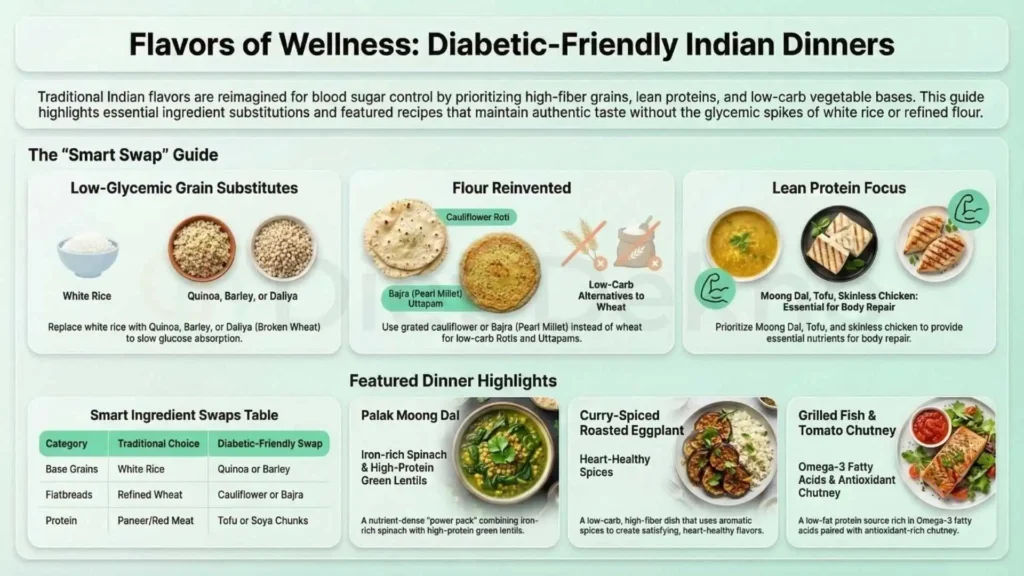
The Harvard T.H. Chan School of Public Health emphasizes that switching from refined grains to whole grains can significantly reduce the risk of Type 2 Diabetes. In the Indian context, this translates to replacing white rice with brown rice, red rice, or parboiled rice. Furthermore, traditional grains like millets including ragi (finger millet), jowar (sorghum), and bajra (pearl millet) offer a superior nutritional profile.
| Grain | Key Benefit for Diabetics | Recommended Use |
| Ragi | High calcium and fiber; low GI | Porridge, dosa, or rotis |
| Jowar | Gluten-free; slow-digesting protein | Bhakri or rotis |
| Bajra | High in magnesium; improves insulin sensitivity | Winter rotis or khichdi |
| Quinoa | Complete protein source; low GI | Upma or salads |
For those who find it difficult to eliminate rice entirely, the technique of cereal-pulse synergy is effective. Combining cereals and pulses in a 3:1 ratio provides a complete protein profile and lowers the overall GI of the meal. Additionally, cooking rice with added vegetables or legumes further buffers the glucose response.

Pulses and Legumes: The Protein Powerhouses
India is one of the world’s largest producers of pulses, yet many urban diets suffer from a protein gap . For the diabetic patient, pulses are indispensable. They contain complex carbohydrates that are digested slowly, and their high fiber content provides lasting satiety. Whole pulses like moong, rajma, and chana have significantly lower GI scores than their split counterparts.
Research indicates that soaking and sprouting pulses enhances their nutritional value. Sprouting reduces anti-nutritional factors like phytates and tannins, which can interfere with mineral absorption. Furthermore, sprouted moong has a higher concentration of Vitamin C and B-vitamins.
| Pulse Type | GI Score | Protein per 100g (Raw) | Fiber Content |
| Moong Dal | 38 | 24g | High |
| Chana Dal | 28 | 22g | Very High |
| Masoor Dal | 26 | 25g | High |
| Soybean | 15 | 36g | Exceptional |
Incorporating soy into the diet is particularly beneficial for those looking for plant-based protein. Soybeans contain roughly equivalent protein to five eggs per 100g, while remaining very low in carbohydrates.

The Biochemistry of Indian Spices in Diabetes Control
One of the most profound insights from Indian traditional medicine, supported by modern clinical trials, is the role of spices as metabolic enhancers. These are not merely for flavor; they contain bioactive compounds that target specific insulin pathways.
Fenugreek (Methi): The Natural Hypoglycemic
Fenugreek seeds are rich in 4-hydroxyisoleucine, an amino acid that stimulates the pancreas to release insulin when blood sugar levels are high. Preclinical studies published through NIH platforms have shown that fenugreek can enhance GLUT4 translocation, which is the process of moving glucose transporters to the cell surface to facilitate glucose uptake into muscles. Consuming 10g of soaked seeds or incorporating methi leaves into rotis and dals can significantly lower post-prandial glucose levels.
Cinnamon (Dalchini): Improving Insulin Signaling
Cinnamon has the ability to mimic insulin and increase glucose transport into cells. Clinical trials have demonstrated that consistent cinnamon supplementation can reduce fasting blood glucose by 18-29%. It also appears to slow the rate of gastric emptying, meaning that carbohydrates from the meal enter the bloodstream more gradually.
Turmeric (Haldi): Combating Inflammation
Chronic low-grade inflammation is a hallmark of Type 2 Diabetes. Curcumin, the primary polyphenol in turmeric, improves insulin sensitivity by reducing systemic inflammatory markers. For maximum benefit, haldi should be paired with black pepper, which contains piperine a compound that increases curcumin absorption by up to 2,000%.

Detailed Recipe Suite: 12 Easy Diabetic Diet Recipes for Indian Meals
Let’s simplify your meal planning with these 12 research-backed recipes. I know it’s hard to find time, but these are curated for their simplicity and metabolic benefits.
Breakfast: The Energy Catalyst
1. Besan Chilla (Chickpea Pancakes)
A protein-dense alternative to traditional pancakes.
- Ingredients: 1 cup besan, turmeric, cumin, carom seeds (ajwain), and chopped spinach.
- Method: Whisk with water to a pouring consistency. Cook on a hot tawa until crisp.
- Benefit: Low GI and high fiber help prevent morning sugar spikes.
2. Vegetable Oats Upma
Ditch the semolina (suji) for rolled oats to double your fiber intake.
- Ingredients: 1 cup rolled oats, mustard seeds, curry leaves, and plenty of green beans and carrots.
- Method: Sauté spices and vegetables, add oats and water (1:2 ratio), and simmer until tender.
- Benefit: Soluble fiber (beta-glucan) regulates glucose absorption.
3. Ragi Dosa (Finger Millet Crepes)
A gluten-free, calcium-rich alternative to rice dosa.
- Ingredients: Ragi flour, curd, and chopped onions.
- Method: Mix ragi flour with curd and water. Let it rest for 15 minutes and spread thin on a tawa.
- Benefit: Ragi has an extremely low GI of 40-50.
4. Moong Dal Chilla
The gold standard for diabetic-friendly Indian breakfasts.
- Ingredients: Soaked moong dal, ginger, green chili, and salt.
- Method: Grind the dal into a batter and spread like a dosa. Serve with mint chutney.
- Benefit: Exceptional plant-based protein helps achieve earlier satiety.
Lunch: The Metabolic Anchor
5. Jowar Roti (Sorghum Flatbread)
A traditional grain that is finally getting the scientific respect it deserves.
- Ingredients: Jowar flour and warm water.
- Method: Knead with warm water to make a soft dough. Pat or roll into rotis and cook on high heat.
- Benefit: High in magnesium, which helps improve insulin action.
6. Palak Paneer (Spinach with Cottage Cheese)
A nutrient-dense pairing that is naturally low-carb.
- Ingredients: Fresh spinach, 100g low-fat paneer, garlic, and ginger.
- Method: Blanche spinach, puree it, and sauté with garlic. Add paneer cubes and simmer.
- Benefit: Spinach has a GI of just 15; paneer provides stable amino acids.
7. Quinoa Khichdi
A modern twist on a comfort classic that lowers the glycemic load.
- Ingredients: ½ cup quinoa, ¼ cup moong dal, and mixed seasonal vegetables.
- Method: Pressure cook quinoa, dal, and veggies with turmeric and cumin for 2 whistles.
- Benefit: Quinoa is a complete protein, making it more filling than rice.
8. Bhindi Masala (Okra Stir Fry)
Okra is widely studied for its ability to block sugar absorption.
- Ingredients: Sliced okra, turmeric, coriander powder, and minimal mustard oil.
- Method: Sauté okra with spices on medium heat until tender but not mushy. Avoid deep-frying.
- Benefit: High mucilage content slows down the digestion of carbohydrates.
Dinner: The Restoration Meal
9. Grilled Tandoori Chicken
A zero-carb protein option that supports muscle repair without affecting sugar.
- Ingredients: Skinless chicken breast, hung curd, and tandoori spices.
- Method: Marinate for 30 minutes. Grill or air-fry until tender.
- Benefit: High-quality animal protein with 0 GI.
10. Baked Lauki (Bottle Gourd) Kofta
Lauki is a hydration powerhouse for diabetics.
- Ingredients: Grated lauki, besan (for binding), and tomato-onion gravy.
- Method: Form koftas and bake them in an oven. Simmer in a light gravy before serving.
- Benefit: Low calorie and helps maintain a healthy BMI.
11. Vegetable Dalia (Cracked Wheat)
A high-fiber one-pot meal perfect for busy professionals.
- Ingredients: Dalia, moong dal, carrots, and beans.
- Method: Sauté dalia and veggies, pressure cook with water and turmeric until soft.
- Benefit: Cracked wheat is digested much slower than polished cereals.
12. Sprouted Moong Salad
The perfect evening snack or light side dish.
- Ingredients: Sprouted moong, chopped cucumber, tomato, and lemon juice.
- Method: Toss the ingredients together with a dash of chaat masala.
- Benefit: Sprouting increases bioavailability of B-vitamins and vitamin C.

One of the most significant challenges for Indian diabetics is the social pressure surrounding food. In Indian culture, offering second helpings or sweets is a gesture of love. For the patient, declining these can feel like a rejection of tradition. However, the shift toward health-conscious eating is a preservation of health that allows for the continued enjoyment of these social bonds.
Experts from Harvard Health suggest an Indian adaptation of the Mediterranean diet, which emphasizes plant-based foods, healthy fats like mustard or peanut oil, and the inclusion of vibrant spices. This approach has been shown to improve BMI and blood sugar levels within three months of adherence.
| Challenge | Strategy for Success |
| Festivals/Weddings | Eat a small fiber-rich snack (like nuts) before leaving home to avoid overeating at the event. |
| Joint Family Dining | Introduce taste-test dinners where the family tries millet-based versions of favorite dishes. |
| Social Pressure | Politely request smaller portions and emphasize the focus on non-starchy vegetable sides. |
| wallow Eating | Keep roasted chana or fox nuts (makhana) handy to avoid reaching for sugary biscuits during tea time. |

Time Management and Kitchen Hacks for Professionals
The perception that healthy Indian cooking is time-consuming often leads professionals toward processed or ordered-in meals. In reality, a few strategic hacks can reduce preparation time significantly.
- Batch Prep Aromatics: Mince ginger, garlic, and green chilies once a week and freeze them in ice-cube trays. This allows for an instant base for any curry.
- The Instant Pot Advantage: Using a pressure cooker or Instant Pot for dals, brown rice, and even steamed snacks like dhokla can cut cooking times by half.
- Soak and Sprout: Keeping a container of sprouted moong in the fridge provides a 2-minute salad or a quick base for a chilla.
- Pre-cut Vegetables: Many Indian supermarkets now offer pre-cut vegetables. While slightly more expensive, they are a valuable investment for a professional’s health.
Expert Insights: Why Consistency Trumps Perfection
The management of diabetes is a marathon, not a sprint. According to the 2023 ICMR guidelines, consistency in meal timings is more important than occasional deviations. Long gaps between meals can cause the liver to release stored glucose, leading to a spike even without food intake.
Diabetes management starts in your kitchen. A consistent diabetic menu plan for a week helps regulate glucose levels, reduces HbA1c, and prevents cravings. Ms. Smita Jaiswal, Certified Diabetes Educator.
Individuals are encouraged to monitor their blood sugar regularly to see how specific Indian recipes affect them personally. This data-driven approach allows for the personalization of the diet, as metabolic responses can vary.

Frequently Asked Questions (FAQs)
1. Is it safe for a diabetic to eat white rice at all?
While white rice has a high GI, it can be consumed in very small portions if balanced correctly. The Rice Paradox suggests that rice eaten alongside lentils, vegetables, and curd affects the body differently than rice consumed alone. However, for better control, brown rice or millets are always preferred.
2. Can I use artificial sweeteners in my tea?
Artificial sweeteners are generally considered safe in small amounts, but they do not address the underlying craving for sweets. A better approach is to gradually reduce the need for sweetness or use natural options like a small portion of whole fruit.
3. Which fruits are the best for sugar patients?
Opt for fruits with a low glycemic index and high fiber. Guava, apples, pears, and berries are excellent choices. Avoid fruit juices, as the lack of fiber leads to rapid sugar absorption.
4. How many meals should a diabetic person eat in a day?
Most experts recommend three main meals and two healthy snacks (like nuts or buttermilk) to maintain stable glucose levels. Avoiding heavy, late-night dinners is particularly crucial.
5. Does walking after a meal really help?
Yes. A 10-minute walk after each major meal helps the muscles absorb glucose from the bloodstream, significantly reducing post-meal sugar spikes.

Toward a Healthier Horizon
For more evidence-based dietary strategies and personalized meal plans tailored to the Indian lifestyle, visit Nutritionsource or explore the Nih.gov.
At DietDekho.com, we believe that health is a collaborative effort between traditional wisdom and modern science. By adopting these diabetic diet recipes, you are not just managing a condition; you are investing in a future of vitality and metabolic resilience. Your journey to better health begins with the very next meal you choose to prepare.
Contact Us
We understand how overwhelming nutrition and weight loss information can feel. With so many opinions and confusing advice online, it’s easy to feel stuck or unsure about what to do next.
At Diet Dekho, you never have to figure it out alone. You can contact us anytime with any questions or concerns. Our expert dietitians are available 24/7 to guide, support, and help you stay on track. Whether your goal is weight loss or building healthier habits, we’re here to make the journey simpler and more sustainable for you.
Disclaimer
This blog is intended to help readers make healthier food choices. Your health should always be the top priority. Before starting any restrictive or special diet, especially if you have a medical condition or health concern, please consult a doctor or a qualified dietitian. Each body responds differently to food and lifestyle changes. Always choose what is safe and suitable for you.

Abhinav is the Founder of Diet Dekho, helping people manage weight and lifestyle health through simple, practical nutrition and personalized diet plans.