
Imagine Anjali, a forty-year-old teacher who manages a household and a full-time job. She recently received a diagnosis that felt like a heavy weight on her shoulders. Her doctor told her she needs a specific indian diet plan for diabetes to manage her rising blood sugar levels. Anjali felt overwhelmed because she loves her traditional meals and has very little time for the gym.
An effective Indian diet plan for diabetes focuses on balancing high-fiber whole grains, lean proteins, and non-starchy vegetables to stabilize blood glucose levels. By replacing refined grains with millets or pulses and following a structured 7-day schedule, you can manage sugar effectively without complex recipes or gym-based exercise. This approach prioritizes home-based, relatable solutions for busy individuals.
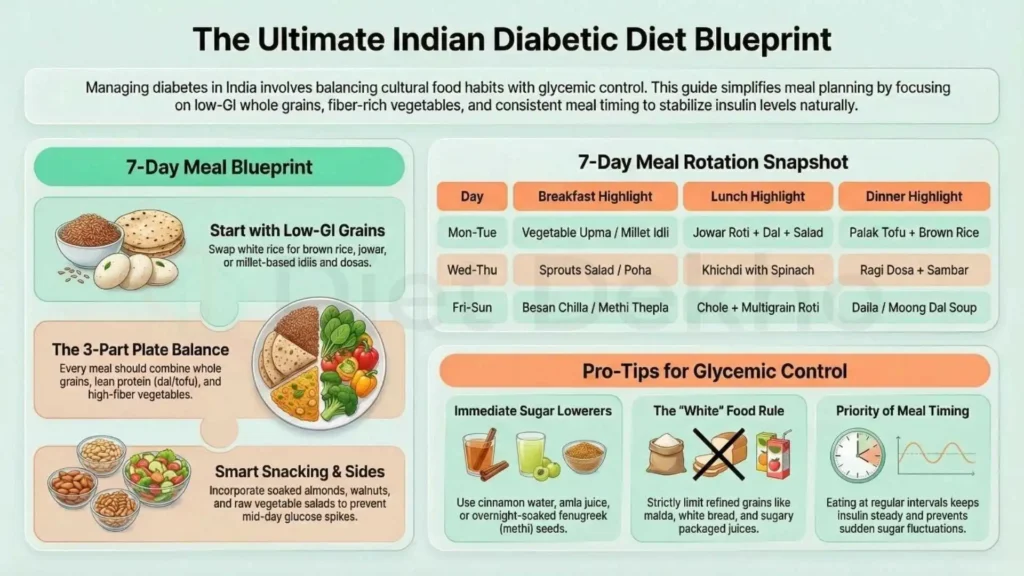
Understanding the Growing Metabolic Challenge in India
The state of health in India has shifted significantly over the last few decades. Recent data from the ICMR-INDIAB study shows that over 101 million people are living with diabetes in our country. Another 15.3 percent of our population is currently in a prediabetic stage, which means nearly one in four people are at risk. I know it is scary to hear these numbers, but understanding them is the first step toward taking control of your daily routine.
The research suggests that our traditional diets have become too heavy in low-quality carbohydrates. About 62.3 percent of the average daily calories in India come from carbohydrates, mostly from white rice and refined wheat. What this means for your health is a constant cycle of sugar spikes and crashes.

Regional Prevalence and the Need for Customization
Diabetes does not look the same in every part of India. The prevalence of conditions like gestational diabetes also varies by region. Central India reports the highest rates, while the West shows slightly lower numbers.
| Region of India | GDM Prevalence (%) | Prediabetes Prevalence (%) | Primary Carbohydrate |
| Central India | 32.9 | 15.3 | Wheat and Millets |
| West India | 16.0 | 14.8 | Wheat and Sorghum |
| South India | 21.8 | 16.2 | White Rice |
| North India | 24.5 | 15.7 | Wheat |
| Northeast India | 18.2 | 12.5 | Rice and Animal Protein |
These regional differences are often linked to what we eat as our primary staple. In the South and East, white rice is the main cereal for 61 percent of the population. In the North, wheat is more common. However, the ICMR study found that even those eating whole wheat or millets are at risk if the total amount of carbohydrates is too high.

The Science of the Glycemic Index in Indian Kitchens
Let’s simplify how food affects your blood. The Glycemic Index or GI is a tool that ranks foods from 0 to 100 based on how fast they raise your blood sugar. Foods with a low GI of 55 or less are your best friends. They digest slowly and keep you feeling full for longer.
I know you might think all traditional foods are healthy, but some can surprise you. For example, Ragi Mudde or finger millet balls have a very high GI of 98.2. This happens because the grain is finely ground and then boiled, which makes it very easy for your body to turn it into sugar quickly.
Glycemic Index Values of Common Indian Foods
| Food Category | High GI (70 or more) | Medium GI (56-69) | Low GI (55 or less) |
| Grains | White Rice (73), Maida | Sorghum Idli (61.3) | Broken Wheat (51.7) |
| Breads | Jowar Roti (84.1) | Methi Paratha (60.2) | Multigrain Roti (46) |
| Snacks | Puffed Rice (82) | Vegetable Poha | Roasted Chana, Nuts |
| Legumes | Not Common | Most Dals | Chickpeas (28), Rajma |
What this means for your daily routine is that you do not have to give up your favorite foods. You just need to change how you prepare them. If you love Poha, try using brown rice flakes and loading it with vegetables like beans and carrots. This addition of fiber slows down the digestion process.

Why Fiber and Protein are Non-Negotiable
Most of us in India do not get enough protein or fiber. The average protein intake is only about 12 percent of our daily calories, but experts recommend 15 to 20 percent. Protein helps you feel satisfied and prevents the muscle loss that can sometimes happen with age or diabetes.
Fiber is equally important. It acts like a broom in your digestive tract. It clears out waste and slows down the absorption of sugar. Harvard Health research suggests that we need about 25 to 38 grams of fiber every day. Most of us only get half of that.
The Benefit of Soluble and Insoluble Fiber
Fiber comes in two types, and both are essential for your health.
| Fiber Type | Main Sources | Benefit for Diabetes |
| Soluble | Oats, beans, lentils, apples | Forms a gel to lower blood sugar and cholesterol |
| Insoluble | Whole wheat, vegetables, nuts | Prevents constipation and adds bulk to meals |
I know it is hard to track every gram, so let’s make it easy. Fill half of your plate with vegetables at every meal. This simple step ensures you get the fiber you need without having to do complex math.

Your 7-Day Indian Diet Plan for Diabetes
This plan is designed for the real world. It uses ingredients you already have in your kitchen and requires minimal cooking time. We will focus on the Plate Method where you balance your nutrients without needing a weighing scale.
Starting with Power (Day 1)
We begin the week by introducing ingredients that naturally support your metabolism. Methi or fenugreek seeds are a great start because they contain fiber that improves insulin sensitivity.
- Early Morning: Drink one glass of water with a teaspoon of methi seeds that were soaked overnight.
- Breakfast: A bowl of vegetable oats upma. Load it with carrots and peas for extra fiber.
- Mid-Morning: One medium-sized guava or apple. These fruits are low in sugar and high in fiber.
- Lunch: Two multigrain rotis with a bowl of moong dal and a serving of sautéed lauki or bottle gourd.
- Evening Snack: A handful of roasted chana. This is a perfect low-calorie crunch for a busy professional.
- Dinner: Paneer bhurji with a large green salad. Avoid eating heavy grains late at night to keep your morning sugar levels stable.

The Magic of Besan (Day 2)
Besan or chickpea flour is a wonderful ingredient for diabetes. It has a low glycemic index and provides a good amount of plant-based protein.
- Early Morning: A glass of warm cinnamon water. Cinnamon may help your cells use insulin more effectively.
- Breakfast: Two besan chillas with mint chutney. This is a quick and filling option for a homemaker on the go.
- Mid-Morning: A small bowl of papaya. This fruit is gentle on the stomach and provides essential vitamins.
- Lunch: A small portion of brown rice with rajma and a cucumber salad. Brown rice has more fiber than white rice.
- Evening Snack: One cup of unsweetened buttermilk or chaas. It is hydrating and great for your gut health.
- Dinner: Grilled paneer with stir-fried beans. Keeping dinner light helps you wake up feeling more energetic.
Transforming Traditional Favorites (Day 3)
I know you might miss your regular Poha or Upma. Let’s simplify how to make them healthier. On Day 3, we focus on adding healthy fats and protein to our grains.
- Early Morning: Warm lemon water without any added sugar or honey.
- Breakfast: Vegetable Poha. Use thick poha and add a handful of peanuts for protein and healthy fats.
- Mid-Morning: Five or six almonds and two walnuts. These are rich in magnesium which is good for heart health.
- Lunch: Two whole wheat chapatis with chole and steamed lauki. Legumes like chickpeas are excellent for steady energy.
- Evening Snack: A cup of green tea. This provides antioxidants that support your overall well-being.
- Dinner: Quinoa khichdi with plenty of vegetables. Quinoa is a complete protein and has a lower GI than white rice.

Balancing Millets and Sambar (Day 4)
Millets are great, but portion control is the secret. On Day 4, we use millets in a way that provides minerals without spiking your sugar.
- Early Morning: Tulsi and ginger water. This is a soothing drink that supports your immune system.
- Breakfast: Two small steamed idlis with a large bowl of vegetable sambar. The sambar provides the fiber and protein you need.
- Mid-Morning: One pear. This fruit is very high in soluble fiber which helps manage cholesterol.
- Lunch: One bajra or pearl millet roti with tur dal and cabbage sabzi. Cabbage is very low in calories and very filling.
- Evening Snack: Roasted lotus seeds or makhana. These are low in fat and perfect for evening hunger.
- Dinner: A bowl of vegetable soup with paneer cubes. This is a warm and comforting meal that won’t weigh you down.
Strengthening with Dalia (Day 5)
Broken wheat or dalia is much better than refined flour. It keeps its fiber content and digests slowly.
- Early Morning: A glass of plain warm water to wake up your digestive system.
- Breakfast: Vegetable dalia upma. Add carrots, peas, and a few beans for a crunch and extra nutrition.
- Mid-Morning: A small bowl of fresh berries if they are available. Berries are among the healthiest fruits for diabetes.
- Lunch: A small portion of brown rice with masoor dal and okra or bhindi. Okra is known for its ability to help manage sugar levels.
- Evening Snack: Two or three fresh coconut slices. They provide healthy fats that keep you satisfied until dinner.
- Dinner: Two moong dal cheelas stuffed with grated vegetables. Moong dal is very easy to digest and high in protein.
Protein Focus for Stability (Day 6)
Including high-quality protein helps your body repair itself. If you eat eggs, they are a fantastic, low-carb way to start your day.
- Early Morning: Jeera or cumin water. It can help improve your digestion and metabolism.
- Breakfast: A vegetable omelette or paneer bhurji with one slice of multigrain bread. This provides a steady start to your morning.
- Mid-Morning: A small bowl of watermelon. While it is sweet, a small portion is safe because it has a low glycemic load.
- Lunch: Two multigrain rotis with mixed dal and beans poriyal. Mixed dals provide a variety of amino acids.
- Evening Snack: A handful of unsalted peanuts. Peanuts are a great source of healthy fats and protein.
- Dinner: A light vegetable stew with tofu or chicken. This ensures you get your protein without unnecessary carbs.
Weekend Balance and Ragi (Day 7)
We end the week with Ragi. While it has a high GI when boiled as a ball, making it as a thin dosa or cheela is a much better choice.
- Early Morning: Warm water with a squeeze of fresh lemon.
- Breakfast: One ragi dosa with coconut chutney and a small bowl of sambar. This is a delicious and healthy way to enjoy the weekend.
- Mid-Morning: One small apple. Remember to eat the skin as that is where most of the fiber is found.
- Lunch: Khichdi made with more dal than rice and loaded with spinach. Adding leafy greens lowers the overall GI of the meal.
- Evening Snack: A cup of herbal tea. It is a relaxing way to end your week without any added calories.
- Dinner: Grilled vegetables with paneer or fish. This simple meal helps keep your fasting sugar levels in check for Monday.
Practical Tips for Your Busy Lifestyle
I know it is hard to find time to cook elaborate meals. Let’s simplify this by using some smart kitchen hacks. What this means for your daily routine is that you can still eat well even when you are rushing to work or managing children.
For Busy Professionals
If you work in an office, your tiffin is your best friend. Prepare a batch of multigrain atta on the weekend so it is ready for the week. You can also boil beans or chickpeas in advance and keep them in the fridge.
| Work-Life Challenge | Simple Solution |
| No time for breakfast | Carry a small bowl of overnight soaked oats or a boiled egg |
| Office snacks are unhealthy | Keep roasted chana or nuts in your desk drawer |
| Sitting all day | Take a five-minute walk every two hours to help your muscles |
| Long gaps between meals | Carry a small pack of buttermilk or a piece of fruit |
Drinking enough water is also vital. Aim for at least 3 to 4 liters a day. If you are on certain medications like SGLT2 inhibitors, your body might lose more fluid than usual. Staying hydrated helps your kidneys and keeps your energy levels up.

For Homemakers
As a homemaker, you are the heart of the kitchen. You can improve everyone’s health by making small changes to how you cook. Instead of deep-frying, try steaming or sautéing with minimal oil.
I know you might be tempted to taste the food while you cook. If you feel hungry, have a small bowl of curd or a few slices of cucumber instead of a biscuit. Use a smaller plate for your own meals. This simple visual trick helps you feel satisfied with smaller portions.
Hidden Traps to Avoid
Not everything that looks healthy is good for your blood sugar. I want to help you spot these sugar traps so you can make better choices for your Indian diet plan for diabetes.
The Truth About Jaggery and Honey
Many people believe that replacing sugar with jaggery or honey is a healthy choice. I have to tell you that jaggery has a glycemic index of about 84.4, which is very high. While it has some minerals, it will still spike your blood sugar just as fast as white sugar.
The Refined Flour Trap
Maida or refined flour is often hidden in things like biscuits, white bread, and even some types of multigrain bread. These foods have been stripped of their fiber. What this means for your daily routine is a rapid rise in insulin followed by a crash that makes you feel tired and hungry.
High-Sugar Fruits
While all fruits have vitamins, some are very concentrated in natural sugars. Mangoes, grapes, and chikus should be eaten only in very small amounts. Stick to fruits with a low GI like guava, apple, and berries for your regular daily snacks.

How to Stay Consistent Without the Gym
I know you might not have an hour to spend at the gym every day. The good news is that your diet does most of the heavy lifting. However, moving your body just a little bit can make a huge difference in how your cells use sugar.
A fifteen-minute walk after your lunch and dinner is one of the most effective habits you can start today. You do not need any special equipment. Just walk around your home or office. This light activity helps your muscles pull sugar out of your blood, which lowers your post-meal spikes.
A Simple Habit for Your Daily Routine
| Time of Day | Simple Physical Activity | Benefit for Sugar Control |
| After Breakfast | Walk to the bus stop or park further away | Starts the day with lower sugar levels |
| At the Office | Use the stairs instead of the lift | Improves insulin sensitivity during work |
| After Dinner | A 15-minute stroll while talking to family | Lowers the morning fasting sugar |
Staying active does not have to be a chore. Think of it as a way to give your body a little boost. Every step you take helps your metabolism work better.

Conclusion: You Have the Power to Change
Managing diabetes can feel like a long journey, but you do not have to do it all at once. Every small choice you make adds up. By following this indian diet plan for diabetes, you are taking a massive step toward a healthier future for yourself and your family.
I know it is hard to change habits that you have had for years. Let’s simplify this by focusing on one meal at a time. Start with a healthy breakfast tomorrow morning and see how much better you feel by lunchtime. You have the knowledge and the tools to take control of your health today.
For personalized support and a plan tailored just for you, connect with us here.
Frequently Asked Questions (FAQs)
Q1: Is white rice completely banned in an Indian diet plan for diabetes?
White rice is not strictly banned, but it should be eaten in small portions. It is best to have only about half to one cup of cooked rice and ensure it is balanced with a large portion of fiber-rich vegetables and a protein source like dal or paneer.
Q2: Can I eat traditional sweets if I have diabetes?
You can have small portions of sweets occasionally, but it is best to pair them with a balanced meal rather than eating them on an empty stomach. This helps prevent a rapid sugar spike. Always consult your dietitian about how often you can include these treats.
Q3: What is the best fruit for someone following an indian diet plan for diabetes?
Fruits with a low glycemic index and high fiber are the best choices. Guava, apples, pears, and berries are excellent options. It is always better to eat the whole fruit instead of drinking fruit juice, as juice lacks fiber and can spike sugar quickly.
Q4: How does methi water help in managing blood sugar?
Methi or fenugreek seeds contain soluble fiber that slows down the digestion and absorption of carbohydrates. This can help improve how your body uses insulin and may lead to lower blood glucose levels over time.
Q5: Can I follow this 7-day plan if I am a vegetarian?
Yes, this plan is perfectly suited for vegetarians. You can get your protein from a variety of dals, legumes, paneer, curd, tofu, and nuts. A well-planned vegetarian diet can be very effective for managing diabetes.

Contact Us
We understand how overwhelming nutrition and weight loss information can feel. With so many opinions and confusing advice online, it’s easy to feel stuck or unsure about what to do next.
At Diet Dekho, you never have to figure it out alone. You can contact us anytime with any questions or concerns. Our expert dietitians are available 24/7 to guide, support, and help you stay on track. Whether your goal is weight loss or building healthier habits, we’re here to make the journey simpler and more sustainable for you.
Disclaimer
This blog is intended to help readers make healthier food choices. Your health should always be the top priority. Before starting any restrictive or special diet, especially if you have a medical condition or health concern, please consult a doctor or a qualified dietitian. Each body responds differently to food and lifestyle changes. Always choose what is safe and suitable for you.

Abhinav is the Founder of Diet Dekho, helping people manage weight and lifestyle health through simple, practical nutrition and personalized diet plans.