
I recently spoke with a client named Rajesh, a busy bank manager in Mumbai who felt constantly exhausted. He struggled to balance his long office hours with the sudden need to manage his rising blood sugar levels. What he really needed was a reliable indian diabetic diet chart pdf to follow without overhauling his entire life. If you feel like Rajesh, this guide is for you.
To manage blood sugar effectively, follow an indian diabetic diet chart pdf focusing on low-glycemic index foods. Fill 50% of your plate with non-starchy vegetables, 25% with lean protein like moong dal, and 25% with complex grains like jowar or bajra. This approach stabilizes glucose levels and prevents dangerous insulin spikes naturally.
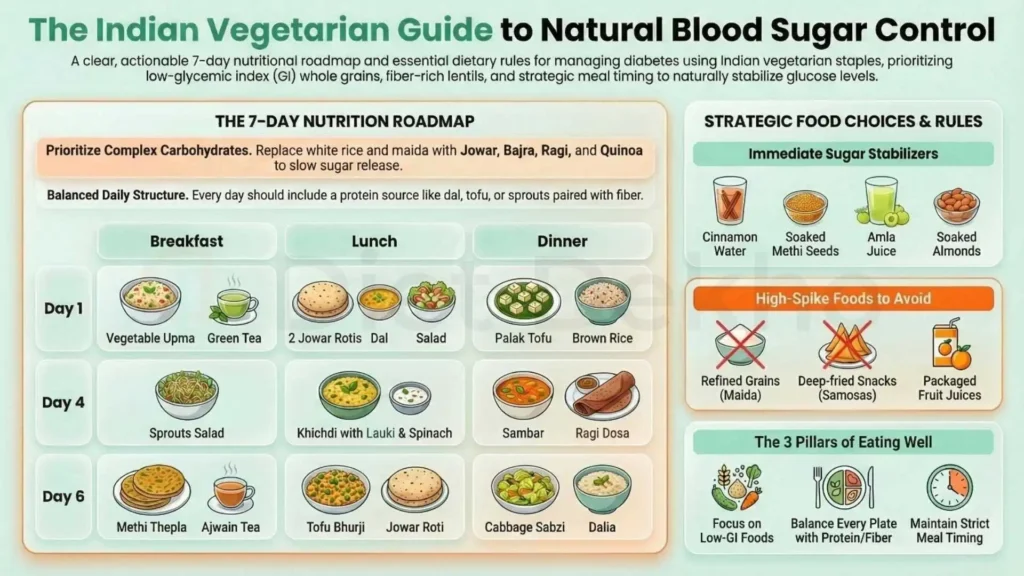
The Growing Diabetes Challenge in India
The prevalence of Type 2 Diabetes in India has reached critical levels, transitioning from a localized concern to a national epidemic. Recent data shows that approximately 101 million adults in India live with diabetes, while an additional 136 million individuals show markers of prediabetes. Furthermore, research suggests that nearly 43% of these individuals remain unaware of their condition until complications arise.

What this means for your daily routine is that early intervention is no longer optional. The Asian Indian Phenotype makes us more prone to central obesity and insulin resistance, even at lower body weights. Therefore, we must adopt dietary strategies that specifically address these physiological risks. For instance, Indian adults often develop diabetes nearly a decade earlier than Western populations.
Understanding Your Nutrition Targets
I know it feels hard to track every calorie, but we can simplify the science. Medical Nutrition Therapy (MNT) focuses on achieving a balance that is culturally acceptable for an Indian kitchen. To make this easier, let’s look at the targets recommended by the Indian Council of Medical Research (ICMR).
| Component | Target Range | Why This Matters |
| Carbohydrates | 50% – 60% | Provides energy; must be complex to avoid spikes |
| Protein | 15% – 20% | Supports muscle repair and keeps you full |
| Total Fat | 20% – 30% | Essential for heart health; focus on unsaturated fats |
| Dietary Fiber | 25g – 40g | Slows down sugar absorption significantly |
Consequently, your primary goal should be to replace refined white grains with whole, fiber-rich alternatives. Studies published by the National Institutes of Health (NIH) highlight that consistent meal timings and fiber integration can reduce HbA1c levels by 1–2%.

The Power of Low Glycemic Index (GI) Staples
The Glycemic Index (GI) ranks foods based on how quickly they raise blood sugar. For a successful indian diabetic diet chart pdf implementation, I recommend choosing foods with a GI of 55 or less. Most traditional Indian dals like moong, masoor, and chana dal have very low GI values, ranging from 26 to 38.
Similarly, millets like jowar, bajra, and ragi provide a much better response than polished white rice or maida. According to harvard, adopting a traditional high-fiber Asian diet can lower insulin resistance effectively. Moreover, using spices like fenugreek (methi) and cinnamon can improve your metabolic response.

Your 7-Day Indian Diabetic Diet Plan
Let’s simplify your week with this manageable meal structure. I have designed this to include familiar ghar ka khana while keeping your sugar levels stable.
| Day | Breakfast (8:00 AM) | Lunch (1:00 PM) | Snack (4:00 PM) | Dinner (7:30 PM) |
| Day 1 | Vegetable oats upma + curd | 2 multigrain rotis + moong dal + lauki sabzi | Roasted chana | Paneer stir-fry + large salad |
| Day 2 | Moong dal chilla + mint chutney | Small portion brown rice + rajma + cucumber salad | Buttermilk (Chaas) | Tofu stir-fry + seasonal greens |
| Day 3 | Ragi dosa + vegetable sambar | 2 jowar rotis + chole + mixed veg curry | Handful of walnuts | Vegetable soup + sautéed paneer |
| Day 4 | Vegetable poha with peanuts | Quinoa pulao + arhar dal + salad | Roasted makhana | Stuffed capsicum + 1 phulka |
| Day 5 | Besan chilla with veggies | 2 rotis + masoor dal + palak sabzi | Sprouts chaat | Grilled fish or soya curry + salad |
| Day 6 | Dalia upma with peas | Millet khichdi + ½ tsp ghee + curd | Green tea + peanuts | Paneer bhurji + 1 multigrain roti |
| Day 7 | Paneer scramble + 1 whole wheat toast | 2 rotis + dal + bhindi masala | Small apple or guava | Light vegetable curry + soup |
Additionally, remember to start your morning with warm water and soaked methi seeds to kickstart your metabolism.

Simple Portion Control Strategies
I know it’s hard to weigh food, so let’s use the Plate Method instead. This visual guide ensures you get the right nutrients without the stress of counting calories.
- Fill Half Your Plate with Vegetables: Use non-starchy options like spinach, cabbage, okra, or bottle gourd.
- Fill One-Quarter with Protein: Choose dals, legumes, sprouts, curd, paneer, or lean meats.
- Fill One-Quarter with Complex Carbs: This is the space for your roti or a small bowl of brown rice.
Furthermore, try using the Hand Method for quick checks. Your palm represents a protein serving, while your fist indicates the vegetable portion. Eating slowly also helps, as your body needs about 20 minutes to signal that you are full.

Home-Based Activity for the Non-Gym Audience
Regular movement is essential, even if you never step foot in a gym. Physical activity improves insulin sensitivity and helps your muscles use up excess sugar. As Dr. V. Mohan, Chairman of Dr. Mohan’s Diabetes Specialities Centre, notes, discipline in lifestyle is just as important as medical intervention.
- The Post-Meal Walk: Walking for just 15–20 minutes after your largest meals can drastically reduce glucose spikes.
- Wall Push-Ups: Stand facing a wall and push in and out. This builds upper-body strength safely without stressing your joints.
- Chair Exercises: If you have limited mobility, practice leg lifts or arm raises while seated to improve circulation.
- Yoga Poses: Poses like Vajrasana after meals aid digestion, while Tadasana improves posture and balance.
Therefore, aim for at least 30 minutes of brisk activity daily. You don’t need fancy equipment, just a pair of comfortable shoes and your hallway or terrace.

Time-Saving Meal Prep for Busy Families
I know you’re busy, so let’s use these dietitian-approved hacks to stay on track. Preparing ahead prevents you from reaching for unhealthy snacks when you’re tired.
- Batch Cook Your Dals: Boil large quantities of lentils like chana or rajma on Sunday. Store them in portions to use in curries or salads throughout the week.
- Pre-Chop Your Veggies: Wash and chop your spinach, cabbage, and beans in advance. Storing them in airtight containers keeps them ready for a 5-minute stir-fry.
- Freeze Your Masala Base: Prepare a batch of ginger-garlic-onion paste. You can freeze this in ice cube trays for perfectly portioned cooking bases.
- Pack Healthy Snack Kits: Keep small boxes of roasted chana or soaked almonds in your bag. This stops the urge to buy fried snacks at the office.

Frequently Asked Questions (FAQs)
Q: Can a sugar patient eat white rice at all?
A: White rice has a high GI, which causes rapid sugar spikes. However, if you must eat it, limit the portion to 1/3 cup and always pair it with a double serving of high-fiber dal and vegetables to slow down digestion.
Q: Is wheat roti better than millets for diabetes?
A: Whole wheat roti is better than maida, but millets like jowar, bajra, and ragi are even better. Specifically, millets have more fiber and a lower GI, which helps improve insulin sensitivity over time.
Q: What are the best Indian snacks for sugar patients?
A: The best options include roasted chana, sprouts salad, roasted makhana, or a handful of soaked almonds. These provide a mix of protein and fiber without the hidden sugars found in biscuits.
Q: Which Indian fruits are safest to eat?
A: Low-GI fruits like guava, apple, pear, and papaya are excellent choices. But remember to eat the whole fruit instead of drinking juice, as the fiber in the whole fruit protects against sugar spikes.
Q: Should I completely avoid potatoes?
A: Potatoes are high in starch and can raise blood sugar quickly. While you don’t have to avoid them forever, you should limit them and consider healthier substitutes like sweet potatoes or non-starchy cauliflower.
Conclusion: Take the First Step Today
Managing diabetes is not about perfection; it is about making small, sustainable choices every day. By using this indian diabetic diet chart pdf approach, you can enjoy your favorite traditional foods while keeping your health in check. Start by changing just one meal today, perhaps swap your white rice for jowar or add a 15-minute walk after dinner.
I am here to support you on this path toward better health. For a more personalized plan tailored to your specific medical history and lifestyle, please reach out to our team.
Take control of your health now:
Fill out our assessment form here
Contact Us
We understand how overwhelming nutrition and weight loss information can feel. With so many opinions and confusing advice online, it’s easy to feel stuck or unsure about what to do next.
At Diet Dekho, you never have to figure it out alone. You can contact us anytime with any questions or concerns. Our expert dietitians are available 24/7 to guide, support, and help you stay on track. Whether your goal is weight loss or building healthier habits, we’re here to make the journey simpler and more sustainable for you.
Disclaimer
This blog is intended to help readers make healthier food choices. Your health should always be the top priority. Before starting any restrictive or special diet, especially if you have a medical condition or health concern, please consult a doctor or a qualified dietitian. Each body responds differently to food and lifestyle changes. Always choose what is safe and suitable for you.

Abhinav is the Founder of Diet Dekho, helping people manage weight and lifestyle health through simple, practical nutrition and personalized diet plans.