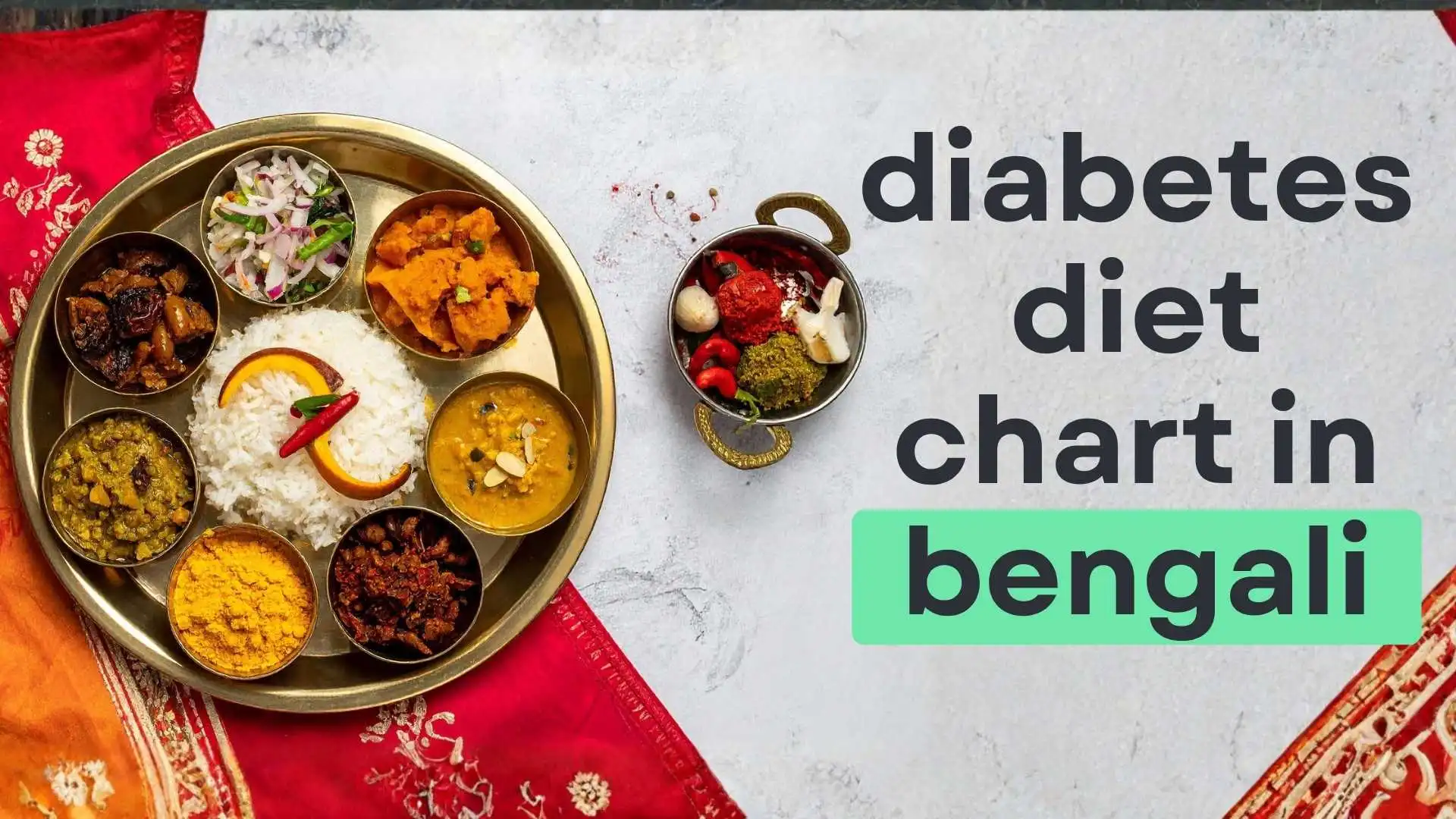
Imagine sitting at a crowded dinner table in Kolkata or Dhaka, surrounded by the comforting aroma of steaming white rice, golden fried fish, and the sweet promise of Rosogolla. For many of my clients at DietDekho.com, this isn’t just a meal; it’s the heart of their family life. But when a doctor hands you a diagnosis, suddenly that plate of rice feels like an enemy. I know it’s hard to find time for a complete lifestyle overhaul when you are juggling a career or managing a busy home, but the truth is that a diabetes diet chart in bengali is your most powerful tool to reclaim your health without losing your heritage. Let’s simplify this journey together, moving away from fear and toward a sustainable, delicious way of living that honors your roots while protecting your future.
A diabetes diet chart in bengali focuses on replacing high-glycemic white rice with brown rice or multigrain rotis and increasing the intake of fiber-rich vegetables like bitter gourd (uchhe) and bottle gourd (lau). By prioritizing lean proteins like small fish and lentils (dal) while restricting refined sugars and deep-fried snacks (telebhaja), you can achieve stable blood glucose levels and reduce insulin resistance naturally.
The Silent Crisis: Understanding the Bengali Diabetes Epidemic
The landscape of public health in the Bengali-speaking regions of West Bengal and Bangladesh is currently facing a metabolic emergency. Data from the International Diabetes Federation (IDF) reveals that the prevalence of diabetes in Bangladesh reached approximately 13.2% in 2024, representing over 13.8 million adults. What this means for your daily routine is that the risk is no longer a distant possibility; it is a community-wide reality that demands immediate, localized action. By 2050, the number of individuals living with diabetes in Bangladesh alone is projected to skyrocket to 23.1 million.
This trend isn’t just about numbers; it’s about a fundamental shift in how we live. We are undergoing a nutrition transition where the traditional, labor-intensive high-fiber diet is being replaced by sedentary habits and processed convenience foods. For a busy professional in Dhaka or a homemaker in Kolkata, this shift often happens invisibly. The convenience of a quick refined-flour snack during a commute or the habit of serving large portions of white rice out of love can inadvertently worsen insulin resistance.

Current and Projected Diabetes Burden in the Bengali Population
| Metric | 2024 Statistics | 2050 Projections | Impact Analysis |
| Prevalence Rate (Bangladesh) | 13.2% | 15.4% | Increasing metabolic risk |
| Total Affected Adults | 13.9 Million | 23.1 Million | Growing healthcare burden |
| Undiagnosed Rate | 39.1% | N/A | Risk of hidden complications |
| Annual Mortality | 31,619 | N/A | Preventable life loss |
| Healthcare Spending | 1.03 Billion | Increased | Economic strain on families |
The analysis suggests that the Bengali population ranks second highest in the South-East Asia Region for diabetes prevalence, trailing only behind the broader Indian average. This heightened vulnerability is partly due to the South Asian Phenotype. Unlike individuals of European descent, Bengalis tend to develop type 2 diabetes at a much lower Body Mass Index (BMI). We often carry more visceral fat (fat around the organs) even if we appear thin to the naked eye. This is why a diabetes diet chart in Bengali must be specifically tailored to our unique physiology, rather than just copying Western models.

The Science of Satiety: The Glycemic Index in the Bengali Kitchen
I often tell my friends that the most important word to learn after a diagnosis isn’t medication it’s Glycemic Index (GI). Think of the Glycemic Index as a speedometer for your blood sugar. High GI foods are like a car racing at 100 miles per hour; they cause a rapid spike in glucose that crashes shortly after, leaving you tired and hungry. Low GI foods are the steady drivers that provide a slow, consistent stream of energy.
In a typical Bengali household, our staples like white rice (Siddha or Atap), puffed rice (Muri), and potatoes are all high-speed racers . When you eat a large plate of white rice, your body converts those carbohydrates into sugar almost instantly. For a person with diabetes, the pancreas cannot produce enough insulin to handle this sudden flood, leading to high blood sugar levels.

Glycemic Index Values of Common Bengali Foods
| Food Category | High GI (>70) – Avoid/Limit | Medium GI (56-69) – Moderation | Low GI (<55) – Best Choice |
| Grains | White Rice (87), Puffed Rice (82), Maida (75) | Brown Rice (54), Basmati Rice (52-58), Whole Wheat (54) | Barley (25), Steel-cut Oats (54), Quinoa (53) |
| Vegetables | Boiled Potato (78), Pumpkin (75), Sweetcorn (60) | Sweet Potato (54), Yam (54), Beetroot (61) | Bitter Gourd (15), Spinach (15), Cabbage (10) |
| Fruits | Watermelon (72), Dates (70), Ripe Mango (51-60) | Banana (51), Pineapple (59), Papaya (59) | Guava (12), Pear (30), Apple (36) |
| Legumes/Dairy | Condensed Milk (High Sugar) | Fresh Milk (31) | Lentils/Dal (28-32), Chickpeas (28), Soy Milk (30) |
The goal of your diabetes diet chart in bengali is not to eliminate carbohydrates entirely your brain needs them to function but to choose the right slow carbohydrates. For example, switching from white rice to parboiled basmati or brown rice can significantly lower the post-meal glucose spike. Harvard Health research indicates that diets rich in whole grains, fruits, and vegetables can improve glycemic control and reduce the risk of long-term complications. You can find more details on evidence-based dietary patterns at authority sites like(https://nutritionsource.hsph.harvard.edu/disease-prevention/diabetes-prevention/).

The Nurturer’s Dilemma: Overcoming Cultural and Social Barriers
I know it’s hard to change what you eat when your entire family expects a certain type of meal. For many Bengali women, cooking is how they show love. There is a deep-seated identity conflict where managing your own diabetes feels like a betrayal of your role as a primary caregiver. You might feel pressured to prepare separate meals one for yourself and another for a family that isn’t ready to give up their oily Kosha Mangso or Luchi.
Moreover, our social lives are built around food. Whether it’s a wedding, Eid, or Durga Puja, refusing sweets or rich biryani can sometimes be seen as insulting to the host. This creates social isolation and emotional stress, which actually worsens your blood sugar levels. What this means for your daily routine is that we need a plan that is flexible enough for a family gathering but disciplined enough for your health.
Managing Social and Household Expectations
Instead of fighting the culture, let’s adapt to it.
- The Plate Method: You don’t have to stop eating with your family. Use the Plate Method where half your plate is filled with non-starchy vegetables (shak, potol, jhinge), one-quarter with lean protein (fish or dal), and only one-quarter with rice.
- Hidden Healthy Swaps: When making Dal, add extra vegetables like Lau (bottle gourd) or Pepe (papaya). This increases the volume and fiber without your family even noticing a difference in taste.
- Be the Host with a Plan: If you are hosting, introduce delicious, low-GI snacks like roasted Chana or Sprouts Chaat. Many of my clients find that their families actually prefer these lighter options once they try them.

A Supportive 7-Day Diabetes Diet Chart in Bengali
Let’s simplify this. You don’t need fancy, expensive ingredients. Most of what you need is already in your local market. This plan is designed for busy professionals who need quick breakfasts and homemakers who need to cook for a large group.
The Foundation Plan
| খাবারের সময় | সাফল্যের জন্য প্রস্তাবিত মেনু | যুক্তি |
| ভোরবেলা (সকাল ৬:৩০) | ১ গ্লাস লেবু মেশানো উষ্ণ জল + ১ চা চামচ ভেজানো মেথি বীজ। | মেথিতে ফাইবার এবং এমন কিছু যৌগ রয়েছে যা রক্তে শর্করার মাত্রা কমাতে সাহায্য করে। |
| সকালের নাস্তা (সকাল ৮:৩০) | সবজি সহ ২টি ছোট মুগ ডাল চিল্লা অথবা ১ বাটি সবজি ওটস উপমা। | উচ্চ প্রোটিন এবং ফাইবার আপনাকে দুপুরের খাবার পর্যন্ত পেট ভরা রাখতে সাহায্য করে। |
| মধ্য-সকাল (১১:০০ AM) | ১টি ছোট পেয়ারা অথবা ১টি আপেল ও ৫-৬টি ভেজানো বাদাম। | রক্তে শর্করার মাত্রা হঠাৎ কমে যাওয়া প্রতিরোধ করে এবং স্বাস্থ্যকর চর্বি সরবরাহ করে। |
| দুপুরের খাবার (দুপুর ১:৩০) | ১ কাপ ব্রাউন রাইস + ১ বাটি লাউ-মুগ ডাল + ১ টুকরো গ্রিলড/কারি করা মাছ + বড় সালাদ। | ধীরগতিতে শক্তি নির্গমনকারী সুষম ম্যাক্রোনিউট্রিয়েন্ট। |
| চা পানের সময় (বিকাল ৫:০০ টা) | চিনি ছাড়া গ্রিন টি + ১ বাটি ভাজা ছোলা অথবা স্প্রাউটস সালাদ। | তেলতেলে বিস্কুটের পরিবর্তে প্রোটিন-সমৃদ্ধ মুচমুচে স্বাদ। |
| রাতের খাবার (রাত ৮:০০) | 2 Multigrain Rotis + 1 bowl of Paka Pepe or Potol-er Sabzi + 1 bowl of Dal. | সারারাত ধরে রক্তে শর্করার মাত্রা বেড়ে যাওয়া রোধ করতে এটি পেটের জন্য হালকা। |
| ঘুমানোর সময় (প্রয়োজন হলে) | ১ কাপ হালকা গরম দুধে এক চিমটি হলুদ। | হলুদ প্রদাহরোধী এবং আরোগ্য লাভে সহায়তা করে। |
I know it’s hard to give up white rice every day. If you must have it, try parboiling it or choosing a long-grain variety like Basmati, which generally has a lower GI than short-grain rice. Always remember: portion is king. A small katori (bowl) should be your measuring tool, not a large serving spoon.

Kitchen Hacks: Flavor Without the Fat
Traditional Bengali cooking relies heavily on Shatlano or frying spices in mustard oil. While mustard oil is a healthier fat than many others, using too much of it adds unnecessary calories that contribute to weight gain and insulin resistance. Let’s look at how we can keep the Bhalobasha (love) in the food without the excess oil.
Zero-Oil and Low-Oil Techniques
- The Power of Steaming (Bhapa): One of my favorite Bengali dishes is Bhapa Ilish (steamed Hilsa). Steaming is a fantastic way to preserve nutrients and eliminate the need for oil. You can steam almost any fish or vegetable with a little mustard-yogurt paste and green chilies for that authentic kick.
- Water Sautéing: Instead of heating oil, try dry-roasting your whole spices (cumin, bay leaf, cardamom) first. When they become fragrant, add your onions and a splash of water to keep them from sticking. The results are surprisingly flavorful.
- The Air Fryer Revolution: If you love Telebhaja (fried snacks), an air fryer can be a game-changer. It uses hot air to fry food with just a tiny spray of oil. You can make Beguni (eggplant fritters) that are actually good for you!.
- Slow Cooker Simplicity: For busy professionals, a slow cooker or a simple pressure cooker allows you to make one-pot meals like Dalia Khichdi. Just put in your grains, lentils, and all your favorite vegetables, set it, and go about your work.
According to Dr. Namratha Kandula, a professor at Northwestern University, South Asians need proactive screening and culturally appropriate counseling because the mismatch between lifestyle behaviors and clinical risk can be surprising. What this means for your daily routine is that even if you think you are eating healthy, the hidden sugars in white rice and the excess oils in our curries might still be working against you.

The Protein Paradox: Why Fish and Dal are Your Best Friends
A common question I get is, Should I stop eating meat? In a diabetes diet chart in bengali, we are actually lucky. Our traditional diet is naturally rich in fish and lentils, which are excellent protein sources. Protein is vital because it slows down the absorption of sugar into your bloodstream, preventing those dangerous spikes.
Protein Selection Guide
| Best Choices (High Protein, Low Fat) | Moderation (Watch Portions) | Limit/Avoid (High Risk) |
| Small fish (Mouri, Puti, Chun-maach) | Large Carp (Rui, Katla) | Red Meat (Mutton/Beef) |
| Skinless Chicken breast | Egg yolks (limit to 2-3/week) | Processed Meats (Sausages) |
| All Lentils (Moong, Musur, Cholar Dal) | Low-fat Paneer/Tofu | Full-fat cream/Ghee |
| Boiled Egg whites | Unsalted Nuts (Almonds/Walnuts) | Fried Fish/Meat |
Small fish, eaten with the bones, provide extra calcium, which is great for your bone health as you age. When making Dal, try to mix different types. Moong Dal is especially easy to digest and has a lower GI compared to refined grains. For more information on protein and chronic disease management, you can visit the National Institutes of Health (NIH).
Movement for the Non-Gym Audience: Simple Steps
I know it’s hard to find the motivation to go to a gym, especially if you’ve never been one for sports. But here is a secret: your body doesn’t know the difference between a treadmill and a rooftop walk. For the Bengali audience, who may not be gym-goers, we need home-based solutions.
Everyday Movement Strategies
- The Rooftop Walk (Prata-bhraman): Many of my clients find that 30 minutes of brisk walking on their roof or in a nearby park is the easiest habit to stick to.
- Yoga for Stress and Sugar: Stress produces a hormone called cortisol, which raises your blood sugar. Simple yoga poses like Mandukasana (frog pose) or Surya Namaskar (sun salutations) can help lower stress and improve insulin sensitivity.
- Active Commuting: If you take the bus or train, try getting off one stop early and walking the rest of the way. If you are a homemaker, try to do your chores with a bit more vigor. Cleaning and gardening are great ways to burn energy.
- Chair Exercises for Older People: If you have knee pain or are a senior, you can still exercise! Seated leg lifts, arm circles, and gentle stretching while sitting in a chair can improve circulation and heart health.

Debunking the Myths: Reclaiming the Truth
In our culture, there are many myths about diabetes that can actually be dangerous. I’ve heard everything from spiritual cures to the idea that jaggery is safe . Let’s set the record straight so you can make informed choices.
Common Myths vs. Facts
- Myth: Jaggery (Gur) is a healthy replacement for sugar.
- Fact: While jaggery has some minerals, it is still almost entirely sugar and has a very high Glycemic Index. It will spike your blood sugar just as much as white sugar.
- Myth: Diabetics cannot eat any fruit.
- Fact: Fruits like guava, apples, and berries are packed with fiber and vitamins. You should have 1-2 servings a day, just avoid the very sweet ones like grapes or lychees in large quantities.
- Myth: Only higher weight people get diabetes.
- Fact: As we discussed, many Bengalis have a thin-outside-fat-inside profile. Even if you look lean, you can have high blood sugar.
- Myth: Soaking your feet in water can lower sugar.
- Fact: This is a common myth in North India and Bengal, but it has no scientific basis. In fact, if you have nerve damage from diabetes, you might not feel if the water is too hot, which can lead to burns and infections.
Living with a chronic condition can feel lonely, especially when the world around you seems to be celebrating with sweets and heavy meals. I want you to know that your diagnosis is not a sign of failure. It is simply a signal from your body that it needs a different kind of fuel.
In many Bengali families, collectivism is stronger than individualism. This means your family’s health is tied to yours. By following a diabetes diet chart in bengali, you are not just helping yourself; you are setting an example for your children and grandchildren. You are showing them that it is possible to honor our culture while also honoring our bodies.
Building a Supportive Household
Talk to your family. Explain that you aren’t going on a diet you are adopting a new way of eating that you’d like them to try too. Often, once families realize that the food still tastes good (thanks to those zero-oil hacks!), they become your biggest supporters.
Frequently Asked Questions
What is the best time to eat rice on a diabetes diet chart in Bengali?
Lunch is generally the best time to have a small portion of rice. This gives your body the rest of the day to move around and use up that energy. Avoid eating large portions of rice at night, as your activity level is lower, which can lead to high fasting sugar levels the next morning.
Can I use honey instead of sugar in my tea?
Honey is slightly better than refined sugar because it contains some antioxidants, but it is still high in glucose and fructose. For a truly diabetes-friendly option, consider using a natural sweetener like Stevia or simply training your taste buds to enjoy the natural flavor of the tea.
Which fish is best for a person with diabetes?
Small fish like Mouri or Puti are excellent because they are lean and can be eaten with the bones for extra minerals. Rui and Katla are also great choices if they are cooked in a light jhol (curry) rather than deep-fried.
Is Muri (puffed rice) safe for a diabetes diet chart in bengali?
Muri is a common snack, but it has a high Glycemic Index (around 82). This means it can spike your sugar quickly. If you eat Muri, always mix it with some roasted peanuts or sprouts to add protein and fiber, which will slow down the sugar absorption.
How much water should I drink every day?
Staying hydrated is essential for your kidneys, especially if you have diabetes. Aim for 2.5 to 3 liters of water daily. It helps your body flush out excess sugar and keeps you feeling full, which prevents overeating.
Conclusion: Your Path Forward
I know it’s hard to change lifelong habits, but every small choice you make today is a victory. Whether it’s choosing brown rice over white, going for a 10-minute walk after dinner, or swapping an oily biscuit for a handful of roasted chana, you are taking control of your story.
What this means for your daily routine is that you don’t have to be perfect. You just have to be consistent. Start by picking one or two changes from this diabetes diet chart in bengali and stick to them for a week. Once they feel natural, add another. You have the strength to manage this, and we at DietDekho are here to support you every step of the way.
Ready to start your personalized journey?
I’d love to help you create a plan that fits your specific life and tastes. Fill out our simple assessment form today at Dietdekho and let’s get started on your path to a healthier, happier you!
Contact Us
We understand how overwhelming nutrition and weight loss information can feel. With so many opinions and confusing advice online, it’s easy to feel stuck or unsure about what to do next.
At Diet Dekho, you never have to figure it out alone. You can contact us anytime with any questions or concerns. Our expert dietitians are available 24/7 to guide, support, and help you stay on track. Whether your goal is weight loss or building healthier habits, we’re here to make the journey simpler and more sustainable for you.
Disclaimer
This blog is intended to help readers make healthier food choices. Your health should always be the top priority. Before starting any restrictive or special diet, especially if you have a medical condition or health concern, please consult a doctor or a qualified dietitian. Each body responds differently to food and lifestyle changes. Always choose what is safe and suitable for you.

Abhinav is the Founder of Diet Dekho, helping people manage weight and lifestyle health through simple, practical nutrition and personalized diet plans.