🩺 Medically Reviewed & Nutrition Verified by Dt. Mahi Patel (B.Sc. Clinical Nutrition & Dietetics) | Editorial Lead: Diet Dekho Clinical Nutrition Desk | Cross-referenced with ICMR & NIN Dietary Standards.
Meet Ramesh. He is a 52-year-old bank manager in Mumbai who has managed his diabetes with insulin for a decade. Recently, a routine check-up showed his kidney function is slowing down. Now, he must quickly learn to follow a renal diabetic diet to protect his health and keep his energy up.
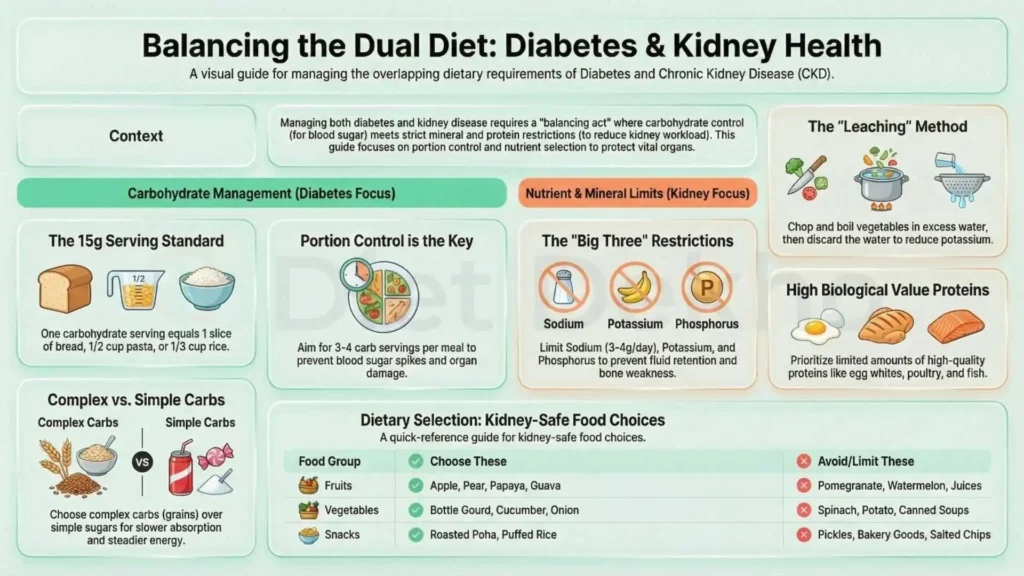
A renal diabetic diet manages your blood sugar while reducing the workload on your kidneys. You must lower your intake of sodium, potassium, and phosphorus to prevent fluid buildup and heart issues. By choosing specific vegetables and using cooking hacks like leaching, you can keep your kidneys healthy while balancing your glucose levels.
The Dual Challenge: Why Your Diet Matters Now
I know it feels overwhelming to manage two conditions at once. However, you are not alone in this journey. Recent data from 2024 and 2025 shows that nearly 44% of Indian patients with Type 2 diabetes also face kidney challenges. When your blood sugar stays high, it damages the tiny filters in your kidneys. Consequently, your body struggles to remove waste and extra fluid.
Fortunately, the right food can act as your best medicine. If you have both high blood pressure and diabetes, your risk for kidney issues is six times higher than average. What this means for your daily routine is that every meal choice becomes a chance to heal. Let’s simplify the rules so you can start today without feeling like you are living in a hospital.

Sodium Control: The First Step in Your Renal Diabetic Diet
To start with, we must talk about salt. Our Indian kitchens love flavor, but extra sodium is the biggest enemy of your kidneys. It forces your body to hold onto water. This raises your blood pressure and strains your heart. In fact, most experts suggest limiting sodium to less than 2,000 mg per day.
I know it is hard to skip the achaar (pickle) or papad, but these are hidden sodium bombs. Similarly, you should avoid processed snacks and canned soups. Instead of salt, you can use fresh lemon, ginger, or garlic to make your food tasty. Harvard Health notes that a low-sodium diet is essential for controlling blood pressure in kidney patients (Harvard Health).
- Avoid: Pickles, papads, salted biscuits, and bottled sauces.
- Enjoy: Fresh herbs like coriander, mint, and spices like cumin.

Potassium Management: Protecting Your Heart
Next, let’s look at potassium. Your kidneys usually filter out extra potassium to keep your heart beating steadily. When kidneys slow down, potassium can build up to dangerous levels. This can cause irregular heartbeats or even a cardiac arrest.
Many of our favorite Indian vegetables like spinach, potatoes, and tomatoes are very high in potassium. However, you do not have to give them up entirely. You can use a simple trick called leaching. Cut your vegetables into small pieces and boil them in plenty of water. Afterward, throw the water away. This process removes a large portion of the potassium, making the food safer for you.
| Safe Low-Potassium Options | High-Potassium Foods to Limit |
| Bottle Gourd (Lauki) | Spinach (Palak) |
| Ridge Gourd (Turai) | Potatoes (Aloo) |
| Cabbage and Cauliflower | Bananas and Oranges |
| Apples and Papaya | Coconut Water |

Phosphorus Balance: Keeping Your Bones Strong
Phosphorus is another mineral that needs your attention. When kidneys are weak, phosphorus levels rise and pull calcium out of your bones. This makes your bones brittle and can damage your blood vessels.
Most importantly, you should know that your body absorbs phosphorus differently depending on the source. You only absorb about 50% of phosphorus from plant foods like dals (lentils). On the other hand, you absorb almost 100% of phosphorus from chemical additives in sodas and packaged meats. Therefore, choosing fresh, home-cooked food is always better than buying anything from a box.

Protein Choices: Quality Over Quantity
I often see patients getting confused about protein. While you need protein for strength, too much of it makes your kidneys work harder. For most Indians, a moderate intake of 0.8 grams per kilogram of body weight is ideal.
You should prioritize high-biological-value proteins that create less waste. Egg whites are a fantastic choice because they are pure protein without the phosphorus found in the yolk. For my vegetarian friends, moong dal is excellent. It has a low glycemic index and is gentler on the kidneys than heavier pulses like rajma. The National Institutes of Health (NIH) recommends working with a dietitian to find your specific protein sweet spot (NIH).

Carbohydrates: Finding the Right Fuel
For a diabetic person, carbs are usually the main focus. But in a renal diabetic diet, some healthy grains like ragi or brown rice might be too high in minerals.
Instead, I recommend using semolina (sooji) or broken wheat (dalia). These options provide good fiber for your sugar levels but have lower phosphorus than whole wheat. For breakfast, an upma with lots of leached veggies is a perfect start to your day. If you love rice, stick to white rice in small portions, as it is lower in potassium than brown rice.

Practical Kitchen Hacks for Busy Indians
I know it is hard to find time to cook separate meals. Let’s simplify this with a few daily hacks:
- The Salt Switch: Cook the family meal without salt. Take your portion out first, then add salt for the rest of the family.
- Batch Leaching: Peel and soak your vegetables for the whole week on Sunday to save time during the busy work week.
- Smart Snacking: Keep roasted makhana (fox nuts) or an apple handy. These are much safer than salted biscuits or mixtures.
- Thirst Management: If you feel thirsty but need to limit fluids, try chewing sugar-free gum or rinsing your mouth with cold water.

FAQs
Which dal is best for my kidneys and sugar?
Yellow moong dal is the best choice. It is easy to digest and has a lower mineral load compared to other pulses.
Can I eat chapatis every day?
Yes, but limit yourself to 2-3 plain chapatis daily. Use a mix of wheat and rice flour to lower the potassium content if needed.
Is coconut water safe for me?
No, I strongly suggest you avoid coconut water. It is extremely high in potassium and can cause a dangerous spike in your blood levels.
What fruit is the safest for a renal diabetic diet?
Apples, pears, and papaya are great choices. They offer fiber for your diabetes and are low in the minerals that stress your kidneys.
Can I use salt substitutes?
Please avoid most salt substitutes. They often replace sodium with potassium, which can be even more dangerous for your heart.

Conclusion
Living with diabetes and kidney disease is a big change, but it is a manageable one. By making these small shifts in your kitchen, you are giving your body the best chance to thrive. You don’t have to do this alone. We are here to help you create a plan that fits your busy life and your love for Indian food.

Contact Us
We understand how overwhelming nutrition and weight loss information can feel. With so many opinions and confusing advice online, it’s easy to feel stuck or unsure about what to do next.
At Diet Dekho, you never have to figure it out alone. You can contact us anytime with any questions or concerns. Our expert dietitians are available 24/7 to guide, support, and help you stay on track. Whether your goal is weight loss or building healthier habits, we’re here to make the journey simpler and more sustainable for you.
Disclaimer
This blog is intended to help readers make healthier food choices. Your health should always be the top priority. Before starting any restrictive or special diet, especially if you have a medical condition or health concern, please consult a doctor or a qualified dietitian. Each body responds differently to food and lifestyle changes. Always choose what is safe and suitable for you.
Medical & Nutritional Disclaimer: The nutritional charts and recommendations presented in this article are intended solely for educational and preventive wellness guidance. They are not a replacement for clinical consultation, personal diagnosis, or medical prescription. Always consult a qualified medical professional or certified clinical dietitian before making drastic modifications to your clinical diet routine.

Abhinav is the Founder of Diet Dekho, helping people manage weight and lifestyle health through simple, practical nutrition and personalized diet plans.